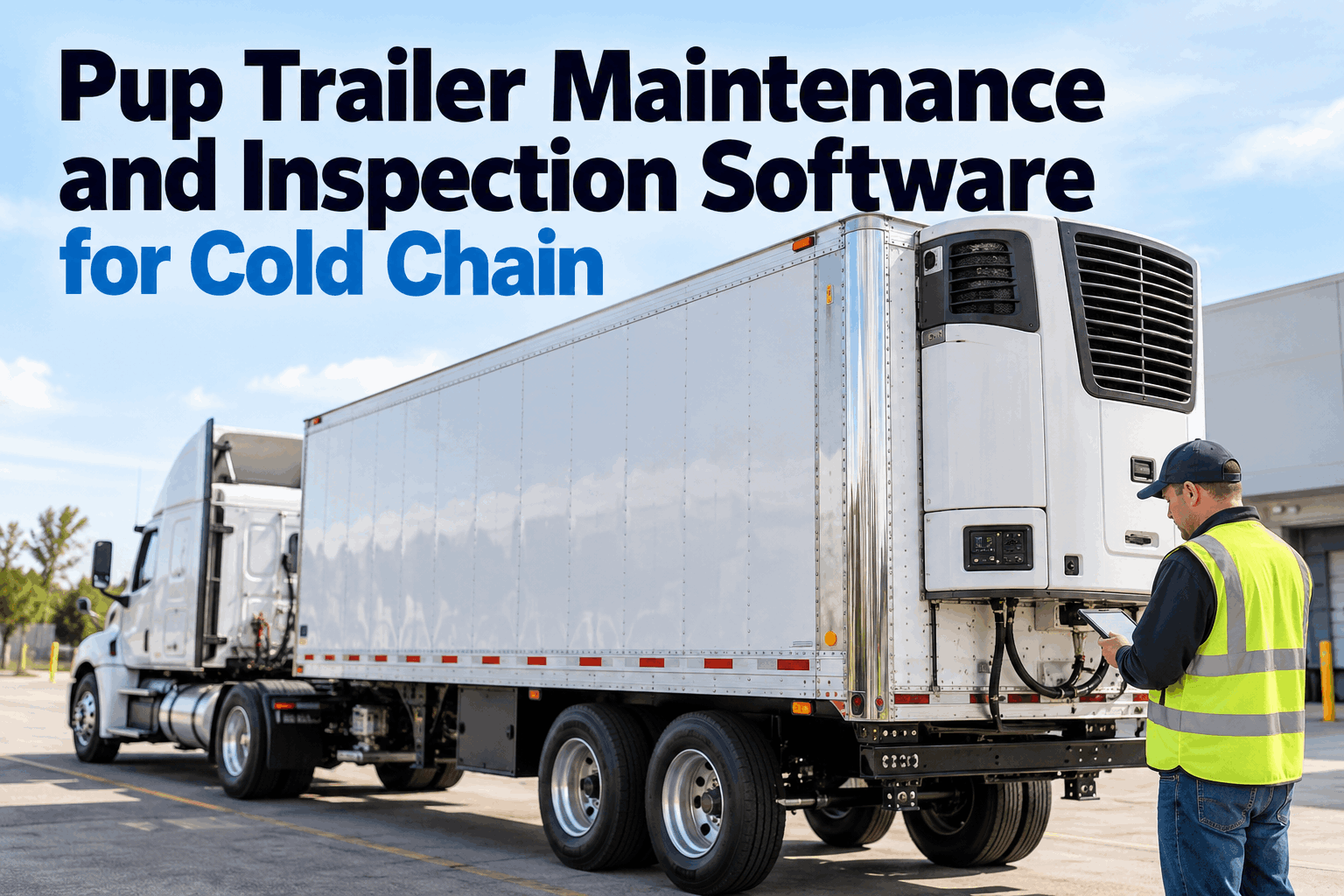
A pup trailer is easy to overlook precisely because it's rarely the star of the rig. It's the shorter trailer riding behind a lead trailer and a converter dolly, swapped between pairings as loads change, and it doesn't have one driver or one tractor it belongs to the way a standalone trailer does. That in-between status is exactly why its maintenance record is the one most likely to have a gap in it. See how FleetRabbit keeps every pup trailer's history attached to it, not to whoever pulled it last.
Refrigerated Pup Trailer Maintenance and Inspection Software for a Trailer That Changes Partners
Track reefer PM, the converter dolly and pre-trip and sanitation inspections by trailer, so a pup's history follows it no matter which tractor or lead trailer it's paired with next.
Why the Pup Is the One That Gets Missed
A standalone reefer trailer tends to stay with roughly the same rhythm, hauling and returning on a pattern someone can track by memory if nothing else. A pup trailer doesn't work that way. It gets paired with different lead trailers and different tractors depending on the day's loads, which means no single driver or dispatcher has a consistent view of it, and nobody's specifically responsible for noticing when its last inspection was.
The Dolly Is Its Own Piece of Equipment
Running a pup trailer usually means running a converter dolly too, and it's easy to treat the dolly as a simple connector that doesn't need its own attention. It has a hitch, wheels, brakes and lighting, all of which wear and all of which can fail independently of the pup itself. A maintenance plan that tracks the trailer but forgets the dolly is only watching half the equipment actually making the pairing possible.
Track the dolly and the pup, not just the trailer people notice
Every piece of the rig on its own schedule, with its own record. Free for your first three vehicles.
Two Inspections, Same as Any Reefer Trailer
Being smaller doesn't exempt a pup trailer from either check. Both matter exactly as much as they would on a full-length reefer.
What Should Trigger Each Service Item
| Item | Best trigger |
|---|---|
| Reefer PM | Engine hours |
| Dolly hitch and coupling | Connect-cycle count or calendar |
| Brakes and tires (pup and dolly) | Calendar + daily visual |
| Sanitation inspection | Before every load |
| Annual DOT inspection | Calendar, regulatory |
One Identity, No Matter Who's Pulling It
The fix for a trailer that changes partners constantly is making sure its record doesn't change with it. Every inspection, service and defect should attach to the pup trailer's own identity, visible the same way regardless of which tractor picked it up or which lead trailer it was paired with that day.
What FleetRabbit Gives a Doubles Fleet
Frequently Asked Questions
A pup gets paired with different tractors and lead trailers depending on the load, so no single driver or route has consistent visibility into its condition or history.
Yes. Its hitch, wheels, brakes and lighting all wear independently of the pup trailer itself and can fail on their own.
Yes, the same as any reefer trailer. Its smaller size doesn't reduce either requirement.
By attaching every inspection and service record to the trailer's own identity rather than to whichever tractor or lead trailer it happened to be paired with that day.
Yes. Start free with three vehicles and scale up as your fleet grows.
Every Pup Trailer Has a History. Keep It Attached.
Reefer PM, dolly tracking and two-step inspections, all tied to the trailer, not the pairing. Free for your first three vehicles.