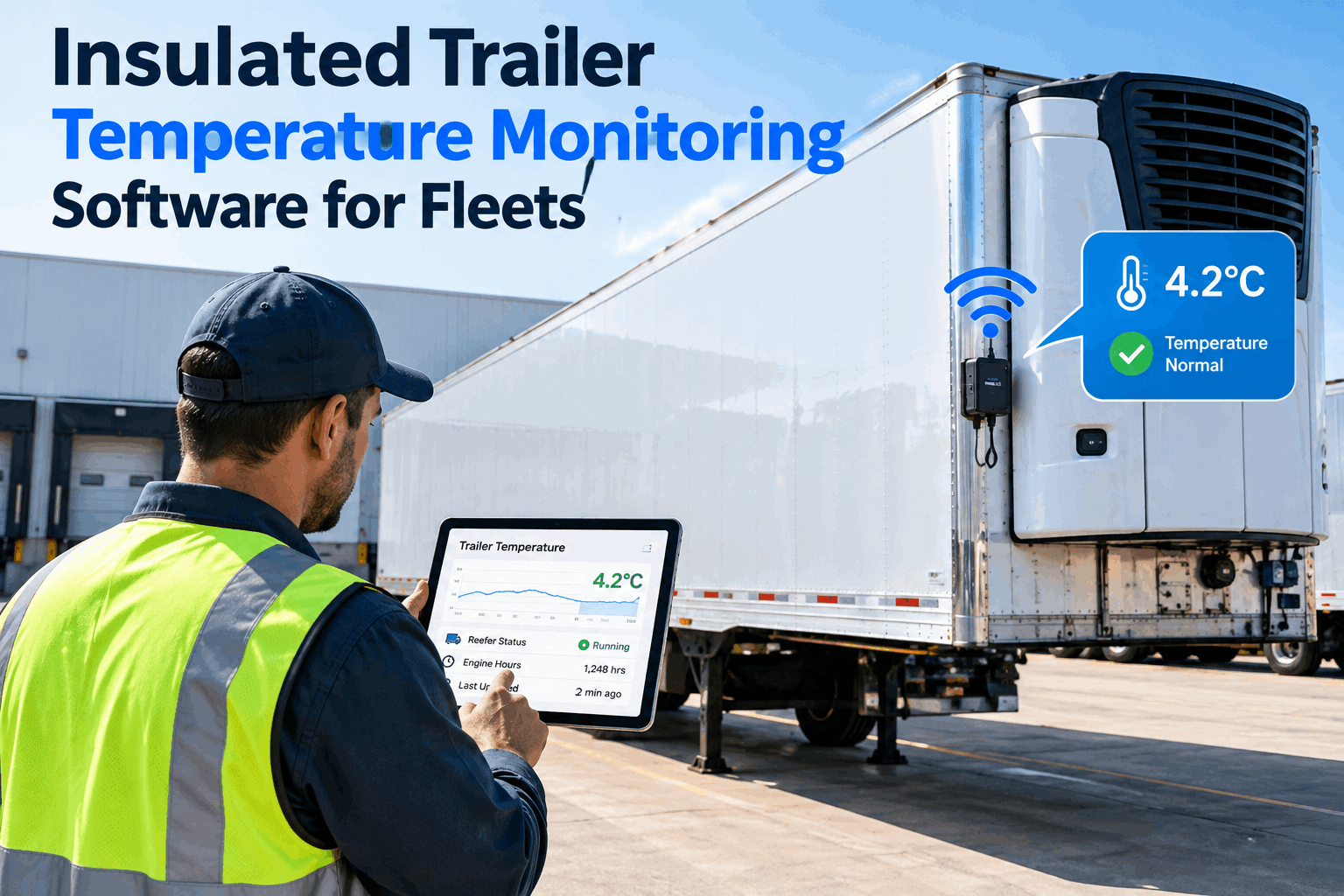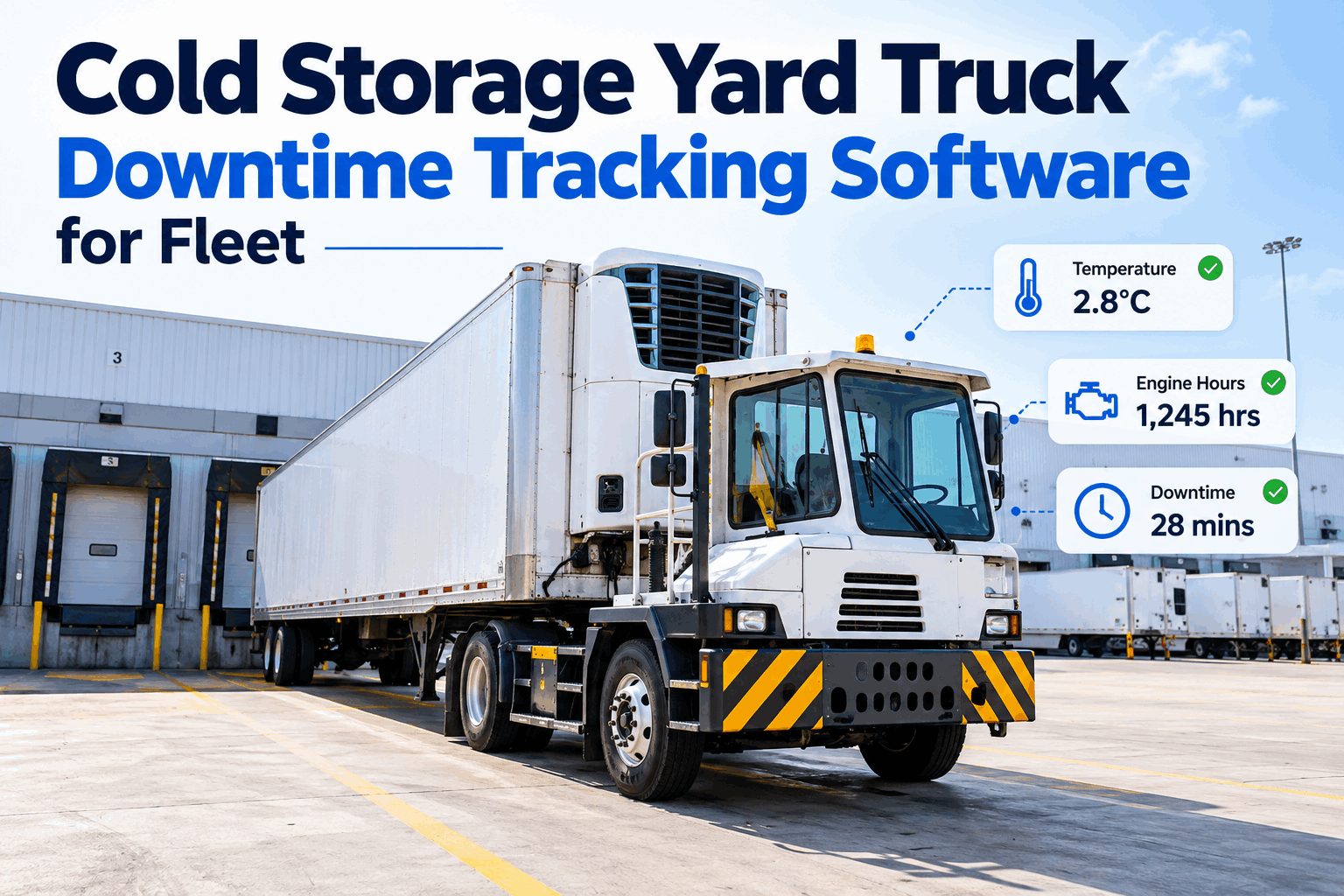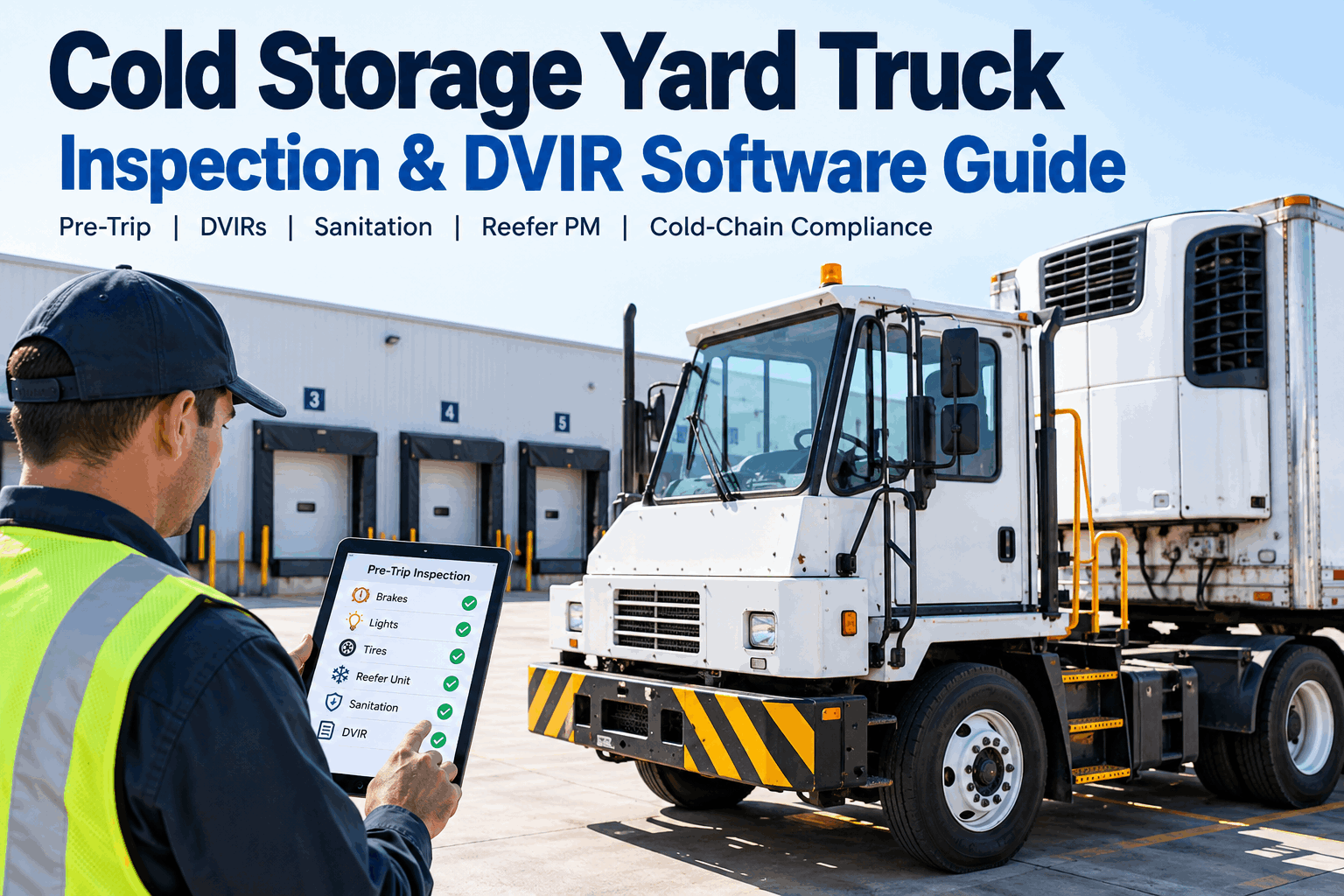
A yard truck might never leave the property, and it's still legally a motor vehicle that needs a DVIR, still wears down a real fifth wheel hundreds of times a shift, and still gets driven straight into a cold dock and back out into the heat, over and over, all day. It's easy to treat a vehicle that never hits the highway as low-stakes. It usually isn't. See how FleetRabbit tracks what a yard truck actually experiences.
Cold Storage Yard Truck Inspection Software for a Vehicle That Never Stops Working
Digital pre-trip and DVIR checks, fifth-wheel and coupling wear tracked on cycles, and reefer PM for trailers moving through your yard, all in one system.
Mileage Tells You Almost Nothing Here
A yard truck can log a handful of miles in an entire shift, shuffling trailers between a cold dock and a staging lot a few hundred feet away, and still put more real mechanical stress on its coupling system than a long-haul tractor sees in a week. Miles were never the right measurement for this vehicle. What actually matters is how many times it hitches, unhitches and cycles through the yard.
The Fifth Wheel Is the Real Wear Point
Every coupling and uncoupling puts load on the fifth wheel, the locking mechanism and the air or electrical connections, and a yard truck can do this dozens of times a shift. That's mechanical wear that has almost nothing to do with distance traveled and everything to do with how busy the yard was that day.
Illustrative comparison. Actual cycle counts depend on yard size and trailer volume.
Track wear by what actually happens, not by miles
Coupling cycles, engine hours and calendar intervals, set per vehicle. Free for your first three vehicles.
Still a Motor Vehicle, Still Needs a DVIR
It's tempting to treat a vehicle that never leaves the property as exempt from the usual paperwork. In most cases it isn't. A yard truck is still a powered vehicle with brakes, tires and a coupling system that can fail, and a daily inspection is what catches a problem before it strands a loaded trailer in the middle of a busy dock schedule. Confirm your own DVIR obligations for yard-only equipment with your compliance team, since requirements can vary by how the vehicle is classified.
In and Out of the Cold, All Day Long
A yard truck working a cold storage facility drives into a refrigerated dock and back out into ambient temperature repeatedly through a shift. That constant thermal cycling stresses seals, electrical connections and condensation-prone components in a way a vehicle that stays in one climate never experiences. It's another reason a generic PM schedule built for an over-the-road tractor doesn't quite fit here.
What Should Trigger Each Check
| Item | Best trigger |
|---|---|
| Fifth wheel and locking mechanism | Coupling cycles |
| Hydraulic lift system | Cycles + calendar |
| Engine and fluids | Engine hours |
| Brakes and tires | Calendar + daily check |
| Seals and electrical connections | Calendar, given thermal cycling |
| Reefer PM on trailers moved | Engine hours, tracked per trailer |
What FleetRabbit Gives a Cold Storage Yard Fleet
Frequently Asked Questions
In most cases, yes. It's still a powered vehicle with brakes, tires and a coupling system that can fail, though exact requirements can depend on classification, so confirm with your compliance team.
The fifth wheel takes load every time a trailer is hitched or unhitched, which happens far more often relative to distance traveled than on a long-haul tractor.
Repeated thermal cycling stresses seals and electrical connections in ways a vehicle that stays in one climate doesn't experience.
Yes. Reefer units on trailers moved through the yard can be tracked on their own engine-hour schedule alongside the yard truck itself.
Yes. Start free with three vehicles and scale up as your operation grows.
Built for a Vehicle That Works the Whole Shift
Cycle-based PM, daily DVIRs and reefer tracking for everything moving through your yard.