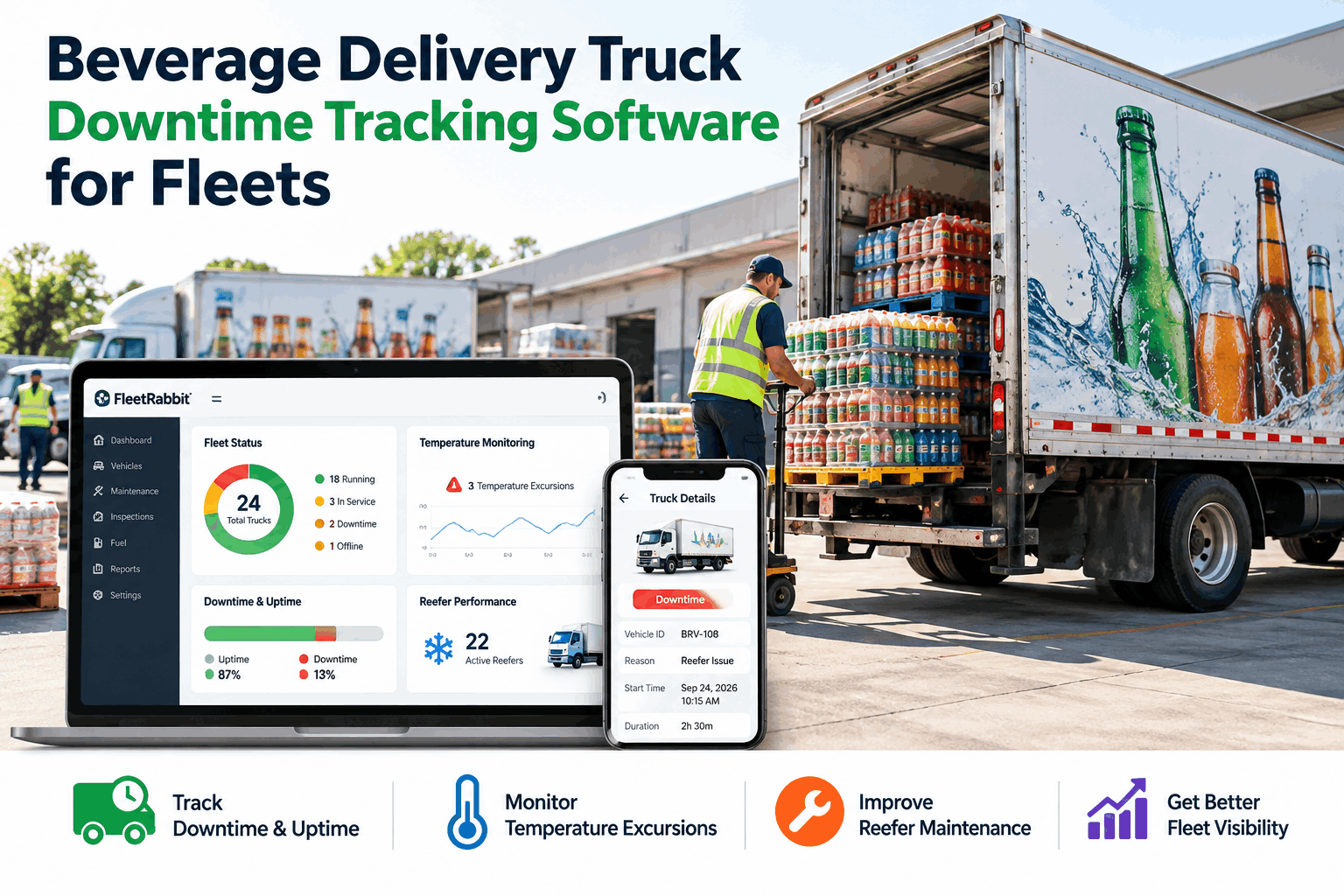
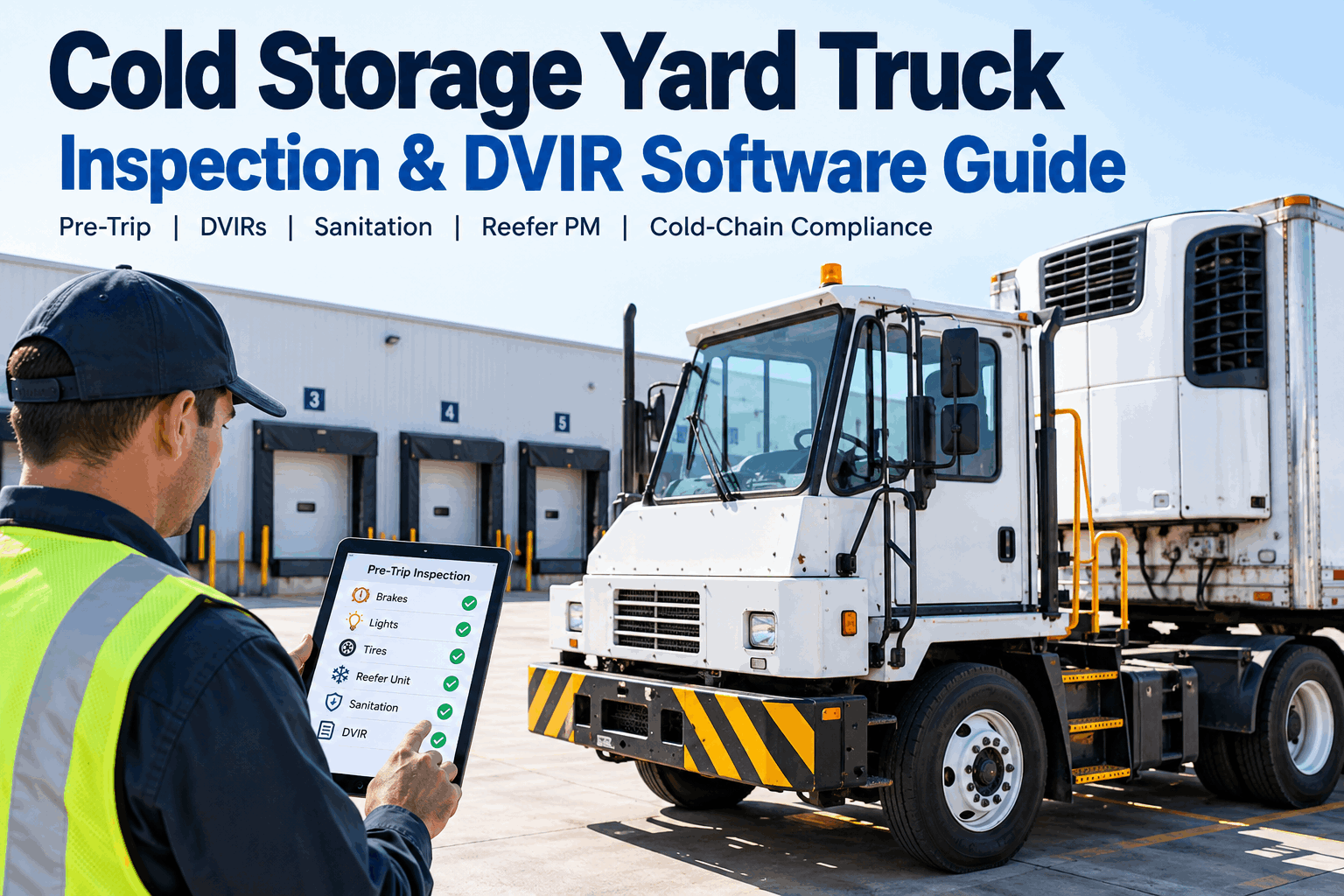
Beverage Delivery Truck Downtime Tracking Software for Fleets
Beverage distributors, draft beer wholesalers, and functional beverage logistics directors navigate a punishing operational reality: when an urban beverage delivery truck suffers roadside downtime, the financial fallout goes far beyond mechanical repair bills. In final-mile beverage delivery, a straight truck carrying perishable craft kegs, cold-pressed juices, and live-culture probiotics is an active thermal container under extreme stress. Every unplanned mechanical delay on a 95°F summer afternoon rapidly turns into a catastrophic temperature excursion. If a direct-drive compressor belt snaps, a 12V electric standby inverter trips, or a hydraulic liftgate jams while the vehicle sits stalled in city traffic, cargo bay temperatures surge past 42°F. Within an hour, beer kegs develop excess pressure and off-flavors, cold-pressed juices begin secondary fermentation, and supermarket receiving clerks reject entire multi-pallet consignments. Beverage delivery truck downtime tracking software unifies high-frequency J1939 CAN-bus diagnostics, auxiliary refrigeration engine-hour tracking, roll-up door dwell telemetry, and predictive maintenance triage. Eliminate costly roadside tow calls, catch mechanical degradation before highway breakdowns occur, protect tight retail delivery windows, and preserve biological product integrity across your distribution fleet. Book a Demo to see our beverage fleet downtime and excursion tracking software live.
The Costly Triple Threat of Beverage Delivery Downtime
Beverage distribution operations face an unforgiving trio of operational risks: heavy cargo weight, multi-drop stop density, and high biological perishability. When a 26-foot delivery straight truck stalls on an urban arterial, the vehicle does not simply lose travel time; the entire cold chain collapses. Sign up to modernize your beverage fleet's uptime and downtime tracking.
Threat 01
The Stop-and-Start Auxiliary Engine Blind Spot
A delivery truck covering only 35 miles across dense metropolitan retail routes often keeps its nose-mounted refrigeration unit running under high load for 9 continuous hours. Tracking maintenance strictly by truck odometer miles causes reefer drive belts, idler pulleys, and compressor oil to operate far beyond safe thresholds, resulting in sudden seized clutches during afternoon runs. Book a demo to inspect our auxiliary engine-hour tracking.
Threat 02
Cumulative Roll-Up Door Dwell Thermal Shock
Beverage drivers execute forty to fifty stops per shift, wheeling multi-keg hand trucks across hot asphalt while rear doors stay open for extended intervals. If traffic delays prevent the refrigeration unit from pulling temperatures back to 36°F between drops, cargo bay air creeps past 45°F, accelerating yeast foaming and spoiling live probiotics.
Threat 03
Hydraulic Liftgate Solenoid Burnout Curbside
Commercial straight trucks rely on high-capacity hydraulic liftgates to lower 160-pound beer kegs and heavy pallets. Continuous cycle usage in stop-and-go delivery drains auxiliary battery banks. A failed solenoid or dead pump stalls the truck mid-drop, blocking city alleys and forcing expensive emergency mobile mechanic dispatch. Sign up to monitor hydraulic liftgate electrical health.
Threat 04
Catastrophic Cargo Claim Condemnations
When a mechanical breakdown leaves a truck stalled in summer heat, transferring ten pallets of unpasteurized kegs and fresh juices to a backup vehicle takes hours. If internal product core temperatures breach legal limits, health inspectors condemn the entire load, resulting in $25,000+ in lost product alongside missed delivery window chargebacks.
The 4 Pillars of Beverage Fleet Downtime & Excursion Prevention
Fleet Rabbit unites on-board chassis J1939 telematics, transport refrigeration unit (TRU) microprocessors, and wireless IoT microclimate sensors into a unified uptime defense ecosystem. Book a demo to explore our full beverage fleet architecture.
Pillar 01
Auxiliary Reefer Compressor Runtime PM Decoupling
Capture actual compressor clutch runtime directly from Thermo King, Carrier Transicold, or Zanotti controllers via direct CAN-bus and serial connections. Decouple reefer maintenance from truck road miles, automatically triggering compressor belt retensioning, idler pulley swaps, and fluid flushes based on true operating engine workload. Sign up to decouple auxiliary reefer engine maintenance.
Pillar 02
Multi-Zone Wireless BLE Temperature Telemetry
Deploy NIST-traceable, IP68 waterproof Bluetooth Low Energy probes at the front bulkhead, center pallet zone, and rear roll-up door threshold. Probes stream microclimate readings every 30 seconds to the in-cab gateway without requiring holes to be drilled through insulated truck body panels, eliminating air leaks.
Pillar 03
Door Dwell Time & Pulldown Anomaly Modeling
Magnetic door sensors link with delivery stop geofences to track exact roll-up door open durations. The cloud analytics engine differentiates between normal restaurant drop-offs and real cooling deficits, sounding an immediate in-cab driver chime if compartment temperatures fail to recover within safe pulldown windows. Book a demo to inspect our door dwell anomaly algorithms.
Pillar 04
Predictive Chassis DTC & Electrical Health Triage
Interrogate vehicle OBD-II and J1939 diagnostic ports continuously to detect pending Diagnostic Trouble Codes (DTCs), transmission fluid temperature spikes during heavy hauling, and battery cranking voltage drop-offs. Auto-generate shop work orders to resolve developing mechanical faults before trucks depart the yard. Sign up to capture live J1939 vehicle fault telemetry.
The Closed-Loop Downtime & Excursion Triage Pipeline
Discover how Fleet Rabbit identifies mechanical and thermal risks early, initiating automated operational triage before cargo is damaged or routes are canceled. Book a demo to test our automated triage workflow.
Stage 01
Continuous Telemetry Polling
In-cab telematics devices query vehicle powertrain and reefer microprocessors every 30 seconds, monitoring compressor suction pressures, battery cranking curves, and cargo bay temperatures.
Stage 02
Thermal Drift & Fault Detection
The software identifies that truck #318 has experienced a 2.5°F thermal climb over six minutes while doors are closed, isolating an auxiliary alternator belt slip before cooling fails completely.
Stage 03
Dual Driver & Dispatch Alerting
An instant audio alert sounds on the driver's mobile device while dispatchers receive a priority notification with vehicle location, remaining delivery stops, and estimated thermal safe-time. Sign up to enable instant driver and dispatch push alerts.
Stage 04
Dynamic Reroute & Pre-Staged Bay
Dispatch prioritizes remaining high-risk cold drops, routes the truck back to the depot, and auto-generates a priority work order with pre-staged drive belts ready in the maintenance bay.
Platform Comparison: Manual Oversight vs. Fleet Rabbit Platform
Commercial Fleet Case Study: Metro Beverage Distributors
Learn how an urban wholesale beverage distributor deployed Fleet Rabbit across 34 refrigerated delivery straight trucks to eliminate roadside breakdowns and dockside keg rejections. Sign up to achieve similar delivery fleet uptime results.
Wholesale Case Study
58%
Fewer Roadside Breakdowns
$78,000
Annual Spoilage & Tow Savings
0
Rejected Draft Beer Drops
Urban Beverage Distributor Eliminates Roadside Stalls Across 34 Straight Trucks
Operating 34 refrigerated straight trucks delivering unpasteurized craft beer, organic kombucha, and premium cold-pressed juices to more than 400 bars, restaurants, and grocery supermarkets daily, Metro Beverage Distributors struggled with costly summer breakdowns. During peak July delivery cycles with forty stops per route, trucks experienced four roadside compressor belt failures and two hydraulic liftgate battery crashes. Stalled vehicles suffered rapid temperature excursions in 95°F heat, resulting in three ruined truckloads worth $64,000 and thousands more in emergency towing and mechanic overtime. The maintenance garage was scheduling reefer service every 6,000 truck road miles, unaware that heavy stop-and-go delivery routes were doubling auxiliary compressor operating hours.
By implementing Fleet Rabbit at $5/asset/month, the distributor decoupled auxiliary compressor maintenance from chassis miles, tracking exact refrigeration operating hours, battery cranking voltages, and cargo bay temperatures in real time. Early thermal drift alerts caught a slipping compressor alternator belt during morning warehouse staging, enabling mechanics to replace the $65 belt in thirty minutes before the truck departed on its route. Over 12 months, unscheduled vehicle downtime fell by 58%, dockside temperature refusals dropped to zero, and the company saved $78,000 in prevented beverage spoilage, eliminated emergency towing, and reduced overtime repair costs.
Frequently Asked Questions
Why does beverage truck downtime cause rapid product spoilage compared to dry goods?
Unlike shelf-stable canned beverages, unpasteurized craft beer, organic juices, and probiotic drinks contain live active cultures and dissolved gases. When a delivery truck breaks down roadside and cooling halts in warm weather, cargo bay temperatures can surge by 10°F in under thirty minutes. This thermal shock causes draft beer kegs to foam and ruin tap lines, while juices risk secondary fermentation that can expand or rupture packaging, resulting in complete retail load rejections.
Why is auxiliary engine-hour tracking essential for beverage delivery trucks?
Beverage delivery trucks spend extensive time stationary at delivery docks, restaurant curbs, and loading zones with their engines idling while refrigeration units run continuously under heavy load. A truck driving only 30 miles in an urban shift may run its reefer compressor for eight hours. Scheduling maintenance by truck odometer miles severely neglects auxiliary belts, idler pulleys, and compressor oil, leading to sudden highway breakdowns.
How does door dwell tracking help prevent temperature excursions on multi-stop routes?
Beverage delivery drivers open rear roll-up doors thirty to fifty times per shift. Fleet Rabbit utilizes magnetic door sensors linked with delivery geofences to track opening durations. If doors remain open past safe limits in warm ambient conditions, the system fires in-cab alerts to the driver, prompting them to check PVC strip curtains and close doors promptly to protect cargo holding temperatures.
Can drivers and dispatchers access temperature graphs without cellular reception?
Yes. Fleet Rabbit features an offline-first mobile architecture. All wireless BLE probe telemetry, door events, and vehicle diagnostic codes buffer locally on the in-cab gateway and driver smartphone app. Drivers can view real-time microclimate conditions via local Bluetooth connection inside concrete loading bays or underground parking structures, and all buffered data auto-syncs to dispatch the moment cellular connectivity returns.
What are the pricing details and contract terms for Fleet Rabbit's software?
Fleet Rabbit is priced at a flat rate of $5 per active beverage delivery truck per month billed annually. This includes complete access to downtime tracking analytics, real-time wireless BLE temperature monitoring, auxiliary reefer engine-hour PM scheduling, door dwell analytics, mobile driver proof-of-delivery tools, and FSMA compliance archives. We offer a 14-day free live trial on up to 3 assets with zero setup fees or long-term locked contracts.
Ready to Eliminate Downtime and Temperature Excursions Across Your Beverage Fleet?
Deploy predictive CAN-bus maintenance, decouple auxiliary reefer engine hours, and ensure 100% cold-chain delivery uptime for just $5/asset/month.
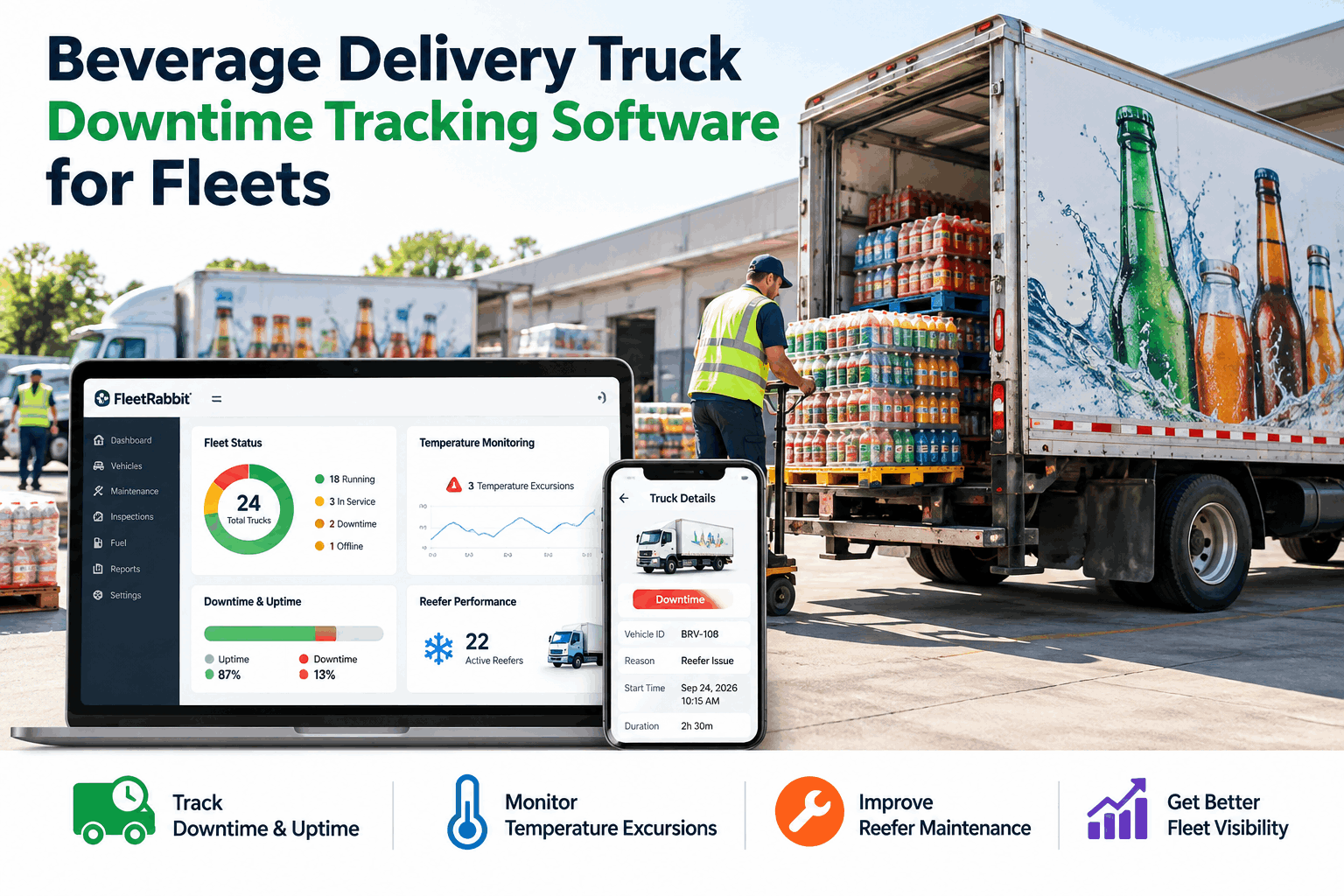
Beverage Delivery Truck Downtime Tracking Software for Fleets
Beverage distributors, draft beer wholesalers, and functional beverage logistics directors navigate a punishing operational reality: when an urban beverage delivery truck suffers roadside downtime, the financial fallout goes far beyond mechanical repair bills. In final-mile beverage delivery, a straight truck carrying perishable craft kegs, cold-pressed juices, and live-culture probiotics is an active thermal container under extreme stress. Every unplanned mechanical delay on a 95°F summer afternoon rapidly turns into a catastrophic temperature excursion. If a direct-drive compressor belt snaps, a 12V electric standby inverter trips, or a hydraulic liftgate jams while the vehicle sits stalled in city traffic, cargo bay temperatures surge past 42°F. Within an hour, beer kegs develop excess pressure and off-flavors, cold-pressed juices begin secondary fermentation, and supermarket receiving clerks reject entire multi-pallet consignments. Beverage delivery truck downtime tracking software unifies high-frequency J1939 CAN-bus diagnostics, auxiliary refrigeration engine-hour tracking, roll-up door dwell telemetry, and predictive maintenance triage. Eliminate costly roadside tow calls, catch mechanical degradation before highway breakdowns occur, protect tight retail delivery windows, and preserve biological product integrity across your distribution fleet. Book a Demo to see our beverage fleet downtime and excursion tracking software live.
The Costly Triple Threat of Beverage Delivery Downtime
Beverage distribution operations face an unforgiving trio of operational risks: heavy cargo weight, multi-drop stop density, and high biological perishability. When a 26-foot delivery straight truck stalls on an urban arterial, the vehicle does not simply lose travel time; the entire cold chain collapses. Sign up to modernize your beverage fleet's uptime and downtime tracking.
Threat 01
The Stop-and-Start Auxiliary Engine Blind Spot
A delivery truck covering only 35 miles across dense metropolitan retail routes often keeps its nose-mounted refrigeration unit running under high load for 9 continuous hours. Tracking maintenance strictly by truck odometer miles causes reefer drive belts, idler pulleys, and compressor oil to operate far beyond safe thresholds, resulting in sudden seized clutches during afternoon runs. Book a demo to inspect our auxiliary engine-hour tracking.
Threat 02
Cumulative Roll-Up Door Dwell Thermal Shock
Beverage drivers execute forty to fifty stops per shift, wheeling multi-keg hand trucks across hot asphalt while rear doors stay open for extended intervals. If traffic delays prevent the refrigeration unit from pulling temperatures back to 36°F between drops, cargo bay air creeps past 45°F, accelerating yeast foaming and spoiling live probiotics.
Threat 03
Hydraulic Liftgate Solenoid Burnout Curbside
Commercial straight trucks rely on high-capacity hydraulic liftgates to lower 160-pound beer kegs and heavy pallets. Continuous cycle usage in stop-and-go delivery drains auxiliary battery banks. A failed solenoid or dead pump stalls the truck mid-drop, blocking city alleys and forcing expensive emergency mobile mechanic dispatch. Sign up to monitor hydraulic liftgate electrical health.
Threat 04
Catastrophic Cargo Claim Condemnations
When a mechanical breakdown leaves a truck stalled in summer heat, transferring ten pallets of unpasteurized kegs and fresh juices to a backup vehicle takes hours. If internal product core temperatures breach legal limits, health inspectors condemn the entire load, resulting in $25,000+ in lost product alongside missed delivery window chargebacks.
The 4 Pillars of Beverage Fleet Downtime & Excursion Prevention
Fleet Rabbit unites on-board chassis J1939 telematics, transport refrigeration unit (TRU) microprocessors, and wireless IoT microclimate sensors into a unified uptime defense ecosystem. Book a demo to explore our full beverage fleet architecture.
Pillar 01
Auxiliary Reefer Compressor Runtime PM Decoupling
Capture actual compressor clutch runtime directly from Thermo King, Carrier Transicold, or Zanotti controllers via direct CAN-bus and serial connections. Decouple reefer maintenance from truck road miles, automatically triggering compressor belt retensioning, idler pulley swaps, and fluid flushes based on true operating engine workload. Sign up to decouple auxiliary reefer engine maintenance.
Pillar 02
Multi-Zone Wireless BLE Temperature Telemetry
Deploy NIST-traceable, IP68 waterproof Bluetooth Low Energy probes at the front bulkhead, center pallet zone, and rear roll-up door threshold. Probes stream microclimate readings every 30 seconds to the in-cab gateway without requiring holes to be drilled through insulated truck body panels, eliminating air leaks.
Pillar 03
Door Dwell Time & Pulldown Anomaly Modeling
Magnetic door sensors link with delivery stop geofences to track exact roll-up door open durations. The cloud analytics engine differentiates between normal restaurant drop-offs and real cooling deficits, sounding an immediate in-cab driver chime if compartment temperatures fail to recover within safe pulldown windows. Book a demo to inspect our door dwell anomaly algorithms.
Pillar 04
Predictive Chassis DTC & Electrical Health Triage
Interrogate vehicle OBD-II and J1939 diagnostic ports continuously to detect pending Diagnostic Trouble Codes (DTCs), transmission fluid temperature spikes during heavy hauling, and battery cranking voltage drop-offs. Auto-generate shop work orders to resolve developing mechanical faults before trucks depart the yard. Sign up to capture live J1939 vehicle fault telemetry.
The Closed-Loop Downtime & Excursion Triage Pipeline
Discover how Fleet Rabbit identifies mechanical and thermal risks early, initiating automated operational triage before cargo is damaged or routes are canceled. Book a demo to test our automated triage workflow.
Stage 01
Continuous Telemetry Polling
In-cab telematics devices query vehicle powertrain and reefer microprocessors every 30 seconds, monitoring compressor suction pressures, battery cranking curves, and cargo bay temperatures.
Stage 02
Thermal Drift & Fault Detection
The software identifies that truck #318 has experienced a 2.5°F thermal climb over six minutes while doors are closed, isolating an auxiliary alternator belt slip before cooling fails completely.
Stage 03
Dual Driver & Dispatch Alerting
An instant audio alert sounds on the driver's mobile device while dispatchers receive a priority notification with vehicle location, remaining delivery stops, and estimated thermal safe-time. Sign up to enable instant driver and dispatch push alerts.
Stage 04
Dynamic Reroute & Pre-Staged Bay
Dispatch prioritizes remaining high-risk cold drops, routes the truck back to the depot, and auto-generates a priority work order with pre-staged drive belts ready in the maintenance bay.
Platform Comparison: Manual Oversight vs. Fleet Rabbit Platform
Commercial Fleet Case Study: Metro Beverage Distributors
Learn how an urban wholesale beverage distributor deployed Fleet Rabbit across 34 refrigerated delivery straight trucks to eliminate roadside breakdowns and dockside keg rejections. Sign up to achieve similar delivery fleet uptime results.
Wholesale Case Study
58%
Fewer Roadside Breakdowns
$78,000
Annual Spoilage & Tow Savings
0
Rejected Draft Beer Drops
Urban Beverage Distributor Eliminates Roadside Stalls Across 34 Straight Trucks
Operating 34 refrigerated straight trucks delivering unpasteurized craft beer, organic kombucha, and premium cold-pressed juices to more than 400 bars, restaurants, and grocery supermarkets daily, Metro Beverage Distributors struggled with costly summer breakdowns. During peak July delivery cycles with forty stops per route, trucks experienced four roadside compressor belt failures and two hydraulic liftgate battery crashes. Stalled vehicles suffered rapid temperature excursions in 95°F heat, resulting in three ruined truckloads worth $64,000 and thousands more in emergency towing and mechanic overtime. The maintenance garage was scheduling reefer service every 6,000 truck road miles, unaware that heavy stop-and-go delivery routes were doubling auxiliary compressor operating hours.
By implementing Fleet Rabbit at $5/asset/month, the distributor decoupled auxiliary compressor maintenance from chassis miles, tracking exact refrigeration operating hours, battery cranking voltages, and cargo bay temperatures in real time. Early thermal drift alerts caught a slipping compressor alternator belt during morning warehouse staging, enabling mechanics to replace the $65 belt in thirty minutes before the truck departed on its route. Over 12 months, unscheduled vehicle downtime fell by 58%, dockside temperature refusals dropped to zero, and the company saved $78,000 in prevented beverage spoilage, eliminated emergency towing, and reduced overtime repair costs.
Frequently Asked Questions
Why does beverage truck downtime cause rapid product spoilage compared to dry goods?
Unlike shelf-stable canned beverages, unpasteurized craft beer, organic juices, and probiotic drinks contain live active cultures and dissolved gases. When a delivery truck breaks down roadside and cooling halts in warm weather, cargo bay temperatures can surge by 10°F in under thirty minutes. This thermal shock causes draft beer kegs to foam and ruin tap lines, while juices risk secondary fermentation that can expand or rupture packaging, resulting in complete retail load rejections.
Why is auxiliary engine-hour tracking essential for beverage delivery trucks?
Beverage delivery trucks spend extensive time stationary at delivery docks, restaurant curbs, and loading zones with their engines idling while refrigeration units run continuously under heavy load. A truck driving only 30 miles in an urban shift may run its reefer compressor for eight hours. Scheduling maintenance by truck odometer miles severely neglects auxiliary belts, idler pulleys, and compressor oil, leading to sudden highway breakdowns.
How does door dwell tracking help prevent temperature excursions on multi-stop routes?
Beverage delivery drivers open rear roll-up doors thirty to fifty times per shift. Fleet Rabbit utilizes magnetic door sensors linked with delivery geofences to track opening durations. If doors remain open past safe limits in warm ambient conditions, the system fires in-cab alerts to the driver, prompting them to check PVC strip curtains and close doors promptly to protect cargo holding temperatures.
Can drivers and dispatchers access temperature graphs without cellular reception?
Yes. Fleet Rabbit features an offline-first mobile architecture. All wireless BLE probe telemetry, door events, and vehicle diagnostic codes buffer locally on the in-cab gateway and driver smartphone app. Drivers can view real-time microclimate conditions via local Bluetooth connection inside concrete loading bays or underground parking structures, and all buffered data auto-syncs to dispatch the moment cellular connectivity returns.
What are the pricing details and contract terms for Fleet Rabbit's software?
Fleet Rabbit is priced at a flat rate of $5 per active beverage delivery truck per month billed annually. This includes complete access to downtime tracking analytics, real-time wireless BLE temperature monitoring, auxiliary reefer engine-hour PM scheduling, door dwell analytics, mobile driver proof-of-delivery tools, and FSMA compliance archives. We offer a 14-day free live trial on up to 3 assets with zero setup fees or long-term locked contracts.
Ready to Eliminate Downtime and Temperature Excursions Across Your Beverage Fleet?
Deploy predictive CAN-bus maintenance, decouple auxiliary reefer engine hours, and ensure 100% cold-chain delivery uptime for just $5/asset/month.