Beverage Delivery Truck Temperature Monitoring Software
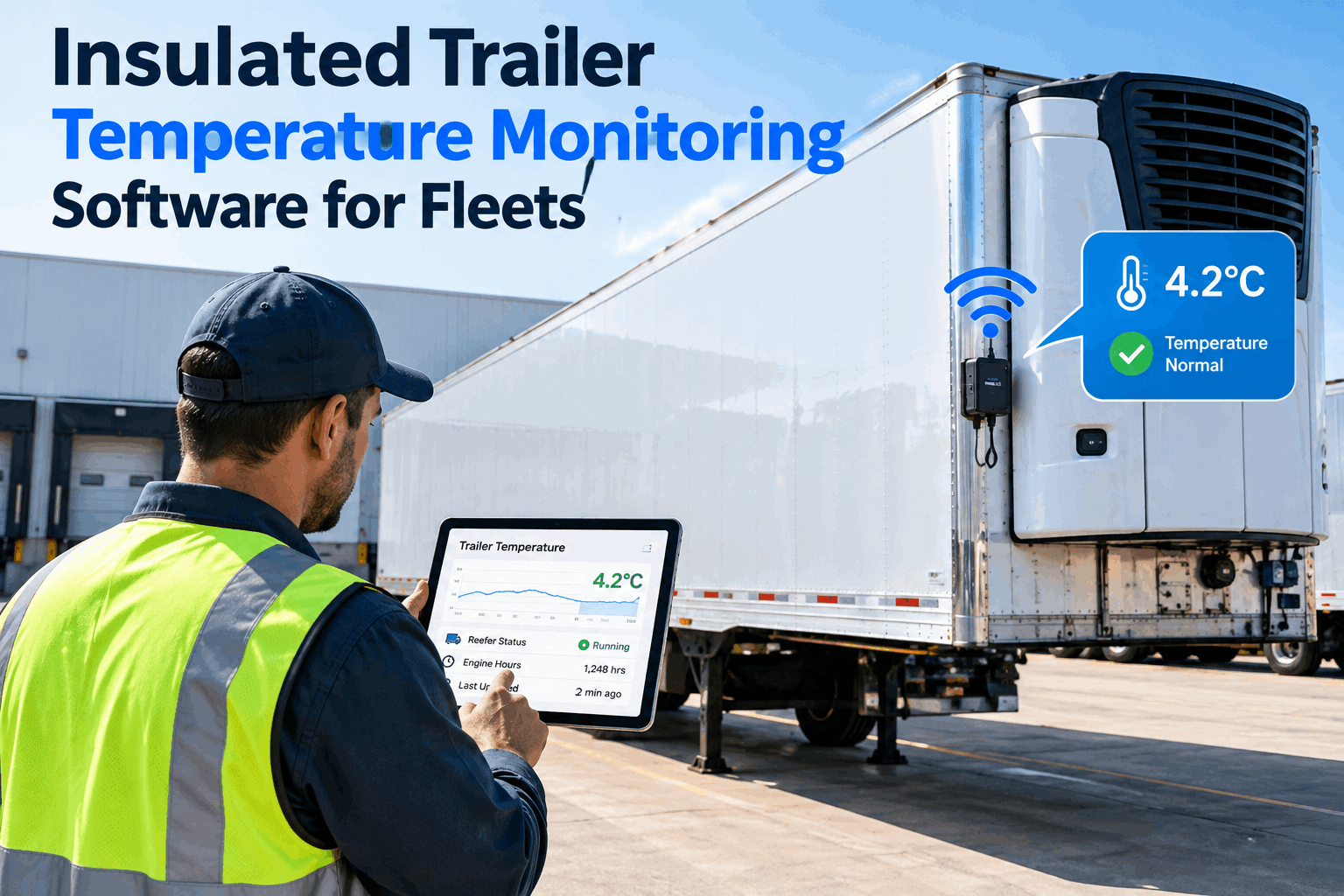
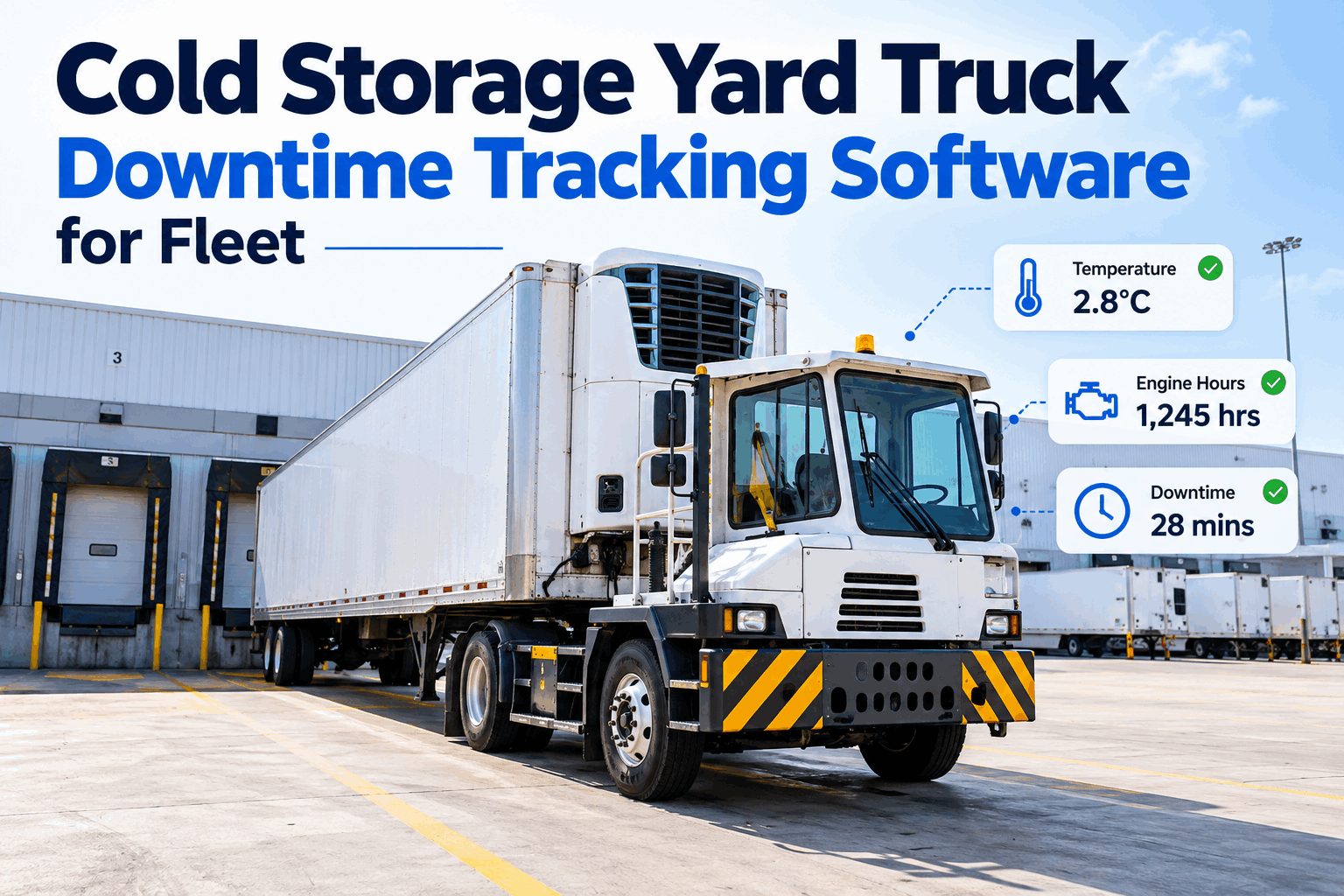
Craft beer distributors, unpasteurized cold-pressed juice fleets, functional probiotic beverage carriers, and premium wine transport operators face a volatile operational hazard: thermal shock during final-mile distribution. Unlike shelf-stable canned sodas, modern craft beverages and unpasteurized drinks contain delicate biological yeast, live cultures, and fragile chemical flavor profiles. If an unpasteurized India Pale Ale or raw organic juice experiences temperatures rising past 42°F for as little as forty-five minutes during dense multi-drop urban routes, secondary fermentation accelerates inside the keg or bottle, causing packaging rupture, flavor souring, cloudiness, and immediate retail rejection. Beverage delivery truck temperature monitoring software bridges the physical visibility gap between the driver's cab and the cargo body. By deploying multi-point wireless Bluetooth Low Energy (BLE) temperature probes alongside door-open dwell tracking, live refrigeration telematics, and engine-hour preventive maintenance scheduling, distributors eliminate costly delivery-dock refusals and maintain brand integrity. Safeguard delicate beverage formulations, verify continuous FSMA 21 CFR compliance, and maximize delivery uptime. Book a Demo to see our beverage delivery truck temperature monitoring software live.
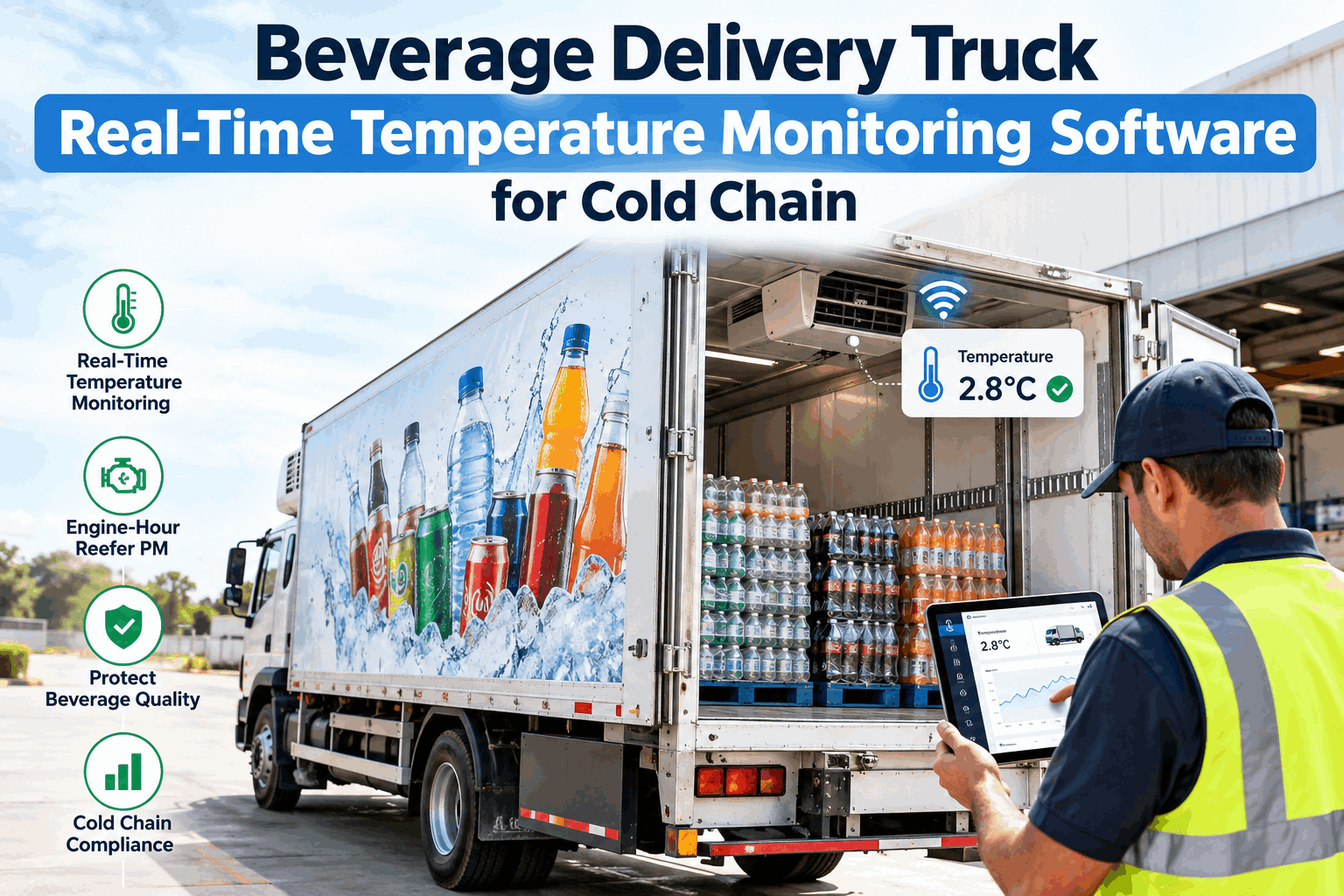
Beverage Delivery Truck Real-Time Temperature Monitoring Software for Cold Chain
An engineering and logistics operations guide for refrigerated beverage distributors: deploy wireless BLE microclimate probes inside keg bays, correlate multi-stop roll-up door thermal loss, automate auxiliary reefer engine-hour maintenance, and eliminate customer dock delivery rejections.
Beverage Truck Multi-Bay Sensor & Gateway Data Topology
54%
Fewer Thermal Excursions
Sub-minute alerts catch rising bay temperatures during prolonged restaurant deliveries.
± 0.1°C
NIST-Traceable Accuracy
Precision BLE probes verify draft beer and premium juice holding specifications.
100%
Engine-Hour Decoupling
Reefer compressor maintenance triggers on true operating runtime, not truck road miles.
$5
Per Beverage Truck / Mo
Predictable SaaS pricing covering wireless probes, dispatch alerts, and mobile proof-of-delivery.
Protect Your Beverage Inventory from Costly Delivery Thermal Shock
Eliminate dockside keg and pallet refusals, correlate door-open dwell times with thermal recovery curves, and decouple auxiliary reefer maintenance for just $5/asset/month.
The Costly Fragility of Cold-Chain Beverage Logistics
Beverage distribution routes represent one of the most mechanically demanding environments in the perishable supply chain. A 26-foot straight truck carrying draft beer kegs, raw unpasteurized juices, and organic kombucha makes thirty to fifty stops per shift across urban restaurant districts, convenience stores, and supermarket receiving bays. Relying on basic dashboard dials or manual paper logs introduces severe financial liabilities. Sign up to modernize your beverage fleet's temperature monitoring operations.
Risk 01
Secondary Fermentation and Keg Foaming
Draft beer kegs must remain between 36°F and 38°F. When cargo bay temperatures climb past 42°F due to repeated door openings, the dissolved carbon dioxide separates from the liquid, creating excessive foam, off-flavors, and immediate bar tap rejections that retailers write off against the distributor. Book a demo to inspect our keg microclimate monitoring.
Risk 02
Multi-Drop Door Dwell Thermal Infiltration
Beverage drivers spend four to eight minutes at each stop unloading kegs with hand trucks while rear roll-up doors remain wide open in 90°F summer heat. If the truck drives only four blocks to the next stop, the refrigeration unit cannot recover before the door opens again, resulting in cumulative thermal creep.
Risk 03
Compressor Belt Fatigue on Urban Routes
Beverage straight trucks utilize direct-drive or auxiliary diesel reefer units that run continuously while stationary at delivery docks. Scheduling maintenance based on truck driving miles neglects compressor drive belts and idler pulleys, leading to sudden highway belt snaps that leave cargo uncooled. Sign up to automate reefer servicing by actual compressor engine hours.
Risk 04
Unsubstantiated Receiving Dock Disputes
Supermarket and big-box beverage receiving clerks routinely test outer bottle cartons with handheld infrared thermometers upon delivery. Without an unalterable, time-stamped digital temperature curve proving continuous compliance, distributors absorb thousands of dollars in rejected shipments.
The 4 Pillars of Beverage Fleet Real-Time Monitoring
Deploy ruggedized, IP68 waterproof Bluetooth Low Energy probes at the front bulkhead, middle pallet zone, and rear roll-up door threshold. Probes stream microclimate readings every 30 seconds to the in-cab gateway without requiring holes to be drilled through insulated truck bodies. Sign up to deploy non-invasive wireless BLE probes.
Pillar 02
Door Dwell Time & Thermal Pulldown Correlation
Magnetic door sensors link with delivery geofences to track exact door-open durations. The system differentiates between standard curbside drop-offs and real refrigeration deficits, alerting dispatch and drivers if temperatures fail to recover within safe pulldown thresholds.
Pillar 03
Reefer Compressor Engine-Hour Telematics PM
Capture actual compressor clutch runtime directly from Thermo King, Carrier Transicold, or Zanotti controllers via CAN-bus and serial interfaces. Schedule compressor drive belt swaps, oil filter changes, and refrigerant checks based on real operating workload rather than road miles. Book a demo to inspect our auxiliary engine-hour PM modules.
Pillar 04
Mobile Driver Audio Alerts & Tamper-Proof ePOD
If cargo bay temperatures climb past 40°F, drivers receive an immediate audio micro-alert on their smartphone or tablet before inventory is compromised. Upon arrival, drivers generate an immutable delivery receipt displaying continuous temperature curves for instant customer sign-off. Sign up to generate tamper-proof digital delivery receipts.
The Step-by-Step Thermal Defense Pipeline: Staging to Dock Handover
The mobile app verifies that the truck body has reached the required 36°F setpoint and held temperature for fifteen minutes before dispatch clearance is granted.
Phase 02
Multi-Drop Stop Sequencing
As the driver navigates delivery stops, magnetic door sensors log opening durations while BLE probes continuously record air and product surface temperatures.
Phase 03
Predictive Drift Notification
If internal air climbs above 40°F due to extended dock dwell, in-cab audio alerts sound, prompting the driver to verify strip curtains and accelerate door closure. Sign up to enable in-cab predictive drift alerts.
Phase 04
Dockside Receipt Generation
The driver generates a certified PDF delivery document with GPS-watermarked temperature curves on their mobile device, securing immediate receiver approval.
Platform Comparison: Manual Clipboards vs. Fleet Rabbit Platform
Craft Beverage Distributor Eliminates Keg Foaming and Dock Refusals Across 28 Trucks
Distributing unpasteurized craft beer, organic kombucha, and cold-pressed juices to more than 350 bars, restaurants, and grocery retailers daily, Craft Coast Beverage Logistics struggled with recurring product loss. During summer delivery shifts with thirty to forty stops per truck, cargo bay temperatures regularly crept from 36°F to 48°F. Bar managers refused warm kegs due to excessive foaming, and grocery receivers rejected organic juice pallets, costing the distributor over $75,000 annually in scrapped inventory and emergency re-deliveries.
By implementing Fleet Rabbit at $5/asset/month, the distributor installed three wireless BLE temperature probes per truck and integrated direct-drive reefer compressor operating hours with shop maintenance schedules. Real-time door dwell alerts notified drivers when roll-up doors remained open past four minutes, and automated thermal drift alerts caught a slipping compressor alternator belt during morning staging, enabling mechanics to fix the belt before departure. Over 12 months, temperature excursions dropped by 54%, dockside customer rejections fell to zero, and the company saved $68,000 in prevented product spoilage and eliminated emergency re-delivery runs.
Frequently Asked Questions
Why is temperature monitoring critical for unpasteurized craft beverages and draft beer?
Unlike pasteurized commercial beverages, unpasteurized craft beer, cold-pressed juices, and probiotic drinks contain live active yeast and cultures. When temperatures rise past 40°F, dissolved carbon dioxide separates from beer, causing severe foaming and off-flavors, while juices risk secondary fermentation that can cause containers to swell or burst. Continuous sub-minute monitoring ensures products remain within precise flavor and safety parameters.
How does door dwell tracking help prevent temperature excursions on multi-stop routes?
Beverage trucks open rear roll-up doors thirty to fifty times per day. Fleet Rabbit uses magnetic door sensors linked with delivery geofences to measure open durations. If doors remain open past safe limits in warm ambient conditions, the system fires in-cab alerts to the driver, prompting them to check PVC strip curtains and close doors promptly to protect cargo holding temperatures.
Can drivers access temperature data in concrete delivery docks without cellular reception?
Yes. Fleet Rabbit features an offline-first mobile architecture. All BLE probe telemetry, door events, and refrigeration diagnostics buffer locally on the in-cab gateway and driver smartphone app. Drivers can view real-time temperatures via local Bluetooth connection inside underground parking structures or concrete staging docks, and all data auto-synchronizes once cellular service returns.
Why is compressor engine-hour maintenance better than truck odometer mileage maintenance?
Beverage delivery trucks spend extended periods idling at loading docks and restaurant curbs while the refrigeration unit runs continuously under heavy thermal load. A truck that drives only 25 miles in a congested urban route may run its reefer compressor for eight hours. Scheduling servicing based on truck driving miles ignores genuine compressor wear, leading to drive belt snaps and unexpected cooling failures.
What are the pricing details and contract terms for Fleet Rabbit's beverage software?
Fleet Rabbit is priced at a flat rate of $5 per active beverage delivery truck per month billed annually. This includes complete access to real-time wireless BLE temperature monitoring, reefer compressor engine-hour PM scheduling, door dwell analytics, mobile driver proof-of-delivery tools, and FSMA compliance archives. We provide a 14-day free live trial on up to 3 assets with zero setup fees or locked enterprise contracts.
Ready to Protect Your Beverage Fleet with Real-Time Temperature Monitoring?
Eliminate dockside delivery refusals, automate reefer engine-hour maintenance, and ensure 100% audit-ready cold-chain compliance for just $5/asset/month.