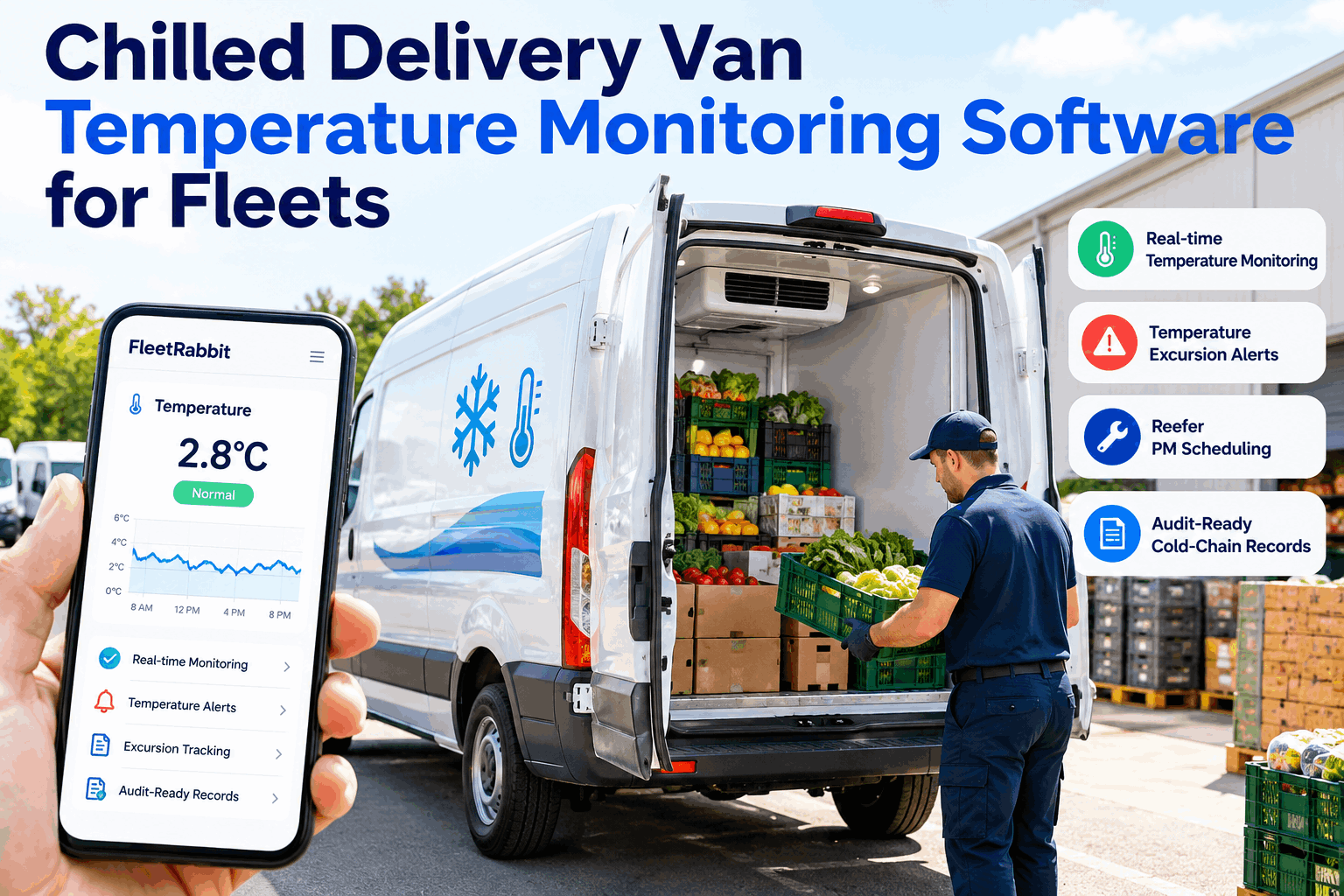
Chilled Delivery Van Temperature Monitoring Software for Fleets
Specialty grocery couriers, pharmaceutical distributors, meal-kit subscription providers, and artisanal dairy logistics managers operate under an unforgiving urban delivery mandate: transporting temperature-sensitive chilled cargo across dense, high-frequency residential and commercial drops. While heavy 53-foot refrigerated reefers cruise along highways with closed doors for hours, a high-roof chilled delivery van operates like an active thermal sieve: stopping sixty to one hundred times per shift, opening rear barn doors or side sliding panels into blistering 95°F summer heat, and navigating stop-and-go downtown traffic that starves direct-drive engine-mounted compressors of critical idle airflow. If an unpasteurized cheese crate, raw meat consignment, or sensitive biometric vaccine encounters temperatures rising past 41°F for even twenty minutes, biological spoilage begins, shelf lives collapse, and receivers reject entire orders at the threshold. Chilled delivery van temperature monitoring software bridges the visibility divide between the driver cab and the insulated cargo hold. By pairing multi-point wireless Bluetooth Low Energy (BLE) temperature probes with automated door-open dwell sensors, J1939 engine-idle telemetry, and predictive reefer maintenance work orders, carriers eliminate delivery rejections, maintain strict FDA FSMA 21 CFR Part 1 Subpart O compliance, and preserve thin operational margins. Book a Demo to see our chilled delivery van real-time temperature monitoring software in action.
Cold-Chain Delivery Van GovernanceFDA FSMA 21 CFR Sanitary TransportSub-30s Wireless BLE Telemetry
Chilled Delivery Van Temperature Monitoring Software for Fleets
An operational engineering guide for refrigerated van operators: deploy multi-point wireless BLE temperature probes, track door dwell time thermal loss, decouple engine compressor run-hours from road miles, and eliminate doorstep food spoilage.
Stop Losing Fresh Cargo to High-Frequency Urban Delivery Door Dwell
Equip your van drivers with sub-minute in-cab temperature alerts, monitor direct-drive compressor runtime, and automate FSMA sanitary compliance for just $5/asset/month.
The Costly Structural Friction of Multi-Drop Urban Van Refrigeration
Operating a fleet of compact or high-roof chilled delivery vans is mechanically distinct from driving heavy linehaul reefer trailers. Vans complete tight neighborhood stops, navigate residential cul-de-sacs, and constantly open cargo bays to blazing asphalt. When management relies on dashboard dials, manual paper clipboards, or single-point analog indicators, costly cold-chain failures are inevitable. Sign up to modernize your chilled delivery van monitoring operations.
Exposure 01
The Engine-Idle Direct-Drive Compressor Deficit
Most refrigerated cargo vans utilize direct-drive transport refrigeration units powered directly by a secondary pulley belt connected to the van's main engine. When a driver idles in downtown traffic or double-parks with the engine idling, compressor displacement drops significantly while ambient radiant heat peaks. Relying on odometer miles ignores the fact that the compressor worked under peak load while stationary, leading to broken drive belts and cooling loss mid-shift. Book a demo to inspect our direct-drive compressor runtime tracking.
Exposure 02
Cumulative Microclimate Thermal Creep Across Multi-Drops
A chilled delivery van driver executes 60 to 100 drops per day, opening rear barn doors or sliding side panels for two to four minutes per delivery. In warm weather, ambient air floods the ceiling and floor layers. If routes have short drive times between stops, the evaporator fan cannot complete a full thermal pulldown before the door opens again, resulting in cargo bay temperatures steadily climbing past 45°F.
Continuous urban air infiltration deposits heavy atmospheric moisture across the evaporator coil fins. If the defrost cycle fails or the rubber drain kazoo clogs with road grime, condensate refreezes inside the ceiling pan. Water spills directly onto top package layers, destroying cardboard packaging and prompting customer load rejections upon threshold delivery. Sign up to deploy predictive defrost cycle diagnostics.
Commercial restaurants and grocery receivers frequently use handheld infrared thermometers at the delivery dock. If surface readings exceed safe storage limits due to localized air pockets near the rear door, the customer refuses the delivery. Without continuous, time-stamped digital probe records proving the core product was held at compliant temperatures, carriers absorb thousands in unrefuted claim write-offs.
The Tiered Chilled Van Preventive Maintenance Matrix
To preserve compressor lifespans and ensure compliance with FDA Food Safety Modernization Act (FSMA) standards, refrigerated vans must follow preventive maintenance intervals triggered by true engine runtime hours and compressor engagement rather than civilian odometer miles. Book a demo to calibrate chilled van PM intervals for your delivery fleet.
Preventive Maintenance Level
Runtime Trigger Interval
Direct-Drive Compressor & Van Chassis Scope
Thermal Failure Prevention Target
PM Level A: Dry Inspection
Every 1,000 Hours / 3,000 Miles
Direct-drive reefer belt tension and idler pulley check; evaporator drain kazoo clean-out; door perimeter gasket tear audit; strip curtain integrity check; BLE probe calibration sweep; chassis brake pad thickness measurement.
Prevent compressor belt snaps, clear condensate drain overflows, and stop warm air intrusion through damaged door seals.
PM Level B: Wet Service
Every 2,500 Hours / 7,500 Miles
PM Level A scope PLUS: full synthetic chassis engine oil and filter flush; primary/secondary fuel filter change; dual-alternator charging output test; 115V electric standby motor contactor inspection; evaporator coil antimicrobial wash.
Prevent auxiliary battery drain under heavy cooling fan draw, maintain starter battery conductance, and prevent biological mold growth.
PM Level C: Heavy Overhaul
Every 5,000 Hours / 15,000 Miles
PM Level A & B scope PLUS: compressor suction/discharge pressure test; expansion valve modulation sweep; receiver tank sight-glass moisture test; chassis transmission fluid flush; cooling loop radiator core pressure bleed.
Deploy IP68 waterproof, NIST-traceable Bluetooth Low Energy probes at the front bulkhead, middle package tier, and rear door threshold. Probes stream microclimate readings every 30 seconds to the in-cab gateway without requiring holes to be drilled through insulated polyurethane body walls, eliminating air and moisture leaks.
Pillar 02
Door Dwell Time & Thermal Pulldown Analytics
Magnetic door sensors link with delivery geofences to track exact roll-up and sliding door open durations. Cloud algorithms differentiate between normal delivery drop-offs and real refrigeration deficits, sounding an immediate in-cab driver chime if compartment air fails to recover within safe pulldown windows. Book a demo to inspect our door dwell anomaly algorithms.
Pillar 03
Direct-Drive Compressor Runtime Decoupling
Capture actual compressor clutch operating hours directly from Thermo King, Carrier Transicold, or Zanotti controllers via CAN-bus and serial connections. Decouple reefer maintenance from truck road miles, automatically triggering belt adjustments, idler pulley swaps, and fluid flushes based on true operating engine workload.
Pillar 04
Automated FSMA 21 CFR Digital Audit Dossiers
Every temperature reading, door open event, and GPS breadcrumb is cryptographically watermarked with satellite coordinates and UTC timestamps. Generate instant 1-click exportable PDF temperature graphs to prove continuous compliance to retail receivers, shippers, and FDA safety auditors. Sign up to automate FSMA cold-chain compliance dossiers.
The Closed-Loop Cold-Chain Delivery & Triage Workflow
The mobile app verifies that the van body has reached its 34°F setpoint and held temperature for fifteen minutes before dispatch departure clearance is granted.
Phase 02
Multi-Drop Stop Execution
As the driver completes delivery stops, magnetic door sensors log opening durations while BLE probes continuously record cargo hold air and package surface temperatures.
Phase 03
Predictive Drift Interception
If internal air climbs above 40°F due to extended door dwell, in-cab audio alerts sound, prompting the driver to verify strip curtains and accelerate door closure. Sign up to enable in-cab predictive drift alerts.
Phase 04
Threshold Handover PDF
The driver generates a certified digital delivery receipt with GPS-watermarked temperature curves on their mobile device, securing immediate customer sign-off.
Platform Comparison: Manual Clipboards vs. Fleet Rabbit Platform
Operating 32 refrigerated high-roof vans delivering organic dairy, unpasteurized juices, and artisanal meats to more than 450 residential and specialty retail customers daily, Urban Fresh Express Logistics struggled with summer product loss. Drivers executing eighty drops per route opened rear doors into 90°F heat, causing cargo bay temperatures to climb past 46°F. Retail receivers and home delivery subscribers rejected warm product shipments, costing the courier over $82,000 annually in scrapped food, emergency re-deliveries, and damaged customer retention.
By implementing Fleet Rabbit at $5/asset/month, the distributor installed three wireless BLE temperature probes per van and integrated direct-drive reefer compressor operating hours with shop maintenance schedules. Real-time door dwell alerts notified drivers when cargo doors remained open past three minutes, and automated thermal drift alerts caught a slipping compressor drive belt during morning staging, enabling mechanics to tension the belt before departure. Over 12 months, temperature excursions dropped by 58%, doorstep product rejections fell to zero, and the company saved $76,000 in prevented food waste and eliminated emergency re-delivery runs.
Frequently Asked Questions
Why is temperature monitoring critical for chilled multi-drop delivery vans?
Chilled delivery vans operate with small cargo volumes that lose thermal holding quickly when doors open. Unlike large refrigerated trailers that make one or two bulk deliveries, vans execute sixty to one hundred drops per shift. Every time the door opens, warm ambient air rushes inside. Without continuous sub-minute monitoring and driver alerts, cumulative thermal creep pushes perishable dairy, meats, and prepared meals above safe 41°F limits, accelerating bacterial growth and causing delivery rejections.
How does door dwell tracking help prevent temperature excursions on urban routes?
Delivery drivers open rear or side doors dozens of times per shift. Fleet Rabbit uses magnetic door sensors linked with delivery geofences to measure open durations. If doors remain open past safe limits in warm ambient conditions, the system fires in-cab alerts to the driver, prompting them to check strip curtains and close doors promptly to protect cargo holding temperatures.
Can drivers access temperature data in concrete delivery docks without cellular reception?
Yes. Fleet Rabbit features an offline-first mobile architecture. All BLE probe telemetry, door events, and refrigeration diagnostics buffer locally on the in-cab gateway and driver smartphone app. Drivers can view real-time microclimate conditions via local Bluetooth connection inside underground parking structures or concrete staging docks, and all buffered data auto-syncs to dispatch once cellular service returns.
Why is direct-drive compressor engine-hour maintenance better than odometer mileage maintenance?
Refrigerated delivery vans spend extended periods idling at curbsides and loading docks while the refrigeration unit runs continuously under heavy thermal load. A van driving only 25 miles in a congested urban route may run its direct-drive compressor for eight hours. Scheduling servicing based on van driving miles ignores genuine compressor wear, leading to drive belt snaps and unexpected cooling failures.
What are the pricing details and contract terms for Fleet Rabbit's software?
Fleet Rabbit is priced at a flat rate of $5 per active chilled delivery van per month billed annually. This includes complete access to real-time wireless BLE temperature monitoring, direct-drive reefer compressor engine-hour PM scheduling, door dwell analytics, mobile driver proof-of-delivery tools, and FSMA compliance archives. We provide a 14-day free live trial on up to 3 assets with zero setup fees or locked enterprise contracts.
Ready to Automate Chilled Delivery Van Temperature Monitoring?
Eliminate doorstep product refusals, automate reefer engine-hour maintenance, and ensure 100% audit-ready cold-chain compliance for just $5/asset/month.