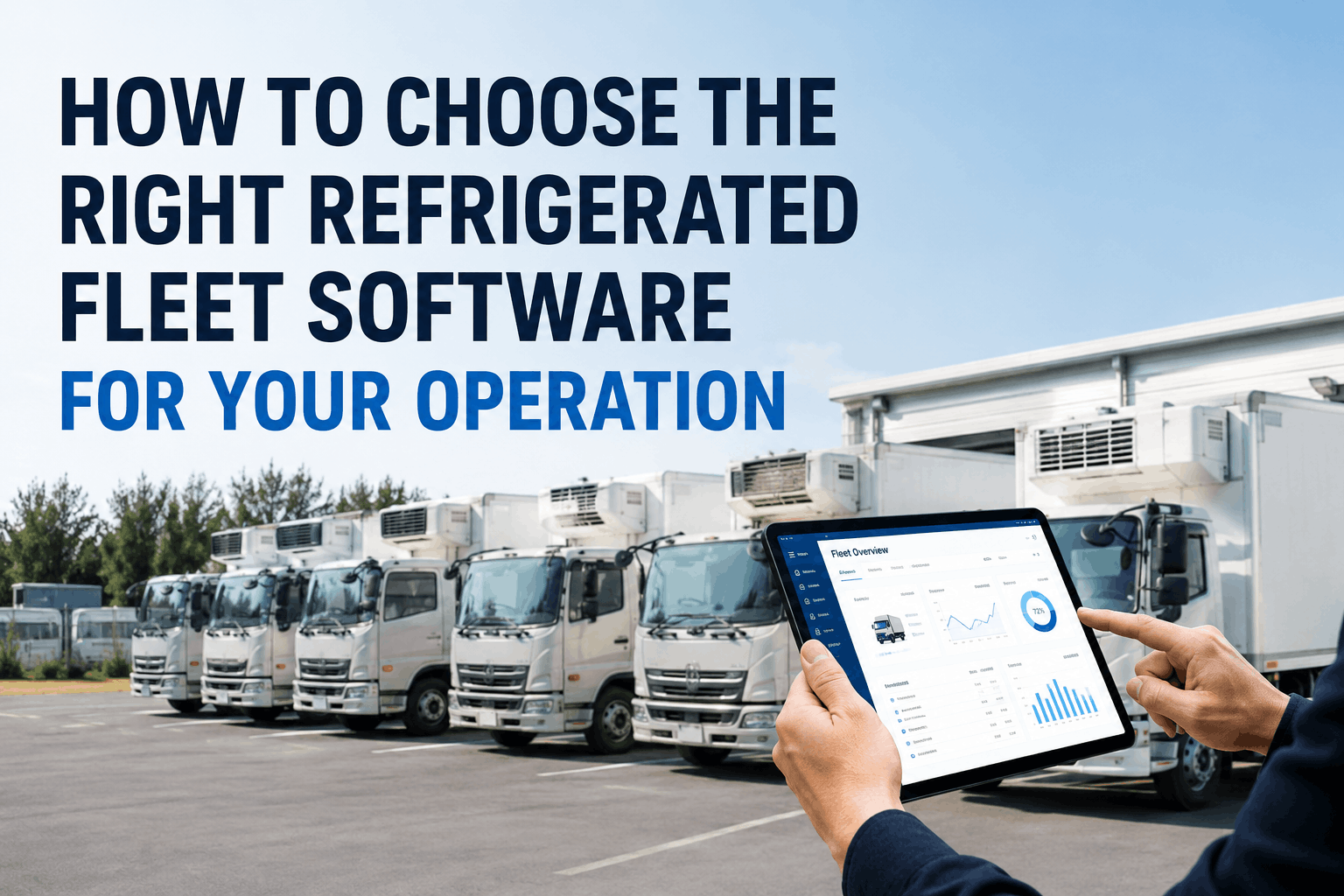
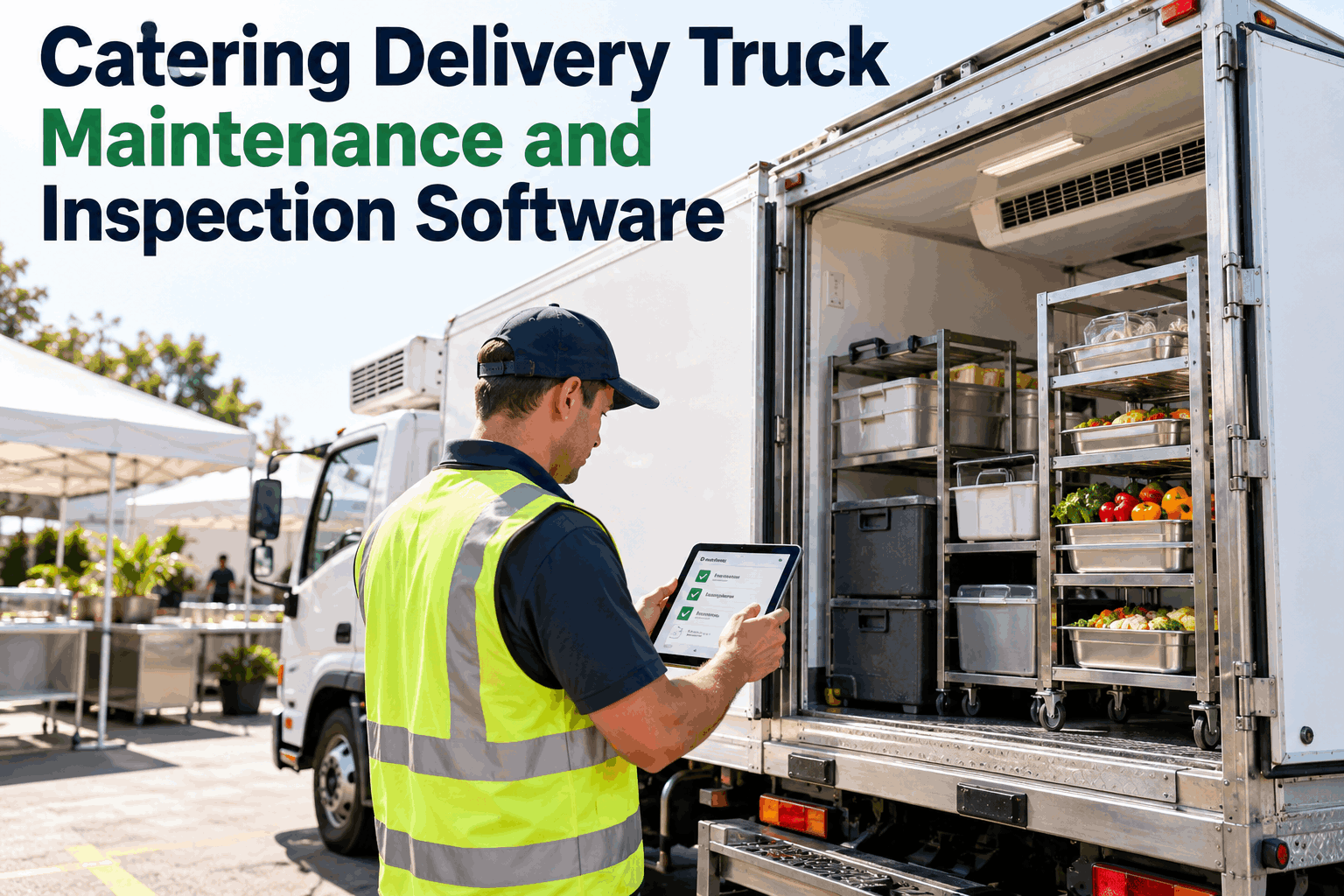
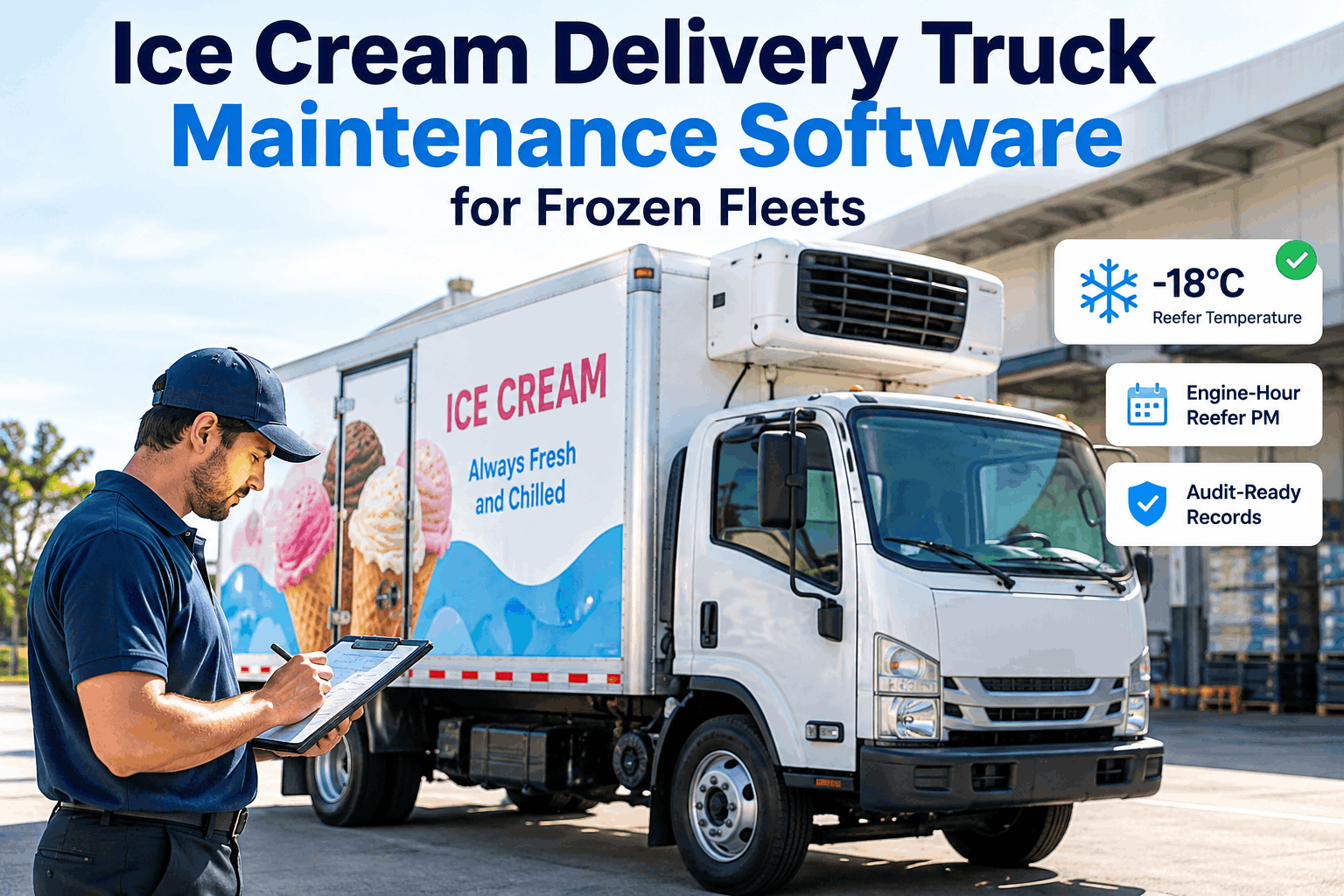
Choosing refrigerated fleet software is not the same decision as choosing general fleet management software. A platform that excels at tracking delivery routes, managing driver hours, and scheduling routine oil changes for a dry goods fleet may have no meaningful capability for the three operational requirements that define refrigerated food distribution: continuous compartment temperature monitoringwith threshold alerting, sanitation documentation that satisfies FSMA's Sanitary Transportation rule, and compliance record generation that holds up under an FDA inspection or a major retailer's food safety audit. Yet the majority of food and beverage fleet operators evaluating software options are working from evaluation criteria designed for general fleet management — and selecting platforms that meet those criteria while leaving the cold chain compliance and spoilage prevention requirements they actually depend on entirely unaddressed. The result is a software investment that improves route efficiency while leaving the operational and regulatory gaps that cost the fleet money in spoilage write-offs, customer contract terminations, and compliance citations exactly where they were before implementation. This guide provides the selection criteria, evaluation questions, and capability benchmarks food and beverage distribution operators need to identify refrigerated fleet software that genuinely addresses every requirement their operation depends on. Explore FleetRabbit for your refrigerated fleet today or book a cold chain platform demo with our team.
FleetRabbit Cold Chain Fleet Intelligence
How to Choose the Right Refrigerated Fleet Software for Your Operation
The complete selection guide for food and beverage distribution operators — covering temperature monitoring, FSMA compliance, sanitation tracking, reefer maintenance, and every capability that separates purpose-built cold chain fleet software from general fleet management platforms.
68%Of cold chain food losses caused by temperature control failures during transit
$35B+Annual US food loss in the cold chain — largely preventable with the right software
2 YearsFSMA minimum record retention requirement — your software must support this
<60sAudit package generation time — the standard purpose-built cold chain software must meet
Why General Fleet Software Fails Refrigerated Operations — The Three Critical Gaps
Most fleet management software platforms are built around three core capabilities: GPS tracking, driver management, and vehicle maintenance scheduling. These capabilities are genuinely useful for refrigerated fleets — but they address roughly 40% of what a food and beverage distribution operation actually needs from its fleet software. The remaining 60% — continuous temperature monitoring, cold chain compliance documentation, sanitation record management, FSMA audit readiness, and spoilage event prevention — are either absent entirely from general fleet platforms or addressed through bolt-on modules that lack the operational depth and integration that cold chain compliance requires.
Gap 1 — No Cold Chain Monitoring
What General Platforms Miss
General fleet software tracks where vehicles are, not what temperature is inside them. For a dry freight operation, this is fine. For a refrigerated food fleet, the absence of real-time compartment temperature monitoring means that every temperature exceedance — reefer drift, door-open spikes, extended idle cooling loss — goes undetected until the receiver refuses the load or an FDA inspector asks for the temperature record that doesn't exist. Purpose-built cold chain software integrates IoT temperature sensors with configurable threshold alerting, giving dispatchers a 90-second alert window to intervene before product is compromised.
Gap 2 — No FSMA Compliance Infrastructure
What General Platforms Miss
FSMA's Sanitary Transportation rule requires a specific category of compliance evidence that general fleet software doesn't generate: continuous temperature logs, sanitation wash event records with chemical and concentration detail, pre-trip inspection records with previous load compatibility confirmation, and driver training documentation linked to each route. General platforms may generate inspection records and maintenance histories — but they don't capture the food-specific compliance evidence that FSMA mandates and that FDA inspectors specifically request. Without it, fleets are FSMA non-compliant regardless of how well-organised their general fleet records are.
Gap 3 — No Reefer-Specific Maintenance
What General Platforms Miss
Refrigerated vehicles have two maintenance requirements: the vehicle itself, and the refrigeration unit. General fleet software manages vehicle maintenance — oil changes, tyre rotations, brake services. It does not track reefer unit runtime hours, fuel consumption, compressor performance, fault codes, or the manufacturer-specified PM intervals that reefer unit reliability depends on. A fleet that manages vehicle PM precisely while ignoring reefer unit maintenance is protecting the carrier while losing product — because reefer unit failures mid-route are the most common cause of total load losses in food distribution.
Seven Selection Criteria for Refrigerated Fleet Software — Evaluated Honestly
The criteria below represent the capability areas that food and beverage distribution operators must evaluate when selecting refrigerated fleet software — not the criteria that general fleet software vendors use to present their platforms in the best possible light. For each criterion, we have included the questions you should ask every vendor in your evaluation, and the standard that purpose-built cold chain software should meet.
01
Real-Time Temperature Monitoring Capability
The fundamental cold chain capability. Evaluate: Does the platform use its own IoT sensors or rely on reefer unit data exports that create latency? What is the minimum reading interval — and does "real-time" mean 60 seconds or 15 minutes? Does the platform support multi-zone monitoring with independent thresholds per zone? Are alerts delivered within 90 seconds of a threshold breach? Is the complete temperature log stored with immutable timestamps for FSMA two-year retention? Does the platform correlate temperature data with door events and GPS location for post-route analysis? FleetRabbit delivers 60-second sensor readings, sub-90-second threshold alerts, multi-zone independent monitoring, and immutable cloud-stored temperature logs per route.
02
FSMA Compliance Documentation Generation
Ask every vendor specifically: which elements of FSMA 21 CFR Part 1, Subpart O does your platform generate documentation for — and in what format? A vendor who cannot answer this question by regulatory citation is not selling purpose-built food fleet compliance software. You need documentation for: continuous temperature control (§1.908d), vehicle sanitation procedures (§1.908b), wash event records (§1.908c), and driver training (§1.910). You need two-year immutable record retention (§1.912). And you need the ability to generate a complete compliance package for any route, vehicle, or date range in under 60 seconds when an FDA inspector requests it. If the platform cannot do this, it is not FSMA compliance software — it is general fleet software with FSMA mentioned in the marketing.
03
Sanitation Log and Wash Event Recordkeeping
FSMA requires wash event records to include wash facility identity, cleaning and sanitising substances used, their concentrations, and the date and time the cleaning was performed. Ask vendors: does your platform capture these specific fields at the point of the wash event — not retrospectively? Does mandatory field enforcement prevent partial submissions? Are wash records linked to the vehicle's compliance profile and searchable by vehicle, date, and wash type? Can wash records be produced in under 60 seconds for a specific vehicle on a specific date? Paper wash certificate filing systems and generic document upload functions do not satisfy this requirement — the record must be captured digitally at the point of the wash event with all required fields enforced.
04
Reefer Unit Maintenance and Performance Tracking
Refrigeration unit maintenance is not the same as vehicle maintenance. Evaluate: does the platform track reefer unit runtime hours independently from vehicle engine hours? Does it support reefer-specific PM intervals by runtime hour and calendar threshold simultaneously? Does it monitor reefer fault codes and performance metrics — fuel consumption, temperature recovery times, compressor cycling — rather than just vehicle-level data? Does the platform generate reefer-specific maintenance work orders at threshold and track completion with technician attribution and parts used? Reefer unit reliability is the single largest driver of mid-route cold chain failure — software that treats the reefer as an afterthought is not fit for purpose in a food distribution operation.
05
Pre-Trip Inspection Workflow Quality
Pre-trip inspections for refrigerated food vehicles must cover food-specific requirements that general vehicle inspection checklists don't include: reefer pre-cool verification, door seal integrity, previous load compatibility assessment, sensor calibration status, and sanitation confirmation. Evaluate: are inspection templates configurable to include these food-specific items? Does mandatory field enforcement prevent partial submissions? Is photo capture required for flagged items — with the photos stored and linked to the inspection record? Do failed inspection items auto-generate maintenance work orders and block dispatch clearance until resolved? Does the platform support offline inspection completion in cellular dead zones at loading docks and cold storage facilities? Generic DVIR tools that do not support food-specific inspection items are not adequate for FSMA-compliant refrigerated fleet operations.
06
Multi-Shipper and Multi-Depot Configuration
Third-party logistics providers transporting food for multiple shipper accounts need software that applies the correct shipper's food safety plan requirements — temperature thresholds, sanitation procedures, compliance report formats — to each load, automatically, without manual reconfiguration between routes. Evaluate: does the platform support per-shipper threshold profiles applied at the route or load level? Can compliance reports be formatted to match each shipper's documentation requirements? For multi-depot operations: does the platform provide site-level compliance dashboards alongside a consolidated enterprise view? Can compliance reports be generated per depot for site-level audits while maintaining a fleet-wide view for corporate food safety management? Platforms that require manual threshold reconfiguration per load or that cannot generate site-specific compliance packages are not suitable for 3PL or multi-depot operations.
07
Implementation Timeline and Onboarding Quality
Ask every vendor for their typical deployment timeline — from contract to first vehicle live — and what that timeline includes. Purpose-built cold chain software should have the first vehicles live within five days of hardware delivery, with full fleet monitoring active within two to four weeks for most operations. Onboarding should include a review of your existing written sanitation procedures against FSMA requirements, configuration of inspection checklists to reflect your specific procedures, threshold configuration by commodity class, and alert escalation protocol design. Platforms that offer only self-serve onboarding for cold chain compliance deployments — where the compliance configuration burden falls entirely on your team — are not providing the implementation quality that food fleet compliance requires. Misconfigured thresholds and incomplete inspection templates discovered six months after deployment are not a software quality issue — they are an onboarding quality issue.
FleetRabbit Cold Chain Fleet Intelligence
Evaluate FleetRabbit Against Every Selection Criterion on This List. It Was Built to Meet All Seven.
FleetRabbit's refrigerated fleet platform delivers real-time temperature monitoring, FSMA compliance documentation, digital sanitation logs, reefer-specific maintenance tracking, food-specific inspection workflows, multi-shipper configuration, and managed onboarding — purpose-built for food and beverage distribution operations from day one of deployment.
How FleetRabbit Performs Across Fleet Operation Types
The right refrigerated fleet software is not a universal platform applied identically to every food distribution operation. A regional fresh produce distributor running 15 single-temperature vans has different operational priorities than a national 3PL food logistics carrier running 300 multi-temperature trailers for 40 shipper accounts. FleetRabbit's cold chain platform configures to the specific operational profile of each fleet type — without requiring separate product tiers or extended customisation timelines.
Regional Food Distributors
Single-depot operations running fewer than 50 refrigerated vehicles need cold chain software that deploys quickly, requires minimal IT involvement, and generates compliance documentation without dedicated compliance management staff. FleetRabbit's standard regional deployment is complete within two weeks, with FSMA-aligned templates, temperature monitoring, and sanitation workflows ready from day one.
Multi-Temperature Carriers
Carriers operating multi-zone trailers with frozen, chilled, and ambient compartments simultaneously require zone-independent temperature monitoring, commodity-specific threshold configuration, and compartment-level compliance records. FleetRabbit supports per-zone sensor placement, independent alert thresholds, and inter-zone deviation alerts for bulkhead integrity monitoring.
3PL Food Logistics
Third-party logistics providers transporting food for multiple shipper accounts need per-shipper threshold profiles, load-specific monitoring configurations, and customer-branded compliance reports applied at the route level. FleetRabbit applies the correct shipper food safety plan requirements automatically for each load without manual reconfiguration between deliveries.
National Food Networks
National food logistics operations managing hundreds of vehicles across multiple depots require consolidated compliance reporting at the fleet level without losing vehicle-level granularity for site-specific audits. FleetRabbit's multi-depot dashboard consolidates compliance metrics across all sites while retaining per-depot and per-vehicle compliance record retrieval on demand.
From the Field
"We evaluated four refrigerated fleet software platforms before selecting FleetRabbit. Three of them were general fleet management tools with cold chain features described in their marketing that turned out to be temperature data pulled from the reefer unit's own display — not independent IoT monitoring, and with no alerting capability. One of them offered a genuine temperature monitoring module but had no FSMA compliance documentation capability at all. We realised during the evaluation process that we didn't have the criteria right going in — we were evaluating based on interface quality and route optimisation features rather than the compliance documentation requirements that were actually creating risk for our business. FleetRabbit was the only platform in the evaluation that could specifically answer every FSMA regulatory citation question we put to them and demonstrate the documentation output for each requirement. In our first FDA-related customer supplier audit after implementation, the auditor reviewed eight delivery records across a 90-day window. Every temperature log, sanitation record, and driver training confirmation was in the system and retrieved in under three minutes. Zero findings. That outcome justified the entire evaluation process."
VP of Logistics and Compliance
·
Regional Fresh and Frozen Food Distributor — 38 Refrigerated Vehicles — FleetRabbit Cold Chain Active
Frequently Asked Questions
QHow do I know if a refrigerated fleet software platform genuinely supports FSMA compliance or just mentions it in marketing?
Ask the vendor to demonstrate — not describe — compliance documentation output for each of the following FSMA Sanitary Transportation rule requirements: continuous temperature log per route (§1.908d), sanitation wash event record with mandatory fields (§1.908c), pre-trip sanitation inspection record with previous load compatibility confirmation (§1.908b), and driver training documentation linked to route records (§1.910). Ask them to generate a complete compliance package for a sample route in under 60 seconds while you watch. Ask them how their platform handles the two-year record retention requirement (§1.912) and whether records are stored with immutable timestamps that cannot be retroactively altered. If a vendor cannot demonstrate these outputs live in a product demo, they are not selling FSMA compliance software — they are selling general fleet software with FSMA mentioned in their feature list.
QWhat is the difference between reefer unit data and independent IoT temperature monitoring — and why does it matter for compliance?
Reefer unit data — pulled from the refrigeration unit's own controller via a telematics connection — provides the setpoint, the unit's discharge air temperature, and runtime information. It does not provide an independent measurement of actual compartment temperature at the product level, which is what FSMA's temperature control requirement is designed to ensure. Independent IoT sensors measure actual compartment air temperature at the return-air stream — the most accurate representation of the product environment — and transmit that data on a schedule determined by the monitoring system, not by the reefer unit's own data export cycle. For compliance purposes, the distinction matters because FDA inspectors reviewing temperature documentation look for evidence of continuous, independent temperature control monitoring — not reefer unit self-reporting, which is subject to sensor calibration drift and unit-level data quality that the carrier cannot independently verify.
Schedule a demo to see FleetRabbit's independent IoT monitoring architecture compared to reefer unit data approaches.
QHow long does it take to deploy refrigerated fleet software, and what should the onboarding process cover?
Purpose-built cold chain fleet software should have the first vehicles live within five days of hardware delivery, with full fleet monitoring active within two to four weeks for most operations. The onboarding process should include: a review of your existing written sanitation procedures against FSMA requirements; configuration of pre-trip inspection checklists to reflect your specific sanitation procedures and commodity classes; temperature threshold configuration by commodity class and shipper food safety plan; alert escalation protocol design based on your dispatcher and management structure; driver training record import and renewal cadence configuration; and a compliance report template review against your customer audit documentation requirements. Platforms that offer self-serve onboarding without food safety compliance specialist involvement are placing the configuration burden on your team — and misconfigured thresholds, incomplete inspection templates, and missing mandatory fields discovered during an audit are not recoverable after the fact. FleetRabbit's onboarding is managed by food fleet compliance specialists who own the configuration outcome.
Sign up for a free account to begin the onboarding assessment for your fleet.
FleetRabbit Cold Chain Fleet Intelligence
The Right Refrigerated Fleet Software Meets Every Criterion. FleetRabbit Was Built To.
FleetRabbit gives food and beverage distribution fleets real-time IoT temperature monitoring, FSMA compliance documentation, digital sanitation logs, reefer-specific maintenance scheduling, food-specific inspection workflows, and managed onboarding — the complete cold chain fleet platform built for operations where product integrity and regulatory compliance are non-negotiable.
Real-Time Temperature Monitoring
FSMA Compliance Documentation
Digital Sanitation Logs
Reefer Maintenance Tracking
Multi-Shipper Configuration
Managed Onboarding
May 26, 2026
By Taylor
All Posts