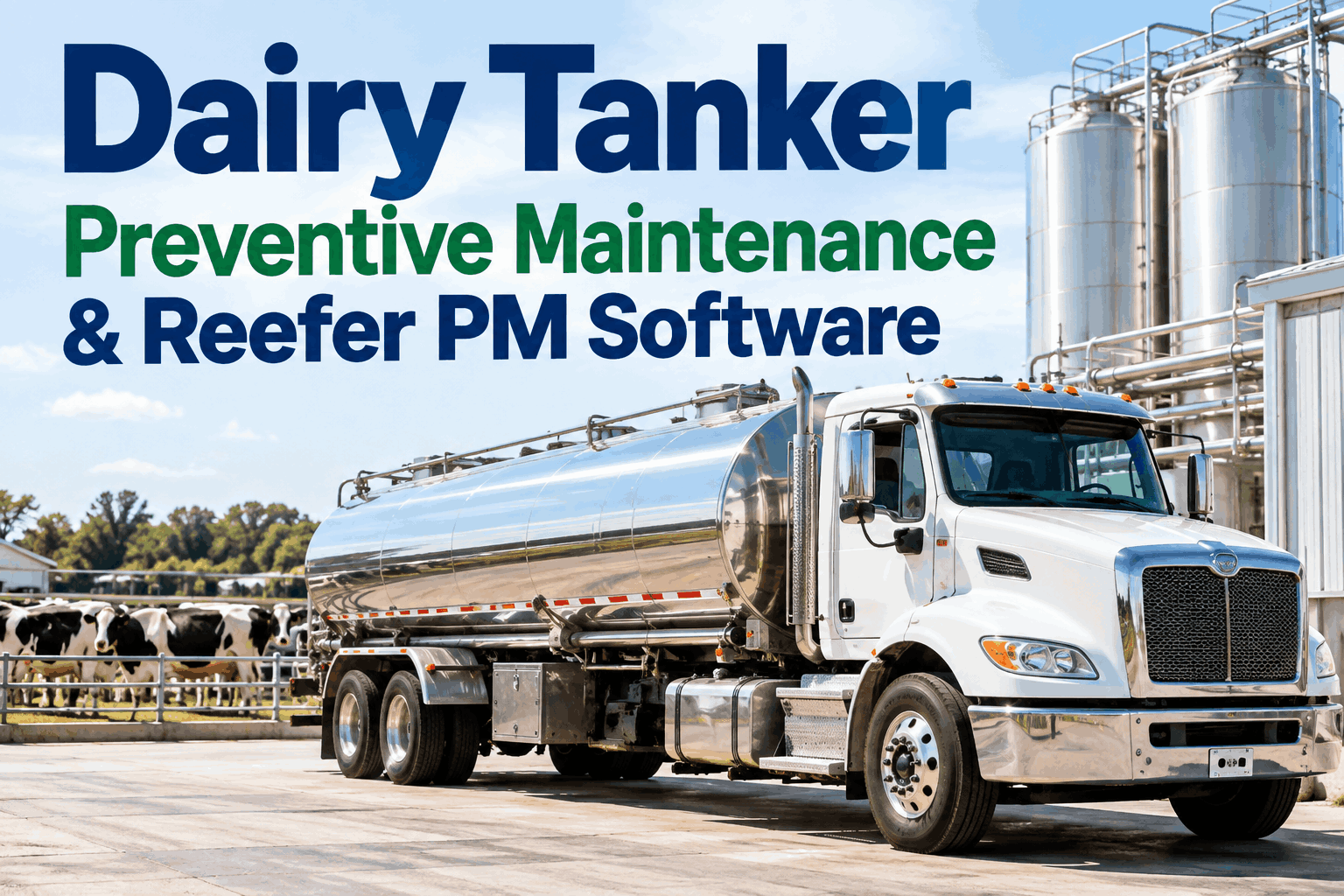
A dairy tanker isn't a box with a compressor, it's a tank with a pump, and that difference changes almost everything about how it should be maintained. There's no cargo door cycling on every stop. Instead there's a wash-out record that has to exist for every single load, a PTO-driven pump that runs hard during every transfer, and sanitary hoses and gaskets that wear on a schedule that has nothing to do with miles. See how FleetRabbit schedules PM around what a dairy tanker actually does.
Dairy Tanker Preventive Maintenance Software Built for Tank, Pump and Wash-Out Record
Schedule engine-hour reefer and pump PM, track temperature where your telematics supplies it, and keep a wash-out record behind every single load.
Four Systems, Four Different Clocks
A dairy tanker asks a lot of a handful of specific systems, and each one wears on its own rhythm. Treating the whole rig as one asset on one schedule means at least a few of these get checked too often, or not often enough.
The Wash-Out Record Is Not Optional
A dairy tanker typically requires a documented wash-out between loads, since the same tank interior that carried milk needs to be clean enough to carry the next batch without cross-contamination. That record, when it happened, who signed off on it, matters as much as the maintenance history, and it needs to exist for every single haul, not just the ones someone remembers to log.
Never load a tanker without a wash-out record attached
Digital wash-out logs, tied to the vehicle, every time. Free for your first three vehicles.
Hoses and Gaskets Wear on Use, Not Miles
A sanitary hose gets connected and disconnected at every pickup and every delivery, and that repeated handling, along with the cleaning chemicals used on it, breaks it down regardless of how far the tanker actually traveled that week. Tracking these by a connect-cycle count or a fixed calendar replacement, rather than by mileage, catches wear that a standard PM plan would miss entirely.
Illustrative example. Set your own replacement intervals from your fittings' manufacturer guidance.
What Should Trigger Each Service Item
| Item | Best trigger |
|---|---|
| Pump / PTO service | Engine hours |
| Sanitary hoses | Calendar or connect-cycle count |
| Gaskets and fittings | Calendar, checked at every wash-out |
| Tank interior inspection | Calendar, paired with wash-out |
| Tractor chassis (oil, brakes, tires) | Miles or engine hours |
| Annual DOT inspection | Calendar, regulatory |
What FleetRabbit Gives a Dairy Tanker Fleet
Frequently Asked Questions
It's built around a tank, pump and sanitary fittings rather than a cargo box, and its wear points, hoses, gaskets and the PTO-driven pump, follow use patterns that a standard box-trailer schedule doesn't cover.
The pump works hardest during loading and unloading rather than while driving, so engine hours reflect that wear far better than mileage does.
It depends on the fitting manufacturer and how heavily the hose is used, but tracking by a connect-cycle count or fixed calendar interval catches wear that mileage-based scheduling misses.
Yes. A digital wash-out record can be logged and attached to the vehicle for every load, rather than relying on a paper log that may or may not make it back to the office.
Yes. Start free with three vehicles and scale up as your fleet grows.
Every Load Clean. Every System on Schedule.
Engine-hour pump PM, digital wash-out records and audit-ready history in one place. Free for your first three vehicles.