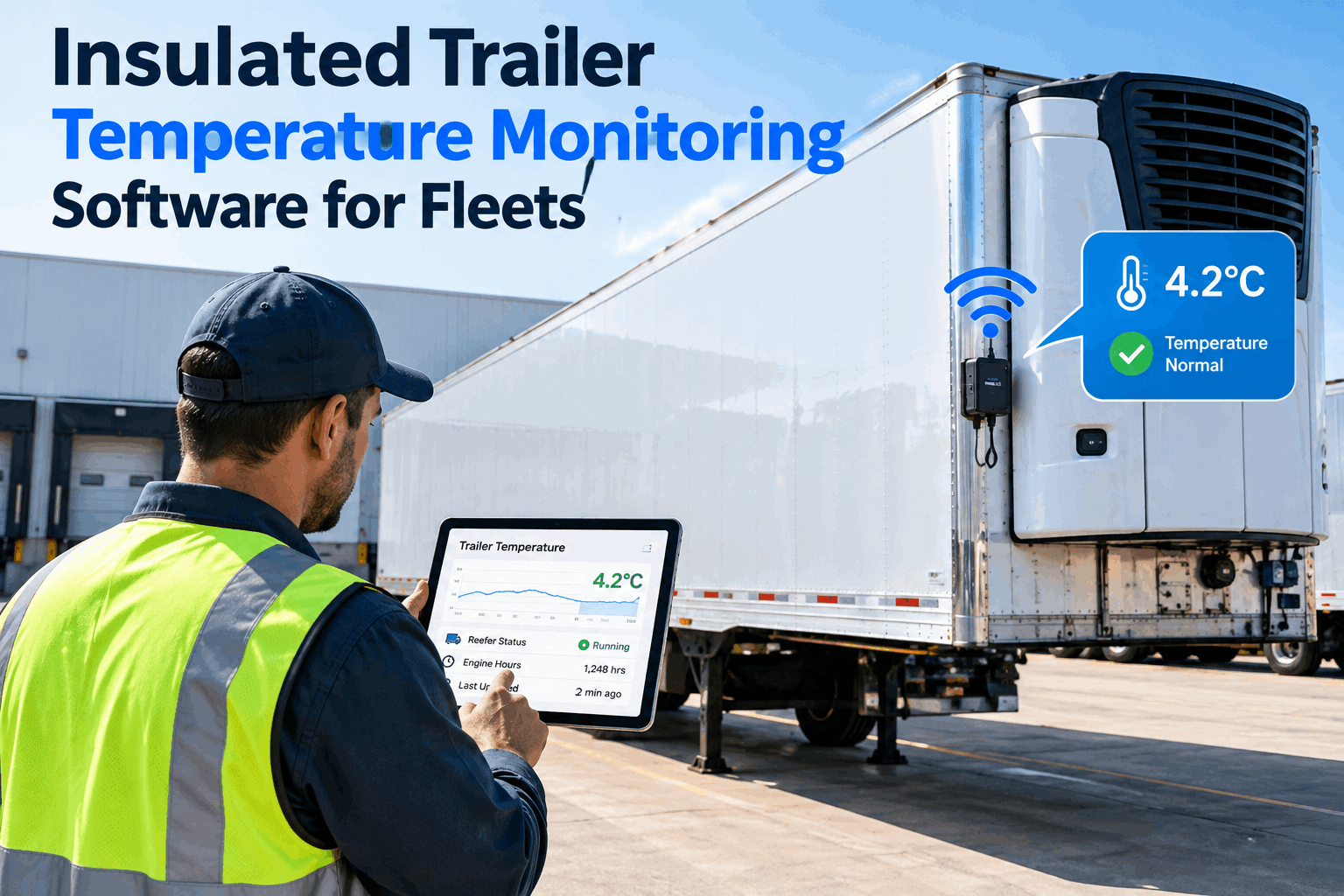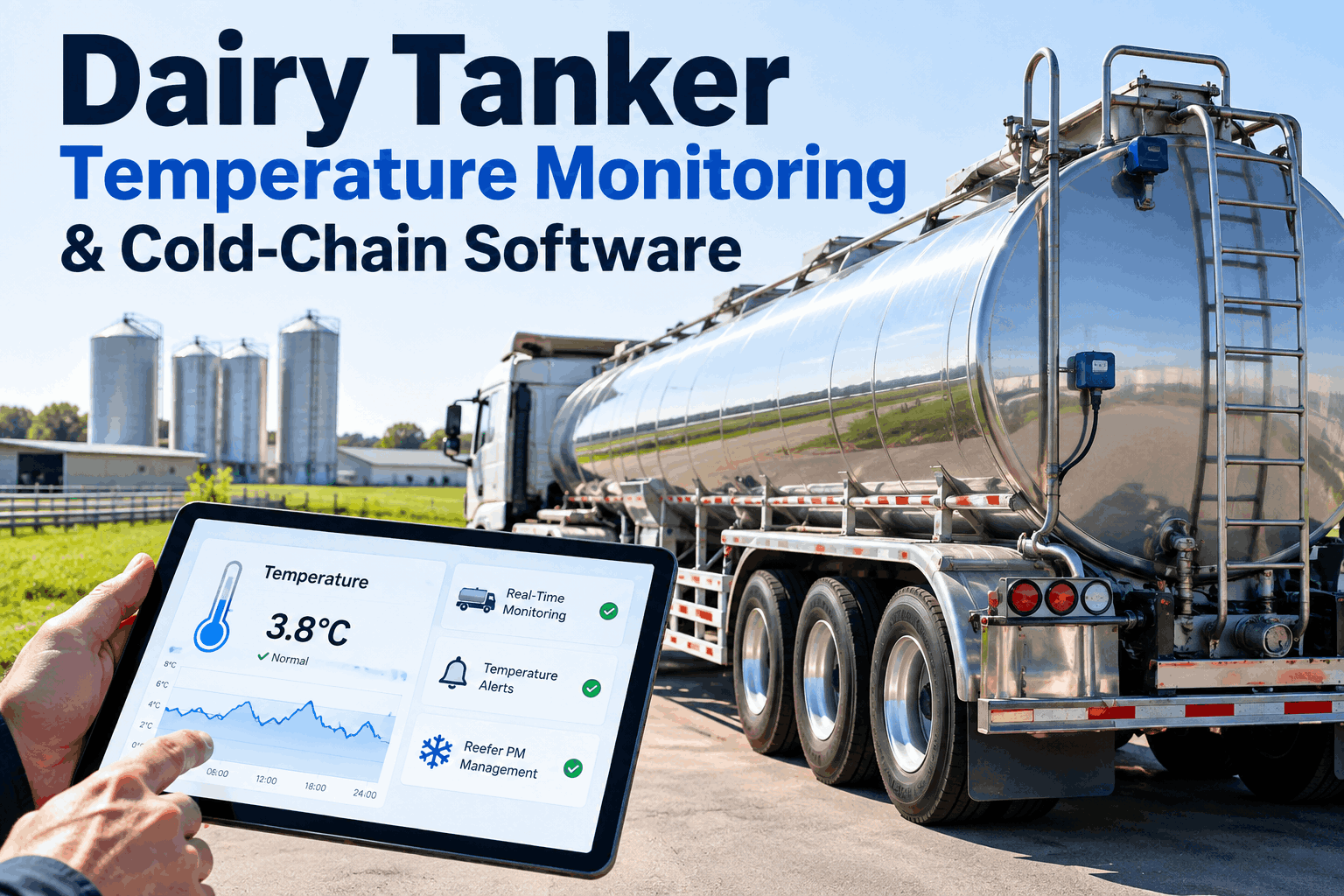
Most cold-chain temperature monitoring is about catching a problem in time. Dairy temperature monitoring is that, plus something more: a continuous, unbroken log from the moment milk is picked up to the moment it's delivered, because that record is often what's actually being checked, not just the alert. A single missing hour in the log can raise more questions than a real temperature excursion would. See how FleetRabbit keeps that record continuous.
Dairy Tanker Temperature Monitoring Software for a Record That Never Has a Gap
Log temperature continuously from pickup to delivery, get real-time alerts on a drift, and produce a complete record for every single load.
Alerts Are Necessary. A Complete Log Is the Point.
An alert tells someone that something is wrong right now. That matters, but it isn't the whole job. Dairy transport typically needs to show what the temperature was throughout the entire haul, not just confirm nothing went wrong. A system built only around alerts can miss the actual requirement: an unbroken record, start to finish, that can be handed over the moment someone asks for it.
Three Checkpoints, One Continuous Thread
Starting temperature logged at the point of collection.
Continuous readings for the full duration of the haul.
Final reading confirms the load arrived within range.
What matters isn't just that each of these three points looks fine on its own. It's that the line connecting them has no gaps, since a monitoring system that only checks in a few times a trip can miss a drift that happened and corrected itself before the next reading.
Give every load a complete temperature story
Continuous logging, real-time alerts and records ready whenever a plant or auditor asks. Free for your first three vehicles.
What an Alert Should Actually Trigger
Temperature alerts are available where your telematics or sensor provider supplies temperature data.
Behind the Reading, the Reefer Still Needs Its Own PM
Accurate temperature data depends on equipment that's actually working correctly, which means the cooling system behind that reading needs its own preventive maintenance. Reefer units on a dairy tanker typically run on engine hours rather than trailer mileage, since the unit works hardest during transfer and holding, not highway travel.
What a Record Should Be Ready to Show
FSMA's sanitary transportation rule and state Grade A milk regulations both touch on temperature control during transport. Confirm exact requirements with your compliance team.
What FleetRabbit Gives a Dairy Fleet
Frequently Asked Questions
An alert catches a problem, but dairy transport typically needs a full record of the entire haul, not just confirmation that nothing went wrong. Continuous logging fills that gap.
Requirements are set by state Grade A milk regulations built on the Pasteurized Milk Ordinance framework. Confirm your specific thresholds with your compliance team.
Driver and dispatch are notified so there's time to respond, and the event is logged either way, whether or not it becomes a full excursion.
Accurate readings depend on equipment that's actually working. Reefer PM on engine hours keeps the cooling system itself reliable, not just measured.
Yes. Start free with three vehicles and scale up as your fleet grows.
A Complete Temperature Record, Every Load
Continuous logging, real-time alerts and reefer PM in one place, ready whenever a plant or auditor asks.