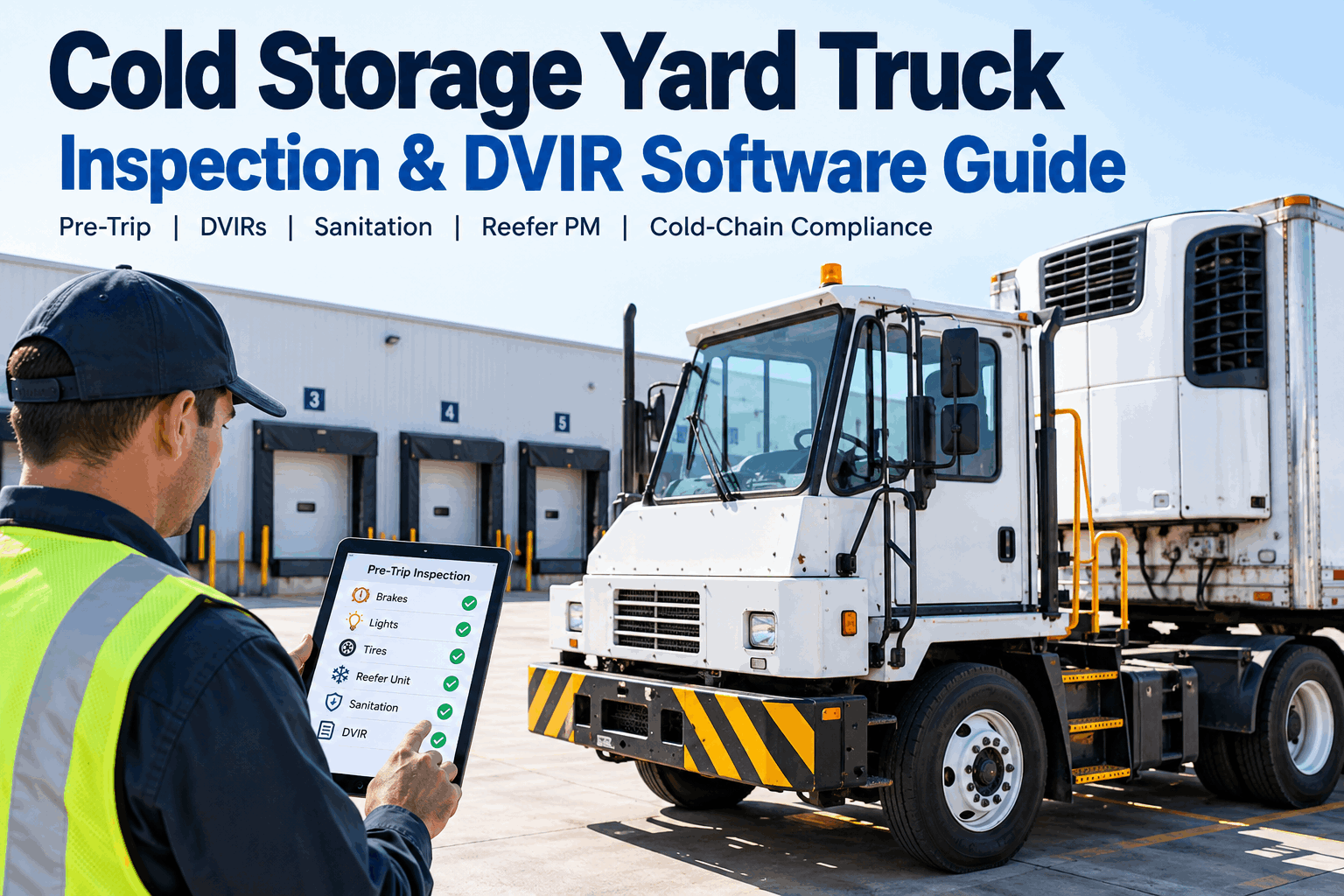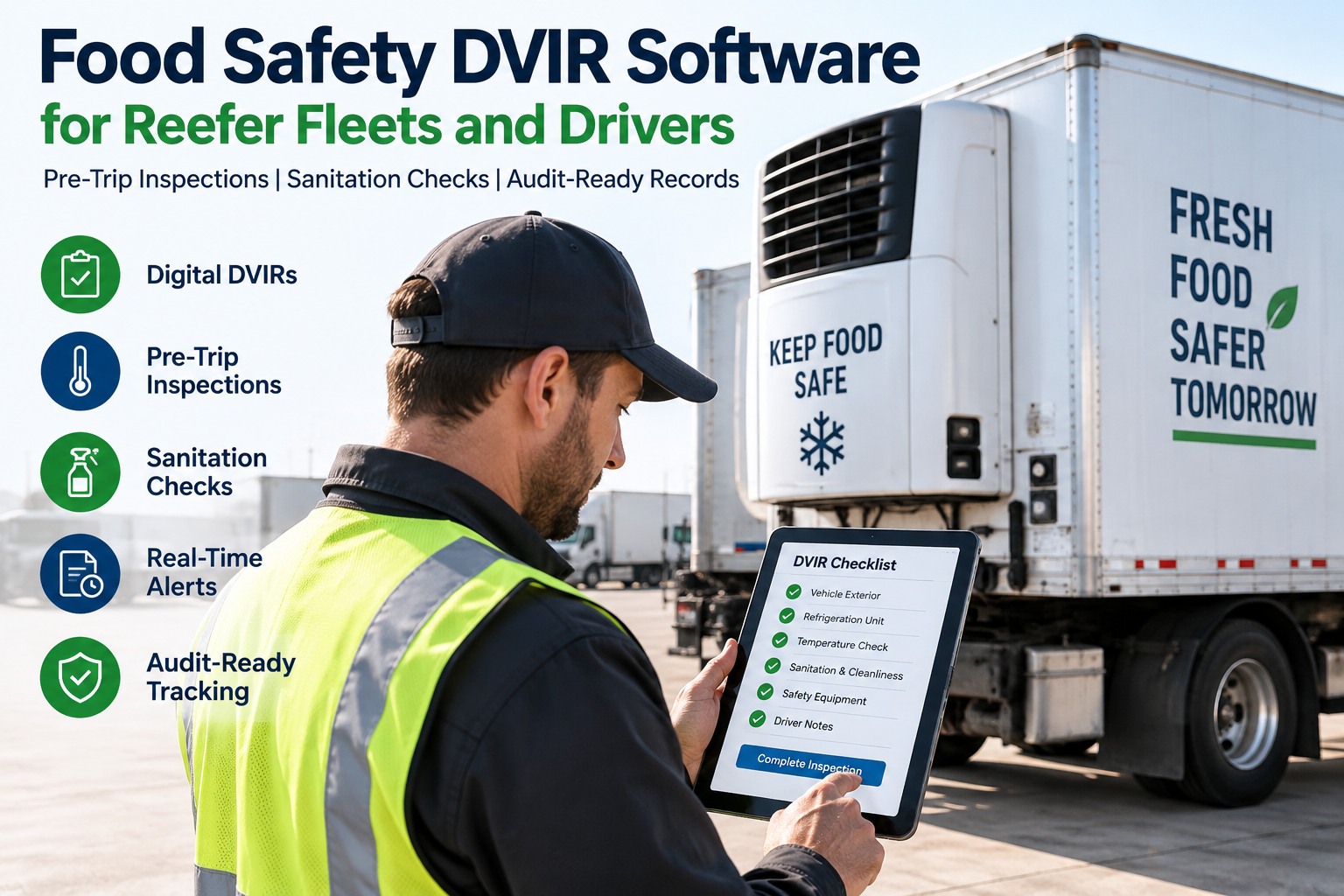
Commercial food and beverage transport operations, perishable logistics carriers, and temperature-controlled distribution fleets manage critical food-safety handoffs under intensifying regulatory oversight. Standard Department of Transportation (DOT) electronic driver vehicle inspection reports (eDVIR) track mechanical roadworthiness—such as brake stroke clearances, tire tread depths, steering linkages, and exterior lamps—but leave carriers completely blind to the sanitary condition of the cargo compartment. Under the FDA Food Safety Modernization Act (FSMA Rule 204 and the Sanitary Transportation Rule), carriers are legally mandated to verify and document that refrigerated trailers, straight trucks, and multi-temp bulkheads are chemically sanitized, free of physical debris and cross-contact allergens, structurally sound without delaminated fiberglass wall panels, and pre-cooled to target cargo setpoints prior to loading. When drivers rely on paper inspection clipboards or generic dry-van inspection apps, critical sanitation failures slip past dispatch, resulting in immediate loading dock turnaways, costly load refusals, and audit penalties during federal food safety reviews. Implementing specialized food-safety DVIR software equips drivers with mobile photographic verification, automated reefer controller diagnostics, and digital washout certificate pairing before the tractor pulls out of the terminal. To discover how our mobile driver inspection workflows protect perishable freight and streamline terminal departures, book a technical walkthrough demo with our cold chain engineering team or launch your driver inspection rosters immediately via our free platform sign up.
Food Safety DVIR Software for Reefer Fleets and Drivers
A comprehensive mobile-first operational guide for refrigerated fleet safety directors and transportation managers. Modernize pre-trip and post-trip mechanical walkarounds with integrated food sanitation checks, digital wash validation, and automated defect triage.
Aluminum duct floor cleared of debris; zero chemical or biological odor detected; scuff plates scrubbed.
Vinyl ceiling chute intact with zero tears; front return air bulkhead unobstructed; rear floor drain kazoos cleared.
Setpoint: 34.0°F • Return Air: 48.2°F • Pulldown dwell exceeded 45 mins. DTC: P0122 (Slow Air Pulldown).
Modernize Your Food Safety Inspections Across Every Reefer Run
Eliminate paper pre-trip delays, automate trailer sanitation auditing, trigger instant shop work orders for reefer faults, and maintain total FSMA compliance starting from $3/vehicle/month with no hardware lock-in.
The Functional Divide: Mechanical DOT Inspections vs. Food Safety DVIRs
Commercial transport fleets commonly make the error of assuming that standard DOT 49 CFR Part 396 vehicle inspection checklists fulfill food safety compliance. A standard federal vehicle inspection is engineered strictly to ensure mechanical road safety: tires, brakes, turn signals, windshield wipers, and coupling devices. While vital for highway operations, a clean DOT mechanical inspection reveals nothing about biological or chemical safety inside the cargo box. A trailer can pass an annual DOT inspection with flying colors while harboring dried raw meat residues, allergen dust from prior bulk soy hauls, severe diesel soot on the interior ceiling, or mold colonies inside the air delivery chute. When perishable cargo is loaded into an uninspected cargo space, cross-contact contamination ruins product viability, resulting in cargo rejections, financial chargebacks, and potential statutory recalls. Dedicated food safety DVIR software bridges the gap between roadworthiness and sanitary transport by integrating mechanical verification with microbiological and sanitary defense checkpoints. Quality assurance directors can evaluate these dual inspection workflows by booking an interactive mobile inspection demo or launch pre-configured food safety checklists via our quick platform sign up.
Conveyance Sanitation & Foreign Odor Auditing
Drivers must physically inspect the cargo compartment floor, walls, and ceiling, attesting that the interior is dry, free of organic residues, and completely void of chemical, diesel, or biological odors. FleetRabbit requires mobile timestamped photographs of ribbed aluminum duct floors, ensuring drivers do not bypass physical walkarounds.
Flexible Air Chute & Return Bulkhead Inspection
The flexible vinyl air delivery chute along the ceiling ensures uniform cooling airflow from the front evaporator all the way to the rear doors. If the chute is torn, unclipped, or obstructed by pallet loading, chilled air short-cycles, creating severe hot spots in the middle and rear of the trailer that trigger mid-route temperature excursions.
Drain Hole Kazoo & Door Gasket Sealing
Reefer trailers feature floor drain valves equipped with rubber "kazoo" sleeves that permit defrost water drainage while blocking outside ambient air and road grime from entering the box. Drivers inspect and photograph these drain valves along with rear door perimeter rubber seals to confirm thermal isolation.
Microprocessor Pre-Cool & Diagnostic Telemetry
Before cargo loading begins, the transport refrigeration unit must run through an automated pre-trip diagnostic cycle, testing sensor circuits, engine RPMs, compressor suction pressures, and defrost dampers. The software pulls this microprocessor telemetry automatically, validating temperature pulldown before the driver departs.
Direct Technical Matrix: Paper Inspection Clipboards vs. FleetRabbit Food Safety eDVIR
Operating a refrigerated transport fleet with paper inspection clipboards creates compounding administrative friction: drivers rush through checklists with superficial checkmarks, grease-stained paper slips get lost in truck cabs, and critical mechanical defects are discovered only after an in-transit breakdown occurs. Review how legacy paper forms compare directly against FleetRabbit's intelligent, food-safety-focused eDVIR platform. Safety directors and maintenance superintendents can evaluate our automated defect escalation engine by scheduling an executive software evaluation demo or explore driver mobile workflows directly through our self-service sign up.
| Inspection & Compliance Dimension | Paper Clipboards & Generic DOT DVIR Apps | FleetRabbit Food Safety eDVIR Platform | Carrier & Shipper Advantage |
|---|---|---|---|
| Inspection Integrity & Verification | Superficial checkmarks; "pencil whipping" common | Forced camera photos & GPS geofence locking | 100% indisputable proof of physical walkaround |
| Food Sanitation & Cleanliness Checks | Ignored; standard forms only check truck brakes/lights | Dedicated sanitary checklists, odors, & floor drains | Satisfies strict FDA FSMA 21 CFR § 1.908 mandates |
| Defect-to-Shop Work Order Routing | Driver hands paper to dispatch hours later | Instant digital work order pushed to shop console | Resolves critical reefer defects before dock departure |
| Reefer Controller Integration | Manual driver reading off control box display | Direct CAN-bus / serial microprocessor data pull | Eliminates human entry errors on setpoints and hours |
| Washout Certificate Pairing | Loose paper receipts from wash bays stapled to BOL | Digital wash ticket upload linked to trailer asset profile | Instant gate pass verification at shipper loading docks |
| Audit Readiness & Document Retention | Boxes of physical paper files; slow manual search | 1-click export of cryptographically signed dossiers | Fulfills state and federal audit inquiries in seconds |
4-Stage Food Safety Driver Inspection Operational Cycle
FleetRabbit standardizes driver inspection routines across every phase of the working shift, ensuring mechanical reliability and complete sanitary compliance from morning yard departure to evening post-trip debrief.
Mechanical & Roadworthiness Pre-Trip
Drivers launch the mobile application to execute standard DOT walkarounds, photographing tractor and trailer tires, lighting circuits, air brake lines, and coupling pins to verify highway safety.
Sanitary Interior Cargo Box Audit
The driver steps inside the trailer to verify floor cleanliness, air chute integrity, and drain kazoo clearance, uploading mandatory high-resolution photos and verifying the digital washout certificate.
Automated Pre-Cool Telematics Validation
The system connects to the Carrier or Thermo King microprocessor, confirming automated self-test clearance, verifying auxiliary diesel fuel levels, and logging setpoint pulldown telemetry.
Post-Trip Debrief & Shop Maintenance Sync
Upon route completion, the driver executes post-trip checks, recording new defects or temperature alarms. Flagged items route automatically to the garage maintenance console for overnight repair.
Financial Capital Stewardship: Eliminating Inspection-Related Budget Drains
Relying on paper checklists or unverified driver walkarounds causes compounding financial losses across loading dock rejections, unexpected roadside breakdowns, and unbudgeted emergency mobile repairs. Identifying these common operational drains helps logistics directors build a compelling business case for digital inspection adoption before executive leadership. Calculate your fleet's exact savings potential by booking an executive consultation demo or get started directly via our rapid platform sign up.
Top Causes of Operational Budget Waste from Poor Inspections
Driver Inspection Platform Capabilities
Drivers use standard iOS or Android smartphones to capture verified, timestamped photos of interior trailer floors, seals, and chutes.
Flagged mechanical or sanitation defects instantly alert shop mechanics, staging replacement parts and assigning repair bays.
Links commercial wash facility receipts and sanitation verification tokens directly to active trailer inspection records.
FSMA Sanitary Transport Compliance & Audit Architecture
Refrigerated motor carriers must satisfy rigorous federal oversight under the FDA Food Safety Modernization Act. FleetRabbit replaces disorganized in-cab paperwork with an automated compliance framework that guarantees end-to-end food safety, defends against regulatory fines, and provides verified maintenance records.
Sanitary Conveyance Auditing
Maintain continuous, cryptographically verified records of daily driver sanitation walkarounds, confirming that cargo bays were maintained in sanitary condition to protect food from cross-contact adulteration.
Driver-to-Mechanic Defect Resolution
When a driver flags a refrigeration fault during pre-trip inspections, the system prevents route clearance until a certified mechanic reviews the defect, completes the repair, and signs off digitally.
Cloud Record Retention
All completed driver inspection forms, photos, mechanic sign-offs, and pre-cooling graphs are stored in an encrypted cloud vault for five years, exceeding federal record retention requirements.
Frequently Asked Questions: Food Safety DVIR Software
How does a food safety DVIR differ from a standard DOT vehicle inspection?
A standard DOT DVIR focuses solely on highway mechanical safety: brakes, tires, steering, coupling devices, and exterior lighting. A food safety DVIR adds critical sanitary and cold-chain checkpoints required by the FDA FSMA Sanitary Transportation Rule, including cargo box cleanliness, odor verification, floor drain kazoo clearance, air delivery chute integrity, and reefer pre-cool temperature pulldown.
How does the software prevent drivers from "pencil-whipping" pre-trip inspections?
FleetRabbit enforces inspection authenticity by requiring drivers to capture live, high-resolution photographs of specific critical checkpoints (such as the interior aluminum floor, ceiling air chute, and reefer control panel). The application records exact GPS coordinates and timestamps, verifying that the driver was physically standing at the trailer during the inspection.
What happens when a driver flags a critical refrigeration defect during pre-trip walkarounds?
When a driver marks a critical item as failed (such as an active reefer diagnostic trouble code or torn air chute), the software instantly triggers an automated defect alert to the fleet maintenance console. The system generates a prioritized shop work order, updates the dispatch board to prevent the trailer from being assigned to an active route, and alerts mechanics to begin immediate repairs.
Does our fleet need to purchase specialized rugged handheld scanners for drivers?
No. FleetRabbit operates on a hardware-agnostic architecture. Drivers can download and run the mobile application on standard company-issued or personal iOS and Android smartphones, eliminating expensive upfront equipment purchases and allowing rapid fleet onboarding.
Upgrade Your Food Safety Driver Inspections Today
Eliminate paper pre-trip delays, automate trailer sanitation auditing, and maintain 100% regulatory compliance across every route. Experience FleetRabbit today with zero proprietary hardware lock-in.