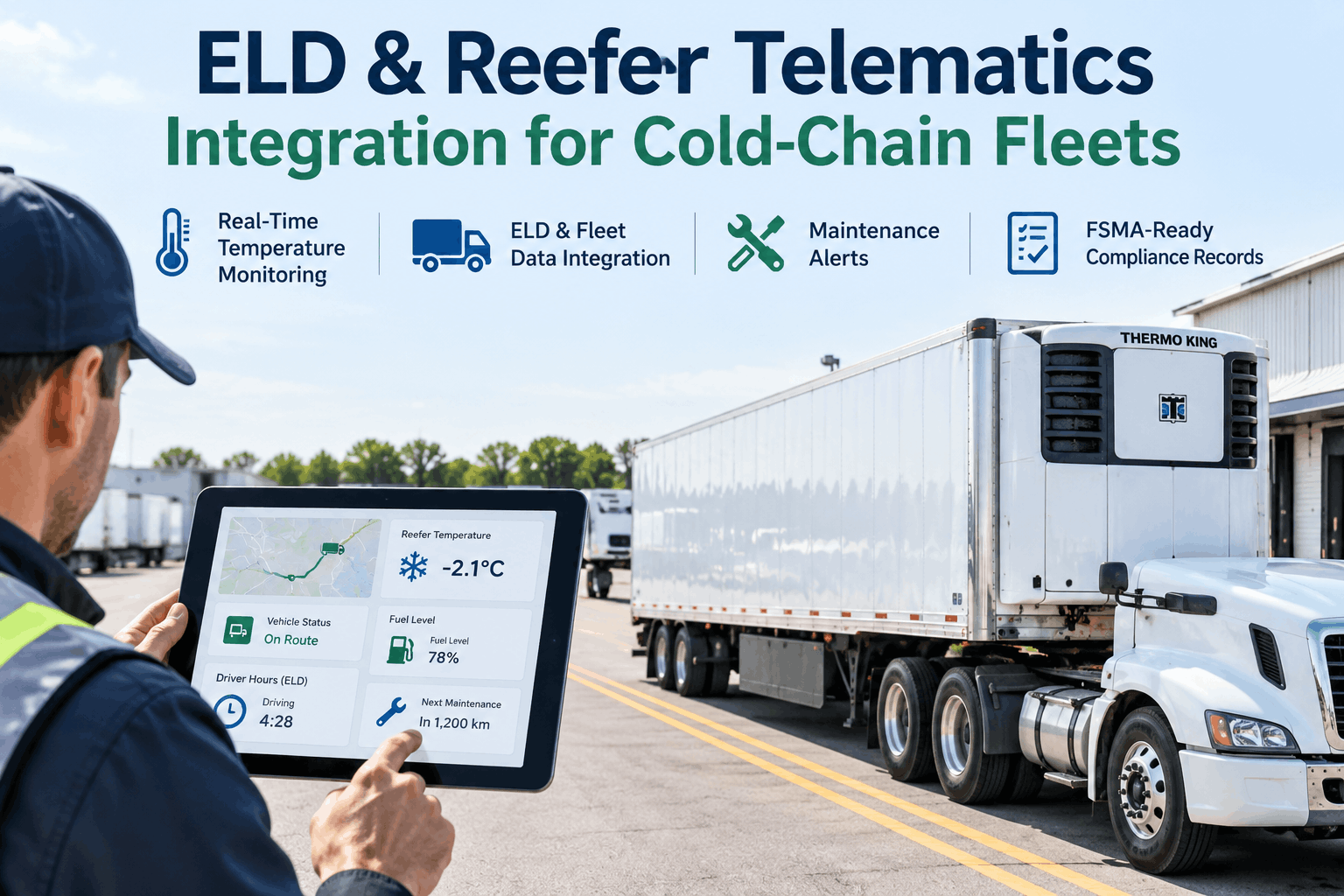
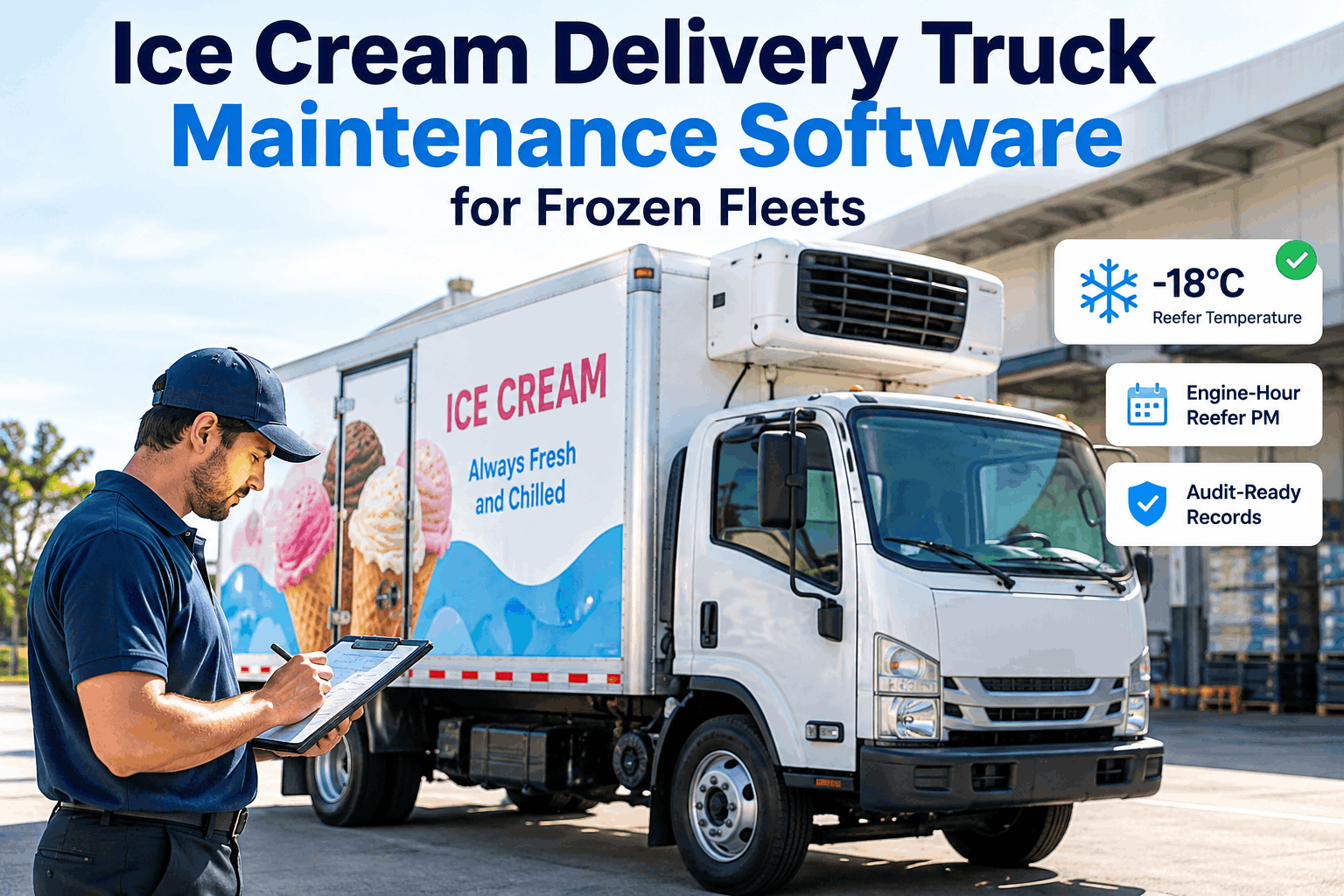
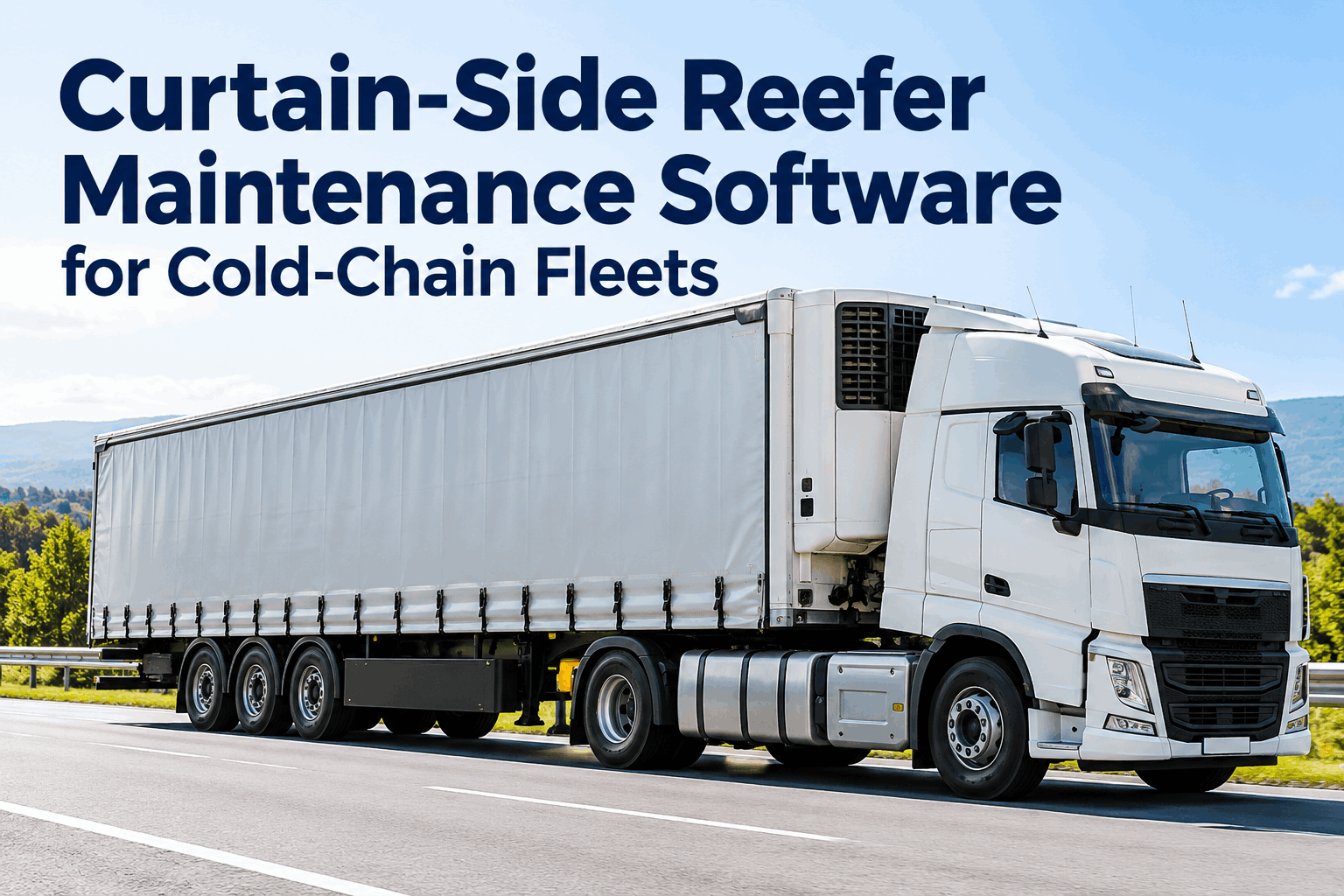
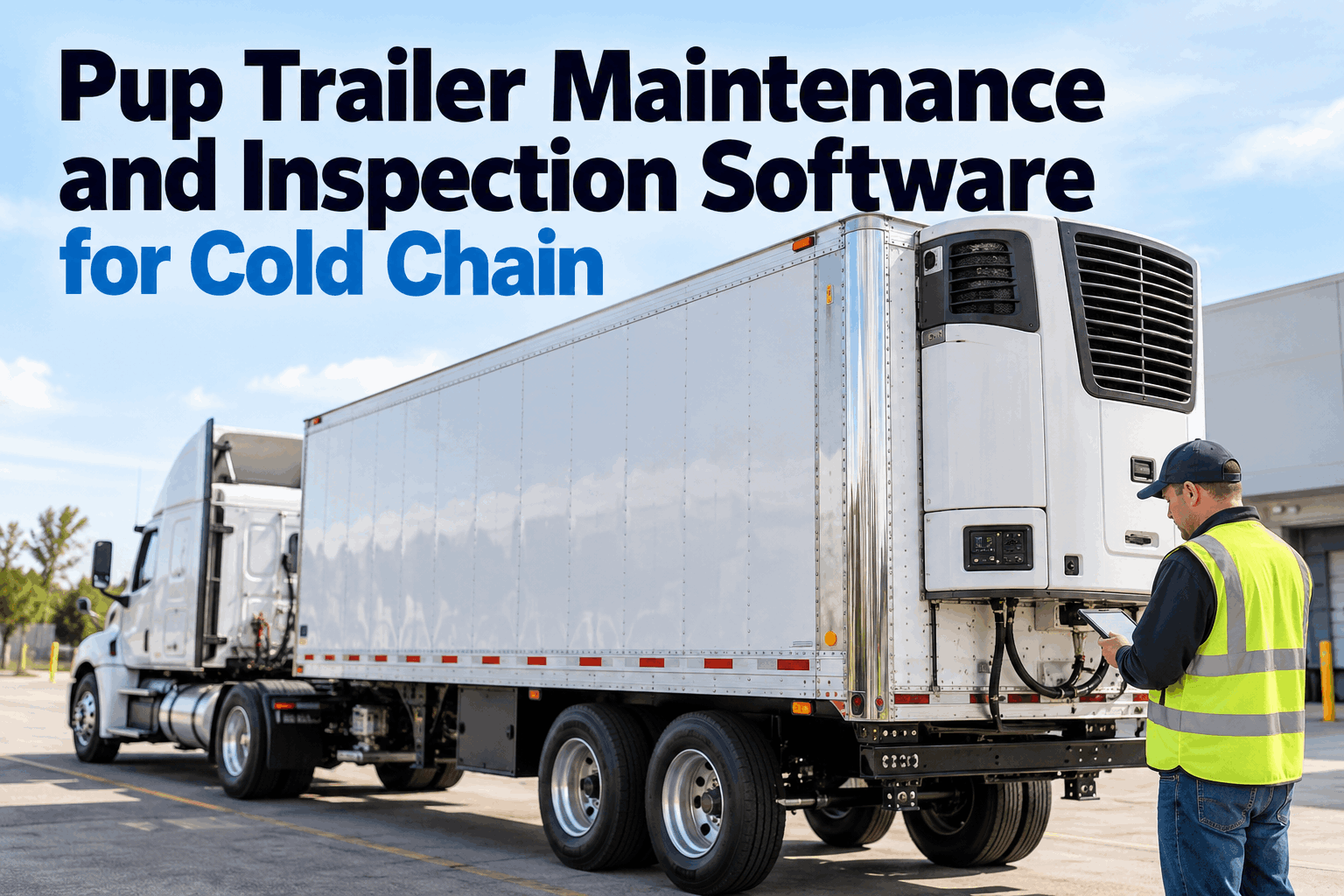
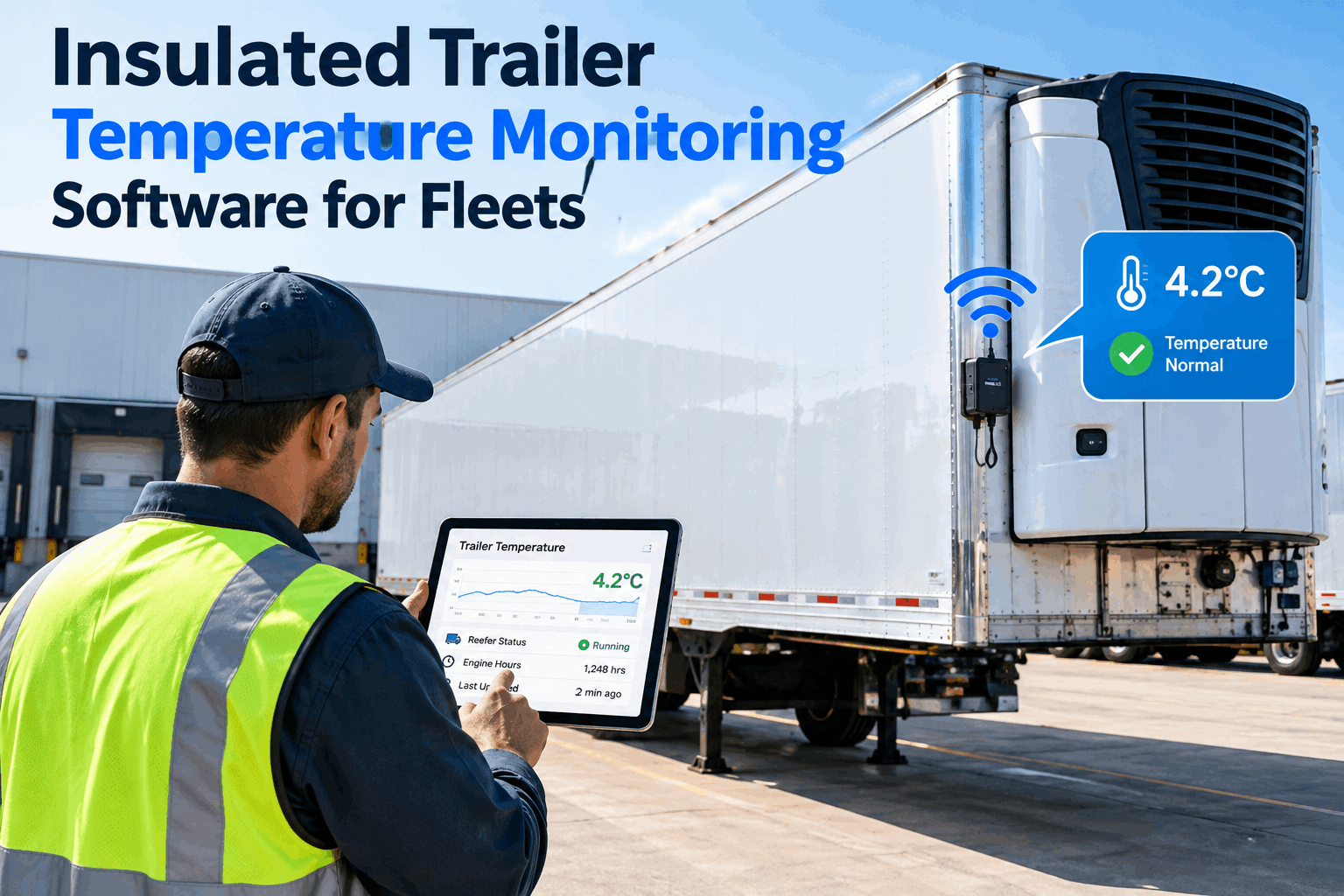
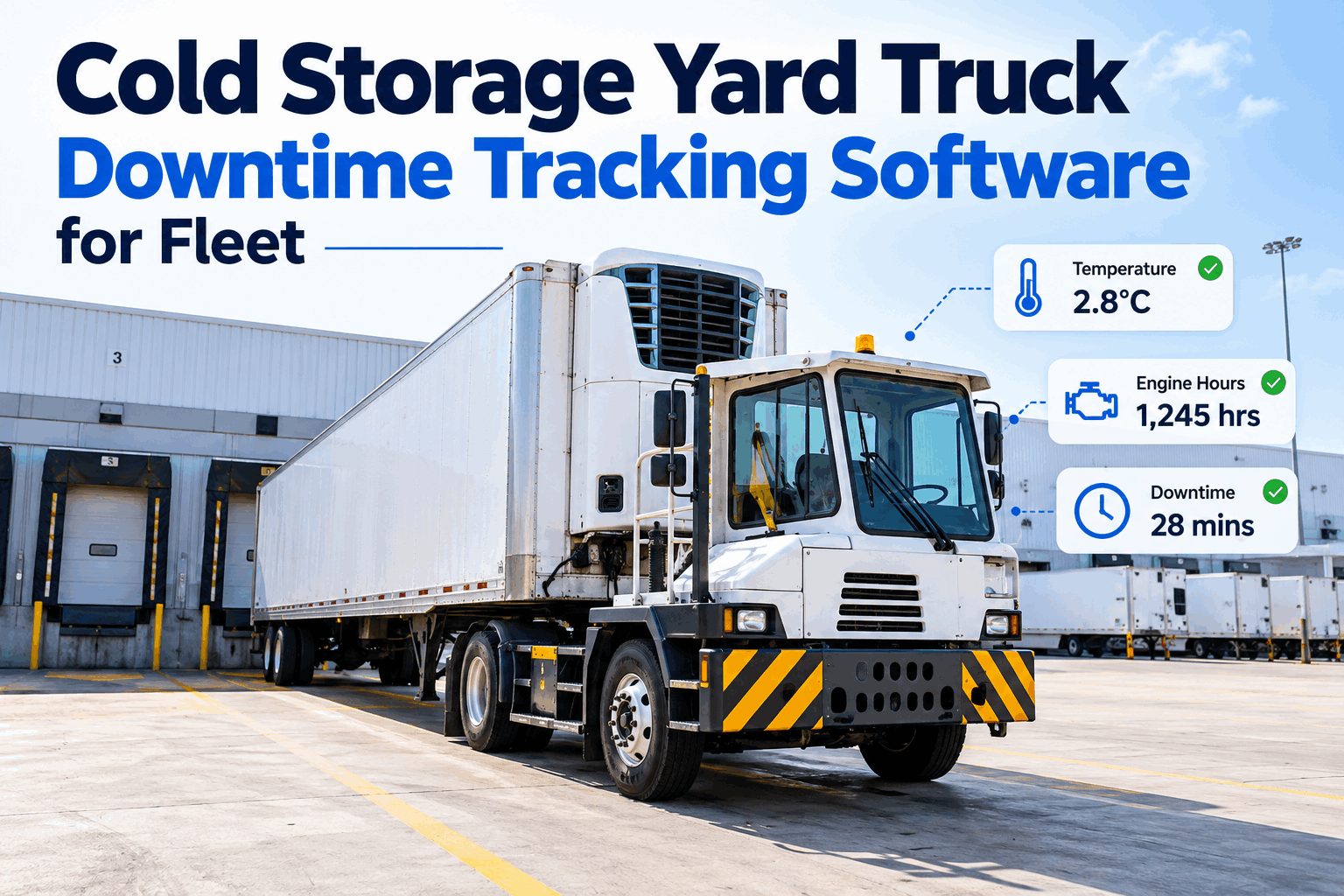
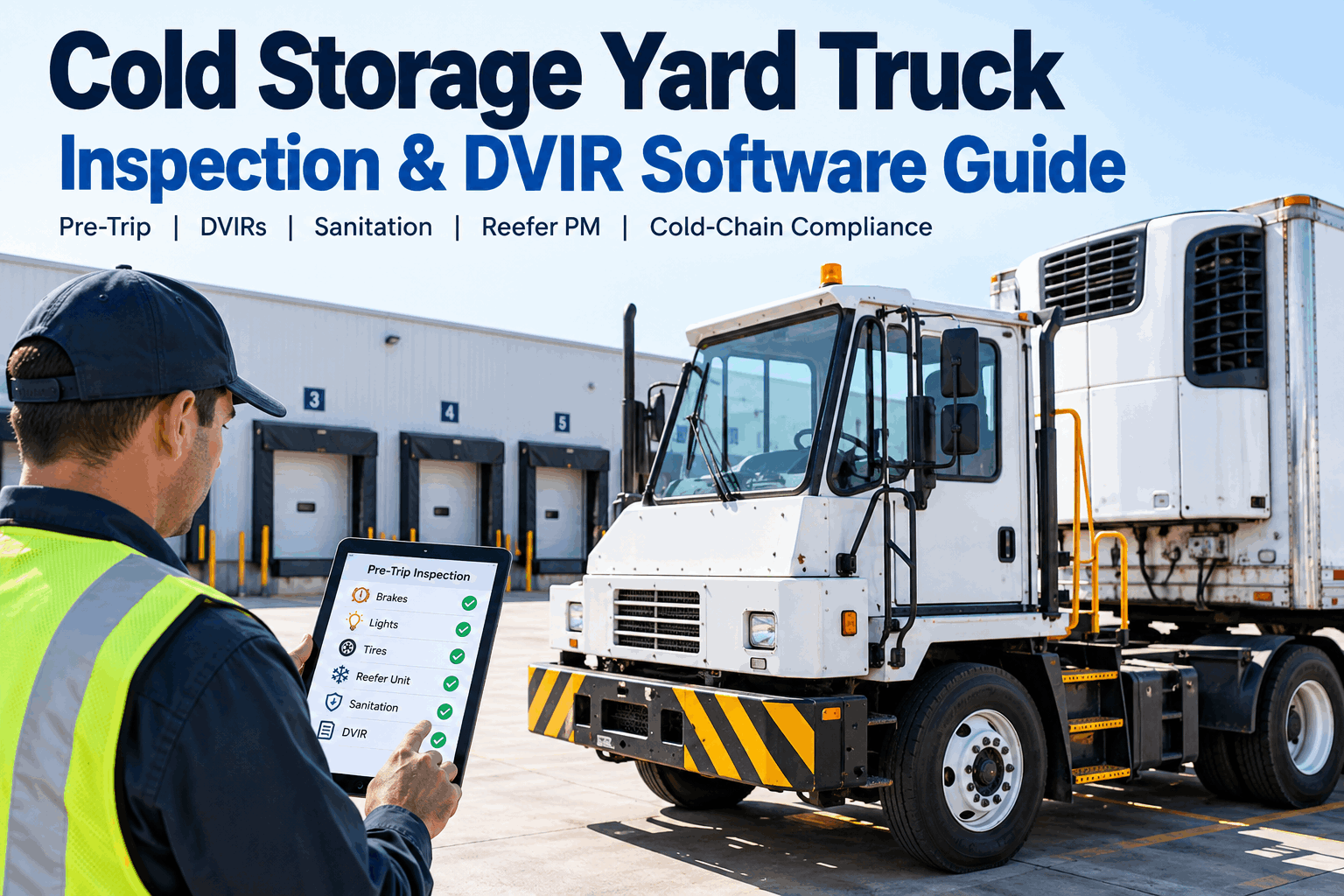
Cold-chain operations leaders, fleet safety coordinators, and refrigerated transportation directors face a critical blind spot when electronic logging devices (ELDs) and transport refrigeration units (TRUs) operate on fragmented, disconnected platforms. An ELD tracks tractor drive time, hours of service (HOS), and highway odometer distance, while separate reefer data recorders monitor cargo setpoints, return air temperatures, and compressor alarms. When dispatchers and drivers juggle multiple web screens and disparate cab tablets, microclimate deviations go unnoticed until trailers arrive at grocery distribution centers, resulting in expensive cargo write-offs, rejected loads, and regulatory scrutiny under the FDA Food Safety Modernization Act (FSMA). Fleet Rabbit bridges this operational divide with a unified ELD and reefer telematics integration framework. By merging tractor engine diagnostics, live driver duty status, multi-zone Bluetooth Low Energy (BLE) temperature probes, and auxiliary reefer controller diagnostics into a single dashboard, carriers gain complete visibility over vehicle health and biological cargo safety. Eliminate load rejections, automate preventative maintenance work orders by real compressor running hours, and generate tamper-proof regulatory audit trails. Book a Demo to see our unified cold-chain telematics integration live.
Unified Cold-Chain Data & Telematics Integration
ELD & Reefer Telematics Integration for Cold-Chain Fleets
A technical and operational deployment blueprint for refrigerated motor carriers: unite hours of service (HOS), tractor diagnostics, and microprocessor reefer telemetry into one real-time cloud dashboard to protect perishable margins and streamline FSMA audit compliance.
J1939 CAN-Bus & Microprocessor Sync
Continuous Sub-Minute BLE Temperature Telemetry
Automated FDA 21 CFR Part 1 Audit Exports
< 30s
Thermal Anomaly Latency
Push alerts notify dispatch and drivers immediately if setpoints drift out of spec.
100%
Audit-Ready Chain of Custody
Synchronized time-stamped driver duty logs and compartment temperature curves.
42%
Fewer Emergency Roadside Calls
Preventative compressor maintenance scheduled by real diesel runtime, not truck miles.
$5
Per Asset / Month
Predictable fleet management pricing with zero expensive API gateway surcharges.
Unify Driver Duty Logs and Cargo Temperature Telematics
Stop toggling between disconnected GPS systems and stand-alone reefer portals. Connect tractor diagnostics, real-time wireless temperature probes, and mobile driver DVIR checklists on one intuitive screen.
The Costly Structural Friction of Siloed ELD and Reefer Systems
In temperature-controlled food distribution, managing tractors and refrigeration units as separate technological islands introduces severe financial and biological risks. When drivers and dispatchers lack a single operational view, micro-failures quickly escalate into commercial catastrophes. Sign up to centralize your refrigerated fleet telematics.
01
Blindness During Driver Rest Breaks & Dwell Time
When a driver parks for an off-duty 10-hour reset or sits waiting at an unsealed receiving staging area, tractor telematics power down into standby. If the independent reefer suffers an engine stall, out-of-fuel condition, or sensor error, nobody receives an alert until the cargo has already warmed and spoiled.
Book a demo to inspect our continuous 24/7 reefer monitoring engine.
02
Inability to Correlate Road Events with Temperature Spikes
When receiving docks report softened frozen goods or surface bacteria on fresh poultry, investigating root causes across disconnected platforms requires hours of manual cross-referencing between ELD GPS breadcrumbs, driver duty logs, and raw reefer download graphs.
03
Flawed Maintenance Scheduling Based on Tractor Odometers
Tractors often accumulate 2,500 road miles a week while the reefer unit cycles intermittently on frozen cargo for only 30 hours. Conversely, an urban distribution straight truck may drive 300 miles while the reefer runs continuously for 65 hours. Scheduling reefer servicing by truck miles causes severe lubrication neglect.
Sign up to automate runtime-based reefer PM.
04
High-Friction FDA FSMA Audit Vulnerability
Under 21 CFR Part 1 Subpart O, carriers must produce verifiable time-temperature records demonstrating continuous holding temperatures throughout transit. Scrambling to match disparate ELD trip manifests with paper temperature logs during an FDA or receiver audit leaves carriers vulnerable to heavy fines.
The 4 Pillars of Unified ELD & Reefer Telematics Architecture
Fleet Rabbit establishes an integrated digital bridge that links tractor telemetry, reefer microprocessors, and wireless cargo sensors into an auditable data pipeline. Book a demo to see our full telematics architecture in action.
Pillar 1
Direct Microprocessor & CAN-Bus Communication
Connect directly to major transport refrigeration controllers (including Thermo King SmartReefer and Carrier Transicold APX) via standard serial and CAN-Bus interfaces. Read engine hours, battery voltage, active fault codes, operating mode (Continuous vs. Cycle-Sentry), and discharge/return air temperatures in real time.
Sign up to connect your reefer controllers.
Pillar 2
Multi-Zone Bluetooth Low Energy (BLE) Sensors
Deploy rugged wireless BLE temperature and door-open sensors throughout multi-temp compartments. Capture environmental telemetry every 30 seconds, automatically transmitting through the in-cab ELD gateway to dispatch without complex wiring through trailer bulkheads.
Pillar 3
Automated Event-Correlation Alert Pipeline
Differentiate between normal temperature rises during scheduled customer dock deliveries and genuine refrigeration failures. By correlating magnetic door sensors, driver geofence arrivals, and reefer defrost cycles, the system eliminates false alarms while catching real compressor stalls instantly.
Book a demo to test our smart alert thresholds.
Pillar 4
Unified Mobile Driver App & Digital DVIR
Drivers manage hours of service, review live trailer microclimate readings, complete photo-verified sanitation checklists, and export verified receiving dock delivery certificates from a single smartphone application.
Sign up to equip drivers with unified mobile tools.
Data Telemetry Flow: From Tractor Sensor to Regulatory Cloud
Follow the end-to-end data transmission lifecycle that ensures zero data loss even when vehicles navigate cellular dead zones. Book a demo to review our offline-first sync protocols.
Stage 01
Sensor & Controller Interrogation
BLE probes ping compartment air temperatures every 30 seconds while the reefer microprocessor monitors fuel level, coolant temperature, and engine RPM.
Stage 02
In-Cab Gateway Aggregation
The telematics gateway consolidates reefer data with tractor J1939 speed, odometer, and driver ELD duty logs, watermarking each packet with exact GPS coordinates and UTC time.
Stage 03
Sub-Minute Cellular & Offline Sync
Telemetry transmits over encrypted cellular channels to the central cloud. In remote dead zones, records buffer securely on the device, uploading automatically upon reconnection.
Sign up to test offline data buffering.
Stage 04
Dispatch Dashboard & Audit Dossiers
Central operations monitor fleet-wide temperature status, receive automated predictive maintenance prompts, and generate customer delivery PDFs in seconds.
Comparative Analysis: Siloed Systems vs. Fleet Rabbit Integration
Evaluate the clear operational differences, hardware costs, and compliance risks between fragmented point solutions and our integrated platform. Book a demo to evaluate your fleet's modernization potential.
| Operational Capability |
Fleet Rabbit Unified Platform |
Separate Disconnected Portals |
Manual Paper & Standalone ELDs |
| Subscription Rate |
$5 / asset / month |
$45 – $75 / asset / month |
$25 – $35 / ELD + paper costs |
| Reefer Alert Latency |
< 30 seconds push & SMS |
15 to 30 minutes delayed sync |
None; noticed after cargo spoils |
| Maintenance Scheduling |
Automated reefer engine hours |
Tractor odometer miles only |
Manual whiteboard calendars |
| Dockside Delivery Proof |
1-click mobile trip PDF export |
Delayed central web portal export |
Subjective paper clipboards |
| Door Open Event Correlation |
Correlated with geofence & temp |
Isolated door sensor log |
Unrecorded driver memory |
| FSMA Audit Dossier Prep |
Instant exportable 12-month archive |
Days of manual data merging |
Stained or lost physical records |
| Implementation & Trial |
14-day free trial, self-serve |
Multi-year locked contracts |
Vendor hardware lock-in |
Refrigerated Fleet Case Study: Mountain West Cold Logistics
Learn how an interstate refrigerated food carrier unified tractor ELD logs and reefer telematics across 36 multi-temperature trailers. Sign up to achieve similar cold-chain telematics results.
Regional Carrier Eliminates Spoilage Write-Offs Across 36 Multi-Temp Units
Operating 36 refrigerated tractor-trailers hauling fresh berries, ice cream, and meat across four Western states, Mountain West Cold Logistics struggled with operational fragmentation. Drivers used one standalone ELD for HOS compliance and another disconnected portal for reefer temperature monitoring. When a compressor alternator failed during a driver rest break, an entire load of fresh fruit thawed, resulting in a $38,000 cargo loss.
By implementing Fleet Rabbit, the carrier unified tractor diagnostics, driver duty logs, and reefer microprocessors into a single interface. Sub-minute alerts caught two subsequent alternator failures while drivers were parked, allowing mechanics to intervene before temperatures drifted. Cargo rejection claims dropped to zero, reefer PM compliance reached 100%, and verified mobile delivery reports eliminated dockside acceptance disputes entirely.
Frequently Asked Questions
What is the primary benefit of integrating ELD and reefer telematics?
The primary advantage is unifying driver hours of service (HOS), tractor position, and cargo microclimate conditions into a single operational view. Dispatchers and drivers receive instant alerts when temperatures drift outside safe ranges—even during rest breaks—while maintenance teams track actual diesel compressor runtime rather than relying on tractor road miles.
Can wireless BLE sensors operate through insulated refrigerated trailer walls?
Yes. Fleet Rabbit utilizes industrial-grade Bluetooth Low Energy (BLE) sensors with high-output antennas engineered specifically to penetrate dense polyurethane insulation and composite trailer walls, transmitting temperature and humidity data reliably to the in-cab ELD gateway without requiring drilled wire penetrations.
How does the integrated platform support FDA FSMA record retention requirements?
Under FDA 21 CFR Part 1 Subpart O, carriers must maintain documented proof that continuous temperature control was maintained during transit for at least 12 months. Fleet Rabbit archives all pre-cooling setpoints, in-transit telemetry readings, and delivery handoffs in the cloud, exportable as audit-ready PDF dossiers in seconds.
What happens if a vehicle enters a remote mountain area with no cellular coverage?
Fleet Rabbit features an offline-first mobile architecture. All BLE sensor readings, reefer controller diagnostics, and driver check-ins cache locally on the telematics gateway and driver smartphone. As soon as the vehicle re-enters cellular or Wi-Fi connectivity, all stored time-stamped records auto-sync to the central cloud.
What are the pricing details and contract terms for Fleet Rabbit's cold-chain software?
Fleet Rabbit is priced at a flat rate of $5 per asset per month billed annually. This includes full access to ELD integration, reefer telematics monitoring, automated engine-hour PM scheduling, mobile driver DVIR checklists, and FSMA audit archives. We offer a 14-day free trial on up to 3 assets with zero setup fees or long-term contract lock-ins.
Ready to Unify Your ELD and Reefer Telematics?
Eliminate cargo loss blind spots, automate engine-hour reefer maintenance, and ensure 100% audit-ready cold-chain compliance for just $5/asset/month.
September 21, 2026
By Mark
All Posts