For food distribution operations, the shift to electric and hybrid refrigerated trucks is no longer optional — it's a competitive and regulatory inevitability. Cold chain fleets face a unique challenge: not only must they manage route efficiency, driver performance, and compliance, but they must also maintain precise temperature integrity while eliminating diesel emissions across routes that demand 24/7 vehicle availability. Yet most food fleet operators still rely on disconnected methods: manual fuel logs for cost tracking, paper temperature records for compliance, and reactive maintenance for ageing diesel reefers. This fragmentation creates transition risk worth millions in stranded assets, compliance failures, and missed sustainability targets annually.
Fleet Rabbit unifies electric and hybrid refrigerated fleet management into a single intelligent platform — connecting EV telematics, cold chain monitoring, charging infrastructure coordination, and compliance documentation so food distribution leaders can protect their cargo, prove sustainability accountability, and maximize fleet productivity from the first electric mile. This guide gives fleet managers, sustainability directors, and operations leaders a complete framework for deploying high-impact EV reefer transition programs across their food logistics network. Start your free trial today.
EV Reefer Transition Guide 2026
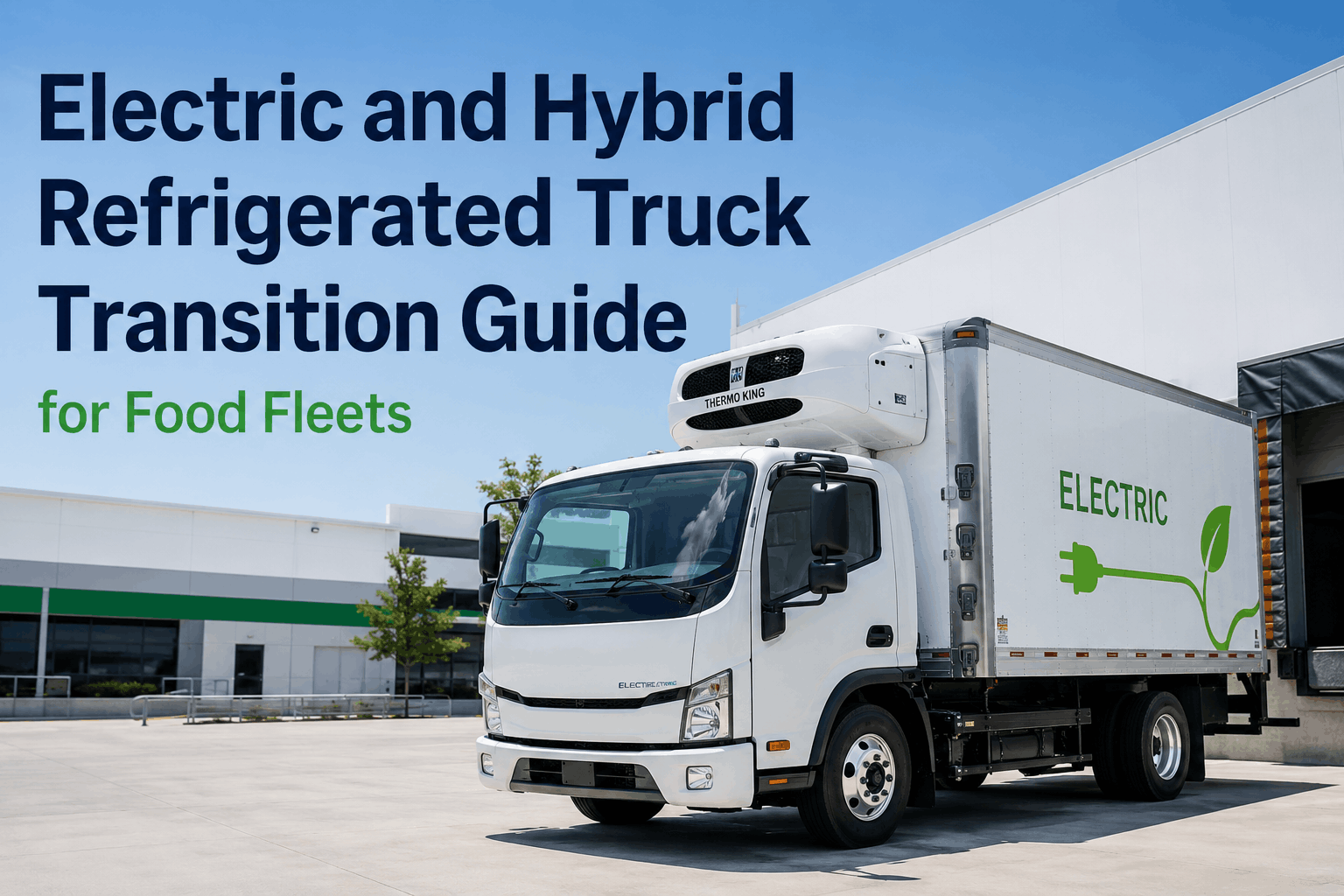
Electric & Hybrid Refrigerated Truck Transition Guide for Food Fleets
From battery-electric reefer trucks on urban delivery routes to hybrid cold chain vehicles serving regional distribution centres, food fleets face immense pressure to decarbonise without compromising temperature integrity or throughput. This guide equips fleet managers, sustainability directors, and finance teams with the frameworks to plan EV reefer transitions, manage cold chain uptime, and achieve measurable ROI through Fleet Rabbit's intelligent electrified fleet management platform.
42%Avg. Fuel & Maintenance Cost Reduction After EV Reefer Deployment
$112KAvg. Annual Savings per EV Fleet in Fuel & Emission Costs
100%Auditable Cold Chain Temperature Compliance Trail
4.2xAverage ROI Within 18 Months of EV Transition
The EV Reefer Transition Readiness Spectrum
Food fleet operators typically approach EV reefer transition at one of three readiness levels. Most fleets remain in diesel-dependent mode — managing electrification as a future consideration while regulatory timelines and fuel cost pressures accelerate — while industry leaders use integrated telematics and EV fleet management platforms to execute phased transitions that protect cold chain integrity from day one. Fleet Rabbit is engineered to accelerate your journey from diesel-dependent to fully electrified, compounding ROI at every transition stage.
Diesel-Dependent (No EV Strategy)
52%
Transitioning (Pilot EV Programmes)
33%
Electrified (Full EV Fleet Strategy)
15%
ROI Pillars: Where EV Reefer Transitions Create Value
Fleet Rabbit's EV reefer transition ROI is built on six interconnected value pillars, each addressing a proven cost driver unique to food fleet electrification. Together, they compound to deliver returns that standalone route planners, manual temperature logs, or generic fleet tools simply cannot match.
Fleet Rabbit EV Reefer Transition Value Pillars
ROI Framework
PILLAR 01
Cold Chain Temperature Integrity Monitoring
Continuous telematics monitoring of refrigeration unit performance, cabin temperature variance, door open events, and power source transitions — scored per vehicle in real time. Automated cold chain scorecards create defensible HACCP records without manual logging or missing paperwork.
Highest Impact
PILLAR 02
EV Range & Charging Optimisation
Automated state-of-charge tracking, route range analysis, charging window scheduling, and energy consumption per delivery give operations teams precise EV utilisation benchmarks. Eliminate range anxiety and charging conflicts with objective, telematics-backed energy data every shift.
Efficiency Gains
PILLAR 03
Driver EV Behaviour Coaching
Telematics trends automatically trigger coaching assignments for drivers exhibiting energy-wasting behaviours — excessive acceleration, poor regenerative braking use, or inefficient cold chain management. Every coaching session is logged, timestamped, and tied to the specific behaviour event.
Safety Critical
PILLAR 04
Total Cost of Ownership Tracking
Vehicle-level TCO analysis comparing fuel savings, maintenance cost deltas, battery degradation rates, and grid energy costs per EV versus retained diesel reefers — enabling precise capital allocation decisions before fleet renewal cycles compound into budget overruns.
Cost Savings
PILLAR 05
Emission Compliance & Sustainability Reporting
Automated CO₂ reduction calculations, zero-emission route tracking, and scope 1 emission summaries per vehicle and depot. Expiry alerts and grant compliance records ensure food fleets remain eligible for clean vehicle incentives and low-emission zone exemptions.
Compliance ROI
PILLAR 06
Fleet-Level EV Transition Benchmarking
Compare EV performance across depots, routes, and vehicle classes. Identify top-performing electric reefer configurations for fleet-wide rollout, surface systemic range or charging gaps driven by route design, and generate executive-ready sustainability reports that translate EV data into leadership decisions.
Strategic ROI
Transition Impact Scoring: Prioritising EV Reefer Gains
Not every EV reefer transition initiative delivers equal financial impact. Fleet Rabbit's Transition Impact Model helps operations and sustainability teams at food distribution companies prioritise electrification actions based on financial magnitude and implementation speed — ensuring the highest-value moves protect cargo integrity and capital investment first.
5
Transformative
Eliminates a chronic emission or cold chain risk category. Immediate deployment prevents compliance violations or cargo loss within days of EV integration.
4
Significant
Major fuel cost reduction or sustainability credential gain. Strong ROI with measurable results within 90 days of EV reefer deployment.
3
Moderate
Meaningful route efficiency and battery longevity gains. Compound coaching value builds over 6–12 months of consistent EV fleet management.
2
Incremental
Process improvement value. Builds the data foundation and charging infrastructure readiness for higher-tier EV transition ROI over time.
1
Baseline
Compliance hygiene value. Prevents certification lapses and grant eligibility failures without generating direct operational cost savings.
Calculate Your EV Reefer Transition ROI
Get a personalised ROI analysis for your food distribution EV reefer fleet. Fleet Rabbit's platform delivers measurable cold chain and sustainability gains from day one — automate temperature monitoring, digitise driver coaching workflows, track EV certifications, and generate emission-ready compliance records in one unified system.
Core Fleet Rabbit Modules for EV Reefer Fleet Management
Fleet Rabbit's EV reefer platform is built on purpose-designed modules that integrate seamlessly across your food fleet's electric and hybrid refrigerated vehicles. Each module addresses a specific cold chain, energy, or compliance driver and feeds data into a unified intelligence layer — enabling compound performance gains that grow as your EV dataset matures.
Core
Real-Time Cold Chain Temperature Scorecards
Continuous Shift-by-Shift Monitoring
Live telematics scoring of refrigeration unit performance, temperature excursions, door open durations, and power source transitions — aggregated into a per-vehicle cold chain score updated every delivery cycle. Automated alerts notify fleet managers when temperatures breach HACCP thresholds.
Temp ScoringDoor EventsHACCP AlertsShift Reports
Safety
EV Driver Behaviour Coaching Workflows
Event-Triggered to Scheduled
Telematics thresholds automatically trigger coaching assignments linked to energy-wasting driver behaviours. Supervisors complete structured EV-specific coaching sessions in the app; every session is timestamped, driver-acknowledged, and archived for regulatory inspection readiness.
Auto-Triggered CoachingDigital Sign-OffCompliance ArchiveTrend Tracking
Analytics
EV Energy & Route Efficiency Analytics
Continuous Monitoring
State-of-charge analysis, kWh per delivery, charging window utilisation, and route energy efficiency scores give operations leaders objective EV performance benchmarks across every depot and delivery corridor — replacing guesswork with data-driven electric commercial vehicle management.
SoC TrackingkWh AnalysisRoute ScoringDepot Compare
Compliance
EV Certification & Incentive Matrix
Always Audit-Ready
Track clean vehicle grant eligibility, low-emission zone exemption certificates, driver EV qualification records, and refrigeration unit service compliance per vehicle. Automated expiry alerts ensure zero compliance gaps across every depot and delivery route in your food fleet network.
Grant EligibilityLEZ ComplianceExpiry AlertsAudit Export
Finance
TCO & Emission Cost Attribution
Vehicle-Level Traceability
Every energy cost, maintenance event, and CO₂ saving is attributed to the specific EV reefer vehicle, timestamped, and linked to route and delivery records. Finance teams gain precise vehicle-level TCO data — enabling capital replacement decisions backed by evidence, not estimation.
TCO AttributionFuel Savings Tie-InEmission HistoryVehicle ROI
Reporting
Sustainability & Multi-Depot Reporting
On-Demand & Scheduled
One-click export of EV fleet CO₂ savings, cold chain compliance summaries, charging utilisation rates, and driver EV performance rankings. Compare results across depots, routes, and vehicle classes — and deliver board-ready sustainability and productivity reports to leadership without manual data assembly.
CO₂ SavingsCoaching RateEmission TrendsMulti-Depot View
Common EV Reefer Transition Cost Drains Fleet Rabbit Eliminates
Understanding where food fleet electrification costs bleed is the first step to eliminating them. Fleet Rabbit's integrated telematics, cold chain monitoring, and compliance intelligence directly targets the highest-impact cost categories across every food distribution environment — from urban last-mile electric delivery routes to regional hybrid cold chain corridors.
Cold Chain & Cargo Costs
Temperature Excursions & Cargo Rejections
HACCP Non-Compliance Penalties
Spoilage Claims & Customer Chargebacks
Undetected Refrigeration Unit Failures
Recall Risk from Undocumented Temperature Breaks
EV Operations & Energy Costs
Range Anxiety Causing Route Inefficiency
Poor Charging Scheduling Increasing Energy Costs
Battery Degradation from Driver Misuse
Idle EV Assets from Poor Depot Coordination
Stranded Diesel Assets from Unplanned Transition
Compliance & Sustainability Risk
Missed Clean Vehicle Grant Eligibility
Low-Emission Zone Penalty Charges
Incomplete Scope 1 Emission Reporting
Insurance Premium Increases After Incidents
Regulatory Risk for Non-Zero-Emission Zone Breach
The Cost of Inaction: EV Transition Risk Escalation Model
Every deferred EV reefer transition decision in a food distribution operation triggers a cascade of costs that extends far beyond the initial delay. The compounding effect of unmanaged fleet electrification on cargo integrity, regulatory standing, and competitive positioning makes proactive EV transition management the single highest-ROI investment available to food logistics leaders.
$500–$3,000
Minor Inefficiency / Temperature Event
Poor EV driving behaviour, suboptimal charging window, or minor cold chain temperature excursion. Low-cost resolution if caught and coached immediately. Fleet Rabbit detects and scores EV and cold chain events automatically before patterns become incidents.
Frequency: High
$22K–$150K
Cargo Rejection / Compliance Breach
HACCP temperature violation, cargo spoilage event, LEZ penalty charge, or significant battery damage from misuse. Customer chargeback, regulatory investigation, emergency vehicle replacement, and lost contract costs compound for weeks after the initial failure.
Frequency: Medium
$600K+
Regulatory Action / Recall Event
Food safety recall, wilful emission compliance violation, major contract loss to zero-emission competitor, or fleet-wide LEZ ban. Regulatory shutdown, class-action litigation, and permanent reputational damage to your food brand. Preventable with documented EV transition accountability in place.
Frequency: Low (But Catastrophic)
Electrify Your Cold Chain. Protect Every Delivery.
Don't wait for a cargo rejection, LEZ penalty, or missed grant deadline to modernise your food fleet's EV transition strategy. Fleet Rabbit delivers the digital infrastructure to reduce cold chain failures, accelerate EV driver development, and maintain full emission compliance — all from one intelligent platform built for electrified food logistics operations.
Fleet Rabbit Platform Capabilities for EV Reefer Fleet Management
Fleet Rabbit is purpose-built for the unique demands of food fleet electrification — not adapted from generic sustainability tools or standalone EV dashboards. Every feature is designed to deliver measurable ROI for fleet managers, sustainability directors, and finance teams operating temperature-controlled EV and hybrid vehicles in high-throughput, compliance-intensive food distribution environments.
A
Telematics-Driven Cold Chain Scorecard Engine
Every refrigeration event — temperature excursion, door open duration, power source transition, or refrigeration unit fault — is captured by onboard sensors, attributed to the specific vehicle and delivery run, and scored automatically. Cold chain scorecards update every delivery cycle without manual logging or supervisor observation, creating a continuous temperature compliance record that stands up to HACCP and food safety scrutiny.
B
Automated EV Driver Coaching & Documentation
When a driver's EV energy scorecard falls below threshold, Fleet Rabbit automatically generates a coaching assignment for the responsible fleet manager — linked to the specific behaviour event and timestamped for auditability. Completed coaching sessions require digital driver acknowledgment, creating an irrefutable record that protects against liability claims and regulatory challenge on driver training compliance.
C
EV Certification & Grant Eligibility Tracker
Clean vehicle grant eligibility, low-emission zone exemption certificates, driver EV qualifications, and refrigeration unit service records are tracked per vehicle and route type. Automated alerts at 30, 60, and 90 days before expiry ensure 100% compliance across every depot — eliminating the certification gaps that disqualify food fleets from clean transport incentives during government audits.
D
EV Energy & Charging Performance Dashboard
State-of-charge completion rates, kWh per delivery route, charging utilisation per depot, and energy efficiency scores are visualised in a live operations dashboard. Depot managers see real-time EV fleet readiness rankings; fleet directors compare energy consumption trends across depots, vehicle classes, and delivery corridors — replacing guesswork with objective electric reefer performance tracking.
E
EV Fleet Compliance Document Vault
Store clean vehicle certificates, driver EV training records, coaching session logs, cold chain temperature reports, and vehicle inspection histories in a searchable cloud archive. During a food safety inspection, LEZ audit, or grant review, every required record is instantly retrievable — demonstrating the documented EV transition accountability programme that significantly reduces penalty and disqualification exposure.
F
Multi-Depot EV Transition Intelligence
Manage EV reefer fleet performance across multiple depots, distribution hubs, and cold storage facilities from a single dashboard. Compare depot-level cold chain scores, benchmark EV energy efficiency, and standardise electric reefer protocols enterprise-wide — giving sustainability directors the consolidated visibility to drive consistent zero-emission cold chain culture across every location in the food distribution network.
Frequently Asked Questions
Q. How quickly do food fleet operators see measurable results after deploying Fleet Rabbit EV reefer management?
Most food fleet customers report measurable cold chain compliance improvement and energy cost reduction within the first 30–60 days, primarily from the behaviour-change effect of drivers knowing their EV performance is scored continuously. Full fleet-wide ROI — including fuel savings, charging optimisation gains, and grant eligibility improvements — typically compounds to 4.2x within 18 months of full EV reefer platform deployment across the food distribution fleet.
Q. Does Fleet Rabbit work with mixed food fleets including battery-electric reefers, hybrid refrigerated trucks, and diesel vehicles in transition?
Yes. Fleet Rabbit is powertrain-agnostic and supports all food fleet vehicle types including battery-electric refrigerated trucks, plug-in hybrid reefers, mild-hybrid cold chain vehicles, and retained diesel refrigerated trucks. The platform adapts scorecard parameters, cold chain monitoring thresholds, and compliance requirements to the specific energy profile of each vehicle class and depot operating environment — making it the ideal tool for managing phased EV transitions.
Q. How does Fleet Rabbit help food fleets manage HACCP cold chain compliance across electric and hybrid vehicles?
Fleet Rabbit digitises all HACCP-relevant cold chain monitoring requirements, including continuous temperature logging, refrigeration unit performance records, door open event tracking, and power source transition documentation. The platform automatically generates alerts when temperature thresholds are breached — enabling immediate corrective action before cargo is compromised — and archives every temperature record for immediate food safety inspection retrieval, creating a defensible compliance trail that protects against regulatory challenge and customer liability claims.
Q. Can Fleet Rabbit integrate with existing TMS, WMS, or route optimisation systems used by food distribution fleets?
Fleet Rabbit offers API-based integration with leading Transport Management Systems, Warehouse Management Systems, and route optimisation platforms, enabling bidirectional data flow: delivery schedule data from TMS feeds into Fleet Rabbit charging window planning and cold chain monitoring, and EV performance scorecard data flows into fleet reporting dashboards. Food distribution operators running SAP, Oracle, or specialist cold chain TMS platforms have deployed Fleet Rabbit as a real-time EV performance layer that enriches existing systems without replacing operational infrastructure already in place.
Q. Is Fleet Rabbit's EV reefer platform suitable for large multi-depot food distribution operations?
Fleet Rabbit is designed for enterprise-scale food fleet electrification management. Multi-depot operations can manage hundreds of EV and hybrid refrigerated vehicles across dozens of cold storage facilities and distribution hubs from a single dashboard, with role-based access controls that give depot-level fleet managers local vehicle visibility while corporate sustainability directors monitor aggregate EV performance, cold chain compliance, and emission reduction trends in real time across the entire food distribution network.
May 28, 2026
By Taylor
All Posts