When a refrigerated truck's GPS temperature sensor fires an alert at 11:47 PM on a Sunday—cargo at +6°C and climbing, 94 miles from the nearest depot, carrying $180,000 of pharmaceutical-grade dairy product—your emergency response protocol is either already built and triggered automatically, or it doesn't exist. There is no middle position. Cold chain logistics emergencies do not arrive during business hours with advance notice. They arrive during peak transit windows, in overnight delivery lanes, and in the middle of multi-drop routes when the driver has no visibility into what's happening inside the trailer behind them. Undetected temperature excursions, delayed spoilage alerts, and the absence of a documented emergency escalation protocol aren't bad luck. They are the predictable outcome of operating a refrigerated fleet without real-time cold chain data connected to an active emergency response planning system.
This guide gives food fleet operations managers, cold chain logistics directors, and supply chain risk teams a comprehensive framework for building emergency response plans anchored in real-time IoT tracking, GPS temperature monitoring, and automated perishable shipment alert workflows. We cover cold chain alert architecture, emergency escalation protocols, cargo recovery decision frameworks, fleet telemetry integration, and the connected platform capabilities that convert raw sensor data into actionable response intelligence—protecting perishable cargo, food safety compliance standing, and shipper relationships when cold chain incidents occur. Food transport operations ready to build genuine cold chain emergency resilience can start their free trial today.
FleetRabbit Cold Chain Emergency Intelligence 2026
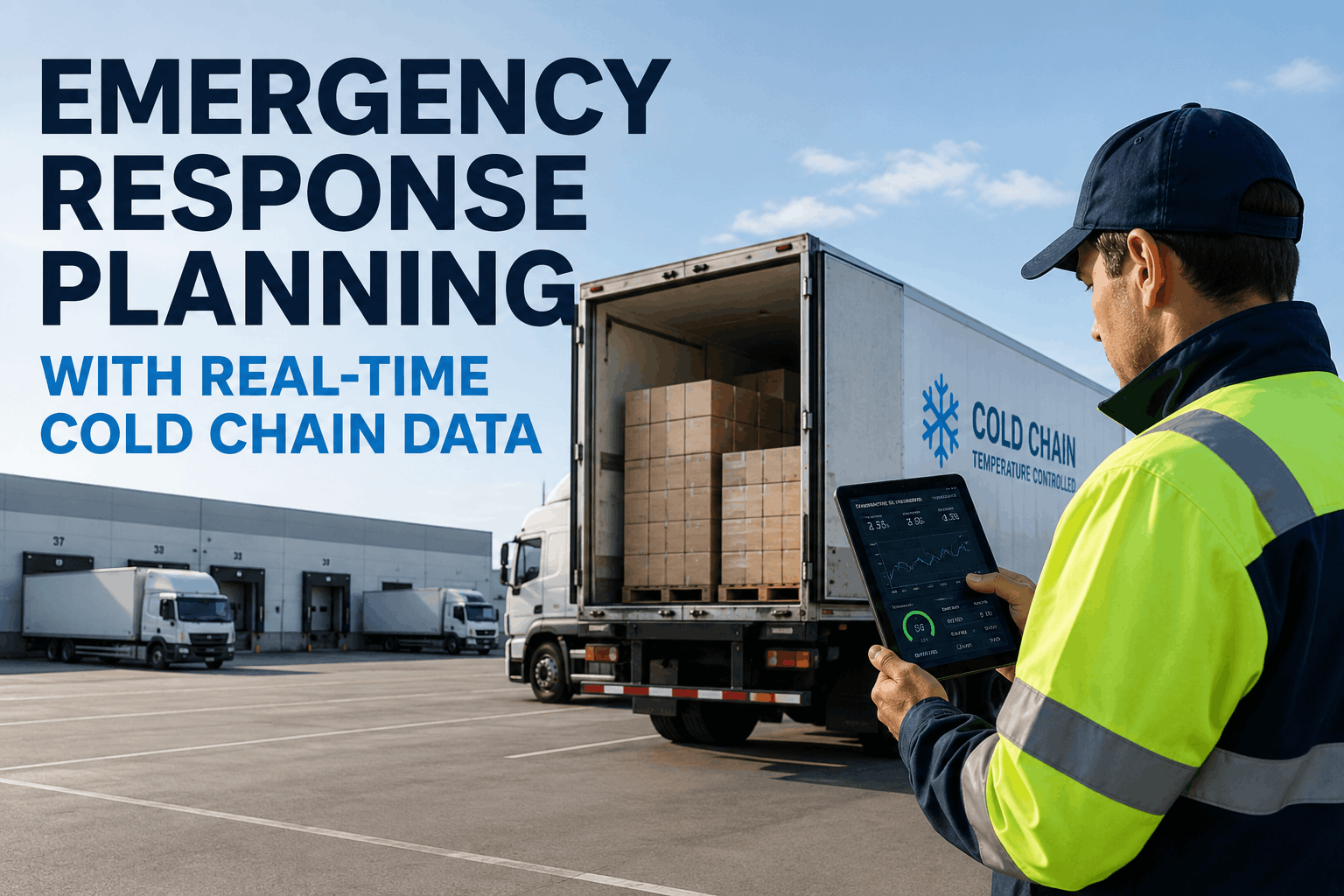
Emergency Response Planning with Real-Time Cold Chain Data
How GPS temperature monitoring, automated cold chain alerts, real-time IoT tracking, and pre-built emergency escalation protocols protect perishable cargo, prevent food spoilage, and give refrigerated fleet operations the response intelligence to act in minutes — not hours.
68%
of cold chain incidents go undetected for 2+ hours without real-time IoT tracking
$3.1B
annual perishable cargo loss attributable to delayed emergency response in refrigerated fleets
83%
of cold chain losses are preventable when real-time alerts connect directly to pre-built emergency protocols
<90s
FleetRabbit cargo temperature sensor breach to emergency alert delivery across all assigned response contacts
Why Real-Time Data Changes the Emergency Response Equation Entirely
Cold chain emergency response planning in most refrigerated fleets is theoretical: a laminated protocol document in the dispatch office, a phone tree in the operations manager's desk drawer, and a driver hotline that nobody called with a temperature emergency last quarter because nobody knew there was one until the load arrived compromised. Real-time cold chain data doesn't just make emergency response faster—it changes what emergency response means. It converts temperature management from a post-event documentation exercise into a live operational intelligence system that detects incidents, routes alerts, and triggers protocols before cargo damage passes the point of recovery.
✗
Without Real-Time Monitoring
T+0 min
Reefer unit fails — excursion begins, cargo warming
T+240 min
Driver notices warning light — calls dispatch
T+270 min
Dispatch begins locating nearest service partner
T+360 min
Cargo assessed — spoilage threshold already crossed
T+480 min
Load rejected at destination — recall and insurance process begins
Full cargo loss. Documentation gap. Compliance exposure.
✓
With FleetRabbit Real-Time Cold Chain Data
T+0 min
Reefer unit fails — IoT sensor detects excursion immediately
T+1.5 min
Automated alert fires to dispatch, fleet manager, and driver simultaneously
T+8 min
Pre-built protocol activates — nearest recovery depot contacted, diversion route calculated
T+22 min
Vehicle diverted — temperature still within salvageable range
T+95 min
Cargo transferred to compliant unit — delivery completed, FSMA record updated
Cargo saved. Full documentation. Zero compliance gap.
The 240-minute detection gap in a manual operation isn't an edge case—it is the median response time for temperature excursion discovery in fleets without real-time cargo temperature sensor coverage. Most refrigerated trailers in manual operations are checked at loading, at unloading, and when a driver notices something unusual. Everything that happens in between is invisible. Real-time IoT tracking closes that window permanently—and the emergency response protocol built on top of real-time data converts detection speed into cargo recovery rates that manual operations cannot approach.
The Four-Layer Cold Chain Emergency Response Architecture
Effective emergency response planning for refrigerated fleet operations isn't a single protocol document—it's a four-layer architecture where each layer depends on the one below it. Real-time data is the foundation. Alert routing is the activation mechanism. Decision frameworks are the response intelligence. And documentation is the compliance output. Fleets that build only the top layers without the real-time data foundation are planning responses to emergencies they won't know are happening until it's too late.
IoT Temperature SensorGPS TrackingFleet Telemetry
Continuous cargo temperature sensor data from every trailer compartment, transmitted via fleet telemetry to the central operations dashboard. No gaps, no manual recording windows — every degree tracked every minute in transit.
Cold Chain AlertsEscalation TiersMulti-Channel
Configurable threshold triggers that fire multi-channel alerts to the right contacts at the right escalation tier — driver, dispatch, fleet manager, food safety officer — within 90 seconds of a defined excursion event, with cargo type and route context included.
Response ProtocolsCargo RecoveryDecision Logic
Cargo-class-specific emergency decision trees that tell responders exactly what to do at each temperature threshold, duration, and cargo type combination — divert, recover, hold, reject — without requiring real-time managerial decision-making under pressure at 2 AM.
FSMA RecordsIncident LogAudit Trail
Every emergency event — excursion timestamp, alert delivery confirmation, response actions taken, cargo outcome, and corrective action record — captured automatically in a food safety compliance record that is audit-ready for FDA, shipper, and insurance review without post-incident manual reconstruction.
Building Your Cold Chain Emergency Alert Architecture
Alert architecture is where most cold chain emergency plans fail. A single alert threshold — "notify dispatch when temperature exceeds 5°C" — is not an emergency response system. It is a single data point that arrives with no context, no escalation logic, no cargo-specific decision guidance, and no follow-through mechanism. A properly designed cold chain alert architecture creates tiered response triggers calibrated to cargo class, excursion duration, route stage, and ambient conditions — converting raw sensor data into actionable emergency intelligence at each threshold level.
TIER 1 — ADVISORY
Trigger: +1°C above spec for >15 minutes
Driver notification via cab unit
Dispatch dashboard flag (amber)
Reefer unit check recommended
Event logged to compliance record
No immediate cargo risk — early detection window; driver-correctable in most cases
TIER 2 — OPERATIONAL
Trigger: +2°C above spec for >30 minutes
Driver + dispatch simultaneous alert
Fleet manager notification
Nearest depot/service point calculated
Shipper notification queued
Cargo risk increasing — active dispatch response required; diversion decision window open
TIER 3 — EMERGENCY
Trigger: +4°C above spec OR any excursion >60 min
Full escalation — all tier contacts
Food safety officer activated
Diversion route pushed to driver
Recovery partner contact initiated
Active cargo emergency — maximum response speed required; diversion or load transfer decision imminent
TIER 4 — CRITICAL
Trigger: +6°C above spec OR product class threshold breach
Executive + customer notification
Load hold/rejection protocol
Insurance documentation triggered
FSMA incident record auto-generated
Cargo safety threshold likely breached — load disposition decision, regulatory notification, and claim documentation required
Alert tiers are fully configurable by cargo class (fresh produce, dairy, frozen, pharmaceutical, ambient) — thresholds shown are indicative reference points for mixed refrigerated operations
Alert architecture must be cargo-class-specific because temperature tolerance varies dramatically across perishable shipment categories. Fresh produce, dairy, fresh meat, frozen goods, and chilled pharmaceuticals each have different excursion windows, different safety thresholds, and different regulatory reporting requirements. A cold chain alert system calibrated only to a single temperature threshold will generate both missed emergencies — for cargo classes with tighter tolerances — and unnecessary escalations for cargo that can tolerate wider variation. Real-time cold chain data only delivers emergency response value when the alert architecture built on top of it reflects the actual risk profile of each cargo class in the fleet.
FleetRabbit Cold Chain Emergency Platform
Build the Emergency Response Intelligence Your Perishable Fleet Actually Needs — Before the Next Incident Tests Whether You Have One.
FleetRabbit gives refrigerated fleets real-time cargo temperature monitoring, automated tier-based alert routing, pre-built emergency response protocols, and automatic FSMA compliance documentation — all connected to your fleet telemetry and operational workflows.
Cargo Recovery Decision Framework: What to Do When the Alert Fires
The most common failure mode in cold chain emergency response isn't slow detection — it's decision paralysis after detection. An alert fires at 1:30 AM, the driver calls dispatch, dispatch calls the manager, the manager doesn't know whether the cargo is salvageable, nobody can reach the food safety officer, and 40 minutes pass while a recoverable load moves from yellow to red. Pre-built cargo recovery decision frameworks eliminate this failure mode entirely by giving every person in the response chain a documented decision path for every excursion scenario — before the emergency occurs.
Excursion Alert Received
GPS + temperature sensor confirmation
Is cargo still within cargo-class safety window?
(Duration × Delta°C vs. class threshold)
YES — Window Open
Calculate nearest compliant depot within route corridor
Push diversion route to driver cab unit
Notify receiving customer of estimated delay
Monitor temperature during diversion — re-evaluate if trend worsens
Target: Cargo diverted and transferred within recovery window
NO — Threshold Likely Breached
Activate food safety officer and operations director
Instruct driver to hold load pending disposition decision
Initiate insurance notification and evidence capture
Generate FSMA incident record and shipper notification
Target: Load disposition documented; regulatory record complete
Fleet Telemetry Integration: Connecting Sensor Data to Response Workflows
Real-time cold chain data has no emergency response value if it exists only in a sensor dashboard that nobody monitors overnight. The operational step that converts IoT temperature data into genuine emergency response capability is integration — connecting cargo temperature sensor readings to fleet management workflows, dispatch communication systems, driver mobile platforms, and compliance documentation tools so that a single threshold event triggers a coordinated response across every relevant system simultaneously without requiring a human to manually relay information between platforms.
Live Dispatch Dashboard
Every active route's temperature status visible in real time — amber and red flags surface automatically without dispatcher needing to manually check individual vehicle logs across the fleet.
Driver Mobile Alerts
Cab unit and mobile app notifications give drivers immediate excursion awareness with cargo-specific guidance — reducing response lag between sensor detection and driver corrective action to under two minutes.
Recovery Partner Network
Pre-registered depot and cold storage partner contacts activated automatically by the platform on Tier 3+ alerts — with nearest facility calculated from live GPS position and estimated arrival time pre-calculated.
Shipper Notification Portal
Automated shipper notifications triggered on configurable alert tiers — giving customers real-time visibility into temperature events affecting their cargo with response status updates as the incident progresses.
FSMA Compliance Engine
Every excursion event, alert delivery, response action, and cargo outcome written automatically to the vehicle's FSMA compliance record — eliminating the manual reconstruction burden that follows every cold chain incident in paper-based operations.
Incident Report Generator
One-click incident report generation compiling the full excursion timeline, response actions, cargo outcome, and supporting sensor data into a structured document ready for FDA submission, insurance claim, or shipper dispute resolution.
Supply Chain Risk Management: Building Cold Chain Resilience Beyond the Single Incident
Emergency response planning is reactive by definition — it prepares organisations to respond effectively when incidents occur. But the fleet telemetry and real-time data infrastructurebuilt for emergency response generates a second category of value that is entirely proactive: pattern recognition across incident history that identifies which vehicles, which routes, which seasonal windows, and which cargo-driver combinations generate the highest cold chain risk — before the next emergency occurs.
01
Vehicle-Level Excursion Frequency Analysis
Fleet telemetry data accumulated across emergency events reveals which refrigerated units generate disproportionate excursion frequency — identifying reefer units that need maintenance before their next incident, rather than after. Fleets with real-time monitoring identify failing units an average of 3–5 incidents earlier than fleets relying on physical inspection schedules.
02
Route-Stage Excursion Mapping
GPS temperature monitoring data correlated to route position identifies whether excursions cluster at specific waypoints — particular loading docks, rest stop locations, urban congestion zones, or time-of-day windows — pointing to environmental factors that route planning or scheduling adjustments can mitigate without equipment intervention.
03
Seasonal and Ambient Risk Calibration
Cold chain risk profiles vary significantly by season, ambient temperature, and humidity corridor. Historical excursion data enables fleet managers to tighten alert thresholds and pre-position recovery resources ahead of peak risk periods — summer cross-country routes, high-humidity coastal corridors, and peak delivery windows where response time is most constrained.
04
Cargo Class Risk Profiling
Not all perishable cargo carries equal risk. Cross-referencing excursion data with cargo class, load origin, and delivery window reveals which shipment types consistently generate the highest emergency frequency — enabling targeted protocol upgrades, specialised vehicle assignment, and insurance risk documentation that reflects actual operational performance rather than theoretical compliance claims.
FleetRabbit Cold Chain Emergency Response Platform
Real-Time Data. Pre-Built Protocols. Automatic Documentation. Every Incident Handled.
FleetRabbit gives refrigerated food fleets the complete cold chain emergency response infrastructure — real-time IoT temperature monitoring, automated tier-based alert routing, pre-built cargo recovery decision frameworks, fleet telemetry integration, and automatic FSMA compliance documentation — connected and operational before your next incident tests whether you have it.
Food Fleet Emergency Response
Real-Time Cold Chain Data
GPS Temperature Monitoring
Perishable Shipment Tracking
Cold Chain Alerts
Supply Chain Risk Management
Food Safety Compliance
Fleet Telemetry
Frequently Asked Questions
Q
How does real-time cold chain monitoring connect to emergency response protocols specifically?
The connection happens through configurable alert triggers built on top of continuous sensor data. When a cargo temperature sensor detects an excursion that meets a defined threshold — temperature level, duration, rate of change, or combination — the platform fires a pre-configured alert sequence to the contacts and systems assigned to that tier. Tier 1 alerts notify the driver. Tier 2 alerts notify driver and dispatch simultaneously. Tier 3 activates the full emergency contact chain and pushes the pre-built decision framework to the responding dispatcher's screen. Tier 4 triggers automatic regulatory documentation and insurance notification workflows. The emergency protocol is embedded in the alert architecture — meaning the response to a 3 AM excursion on a remote route is identical to the response during a supervised peak delivery window, because the platform executes the protocol regardless of who is manually monitoring the dashboard at that moment.
Q
What cargo temperature sensor data is captured and stored for post-incident investigation?
Every sensor-captured event is time-stamped and stored in the vehicle's compliance record: compartment temperature readings at configured intervals (typically every 2–5 minutes), excursion start and end timestamps, rate of temperature change during the excursion, reefer unit operating status flags, door-open events, and GPS position correlated to every temperature data point. When an emergency incident is investigated, this data package gives investigators a complete minute-by-minute record of what happened inside the trailer and where the vehicle was throughout the event. The package can be exported as a structured PDF for FDA 204 traceability response, insurance claim documentation, or shipper dispute resolution in under five minutes — compared to the multi-day manual record reconstruction process typical in paper-based operations.
Q
How are emergency alert thresholds configured for different cargo classes?
Each cargo class in the platform has its own configurable threshold profile: the temperature specification for the cargo, the acceptable tolerance band above and below that specification, the advisory threshold that triggers a Tier 1 alert, and the emergency threshold that activates full escalation. A fresh produce profile might have a wider tolerance band and a longer duration window before Tier 3 activation than a chilled pharmaceutical profile, which may require Tier 3 activation within 15 minutes of any deviation. These profiles are set by your food safety officer or fleet compliance manager during platform configuration and can be updated without hardware changes. When a vehicle is loaded with a specific cargo class, the relevant profile is assigned to that trip — ensuring that alert thresholds during the journey reflect the actual risk tolerance of what is being carried, not a generic average across all cargo types in the fleet.
Q
Can the platform support multi-leg and multi-stop cold chain emergency response?
Yes — multi-stop and multi-leg route management is essential for last-mile cold chain operations where a single vehicle carries multiple cargo consignments for different customers at different temperature specifications. The platform manages each consignment as an independent compliance record within the same trip — enabling different alert thresholds for different cargo classes on the same vehicle, separate shipper notifications for the affected consignment only, and independent FSMA records for each leg of the journey. When a temperature event occurs on a multi-stop route, the platform identifies which specific consignments are affected based on compartment assignment and cargo class profile — preventing blanket escalation that would affect all customers when only one consignment is at risk, and ensuring that the emergency response is proportionate to the actual cargo exposure.
Q
How does the platform support food safety compliance documentation during and after an emergency?
The platform generates compliance documentation continuously throughout any emergency event without requiring manual input from dispatch or driver during the incident response. From the moment a threshold alert fires, every action is timestamped and logged: alert delivery confirmation per contact, response actions taken and by whom, corrective actions initiated, cargo disposition decisions, and outcome verification. This creates a complete chain of documented response that demonstrates to FDA investigators, food safety auditors, and insurance assessors that the operation identified the incident promptly, activated a documented response protocol, and took appropriate corrective action. Carriers with this documentation are in a materially stronger position in any regulatory investigation or insurance claim than those whose incident response exists only in dispatcher memory and driver phone call records.
May 29, 2026
By Taylor
All Posts