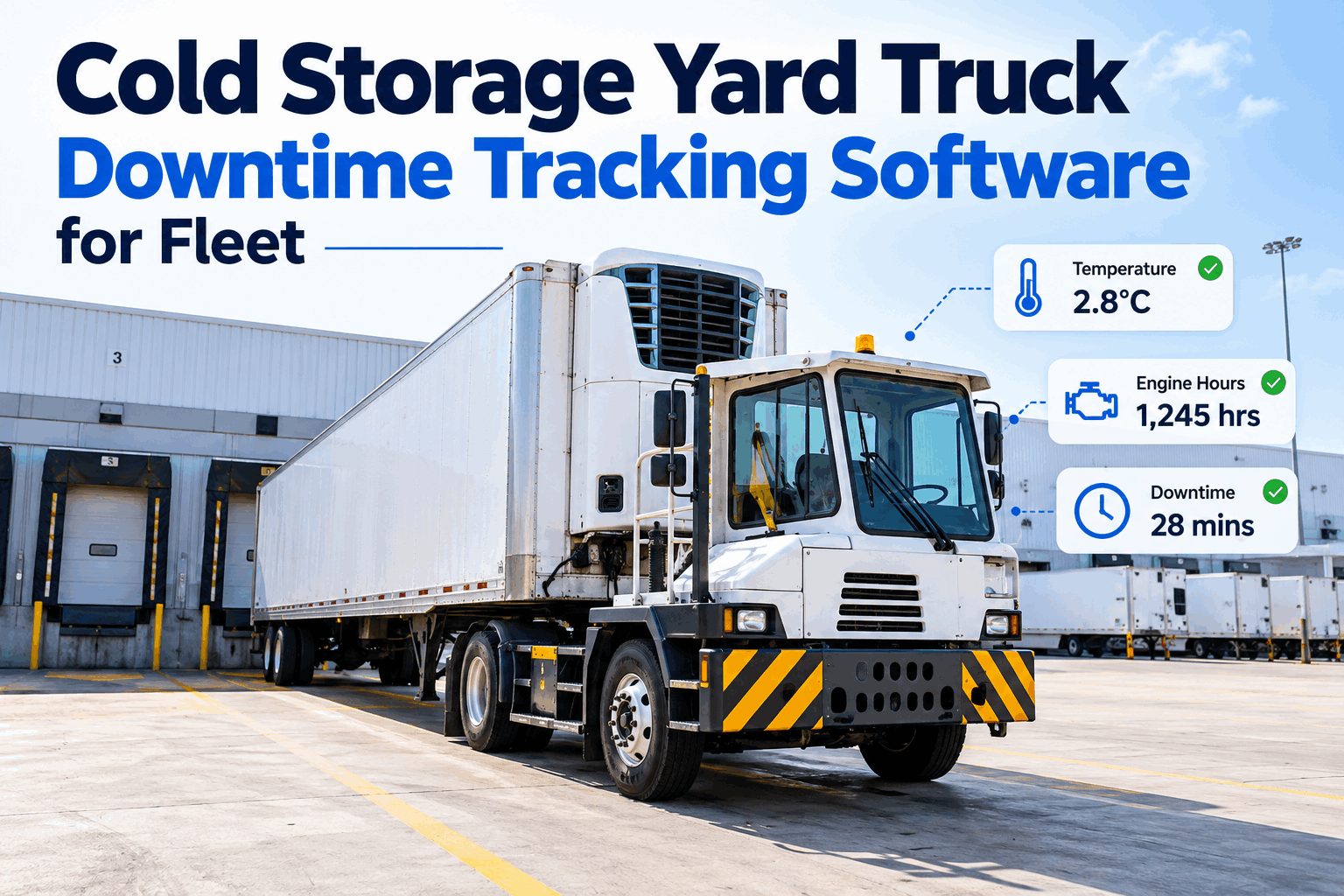
Commercial cold-chain fleet operators, used transport refrigeration unit (TRU) buyers, and perishable food logistics directors evaluate equipment reliability under severe operating conditions where equipment age is frequently obscured. In the refrigerated transportation industry, evaluating a reefer trailer or refrigerated straight truck based solely on tractor or chassis odometer mileage is one of the most financially damaging mistakes a buyer can make. A refrigerated trailer may log only 35,000 road miles in a regional distribution year while its auxiliary diesel engine accumulates more than 3,200 operating engine hours parked at distribution center cross-docks, holding critical temperature setpoints during prolonged yard staging, or pre-cooling prior to loading. Conversely, long-haul over-the-road reefers might roll 120,000 highway miles while accumulating minimal runtime hours under aerodynamic cruising and cycle-sentry start-stop operation. Relying on chassis mileage to time oil changes, schedule scroll compressor rebuilds, or determine secondary market resale valuation leads to sudden in-transit compressor seizures, missed preventative maintenance (PM) windows, and catastrophic cargo write-offs. Modern maintenance teams rely on integrated telematics software that pulls independent engine-hour telemetry directly from Carrier Transicold and Thermo King microprocessors. To see how hour-based tracking protects refrigerated equipment value, book a technical demonstration with our refrigeration maintenance engineers or begin tracking your assets immediately with our free account sign up.
Engine Hours vs Mileage for Reefer Fleets: Buyer Guide
The definitive engineering and procurement evaluation guide for refrigerated transport buyers. Compare the mechanical realities of road mileage versus auxiliary diesel engine hours, evaluate true depreciation curves, and discover how to calculate real operating costs before acquiring or maintaining reefer equipment.
Odometer Road Mileage
Reflects chassis suspension, brake drum friction, steer axle wear, and highway rolling resistance. Completely silent on transport refrigeration unit (TRU) mechanical fatigue.
TRU Diesel Operating Hours
Measures true combustion cycles, crankshaft revolutions, alternator current delivery, scroll compressor scroll fatigue, and refrigerant pump duty.
Protect Capital Investments by Tracking Real Refrigeration Hours
Eliminate equipment valuation blind spots, optimize auxiliary reefer preventative maintenance, and sync Carrier Transicold and Thermo King controller data starting from $3/vehicle/month with no proprietary hardware lock-in.
The Engineering Reality: Why Mileage Distorts Equipment Condition
The operational divide between chassis mileage and auxiliary engine run hours stems from how transport refrigeration units function across commercial food distribution supply chains. A dry freight trailer experiences mechanical degradation almost exclusively when its wheels are turning along asphalt highways. A refrigerated trailer, however, continues to run its 2.2-liter four-cylinder diesel engine while stationary at terminal cross-docks, customer delivery bays, customs inspection plazas, and distribution yards during multi-day holiday staging. In multi-stop direct-store-delivery (DSD) routes, a straight reefer truck may travel only 60 miles across an urban core in an 8-hour shift, but its refrigeration unit runs continuously under high thermal strain to recover from 25 rear roll-up door openings in 90-degree summer heat. Measuring service intervals by miles guarantees that oil viscosity breaks down, drive belts slip, and fuel filters plug long before the odometer signals a scheduled PM bay visit. Fleet buyers and maintenance planners can assess live engine-hour calculation models by booking a personalized reefer maintenance demo or configure test trailer telematics channels through our quick platform sign up.
Continuous vs. Cycle-Sentry Mode Disparities
Reefer microprocessors operate in two distinct modes: Continuous (constant engine running for tight-tolerance pharmaceuticals, fresh meat, and leafy produce) and Cycle-Sentry / Start-Stop (automatic shutdown once temperature setpoint is reached, ideal for frozen items). Two identical reefer trailers with 80,000 miles can possess drastically divergent mechanical profiles: a unit hauling fresh seafood on continuous run may have logged 4,800 engine hours, while a unit hauling frozen poultry on cycle-sentry may have accumulated fewer than 1,900 engine hours.
Cross-Dock Dwell and Stationary Pre-Cooling
Before a food shipper allows a trailer to touch a loading dock, the interior must be pre-cooled to the designated temperature (e.g., -10°F for ice cream or 34°F for fluid dairy). In humid summer conditions, pre-cooling an empty 53-foot trailer takes 90 to 180 minutes of maximum-output engine operation. When loading is delayed, trailers routinely run stationary for 12 to 24 hours in distribution yards without rolling an inch.
The Automotive Mileage Conversion Rule of Thumb
Refrigeration engineers use an empirical conversion ratio to explain stationary wear to executive finance teams: one hour of auxiliary diesel TRU operation equates to roughly 40 to 50 miles of highway driving wear on engine bearings, pistons, and lubrication packages. A reefer unit with 6,000 engine hours has endured the mechanical equivalent of 240,000 to 300,000 highway miles, regardless of what the trailer hubodometer states.
Secondary Market Valuation Traps
Used commercial equipment auctions and trailer dealerships frequently advertise low-mileage reefer trailers at premium prices. Unwary buyers discover months later that the low-mileage unit was previously utilized as an auxiliary stationary storage cooler at an overcrowded warehouse, racking up 14,000 engine hours and leaving the compressor on the verge of catastrophic failure.
Direct Technical Comparison: Mileage-Based vs. Engine-Hour-Based Maintenance
Relying on chassis odometer mileage to structure cold chain maintenance schedules leads directly to service intervals that are either dangerously delayed or unnecessarily premature. Review how traditional mileage-based maintenance management compares directly against FleetRabbit's connected, engine-hour-based telemetry platform across primary fleet reliability criteria. Transportation directors and asset buyers can explore custom life-cycle depreciation tables by scheduling a tailored equipment valuation demo or explore our pre-configured reefer profiles via self-service platform sign up.
| Fleet Management Dimension | Chassis Mileage Tracking (Hubodometer) | FleetRabbit TRU Engine-Hour Telemetry | Distributor & Buyer Advantage |
|---|---|---|---|
| PM Scheduling Accuracy | Poor; ignores hours accumulated in yards | Precise; triggers PM every 1,500/3,000 engine hours | Eliminates 64% of roadside auxiliary failures |
| Lubrication Oil Quality Control | Oil breaks down while truck sits at loading docks | Oil changes scheduled based on actual run-time | Prevents soot buildup and cylinder wall scoring |
| Drive Belt & Alternator Replacement | Belts snap unexpectedly during long dock dwells | Tension and replacement linked to operational hours | Avoids in-transit thermal alarm shutdowns |
| Used Equipment Valuation | Overpays for low-mileage trailers with high engine hours | Transparent appraisal based on total engine hours | Saves $4,000 - $8,000 per used trailer acquisition |
| Compressor Overhaul Timing | Guessed after expensive roadside lockup occurs | Planned overhaul between 12,000 and 15,000 hours | Eliminates emergency mobile technician callouts |
| Off-Road Diesel IFTA Tax Filings | Manual approximations or completely unclaimed | Automated auxiliary engine-hour consumption reports | Recovers up to $1,850 in fuel tax rebates per trailer |
4-Stage Equipment Life-Cycle & Preventative Maintenance Schedule
Operating a reliable refrigerated fleet requires tracking multi-stage maintenance milestones tied strictly to cumulative auxiliary diesel operating hours, ensuring maximum asset life and pristine food safety compliance.
Minor Service & Safety Audit
Replace primary engine oil and spin-on filters. Inspect drive belts for micro-cracking and tension deflection. Clean evaporator and condenser coils, calibrate defrost air switches, and verify refrigerant sight-glass moisture indicator.
Comprehensive Mechanical Service
Execute full PM-A checklist plus primary and secondary fuel filter replacement. Flush and replace engine coolant, inspect water pump impeller, test alternator charging diodes, and lubricate electric standby motor bearings.
Major Subsystem Overhaul
Replace all drive belts, idler pulleys, and vibration isolators. Perform laboratory oil analysis on compressor lubricant for acid levels and metal wear. Inspect engine valve lash clearances and test electric defrost heating elements.
Compressor & Engine Remanufacturing
Evaluate diesel engine compression across all cylinders and overhaul fuel injection pump. Inspect scroll compressor internal seals and shaft bearings, or execute a factory-remanufactured compressor swap to extend asset service life.
Total Cost of Ownership: Where Hour-Blind Fleets Bleed Capital
Operating or purchasing refrigerated trailers without continuous, engine-hour telematics tracking results in compounding financial drains: premature compressor lockups, unrecognized equipment depreciation, and unfiled off-road fuel tax rebates. Analyzing these systemic cost drivers helps cold-chain fleet executives build an airtight business case for hour-based maintenance and telematics adoption. Calculate your fleet's exact cost recovery by booking an operational assessment demo or get started directly via our rapid platform sign up.
Top Causes of Budget Waste in Hour-Blind Reefer Fleets
Telematics Engineering Capabilities
Extracts total diesel engine run hours, switch-on hours, and electric standby hours directly from Carrier APX and Thermo King SR-4 controllers.
Triggers digital PM tickets and reserves parts automatically as trailers approach 1,500 and 3,000 engine-hour milestones.
Monitors independent reefer fuel burn to calculate exact off-road fuel tax credits, eliminating manual spreadsheet estimations.
ROI & Procurement Framework for Equipment Buyers
When purchasing new or used refrigerated fleet assets, maintenance and finance leadership must look beyond purchase price and mileage to evaluate the complete total cost of ownership. FleetRabbit provides quantifiable financial returns across maintenance timing, asset appraisal, fuel recovery, and cargo protection.
Used Equipment Valuation
Auditing true controller engine hours prevents fleets from overpaying for visually clean, low-mileage trailers that possess exhausted, high-hour compressors on the verge of mechanical failure.
Roadside Callout Defense
Servicing refrigeration engines according to true operating hours prevents belt snapping, oil sludge formation, and compressor seizures during transit, eliminating costly emergency repairs.
Automated IFTA Fuel Rebates
Auxiliary diesel consumed by stationary refrigeration units qualifies for significant state and federal fuel tax refunds. Automated hour-based tracking produces certified audit reports.
Frequently Asked Questions: Engine Hours vs Mileage in Reefer Fleets
Why are engine hours more important than mileage when evaluating a used reefer trailer?
Chassis mileage only records road travel. A refrigerated trailer frequently operates its auxiliary diesel engine for hundreds of hours while stationary in distribution yards, pre-cooling, or staged at docks. An older trailer with only 100,000 road miles might have 12,000 engine hours (the equivalent of over 500,000 miles of engine wear), meaning its refrigeration compressor and engine are near the end of their operational lifespan.
What is the difference between total switch-on hours and diesel engine run hours?
Switch-on hours measure the total duration the reefer controller has been powered on, including periods when the diesel engine is off during cycle-sentry mode or when operating on electric standby shore power. Diesel engine run hours measure only the exact time the internal combustion diesel engine has been running. Preventative maintenance schedules for oil, belts, and fuel filters should always be based on diesel engine run hours.
How many engine hours can a transport refrigeration unit typically run before needing a major rebuild?
With strict adherence to preventative maintenance (servicing every 1,500 to 3,000 engine hours), modern commercial reefer diesel engines and scroll compressors (Thermo King, Carrier Transicold) typically run between 12,000 and 15,000 engine hours before requiring major overhaul or remanufactured component replacement.
Can FleetRabbit automatically track reefer engine hours without manual meter reading?
Yes. FleetRabbit connects directly to Carrier Transicold and Thermo King refrigeration controllers via standard serial and CAN-bus telematics interfaces. The platform continuously reads and logs engine hours, operating modes, and diagnostic trouble codes in real time, automatically triggering preventative maintenance work orders when hour thresholds approach.
Upgrade to Connected Engine-Hour Fleet Intelligence Today
Eliminate equipment valuation surprises, automate preventative maintenance scheduling, and protect refrigerated cargo integrity with real-time telematics. Experience FleetRabbit today with zero proprietary hardware lock-in.