FleetRabbit Cold Chain Features Overview for Food and Beverage
Food and beverage fleet operators face a compliance and operational challenge that no other sector encounters in the same form: every vehicle they run is simultaneously a transport asset, a food safety control point, a regulatory evidence generator, and a customer relationship risk. A refrigerated van carrying fresh-cut produce to a grocery chain is not just moving product — it is maintaining a documented chain of temperature custody that the shipper's food safety plan requires, that FSMA's Sanitary Transportation rule mandates, and that the receiver's food safety team will audit against if a quality issue surfaces at unloading. The fleets that protect product integrity, retain customer contracts, and pass FDA inspections without remediation share a common infrastructure: a unified platform that connects temperature monitoring, sanitation documentation, driver compliance, and maintenance scheduling into a single operational system rather than four separate tools managed by four separate teams. FleetRabbit's cold chain platform was built specifically for the food and beverage distribution sector — covering every compliance requirement and operational need across refrigerated fleets from 5 vehicles to 500. Explore FleetRabbit cold chain features with a free account or book a live cold chain demo with our team.
Why Food and Beverage Fleets Need Purpose-Built Cold Chain Software
General fleet management platforms track vehicles, log mileage, and schedule oil changes. They are not built for the food and beverage sector's specific operational reality: commodity-specific temperature thresholds that change by load, sanitation documentation requirements that differ by previous cargo, FSMA recordkeeping obligations that span two years per route, and the food safety audit demands of major grocery retailers and food service chains that go significantly beyond what any regulatory body requires. FleetRabbit's cold chain platform addresses each of these requirements at the feature level — not through workarounds applied to a generic fleet tool, but through capabilities designed from the ground up for refrigerated food and beverage distribution operations.
FleetRabbit Cold Chain Platform — At a Glance
60s
Live compartment temperature readings — every vehicle, every zone, updated continuously
<90s
Threshold breach to driver and dispatcher alert — intervention before product is compromised
<60s
FSMA compliance package generation — per route, per vehicle, or per date range on demand
78%
Average reduction in spoilage write-offs for FleetRabbit food fleets within the first operating year
See every cold chain feature running live. FleetRabbit's food and beverage fleet platform connects temperature monitoring, sanitation tracking, driver compliance, and FSMA documentation in one system.
Core Cold Chain Features: A Full Capability Overview
FleetRabbit's food and beverage cold chain platform is built around six integrated capability areas — each addressing a distinct operational requirement of refrigerated food distribution, and each feeding the same central compliance record that protects fleets during FDA inspections, customer food safety audits, and insurance reviews.
FleetRabbit Cold Chain Feature ArchitectureSix integrated capability areas — one unified compliance record per route
01
Real-Time Temperature Monitoring
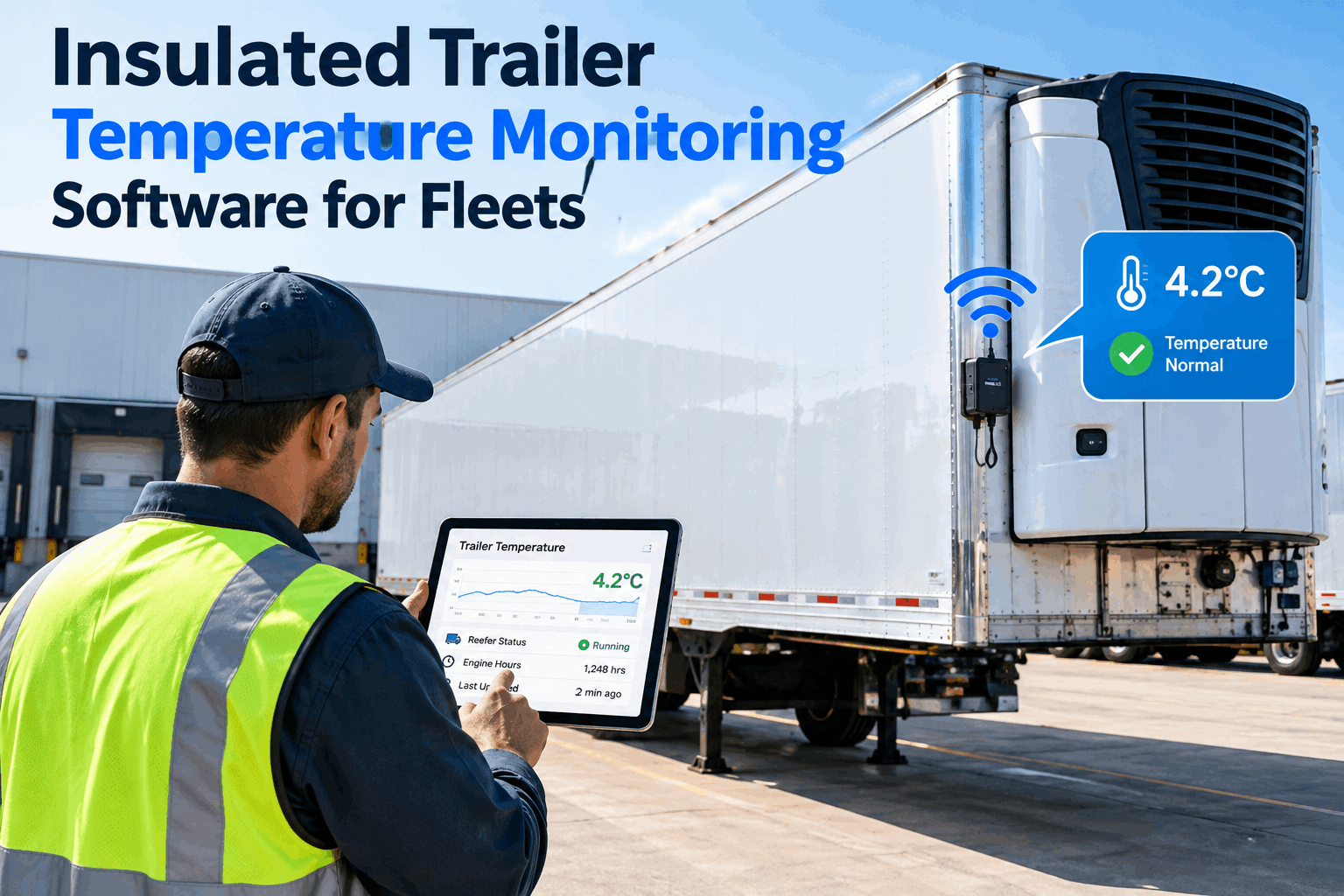
IoT sensors installed in every refrigerated compartment transmit temperature readings every 60 seconds to FleetRabbit's central dashboard — updated live, visible across all vehicles simultaneously. Multi-zone trailers are monitored zone-by-zone with independent thresholds per compartment. Readings are timestamped, GPS-tagged, and stored in an immutable database the moment they are received, creating the continuous cold chain documentation that FSMA's temperature control requirements and customer food safety audits demand. Historical temperature charts are accessible per route, per vehicle, and per commodity class without any manual compilation.
02
Instant Threshold Alerting with Escalation Logic
When any compartment reading exceeds a configured threshold, FleetRabbit generates an alert within 90 seconds — delivered simultaneously via push notification, SMS, and email to the driver, dispatcher, and fleet manager. Alert thresholds are configured per zone, per commodity class, and per shipper food safety plan. Escalation rules ensure that unacknowledged alerts reach supervisors automatically within a configurable window. Every alert event — trigger time, delivery confirmation, acknowledgement, and response action — is logged in the compliance record for that route, creating an auditable chain of cold chain responsiveness that FDA inspectors and customer food safety auditors specifically look for.
03
Digital Sanitation Logs and Wash Event Records
FSMA requires carriers to document cleaning and sanitising events with sufficient detail to demonstrate that sanitation procedures were followed — including wash facility identity, chemicals and concentrations used, and completion timestamp. FleetRabbit's digital sanitation log captures every wash event at the point of completion: wash facility name, chemical products and concentrations, contact time, technician attribution, and GPS-verified location. Records are linked immediately to the vehicle's compliance profile and are searchable by vehicle, date, and wash type in under 60 seconds. When a customer auditor or FDA inspector requests sanitation records for a specific vehicle on a specific date, FleetRabbit produces the complete wash history without any manual document retrieval.
04
Pre-Trip Digital Inspection Workflows
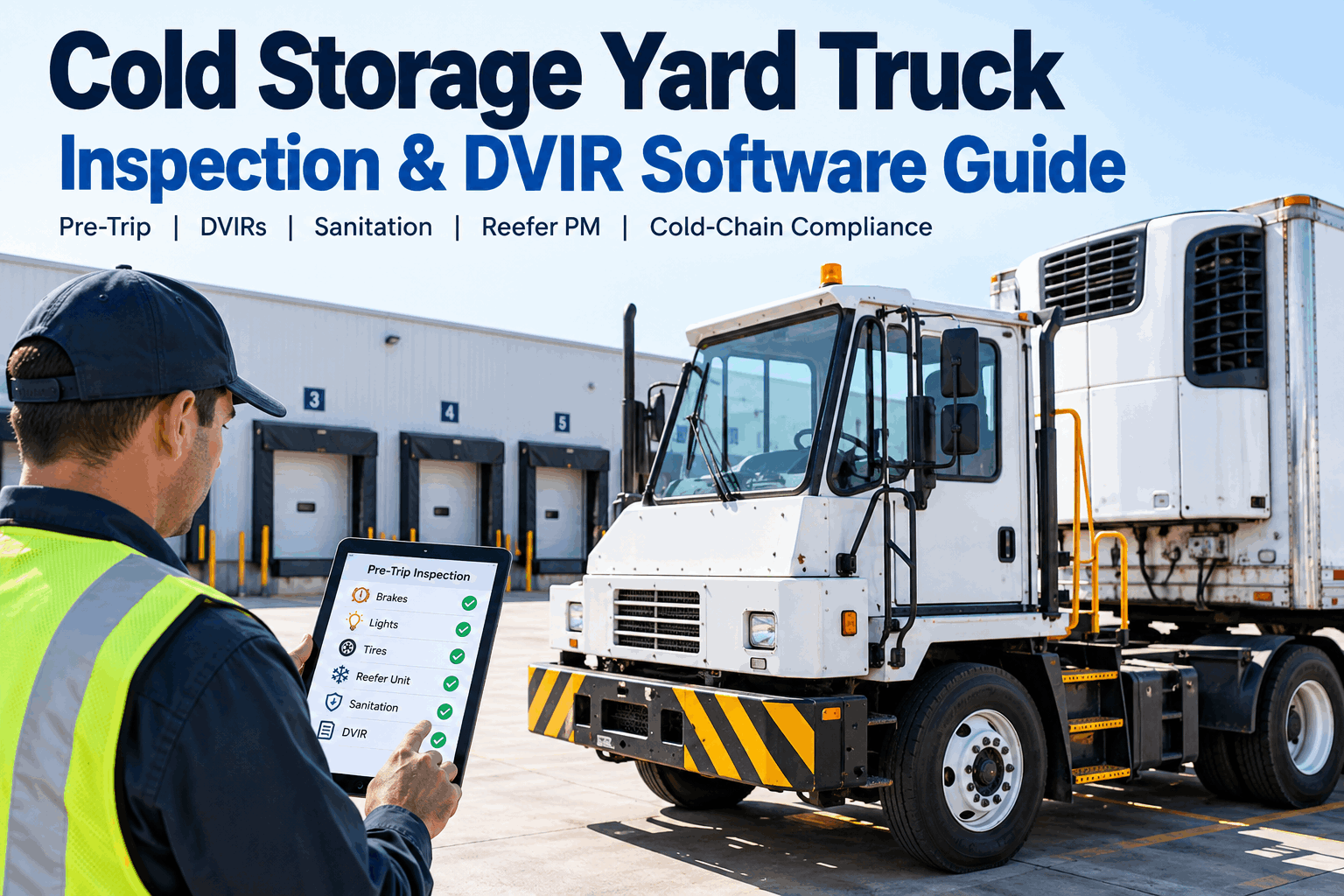
Digital pre-trip inspection checklists are pushed to drivers' mobile devices before every route — covering reefer pre-cool verification, door seal integrity, evaporator drain condition, sensor calibration status, and previous load compatibility confirmation. Mandatory fields prevent partial submissions. Photo capture for any flagged item creates visual evidence at the time of inspection. Failed inspection items trigger automatic maintenance work order generation and prevent dispatch clearance until the maintenance team resolves the issue and closes the work order. Every completed inspection is timestamped, GPS-tagged, and linked to the vehicle's compliance record — creating the pre-trip documentation evidence that FSMA's Sanitary Transportation rule requires for every food transport route.
05
Driver Hygiene and Training Documentation
FSMA requires carriers to ensure that personnel engaged in food transport are trained in sanitary transport practices commensurate with their duties. FleetRabbit's driver compliance module stores training completion records, refresher cycle dates, and driver acknowledgement of current sanitation procedures — linked to route assignments so that every route's compliance record confirms the assigned driver's training was current at the time of transport. Driver hygiene policy acknowledgements are captured digitally at shift start, creating shift-level documentation that FDA inspectors use to verify that your training programme is active rather than historical. Sign up for FleetRabbit to activate driver compliance documentation for your entire fleet from day one.
06
Preventive Maintenance and Reefer Performance Tracking
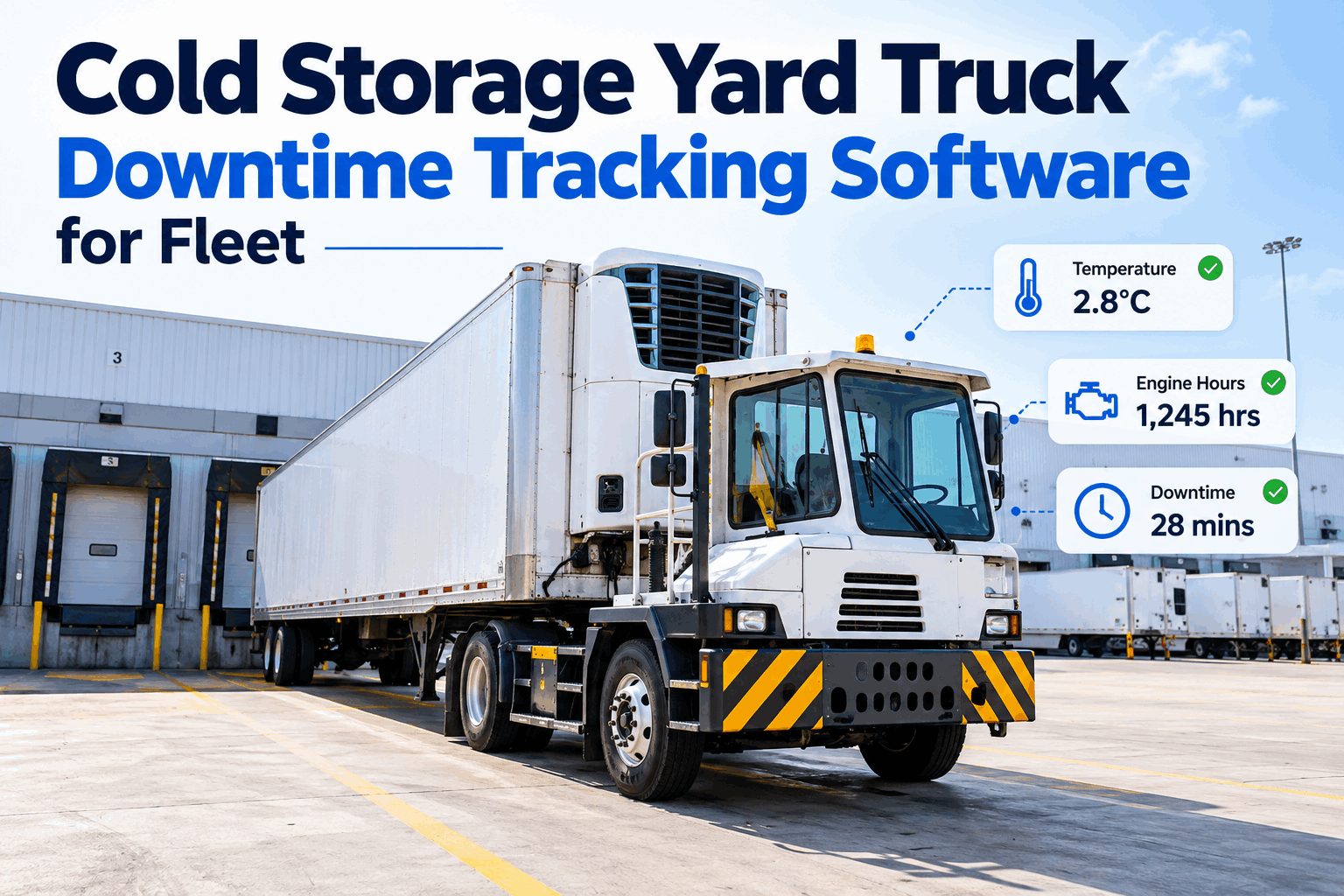
Reefer unit compressor degradation, refrigerant loss, and evaporator icing all follow predictable patterns before they cause mid-route cooling failures — but only if you are monitoring reefer performance data continuously. FleetRabbit tracks runtime hours, fuel consumption, temperature recovery times, and fault codes per reefer unit — generating preventive maintenance work orders at configured hour and calendar thresholds and surfacing anomalies that indicate developing mechanical issues before they escalate into load losses. PM compliance rates for FleetRabbit-managed reefer fleets average 97% within 60 days of deployment, compared to the 71% industry average for paper-based PM scheduling systems.
Cold Chain Feature Capability by Compliance Requirement
FSMA's Sanitary Transportation rule, major grocery retailer food safety audit standards, and food service chain supplier requirements each impose distinct documentation demands. The table below maps FleetRabbit's core cold chain features to the specific compliance requirements they satisfy — giving food fleet compliance managers a clear picture of which capabilities to prioritise based on their regulatory and customer audit exposure.
FleetRabbit Cold Chain Features vs. Compliance Requirements
Compliance Requirement
Applicable Standard
FleetRabbit Feature
Documentation Generated
Continuous Temperature Control
FSMA 21 CFR § 1.908(d)
Real-time IoT temperature monitoring
Per-route continuous temperature log with exceedance annotations
Vehicle Sanitation Procedures
FSMA 21 CFR § 1.908(b)
Digital pre-trip sanitation inspection
Timestamped inspection record with photo evidence per route
Wash Event Documentation
FSMA 21 CFR § 1.908(c)
Digital sanitation wash log
Chemical, concentration, technician, and facility record per wash event
Driver Training Records
FSMA 21 CFR § 1.910
Driver compliance module
Training completion, renewal dates, shift-start acknowledgement records
Two-Year Record Retention
FSMA 21 CFR § 1.912
Cloud compliance archive
All records retained with immutable timestamps, searchable on demand
Equipment Maintenance Evidence
Retailer food safety audit standards
PM scheduling and reefer tracking
Service history per asset with technician attribution and parts records
FleetRabbit generates all compliance documentation automatically as part of normal fleet operations — no manual data entry, no separate compliance workflows, no after-the-fact record reconstruction.
See which features apply to your fleet's compliance requirements. Our food fleet compliance team will map your specific FSMA obligations and customer audit requirements to the right FleetRabbit configuration.
Advanced Cold Chain Features for Food and Beverage Operations
Beyond the core compliance documentation capabilities, FleetRabbit's food and beverage cold chain platform includes a suite of advanced features that address the operational complexity of multi-shipper carriers, high-volume direct-store-delivery operations, and national food logistics networks running hundreds of refrigerated vehicles across multiple depot locations.
Advanced Cold Chain Features — FleetRabbit Food & Beverage Platform
Multi-Zone Independent Monitoring
Multi-temperature trailers carrying frozen, chilled, and ambient commodity classes simultaneously receive independent sensor placement, independent threshold configuration, and independent alert logic per zone. Inter-zone temperature deviation alerts surface bulkhead integrity failures before they compromise adjacent-zone loads. Zone-specific compliance reports satisfy per-commodity FSMA documentation requirements without manual data extraction.
Per-Shipper Threshold Profiles
Third-party logistics providers transporting food for multiple shipper accounts configure distinct temperature thresholds, sanitation procedure requirements, and compliance report formats per shipper — applied at the route level when each load is assigned. The correct shipper's food safety plan requirements are enforced automatically for each delivery, without manual reconfiguration between loads or routes.
Fleet-Wide Compliance Dashboard
A single-screen compliance status view shows the current cold chain status of every vehicle in the fleet — colour-coded by risk level, filterable by depot, route, driver, and commodity class. Compliance officers see in real time which vehicles are in-range, which have active threshold alerts, which have open corrective actions, and which have approaching maintenance intervals — across every vehicle simultaneously, without drilling through individual records.
Door Event and GPS Correlation
Door state sensors log every cargo door opening and closing with timestamp and GPS location — correlating door events with temperature data to identify whether temperature spikes at specific stops are caused by delivery door openings, reefer unit issues, or seal failures. Post-route door event reports show which delivery stops generate the most cold chain stress, enabling route sequencing and loading order optimisation based on actual temperature evidence rather than assumption.
Offline Data Capture for Dead Zones
Pre-trip inspections, loading temperature confirmations, and sanitation log submissions captured in cellular dead zones — loading docks, cold storage facilities, and remote depot locations — are stored locally on the operator's device and synced automatically when connectivity is restored. No data gap, no manual re-entry, no compliance record gaps caused by coverage limitations at critical capture points in the cold chain workflow.
Cold Chain Analytics and Trend Reporting
Fleet-wide analytics identify which vehicles, routes, drivers, and stops generate the highest frequency of temperature exceedances — enabling operations managers to intervene at the root cause rather than managing individual incidents in isolation. Trend data surfaces deteriorating reefer performance before it produces a spoilage event, and route-level temperature recovery analysis identifies which delivery sequences maximise cold chain protection for the most temperature-sensitive commodity classes in the fleet.
Want to see the analytics dashboard running on your fleet data? Book a demo and our team will configure a live walkthrough using a fleet profile that matches your vehicle mix and commodity classes.
Manual Cold Chain Management vs. FleetRabbit Platform
The operational and compliance gap between traditional cold chain management approaches and FleetRabbit's integrated platform is measurable in spoilage events prevented, audit outcomes improved, and compliance management hours eliminated. This comparison reflects what food and beverage fleets gain — and what they risk — based on their cold chain management approach.
Cold Chain Management Approach Comparison
Manual / Disconnected Tools
❌
Paper temperature logger tapes — two data points per route
Exceedances discovered at delivery, not during transit
Wash certificates filed in folders — unfindable under audit
Driver training tracked in spreadsheets with no renewal alerts
PM scheduled by calendar — misses high-utilisation reefer wear
Reactivespoilage, citations, and audit findings discovered after the damage is done
FleetRabbit Cold Chain Platform
✔️
One reading per minute — continuous temperature record per route
Threshold alerts in under 90 seconds — intervene before product loss
Digital wash logs — searchable by vehicle, date, and wash type
Automated training renewal alerts — no manual tracking required
Hour-based PM scheduling — catches reefer wear at the right interval
Proactiveevery compliance requirement met, every route, automatically
Stop Managing Cold Chain Compliance Manually. Start Generating It Automatically on Every Route.
FleetRabbit replaces disconnected cold chain management tools with a single platform that captures temperature data, sanitation records, inspection evidence, and driver compliance documentation automatically — on every route, across every vehicle, with zero manual data entry.
FleetRabbit Cold Chain Features by Fleet Operation Type
Food and beverage cold chain operations vary significantly in their monitoring complexity and compliance documentation requirements. FleetRabbit's platform configures to the specific operational profile of each fleet type — from single-temperature regional dairy runs to multi-shipper national food logistics networks carrying frozen, chilled, and ambient commodity classes simultaneously.
Cold Chain Feature Configuration by Fleet Operation Type
Fleet Operation Type
Key Cold Chain Features
Primary Compliance Output
Configuration Priority
Regional Fresh Produce
Narrow-band threshold monitoring, door event tracking, pre-cool verification
Route-level FSMA temperature log, per-delivery temperature confirmation
Chilling injury lower-bound alerts, post-stop temperature recovery tracking
Enterprise compliance reporting across all depots, per-vehicle audit packages
Consolidated dashboard with depot-level drill-down, fleet risk scoring
FleetRabbit's cold chain feature configuration is completed during onboarding by a food fleet compliance specialist — no generic templates, no one-size-fits-all threshold settings, no workarounds for operation-specific requirements.
We distribute fresh protein and produce to 340 grocery and food service accounts across four states — 31 refrigerated vehicles, three depot locations. Before FleetRabbit, our cold chain compliance programme was three separate systems that didn't talk to each other: a paper logger tape filing system, a spreadsheet-based wash certificate tracker, and a standalone driver training database. When our largest grocery account ran a supplier food safety audit and asked for the complete cold chain record for six specific deliveries across a 90-day window, it took our compliance team four days to assemble the documentation — and two of the six routes had gaps in the temperature record because a logger tape had been lost. We failed two of the six delivery reviews. After FleetRabbit, we passed our next supplier audit with zero findings. The auditor commented that our electronic cold chain records were among the most complete she had reviewed across her supplier portfolio. Every feature they mentioned — continuous temperature logs, sanitation records, pre-trip inspections — was already there in FleetRabbit.
— VP of Logistics Operations, Fresh Protein and Produce Distributor — 31 Refrigerated Vehicles — 3 Depot Locations — FleetRabbit Cold Chain Active
Frequently Asked Questions
How does FleetRabbit's temperature monitoring hardware install on existing refrigerated vehicles?
FleetRabbit's IoT temperature sensors install in refrigerated compartments via a self-contained cellular-connected data logger — no vehicle wiring modification required. Sensors are mounted in the return-air stream for accurate compartment temperature representation rather than discharge-air temperature, which can differ by 10–15°F from the actual product environment temperature. Installation is completed by a FleetRabbit-certified technician in 60–90 minutes per vehicle. Multi-zone trailers receive independent sensors per zone with independent cellular transmission. Sensor calibration is verified against a NIST-traceable reference thermometer at installation, and FleetRabbit tracks calibration dates per sensor — alerting before recalibration intervals expire. The complete hardware specification for your vehicle mix is confirmed during the pre-deployment assessment at no cost before any hardware is ordered.
Can FleetRabbit generate compliance documentation in the formats that major grocery retailer food safety audits require?
FleetRabbit's compliance report templates are configurable to match the documentation format requirements of major grocery retailer supplier food safety programmes — including continuous temperature log formats, sanitation record structures, and corrective action documentation frameworks that major retail audit standards specify. For 3PL operations transporting product for multiple shipper accounts, FleetRabbit supports customer-branded compliance report templates that present the shipper's own food safety programme requirements in the report header — so the documentation your fleet generates matches the format the shipper expects to receive. Schedule a demo to review the compliance report templates available for your specific customer audit requirements.
How does FleetRabbit handle food fleet compliance documentation for multi-depot operations?
FleetRabbit supports multi-depot food fleet operations with a consolidated enterprise compliance dashboard that shows fleet-wide cold chain status across all depot locations simultaneously — while retaining complete depot-level and vehicle-level granularity for site-specific compliance reports. Each depot maintains its own vehicle asset registry, driver pool, route assignments, and compliance record archive — accessible from the enterprise dashboard without requiring separate platform instances or data exports between sites. When an FDA inspector arrives at a specific depot location, the site's complete compliance record is generated in under 60 seconds from the local dashboard. When a corporate food safety officer needs a fleet-wide compliance overview, the enterprise dashboard consolidates all sites in a single view. Sign up for a free account to explore the multi-depot dashboard configuration options.
What does FleetRabbit's cold chain onboarding process look like for an existing refrigerated fleet?
FleetRabbit's food fleet onboarding follows a structured four-phase process: fleet assessment and hardware specification (days 1–5), sensor installation and connectivity verification across all vehicles (days 6–14), threshold configuration, alert protocol setup, and driver training deployment (days 15–21), and full fleet live monitoring with compliance documentation active (day 22 onwards). Most food distribution fleets have the first vehicles live within five days of hardware delivery. The onboarding process includes a review of your existing written sanitation procedures against FSMA requirements, configuration of inspection checklists to reflect those procedures, and alert escalation protocol design based on your dispatcher and management structure. FleetRabbit's food fleet compliance specialist manages the technical deployment — the compliance manager's primary involvement is threshold configuration review and escalation protocol sign-off, not technical setup.
Every Cold Chain Feature. One Platform. Every Route Compliant.
FleetRabbit gives food and beverage fleets real-time temperature monitoring, instant threshold alerts, digital sanitation logs, pre-trip inspection workflows, driver compliance documentation, and reefer preventive maintenance — unified in a single platform that generates FSMA compliance evidence automatically on every route, across every vehicle, in every depot.