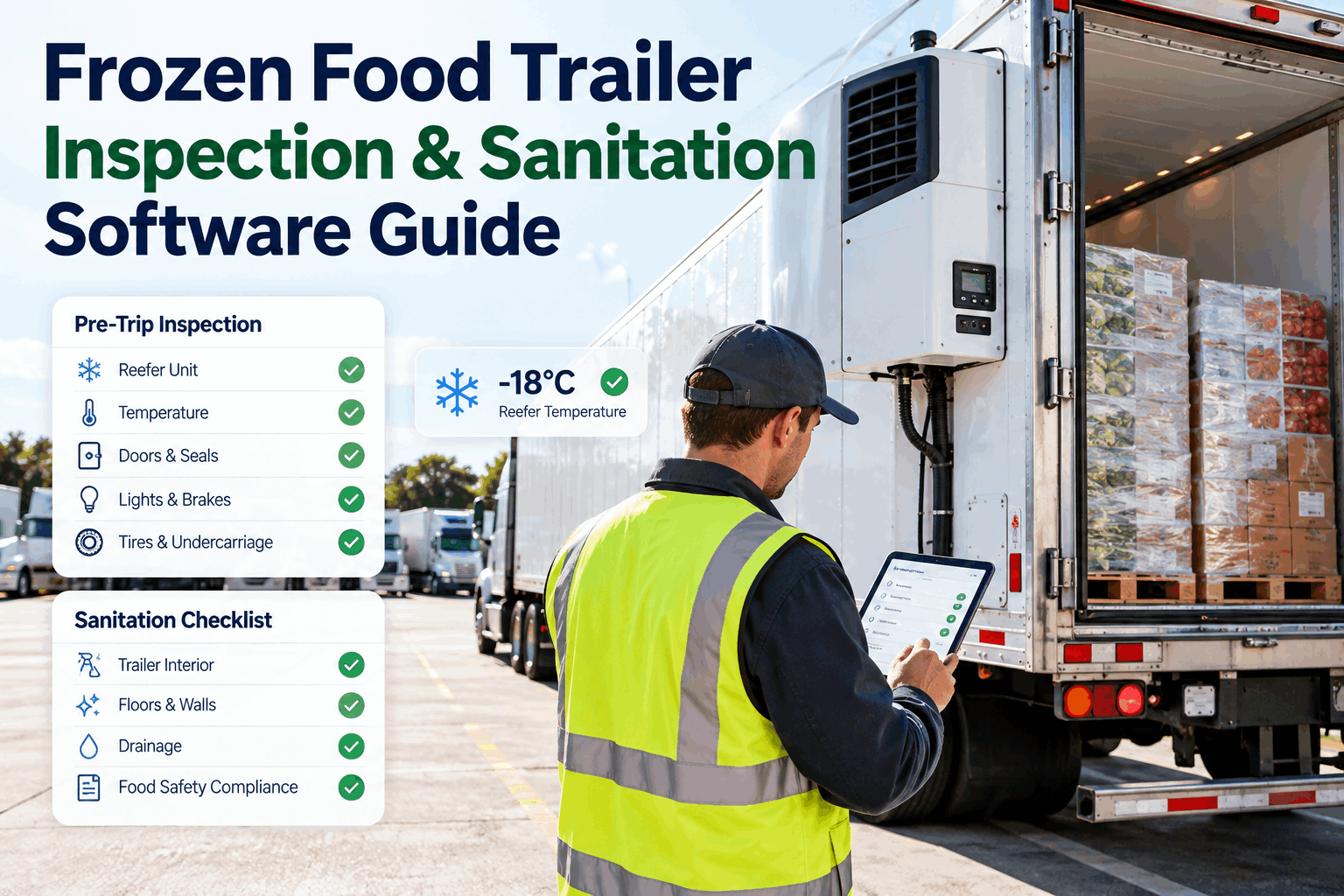
A frozen food trailer can pass every temperature check and still fail the load. Cold isn't the only thing protecting the product, cleanliness is too, and a trailer that hauled something else last week can carry odor, residue or pest evidence that no thermometer will ever catch. Pre-trip inspection and sanitation inspection are really two different questions: is this trailer mechanically sound, and is it clean enough to load. Most checklists only ask the first one. See how FleetRabbit runs both inspections digitally, every time.
Frozen Food Trailer Inspection Software for Pre-Trip and Sanitation, Both Covered
Run mechanical pre-trip checks and sanitation inspections as two clear steps, digitally logged, with reefer PM and FSMA-ready records behind every load.
Two Questions, Two Checklists
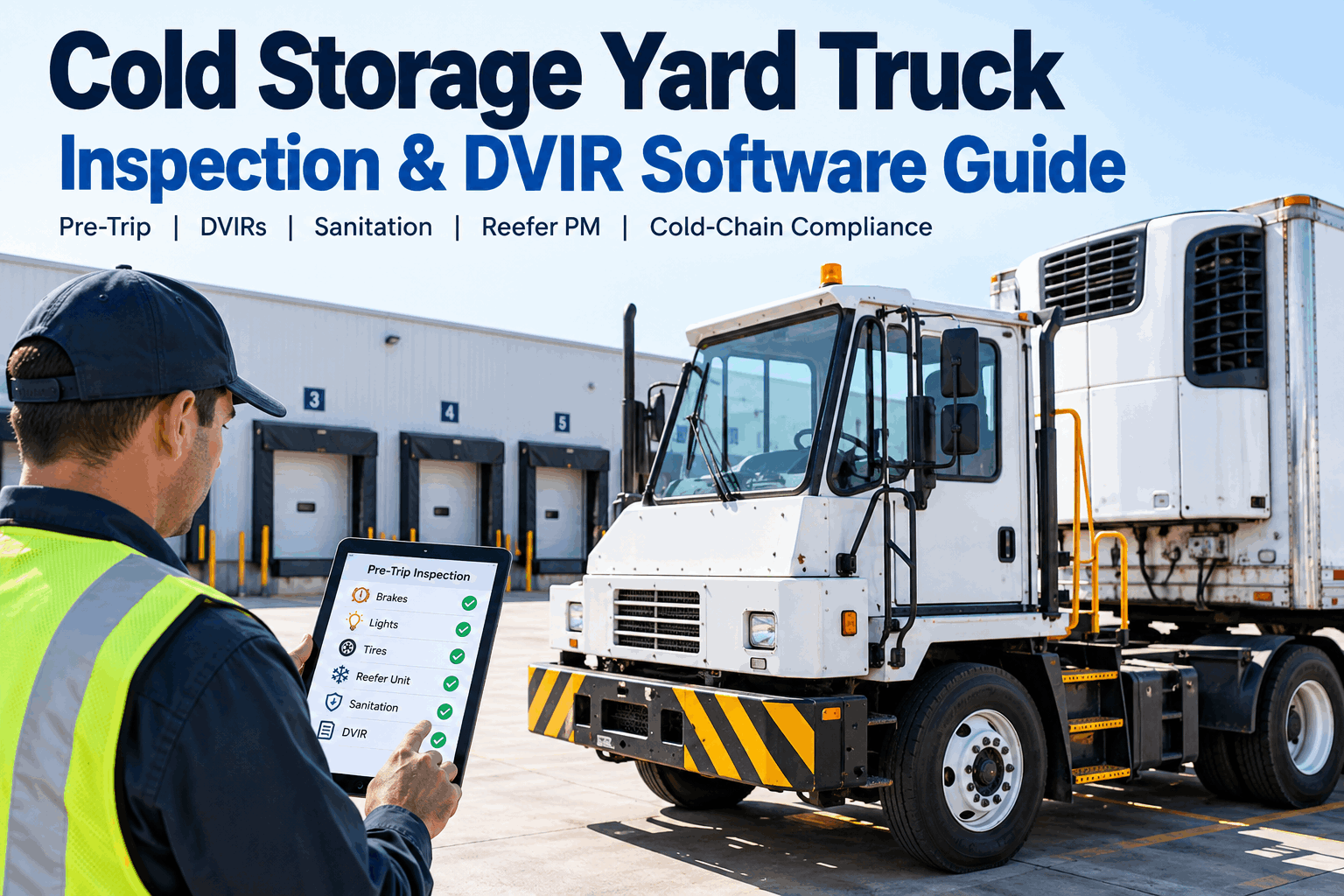
A mechanical pre-trip inspection answers whether the trailer will get the load there: brakes, tires, lights, the reefer unit itself. A sanitation inspection answers a completely different question: whether the inside of that trailer is safe to put frozen food in at all. Treating these as one combined checklist tends to shortchange sanitation, since a driver scanning for mechanical defects isn't necessarily trained to spot the signs that matter for food safety.
Give sanitation its own checklist, not an afterthought
Two digital inspections, mechanical and sanitation, both logged before the trailer is loaded. Free for your first three vehicles.
What a Sanitation Failure Actually Looks Like
Sanitation problems are rarely dramatic. They're a faint smell that wasn't fully aired out, a bit of residue in a corner that's easy to miss in a quick glance, or a drain that's been slow for weeks and nobody flagged it. None of that shows up on a mechanical inspection, and none of it will trip a temperature alarm. It only shows up when someone is specifically looking for it, with a checklist built for that purpose.
Where Sanitation Fits in the Trip
Previous load's residue and odor are freshest and easiest to catch here.
Cleaning happens based on what the last load actually required.
Checked and signed off before anything new is loaded.
Mechanical check confirms the trailer is road-ready.
Both records attached to the load, not just the trip.
Don't Forget the Reefer's Own Schedule
Sanitation and mechanical inspections catch what's happening right now. The reefer unit still needs its own preventive maintenance behind the scenes, on engine hours rather than trailer mileage, since the unit often runs independently of how far the trailer has actually traveled.
FSMA and the Sanitation Record
FSMA's sanitary transportation rule (21 CFR Part 1, Subpart O) expects vehicles and equipment used to transport food to be suitable and kept in sanitary condition, with attention to prior cargo that could create a food safety risk. Exact obligations depend on your role and agreements, so confirm specifics with your compliance team, but the practical takeaway is the same either way: a documented sanitation check is what turns "we're pretty sure it was clean" into a record you can actually produce.
What FleetRabbit Gives a Frozen Trailer Fleet
Frequently Asked Questions
They answer different questions. A mechanical check confirms the trailer can safely make the trip, while sanitation confirms it's clean enough to carry food at all. Combining them tends to shortchange sanitation.
Right after the trailer returns empty and before it's loaded again, since residue and odor from the previous load are easiest to catch at that point.
Odor, visible residue, evidence of pests, and drain condition are common items, alongside anything specific to what the trailer carried last.
It creates a documented, searchable sanitation record, which supports those requirements. Confirm exact obligations with your compliance team.
Yes. Start free with three vehicles and scale up as your fleet grows.
Clean and Roadworthy. Both, Every Time.
Mechanical pre-trip and sanitation inspections, reefer PM and FSMA-ready records in one place. Free for your first three vehicles.