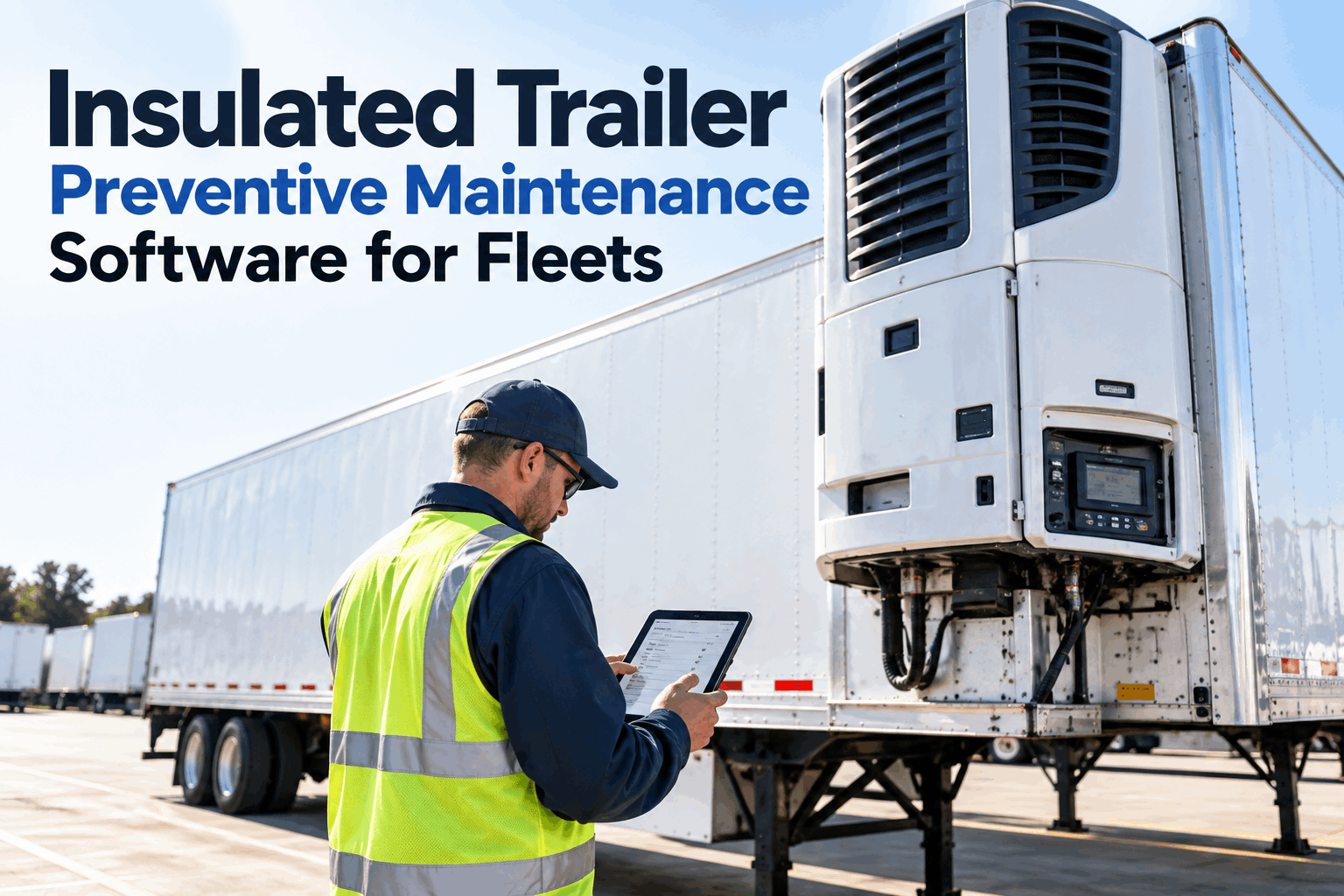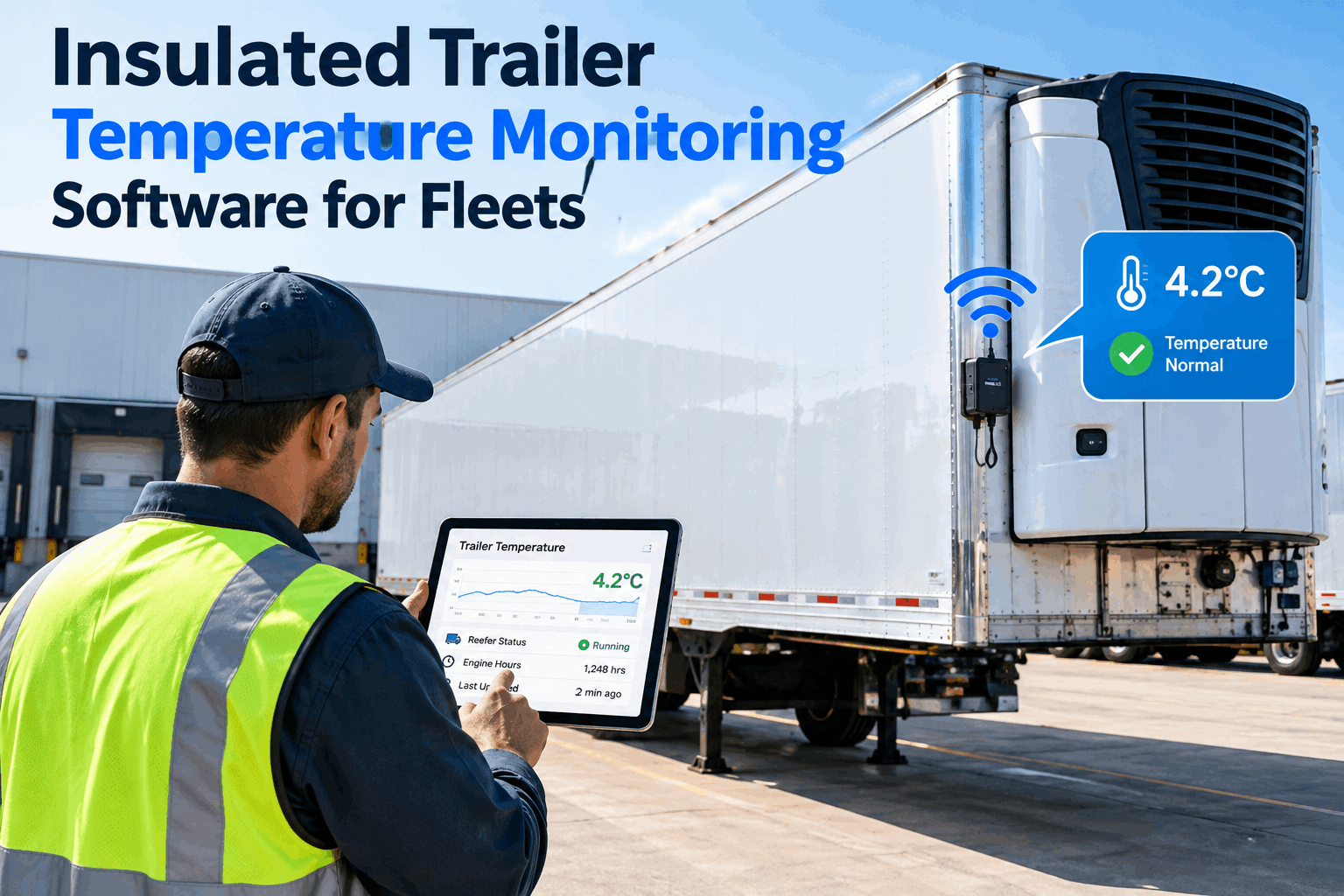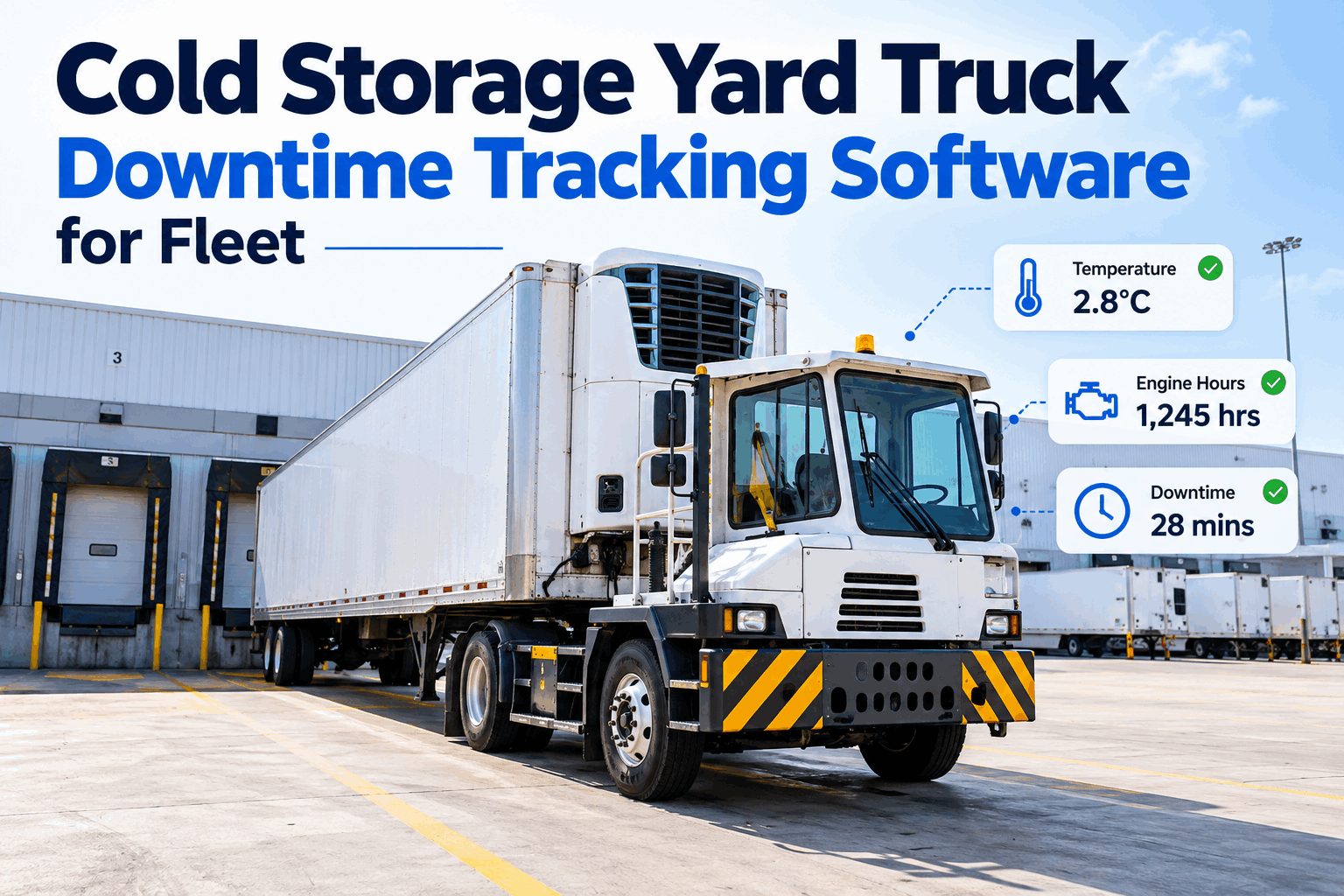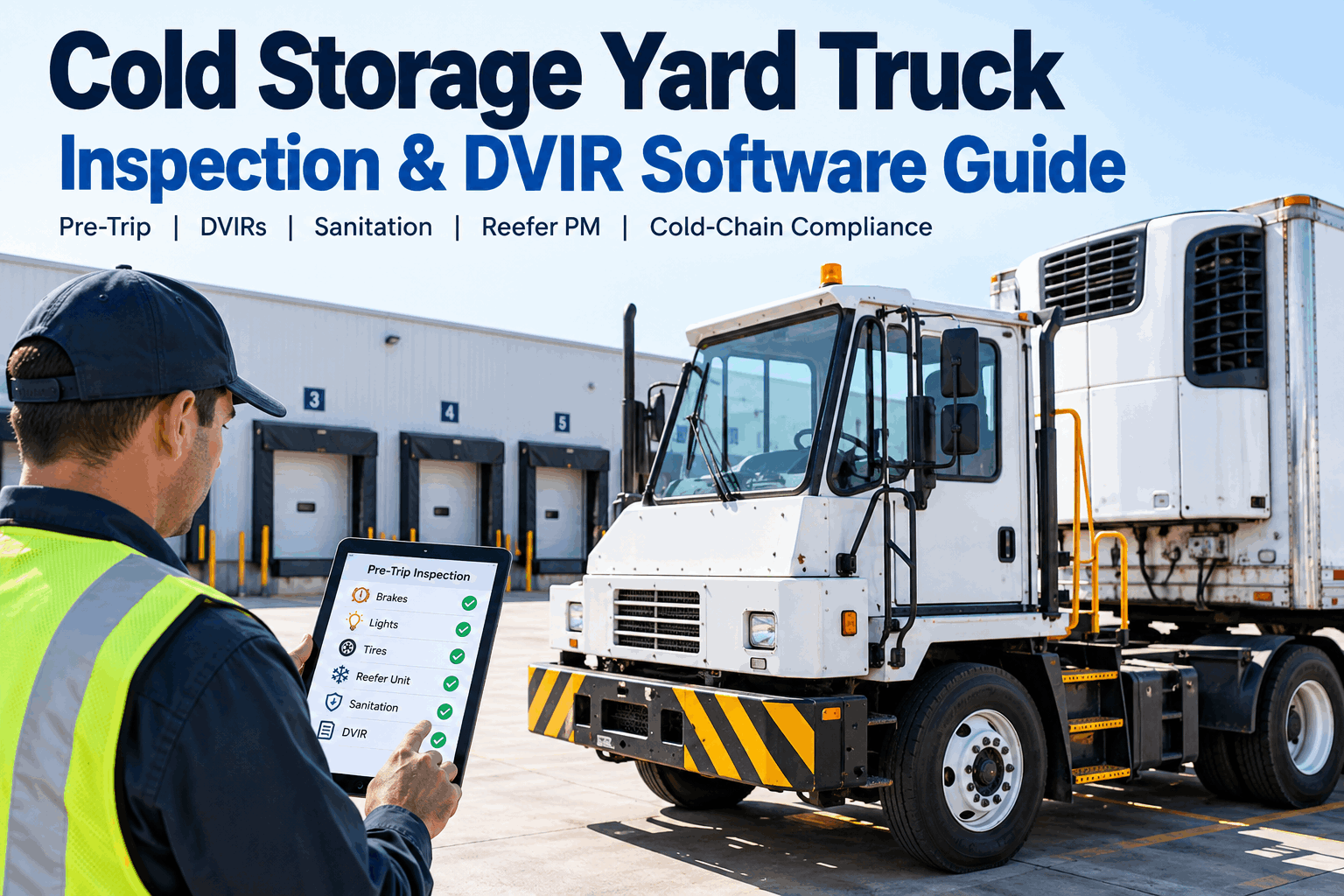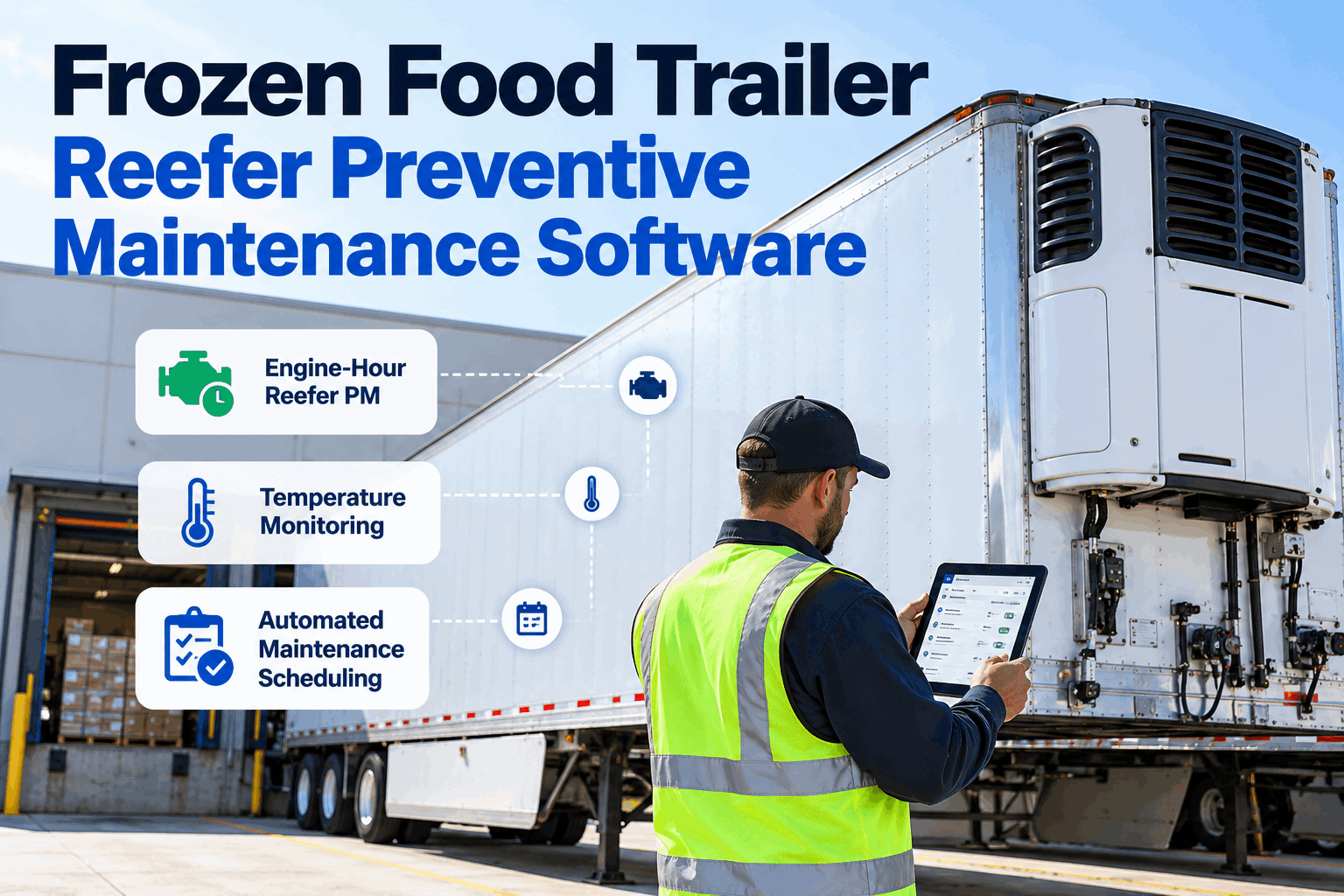
A frozen food trailer can look perfect at the dock and still be a few hundred engine hours from a reefer failure. The trailer's odometer will not warn you, because the refrigeration unit runs on its own clock, even while the trailer sits parked. When that clock is missed, the first sign is often a temperature alarm halfway through a delivery. Fleets that schedule reefer PM by engine hours catch the problem in the shop instead. See how FleetRabbit automates engine-hour reefer PM and keep every frozen load protected.
Frozen Food Trailer Reefer Preventive Maintenance Software: Engine-Hour PM That Protects Every Load
Your reefer unit and your trailer wear on different clocks. Learn how to schedule both, keep temperatures where shippers expect them and show proof when an auditor asks.
One Trailer, Two Maintenance Clocks
A reefer trailer is really two assets bolted together. The trailer wears with road miles. The refrigeration unit wears with run time, and it keeps running at the dock, on standby and through long loading waits. Reefer units often log thousands of hours a year, so a trailer that barely moved can still be overdue.
Trailer clock
Miles and date Brakes and tires Landing gear and lights Doors, seals and floor Annual inspectionReefer unit clock
Engine hours Oil and filters Belts and coolant Refrigerant and condenser coil Controller and alarm checksWhat an Hour-Based PM Ladder Looks Like
Manufacturers publish their own intervals, and they differ by make, model and duty cycle. A common pattern is an inspection around every 750 hours, a service at 1,500 and a deeper service at 3,000. Always follow your unit's manual.
Operating hours on the reefer's hour meter. Example pattern only, not a manufacturer schedule.
How One Missed Interval Becomes a Rejected Load
Reefer failures rarely start with a bang. They build step by step, and every step is cheaper to stop early.
Frozen Loads Come With Paperwork
The FDA's Sanitary Transportation rule puts real duties on carriers of food that needs temperature control. It does not set one universal temperature or prescribe PM intervals, but a well-maintained unit is how you meet these obligations.
Put Every Reefer Unit on the Right Clock
Schedule engine-hour PM, trailer PM, inspections and repairs for every frozen food trailer in one system. Free for your first three vehicles.
Three Layers of Reefer Care
Strong programs stack three rhythms, from daily checks at the base to deeper service at the top.
How FleetRabbit Tracks a Frozen Food Trailer
Each trailer becomes one record with two tracks underneath it. Start free and set it up in minutes.
Trailer body
Miles and date Mileage or date-based PM Digital pre-trip inspections Annual inspection tracking Work orders and repair costReefer unit
Engine hours Hour-based PM with due and overdue alerts Its own inspection checklist Temperature and setpoint tracking Downtime and service historyNumbers That Show Your Reefer Program Is Working
Frequently Asked Questions
It is scheduled service on the refrigeration unit and the trailer before failures happen. For the reefer that means oil, filters, belts, coolant, refrigerant and coil care on an engine-hour schedule.
Follow the manufacturer's manual. Commonly cited patterns include inspections near 750 hours, service around 1,000 to 1,500 hours and deeper service near 3,000, with shorter intervals in hard duty.
The unit runs while the trailer is parked, at docks and on standby. Miles do not capture that run time, so an hour meter is the only reliable trigger.
Frozen loads are commonly held at 0°F (-18°C) or colder, but the shipper specifies the operating temperature. The FDA rule does not set one universal temperature.
The Sanitary Transportation rule requires carriers to keep equipment in suitable condition, maintain the agreed temperature and keep records for 12 months. It does not set PM intervals, so strong service history is your proof.
Yes. You can start free with three vehicles and add more as your fleet grows.
Stop Guessing When the Reefer Is Due
Engine-hour PM, inspections, work orders, downtime and temperature tracking for your whole cold-chain fleet in one system. Free for your first three vehicles.