The FDA's Sanitary Transportation of Human and Animal Food rule — 21 CFR Part 1, Subpart O — came into effect for larger carriers in 2017 and has been progressively enforced across the food distribution industry since. Yet the majority of food fleet operators who believe they are compliant are operating on a definition of compliance that would not survive an FDA inspection or a customer food safety audit. Written procedures that exist as PDFs nobody has read. Cleaning logs that are technically maintained but contain entries made in bulk at the end of the week rather than immediately after each wash event. Temperature monitoring records that exist only as paper logger tapes stored in a filing cabinet organised by nobody. Pre-trip vehicle inspections that are signed by drivers who never left the cab. FSMA compliance for food fleets is not a documentation format problem — it is an operational consistency problem. The rule requires documented evidence that controlled sanitary transport practices were followed on every route, by every driver, across every vehicle. The only way to achieve that at scale is through digital systems that capture compliance evidence automatically as part of normal operations rather than as a separate administrative burden imposed on an already stretched fleet operation. Start your FleetRabbit FSMA compliance journey today or book a compliance demo with our team.
FleetRabbit FSMA Compliance Intelligence
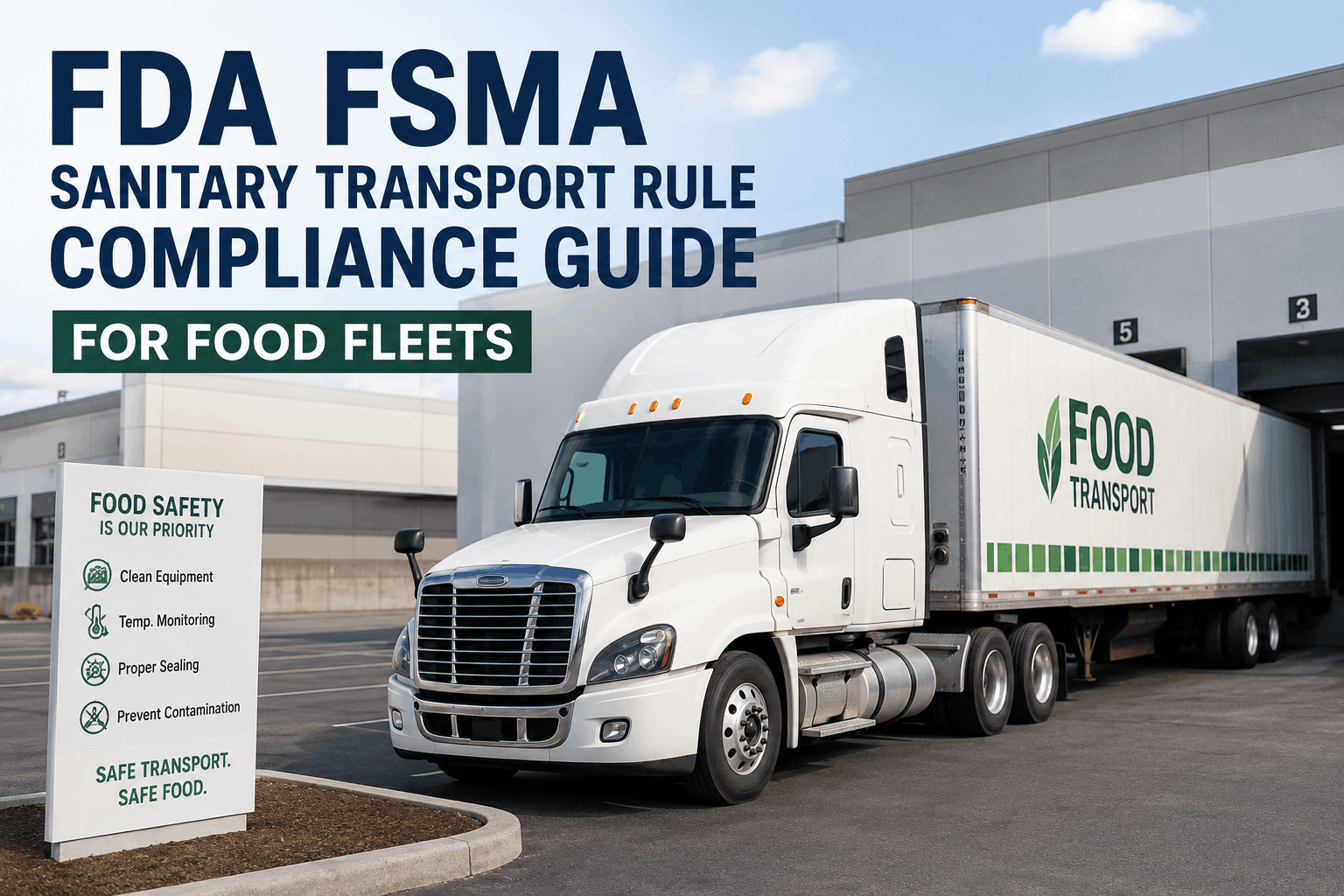
FDA FSMA Sanitary Transport Rule Compliance Guide for Food Fleets
A step-by-step guide to mastering 21 CFR Part 1, Subpart O for food distribution fleets. Covers written procedures, vehicle sanitation controls, temperature monitoring, recordkeeping, and how FleetRabbit automates FSMA compliance evidence across every route and every vehicle in your fleet.
2017FSMA Sanitary Transport Rule Effective Date for Large Carriers
21 CFRPart 1 Subpart O — The Regulatory Framework Every Food Fleet Must Meet
2 YearsMinimum FSMA Record Retention Requirement for All Compliance Documentation
<60sFleetRabbit Compliance Package Generation for FDA Inspectors
What the FSMA Sanitary Transport Rule Actually Requires — And Where Fleets Fall Short
Most food fleet operators have heard of the FSMA Sanitary Transport rule. Fewer have read the regulation in full, and fewer still have mapped their current operational practices against each of the four primary compliance requirements the rule imposes. The gap between what fleets assume they are doing and what the rule actually requires is where FDA warning letters, customer contract terminations, and product recall exposures originate. Understanding each requirement precisely — and where manual systems consistently fail to satisfy it — is the essential starting point for building a food fleet compliance programme that holds up under scrutiny.
Written Procedures Requirement
§ 1.908(b) — Carrier Sanitation Procedures
The rule requires carriers to develop, implement, and maintain written procedures for maintaining vehicles and transportation equipment in a sanitary condition — including procedures for cleaning, sanitising, and ensuring that transportation equipment is suitable for the food it will carry. The most common failure here is not the absence of written procedures but the absence of evidence that those procedures are actually followed. Having a procedure document is not compliance. Having documented evidence that the procedure was followed on every route, by every driver, is compliance. FleetRabbit's digital pre-trip inspection system captures procedure adherence at the point of execution, creating an unbroken documented evidence trail that links every route to the specific sanitation procedures that were followed before departure.
Vehicle Sanitation Controls
§ 1.908(c) — Sanitary Conditions During Transport
Carriers must ensure that vehicles and equipment used for food transport are maintained in a sanitary condition — clean, pest-free, and free of conditions that could render food unsafe or unsuitable. The specific requirement covers cargo compartment cleaning and sanitising between loads when the previous load was a non-food item or a food that poses allergen or contamination risk to the current load. The compliance failure here is documentation: fleets that physically clean vehicles but record the cleaning in paper logs that are incomplete, illegible, or completed retrospectively cannot demonstrate compliance at the point of audit. FleetRabbit's digital sanitation log captures wash event details — facility, chemicals used, concentrations, contact time, technician identity, and timestamp — at the point of execution, with mandatory field completion enforced before the inspection can be submitted.
Temperature Control Requirements
§ 1.908(d) — Temperature-Controlled Transport
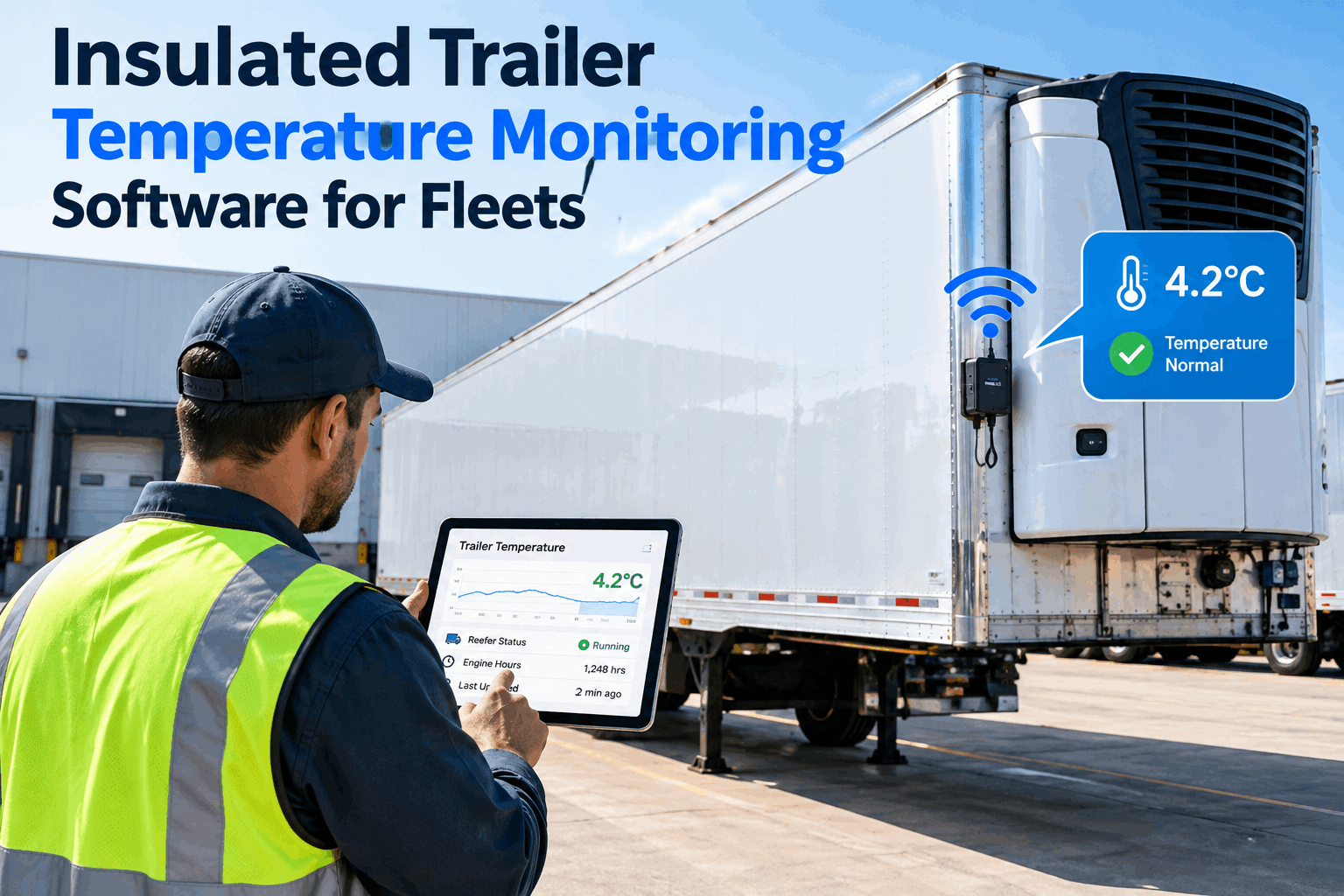
For temperature-controlled food transport, the rule requires carriers to pre-cool transportation equipment to the required temperature before loading TCS foods, maintain required temperatures during transport, and have records demonstrating that temperature controls were applied. The compliance failure mode is continuous temperature data rather than point-in-time records — a temperature reading at loading and a reading at delivery does not demonstrate continuous temperature maintenance for the duration of transit. FleetRabbit's IoT temperature monitoring provides continuous compartment temperature logging with timestamped readings at configurable intervals, generating the unbroken temperature record that FSMA requires and FDA inspectors specifically look for when evaluating cold chain compliance documentation.
Six Steps to Full FSMA Sanitary Transport Rule Compliance for Food Fleets
Full compliance with the FSMA Sanitary Transport rule is not achieved by purchasing a software platform and declaring the compliance programme complete. It requires a structured implementation process that covers written procedures, vehicle and equipment controls, driver training, temperature monitoring infrastructure, recordkeeping systems, and ongoing audit readiness maintenance. The six steps below reflect the implementation sequence that FleetRabbit's food fleet compliance team has refined across hundreds of carrier deployments — from small regional food distributors to national multi-depot operations running hundreds of refrigerated vehicles.
01
Document Your Written Sanitation Procedures
The foundation of FSMA Sanitary Transport compliance is a set of written procedures that cover every aspect of sanitary transport operations — vehicle cleaning and sanitising protocols, previous load compatibility assessment procedures, temperature pre-cooling and monitoring requirements, driver hygiene standards, and pest control verification steps. These procedures must be specific enough to be followed consistently by every driver across every shift and vehicle — not generic enough to mean anything. FleetRabbit's compliance template library provides FSMA-aligned procedure templates for common carrier operations that food fleet managers adapt to their specific routes, commodity classes, and equipment types. Once finalised, procedures are stored in the FleetRabbit platform and referenced directly from digital pre-trip inspection checklists — ensuring drivers complete inspections against the current written procedure version rather than from memory or outdated printed forms.
02
Deploy Digital Pre-Trip Sanitation Inspection Checklists
Pre-trip vehicle sanitation inspections are the primary evidence mechanism for demonstrating that written sanitation procedures are being followed before every food transport route — and they are the most consistently incomplete element of food fleet FSMA compliance programmes when managed on paper. FleetRabbit's digital pre-trip inspection system deploys FSMA-structured sanitation checklists directly to each driver's mobile device, requiring completion before the route's operational status is updated. Mandatory fields prevent partial submissions. Photo capture for identified defects creates visual evidence of conditions at the time of inspection. Automatic work order generation when a sanitation-critical defect is flagged ensures that vehicles are not cleared for food service with open sanitation issues. Every completed inspection is timestamped, GPS-tagged, and linked to the vehicle's compliance record — creating the documented evidence that FSMA requires at the point of capture rather than through retrospective reconstruction.
03
Implement Continuous Temperature Monitoring
FSMA's temperature control requirements cannot be satisfied by manual temperature readings at loading and delivery. The rule's intent is continuous temperature maintenance, and FDA inspectors evaluating temperature compliance documentation look for records that demonstrate unbroken temperature control throughout the transit period — not point-in-time snapshots. FleetRabbit's IoT temperature monitoring system installs calibrated sensors in refrigerated compartments that transmit readings at configurable intervals — typically every 60 seconds for active food distribution — to a central compliance dashboard. Temperature logs are stored with timestamps, GPS location, and vehicle attribution. Threshold alert events — when compartment temperature exceeds or falls below acceptable limits — are logged with trigger time, alert delivery timestamp, and response action documentation. The complete temperature record for every route is exportable as a PDF compliance document that satisfies FSMA's documented information requirements and is formatted for direct submission to FDA inspectors or customer food safety auditors.
04
Build Driver Hygiene and Training Documentation
FSMA requires that carriers ensure personnel engaged in food transport operations are trained in sanitary transport practices commensurate with their duties. This training requirement extends to driver hygiene practices, illness reporting protocols, proper PPE use, and the specific sanitation procedures applicable to the food categories they transport. Documenting training completion, refresher cycles, and driver acknowledgement of current procedures is a distinct compliance requirement from the vehicle sanitation controls — and one that FDA inspectors test specifically. FleetRabbit's operator profile system stores training completion records, links them to route assignments, and auto-escalates renewal alerts before training periods expire. Driver hygiene policy acknowledgements are captured digitally at the start of each shift, creating shift-level documentation that confirms training is current and policy compliance was affirmed before the driver handled food product.
05
Establish Sanitation Wash Event Recordkeeping
The FSMA Sanitary Transport rule requires carriers to document cleaning and sanitising events with sufficient detail to demonstrate that sanitation procedures were followed — including the identity of the cleaning facility or responsible party, the cleaning and sanitising substances used, and the date and time the cleaning was performed. Paper wash certificates stored in physical folders at the depot satisfy the documentation requirement in principle but fail in practice when the folder is incomplete, when wash certificates are lost between the wash facility and the depot, or when records cannot be retrieved for a specific vehicle on a specific date without hours of manual searching. FleetRabbit's digital sanitation log records each wash event with wash facility identity, chemicals and concentrations used, contact time, technician name, and completion timestamp — captured digitally at the point of the wash event and linked immediately to the vehicle's compliance record, where it is searchable by vehicle, date, and wash type in under 60 seconds.
06
Maintain Two-Year Record Retention and Audit Readiness
FSMA's recordkeeping requirements mandate a minimum two-year retention period for all sanitary transport compliance records — including vehicle inspection records, temperature logs, sanitation wash event records, driver training documentation, and corrective action records for any identified non-conformances. This retention requirement is not merely a storage obligation — it is paired with an accessibility requirement that FDA inspectors can request these records during unannounced inspections and expect them to be provided promptly. FleetRabbit stores all compliance records with configurable retention periods — minimum two years, extendable to match state regulations or customer contract requirements — in a searchable cloud repository that is accessible from any authorised device. When an FDA inspector arrives or a customer food safety auditor requests documentation, FleetRabbit generates a complete FSMA compliance package for any vehicle, route, or date range within 60 seconds — no filing cabinet search, no data reconstruction, no gaps in the evidence trail.
FleetRabbit FSMA Compliance
Stop Rebuilding Compliance Records After the Inspector Arrives. Generate Them Automatically on Every Route.
FleetRabbit digitises every element of FSMA Sanitary Transport compliance — pre-trip inspections, temperature logs, sanitation wash records, driver training documentation, and corrective action trails — creating a complete, audit-ready compliance package for every route without adding administrative burden to your fleet operation.
How FleetRabbit FSMA Compliance Performs Across Food Fleet Types
Food distribution fleets vary significantly in their FSMA compliance complexity — a single-temperature regional dairy distributor running 12 refrigerated vans has different documentation requirements than a multi-temperature national food service carrier running 200 vehicles across frozen, chilled, and ambient categories simultaneously. FleetRabbit's compliance platform configures to both ends of this spectrum — and every fleet composition between them — without requiring separate product tiers or custom development for operation-specific FSMA requirements.
Regional Distributors
Single-depot food distributors running fewer than 50 refrigerated vehicles need FSMA compliance infrastructure that deploys quickly, requires minimal IT involvement, and generates audit-ready documentation without dedicated compliance management staff. FleetRabbit's standard deployment for regional distributors is complete within two weeks, with pre-built FSMA-aligned inspection templates, temperature monitoring configuration, and sanitation log workflows ready from day one of operation.
Multi-Temp Carriers
Food service carriers operating multi-temperature trailers with frozen, chilled, and ambient compartments require zone-specific temperature monitoring, commodity-specific sanitation procedure documentation, and compartment-level compliance records rather than vehicle-level records. FleetRabbit supports multi-zone temperature monitoring with independent alert thresholds per zone and zone-linked sanitation inspection items that reflect the specific requirements of each temperature category.
National Food Logistics
National food logistics operations managing hundreds of vehicles across multiple depots require consolidated FSMA compliance reporting at the fleet level without losing vehicle-level granularity when inspectors or customer auditors request route-specific documentation. FleetRabbit's multi-site dashboard consolidates compliance metrics across all depots while retaining complete route-level and vehicle-level compliance records that can be retrieved for any specific asset or delivery on demand.
Third-Party Cold Chain
Third-party logistics providers transporting food for multiple shipper accounts face FSMA compliance complexity that varies by shipper food safety plan — different temperature requirements, different previous load compatibility matrices, and different sanitation standards for different commodity categories in the same fleet. FleetRabbit's configurable inspection templates support shipper-specific sanitation procedures and temperature thresholds applied at the route level, ensuring each load's compliance documentation reflects the specific FSMA requirements of the originating shipper's food safety plan.
From the Field
"Our FDA inspection came eight months after we deployed FleetRabbit — and it was the first unannounced inspection we had received since the FSMA Sanitary Transport rule came into effect. Before FleetRabbit, our FSMA records were a mix of paper temperature logger tapes filed by week, driver-signed inspection checklists that we knew were being completed inconsistently, and wash certificates that sometimes arrived from the wash facility and sometimes didn't. We had a compliance programme on paper that we genuinely could not have defended under inspection. The FDA inspector asked for temperature records for three specific vehicles across the previous 90 days, driver training documentation for six drivers, and sanitation inspection records for two routes that had delivered to a food establishment that had reported a concern. I pulled all of it in under four minutes from the FleetRabbit dashboard while the inspector was standing in our office. She specifically noted in her report that our electronic recordkeeping system demonstrated a high level of FSMA compliance documentation quality. We received zero warning letter citations. That outcome was not possible with our previous paper-based system — I know that with certainty because I know what those records actually looked like before FleetRabbit."
Director of Food Safety & Compliance
·
Regional Fresh Produce Carrier — 47 Refrigerated Vehicles — 3 Depot Locations — FSMA Compliant
Frequently Asked Questions
QDoes the FSMA Sanitary Transport rule apply to our fleet, and what determines whether we are a covered carrier?
The FSMA Sanitary Transport rule applies to shippers, carriers, loaders, and receivers engaged in the United States in transportation operations that are subject to the rule. A carrier is covered if it uses a motor vehicle to transport food in the US for a fee or as part of a business activity. Key exemptions include carriers transporting food that is fully enclosed in a vehicle that also carries non-food items (provided the food is protected from contamination), carriers with less than $27.5 million in total annual sales who are not otherwise required to comply, and operations transporting food that is shelf-stable, raw agricultural commodities transported in a non-refrigerated vehicle, or live food animals. If your fleet transports temperature-controlled foods — refrigerated or frozen — for a fee or as part of a commercial food distribution operation, you are almost certainly a covered carrier. FleetRabbit's compliance team will confirm your covered status during the onboarding assessment at no additional cost before configuring your compliance programme to match the specific rule requirements applicable to your operation.
QWhat records does FleetRabbit generate automatically, and in what format can they be provided to an FDA inspector?
FleetRabbit generates FSMA Sanitary Transport compliance records automatically across every category the rule requires: pre-trip vehicle sanitation inspection records with mandatory field completion, photo evidence, and electronic operator signature; continuous compartment temperature logs with timestamped readings, threshold exceedance annotations, and alert response documentation; sanitation wash event records capturing facility identity, chemicals and concentrations, contact time, and technician attribution; driver training completion and acknowledgement records linked to route assignments; previous load compatibility assessment records captured at the point of load acceptance; and corrective action records for any identified sanitation non-conformances with root cause, action taken, and verification close-out documentation. All records are stored with immutable timestamps and are exportable in PDF format — individually or as consolidated compliance packages by vehicle, route, or date range — suitable for direct submission to FDA inspectors. FleetRabbit can also provide time-limited read-only dashboard access for inspectors or auditors who prefer to review records in the platform interface rather than exported documents.
QHow does FleetRabbit handle the FSMA requirement for written sanitation procedures, and can we use our existing procedures?
FleetRabbit is designed to support existing written sanitation procedures rather than replace them. During onboarding, your current written procedures are reviewed against FSMA Sanitary Transport rule requirements to identify any gaps — common gaps include insufficient specificity for previous load compatibility assessment, absence of documented sanitiser concentration verification procedures, and incomplete illness reporting and exclusion policy documentation for drivers. Where procedures are complete and FSMA-compliant, FleetRabbit's digital pre-trip inspection checklists are configured to reflect those procedures directly — so drivers complete inspections against your specific written procedure requirements, not against a generic template. Where gaps are identified, FleetRabbit's FSMA compliance template library provides procedure language that can be adopted or adapted. Once finalised, written procedures are stored in the platform and version-controlled — so that any future procedure updates are reflected in the inspection checklists that drivers complete, and the compliance record includes the specific procedure version in effect at the time of each inspection.
FleetRabbit FSMA Compliance
FSMA Compliant on Every Route. Audit Ready Every Day. Zero Pre-Inspection Scramble.
FleetRabbit transforms FSMA Sanitary Transport rule compliance from a pre-audit preparation exercise into a continuous, automated operational output — generating inspection records, temperature logs, sanitation wash documentation, and driver training evidence automatically on every route, across every vehicle, in every depot.
FSMA 21 CFR Part 1
Digital Sanitation Logs
Continuous Temp Monitoring
Driver Training Records
2-Year Record Retention
60-Second Audit Packages
May 24, 2026
By Taylor
All Posts