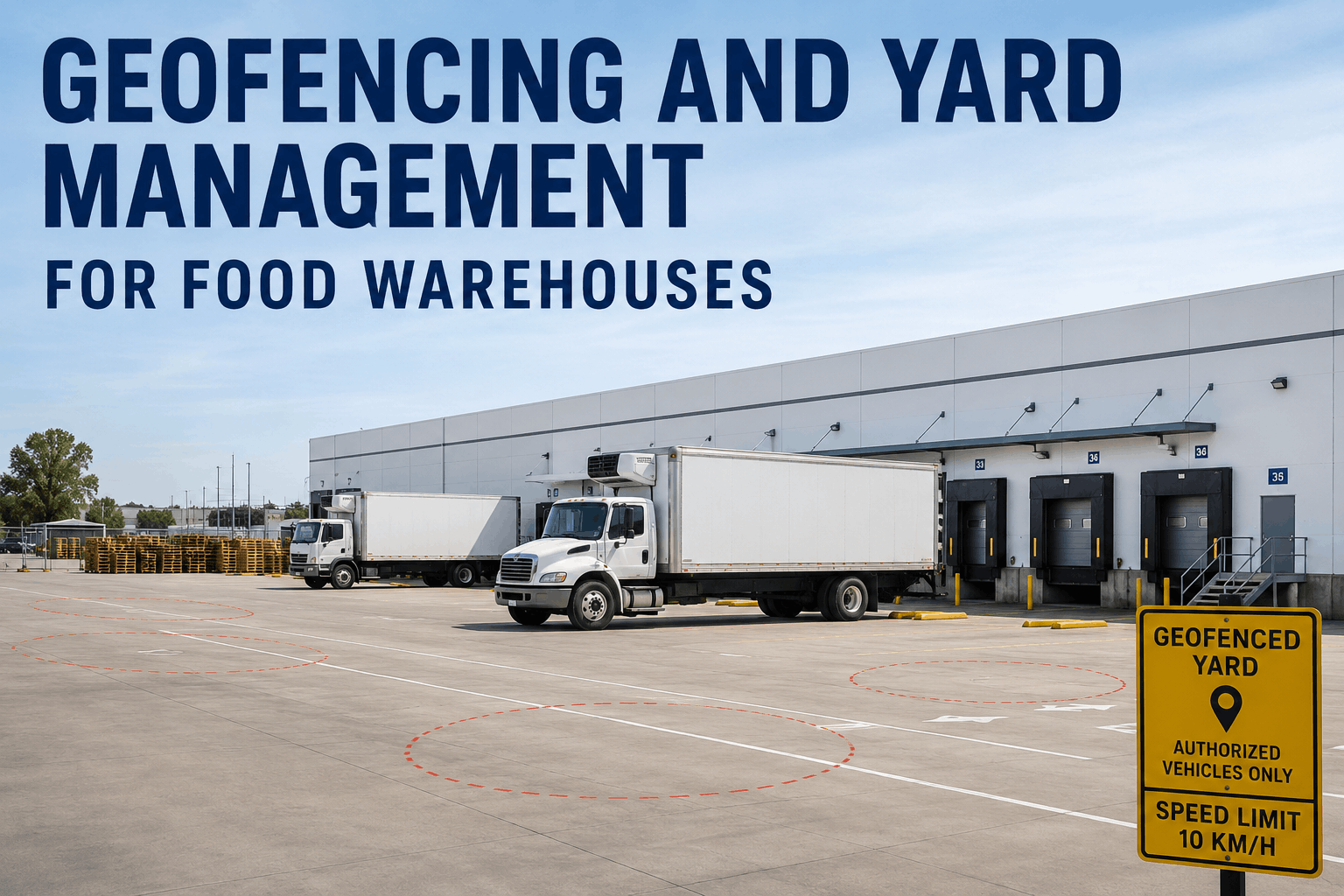
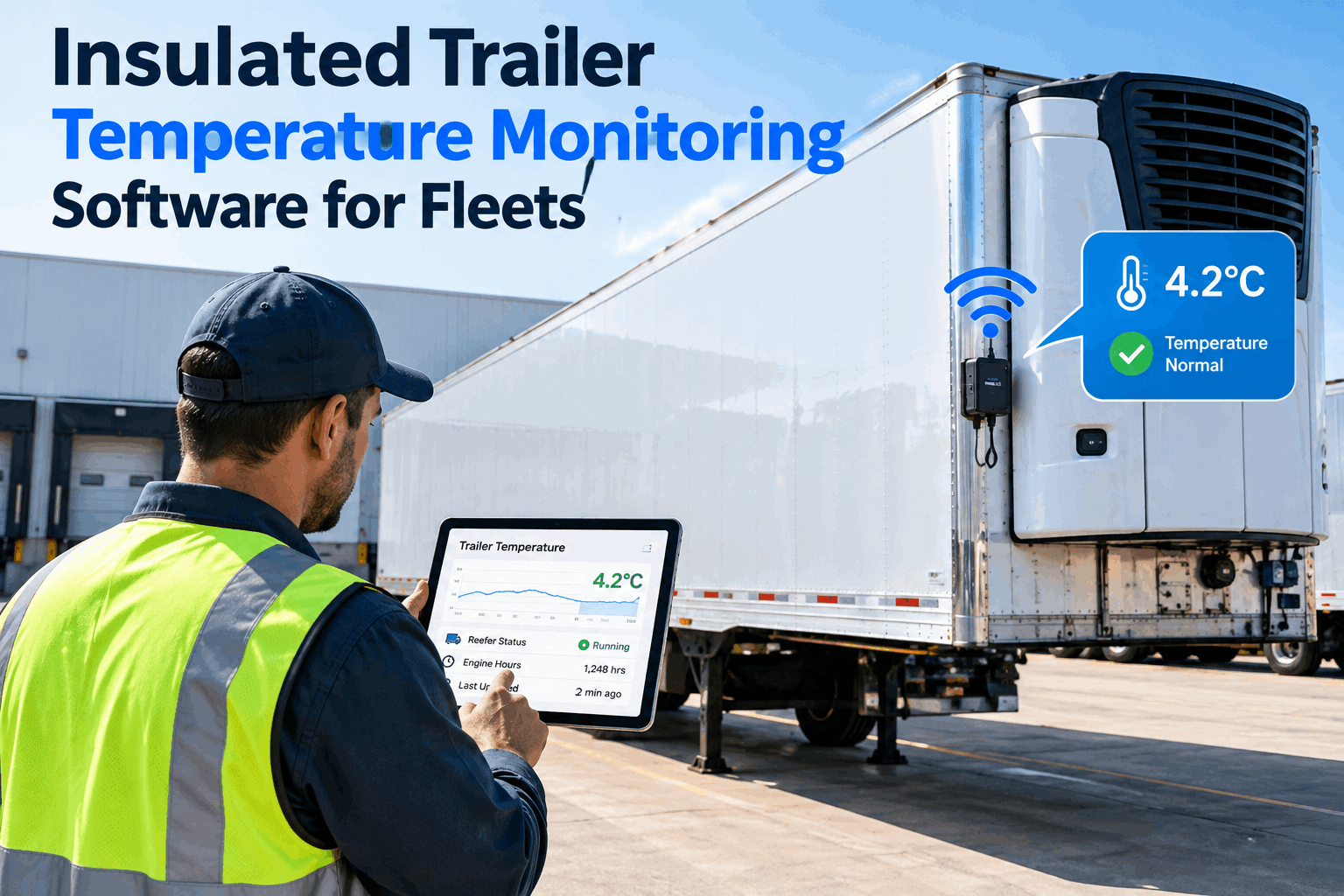
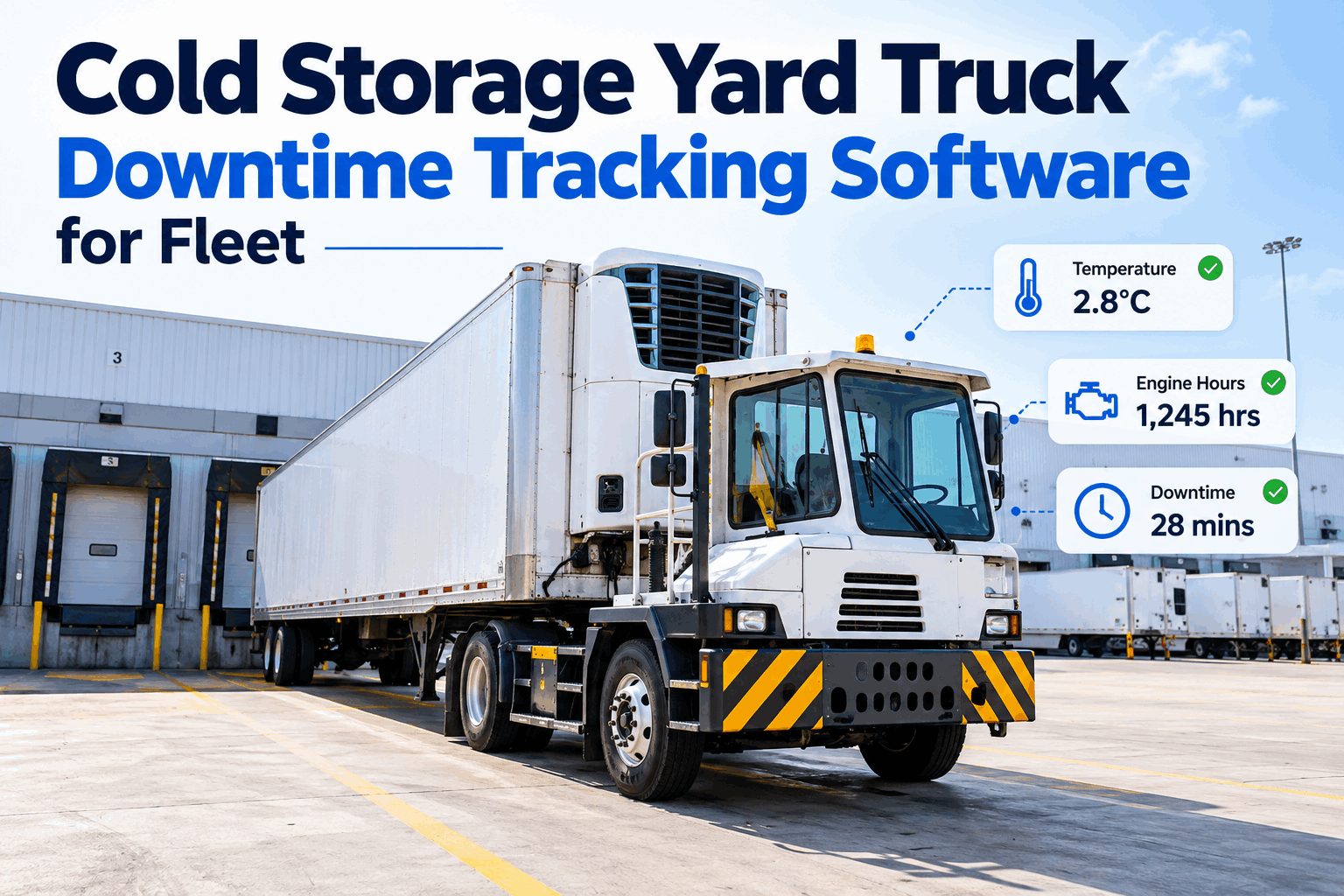
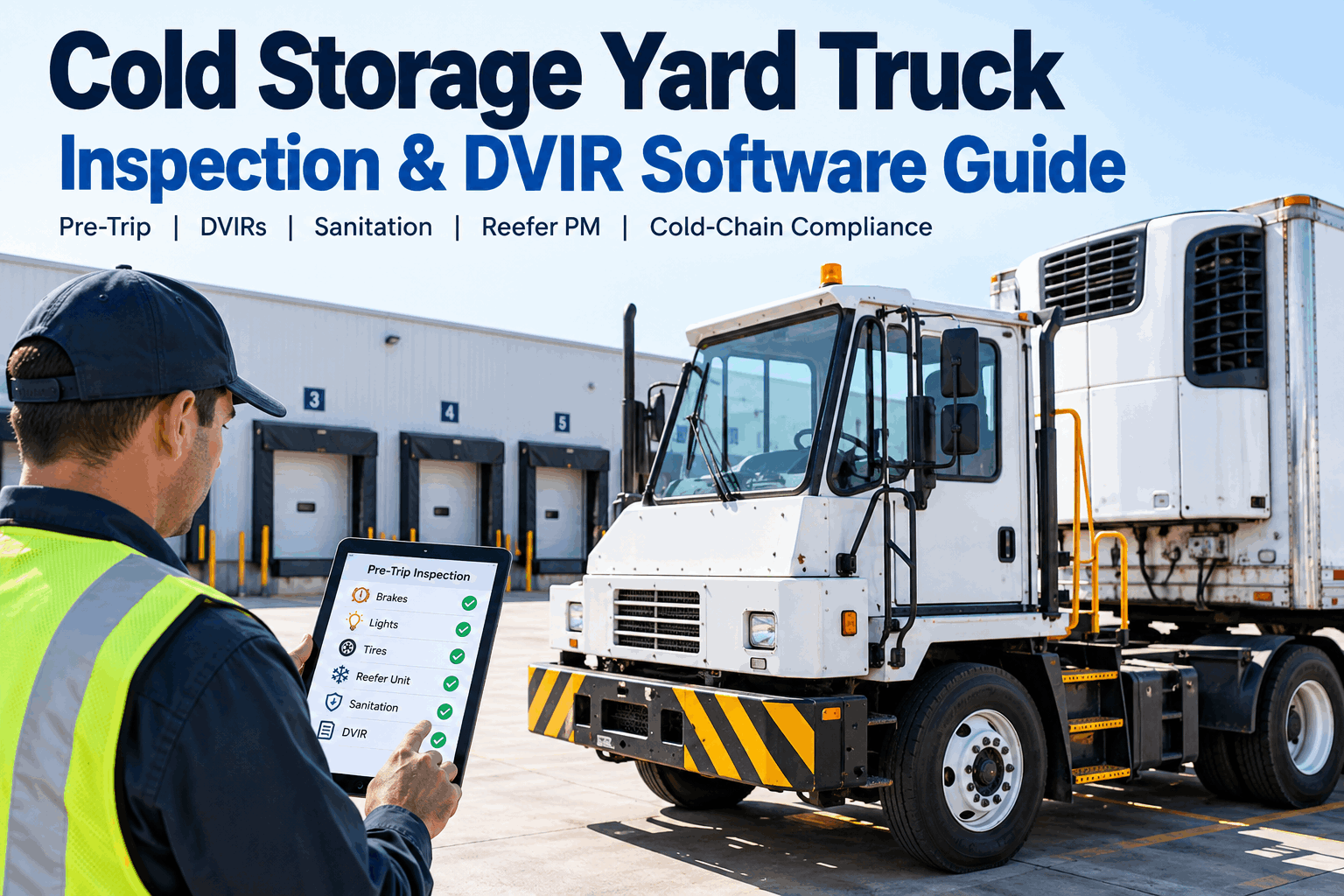
When a refrigerated trailer sits unconnected at an exterior yard slot for 140 minutes on a July afternoon—because your yard management system has no visibility into which trailers are plugged into shore power and which are running on residual thermal mass—the temperature excursion building inside that unit isn't generating an alert. It isn't triggering a dock scheduling workflow. It isn't flagging a compliance record for your FSMA sanitary transportation file. It is silently accumulating product risk that your receiving team will discover when they open the doors, and that your food safety manager will document after the fact on a corrective action form that cannot reverse what already happened. Unmonitored yard dwell, untracked trailer temperature during staging, and uncontrolled cold storage access aren't isolated operational failures. They are the predictable consequence of running a modern cold chain logistics operation without the geofencing intelligence and yard management automation that convert your facility perimeter into an active compliance and efficiency system.
This guide gives food warehouse managers, cold chain logistics directors, and food safety compliance teams a comprehensive framework for implementing geofencing and yard management automation across refrigerated distribution facilities. We cover real-time trailer tracking, temperature-controlled loading dock scheduling, cold storage access control, geofence-triggered compliance workflows, and the connected platform capabilities that eliminate yard dwell losses, protect product integrity at the dock face, and build a measurable, audit-ready food safety record for every vehicle that enters your facility. Food warehouse operations ready to take control of their yard can start their free trial today.
FleetRabbit Food Warehouse Intelligence 2026
Geofencing and Yard Management for Food Warehouses
How real-time geofence tracking, automated dock scheduling, and temperature-controlled yard management eliminate cold chain losses, close FSMA compliance gaps, and give food distribution facilities complete visibility over every trailer in their yard — from gate entry to dock departure.
62%
of cold chain temperature excursions occur during yard staging — not in transit
$2.4B
annual US food loss attributable to inadequate yard and dock temperature management
91%
reduction in unplanned yard dwell events for fleets using geofencing yard automation
<45s
FleetRabbit geofence breach to yard manager alert delivery time
Where the Cold Chain Actually Breaks — and Why the Yard Is the Highest-Risk Zone
Food safety compliance investment in refrigerated transport is overwhelmingly concentrated on the transit phase — IoT temperature sensors in the trailer, FSMA sanitation records for the vehicle, real-time telematics during the haul. These are necessary. But the data consistently shows that the yard staging environment — the period between a trailer's arrival at a facility and its connection to a temperature-controlled loading dock — represents the highest-risk phase of the entire cold chain journey for facilities without geofencing and yard management automation.
Long-haul transit
IoT monitoring active; alerts fire in real time
Multi-stop delivery
Door-open events monitored; driver procedures enforced
Yard staging & dwell
Highest risk — minimal monitoring without yard automation
Source: Cold Chain Federation Yard Temperature Study & USDA Post-Harvest Loss Analysis 2024
The yard staging risk profile is driven by three compounding factors that manual yard management cannot adequately address: uncontrolled dwell time in ambient conditions without shore power connection monitoring; unscheduled dock face access that exposes temperature-controlled storage to repeated ambient air infiltration; and the absence of any compliance record for what happens to a trailer and its load between gate entry and dock connection. Geofencing and yard management automation addresses all three simultaneously — converting the highest-risk phase of your cold chain into a monitored, scheduled, documented operational environment.
01
Unmonitored Yard Dwell
Refrigerated trailers staged in exterior yard slots without shore power connection monitoring accumulate thermal load at rates of 2–4°F per hour in summer conditions. Without geofence-triggered dwell alerts, a 90-minute staging delay can compromise an entire load of fresh produce or dairy before the trailer reaches the dock face.
02
Unscheduled Dock Access
Cold storage dock doors opened outside scheduled windows by vehicles arriving ahead of schedule — or by unauthorised access — generate ambient air infiltration events that raise dock temperature by 6–14°F per unplanned opening. Without geofence-controlled access workflows, every early or unscheduled arrival creates an unrecorded compliance gap at the most temperature-sensitive point in the facility.
03
Zero Yard Compliance Records
FSMA sanitary transportation compliance records document the transit environment — but the yard staging environment between gate entry and dock connection generates no compliance record in manual operations. FDA inspectors requesting evidence of continuous temperature control for a specific load will find a documentation gap that spans the entire period the trailer spent in your yard without digital monitoring.
What Food Warehouse Geofencing Actually Controls — Beyond Simple Gate Tracking
Gate entry tracking — knowing when a truck crossed your facility perimeter — is the minimum viable function of food fleet geofencing. A purpose-built cold chain yard management platform delivers geofencing intelligence across every critical zone inside the facility boundary: gate entry, yard slot assignment, shore power connection points, dock staging lanes, dock face positions, and cold storage access zones. Each zone generates its own alert logic, compliance trigger, and documentation record — creating a complete digital map of every vehicle's journey from arrival to departure.
Gate Entry Zone
Arrival timestamp
Vehicle ID match
Schedule validation
FSMA record check
Every geofence entry generates an automatic arrival record with timestamp, vehicle identity confirmation, and schedule adherence status — flagging early arrivals for yard slot pre-assignment and late arrivals for dock rescheduling workflow.
Yard Slot Staging Zone
Dwell timer start
Shore power check
Temp alert threshold
Max dwell alert
Dwell monitoring begins the moment a trailer enters its assigned yard slot. Shore power connection status is tracked continuously — generating an alert if a refrigerated trailer remains unconnected beyond the configurable temperature-risk window for the current ambient conditions.
Dock Staging Lane
Queue position record
Schedule slot confirm
Dock assignment push
Driver notification
Geofence entry into the dock staging lane confirms the vehicle is ready for dock connection and triggers the dock assignment notification to the driver — eliminating uncoordinated approaches that create congestion, extended door-open exposure, and missed scheduling windows.
Cold Storage Access Zone
Authorisation check
Access log record
Door-open duration
Unscheduled alert
Cold storage zone access is logged against the scheduled access window — generating an immediate alert for any unscheduled entry, recording door-open duration for FSMA compliance documentation, and flagging extended access events that indicate process deviation or equipment issues requiring intervention.
Loading Dock Face Zone
Dock seal confirm
Load start timestamp
Temp bridge record
Departure trigger
Dock face connection is confirmed by geofence position combined with trailer sensor data — starting the load transfer compliance record, monitoring the temperature bridge between storage and trailer throughout the transfer, and triggering the departure workflow when the load is complete and the trailer exits the dock position.
Gate Departure Zone
Departure timestamp
Dwell total record
Compliance pack close
Route handoff trigger
Gate departure closes the facility compliance record for the visit — logging total yard dwell time, dock connection duration, temperature bridge data, and all zone access events into a single FSMA-ready facility record that is archived automatically for the two-year retention requirement.
FleetRabbit Cold Chain Yard Management Platform: Core Capabilities
Effective food warehouse geofencing and yard management requires more than GPS fence lines around a property boundary. A purpose-built cold chain yard management system integrates geofence intelligence with temperature monitoring, loading dock scheduling automation, access control workflows, and FSMA compliance documentation — operating as a unified yard intelligence layer that connects every vehicle movement to a documented, auditable food safety record.
Real-Time Trailer Tracking and Geofence Intelligence
Every refrigerated trailer in the yard is tracked in real time across all designated zones — gate entry, yard slot, dock staging, dock face, and departure — with continuous position updates transmitted to the yard management dashboard. Geofence crossing events generate instant notifications to yard managers, dispatch, and receiving teams with vehicle identity, zone, timestamp, and temperature status. Unauthorised zone access triggers an immediate alert regardless of time of day or shift coverage, eliminating the visibility gaps that allow unmonitored cold storage access and unscheduled dock approaches to accumulate as undocumented compliance events.
45sAlert delivery from geofence breach
6Distinct yard zones monitored independently
24/7Continuous unauthorised access detection
91%Reduction in unplanned yard dwell events
2hrAdvance dock schedule visibility for drivers
100%Dock visits with digital scheduling record
Loading Dock Scheduling and Temperature-Controlled Access Management
Dock scheduling automation assigns refrigerated trailers to temperature-appropriate dock positions based on cargo class, arrival time, and cold storage bay availability — eliminating the uncoordinated first-come-first-served approach that creates extended ambient exposure at the dock face. Drivers receive their dock assignment and scheduled access window via mobile notification when their trailer enters the dock staging zone. Geofence-controlled access workflows prevent early dock connection until the scheduled temperature preparation window is confirmed — protecting cold storage environments from the ambient infiltration that unscheduled early arrivals consistently generate in manual operations.
Cold Storage Access Control and FSMA Zone Documentation
Cold storage access zone geofencing creates an automatic digital log of every entry and exit at temperature-controlled storage areas — recording vehicle identity, driver identity, access timestamp, duration, and temperature reading at the point of entry. This documentation layer closes the single most common FSMA compliance gap in food warehouse operations: the absence of any formal record for cold storage access events between scheduled inspections. Every door-open event, every trailer-to-storage temperature bridge, and every deviation from the scheduled access window is captured automatically — creating an audit-ready access history that requires no manual logging, no paper forms, and no post-shift data entry from yard or receiving staff.
0Manual log entries required per access event
2yrFSMA-compliant record retention per zone
60sFull facility compliance report generation
FleetRabbit Food Warehouse Geofencing
Stop Managing Your Yard on Clipboards. Start Controlling Every Zone With Automated Geofence Intelligence.
FleetRabbit gives food warehouses real-time trailer tracking, automated dock scheduling, temperature-controlled access management, and FSMA yard compliance documentation — connected across every zone in your facility, on every shift, without manual data entry.
Yard Management Automation vs. Manual Operations: The Compliance and Efficiency Gap
The gap between a manual yard clipboard operation and a geofencing-enabled yard management system isn't a difference in documentation speed — it's a difference in what a food warehouse operation can actually see, control, and prove. Facilities managing yard access on paper and radio communication are generating compliance exposure on every shift that only becomes visible during an FDA audit or a product recall investigation.
✗
Manual Yard Operations
Trailer arrival times recorded by gate guard on paper log — no timestamp verification
Yard slot assignment communicated by radio with no digital record of actual position
Shore power connection status unknown until technician physically checks each unit
Dock scheduling managed on whiteboard with no automated conflict detection
Cold storage access unrecorded — no log of who entered, when, or for how long
Temperature bridge data captured manually at dock — frequently incomplete or absent
FDA audit requires multi-day manual reconstruction of yard access history
Blind, Exposed & Audit-Vulnerable
✓
FleetRabbit Geofencing Yard Management
Geofence crossing generates GPS-verified arrival timestamp linked to vehicle and driver identity
Yard slot assignment confirmed by geofence position — digitally logged in real time
Shore power monitoring alerts within 45 seconds of unconnected refrigerated trailer threshold
Automated dock scheduling with geofence-triggered driver notification and conflict prevention
Every cold storage access logged automatically with identity, timestamp, duration, and temperature
Continuous temperature bridge monitoring from dock staging through load transfer completion
One-click FSMA yard compliance report covers every vehicle and access event by date range
Visible, Controlled & Audit-Ready
Implementation: Building Geofencing and Yard Management Maturity in Food Facilities
Deploying a full cold chain yard management system across a food warehouse or distribution centre is most effective as a phased implementation — establishing geofence infrastructure and trailer tracking first, then layering dock scheduling automation, temperature monitoring integration, and FSMA compliance documentation workflows as each foundation capability stabilises. Food facilities that attempt to activate all capabilities simultaneously typically encounter yard workflow conflicts and driver adoption friction that slow the full compliance benefit by 60–90 days.
Phase 1
Yard Visibility Foundation
Weeks 1–4
Facility geofence zone mapping and configuration
Vehicle and trailer asset registration
Gate entry and exit tracking activation
Yard manager dashboard and alert routing
Phase 2
Dock and Temperature Control
Weeks 5–10
Loading dock scheduling workflow activation
Shore power and dwell alert configuration
Cold storage access control geofencing
Driver mobile notification integration
Phase 3
Compliance Intelligence
Months 3–6
FSMA yard compliance documentation automation
Temperature bridge analytics and trending
Yard throughput and dwell benchmarking
Audit report generation and shipper portal access
Begin with the yard visibility foundation: map every zone in your facility, register your trailer fleet as trackable assets, and activate gate entry and exit monitoring so your yard management team has real-time visibility into arrivals, departures, and current yard inventory for the first time. Then deploy dock scheduling and temperature control workflows to eliminate the unscheduled access and unmonitored dwell events that generate the majority of your yard-phase compliance exposure. Finally, activate FSMA documentation automation and analytics to convert your yard operation from a compliance liability into a documented, audit-ready food safety asset. Book a Demo.
FleetRabbit Food Warehouse Geofencing & Yard Management
Every Trailer Tracked. Every Zone Controlled. Every Visit Documented.
FleetRabbit gives food warehouses and cold chain distribution centres real-time geofence tracking across every facility zone, automated loading dock scheduling, temperature-controlled access management, shore power monitoring, and automatic FSMA yard compliance documentation — on every shift, for every vehicle, without manual clipboard operations.
Food Fleet Geofencing
Yard Management System
Loading Dock Scheduling
Cold Storage Access Control
FSMA Compliance Documentation
Trailer Tracking Food & Beverage
Frequently Asked Questions
Q
How does food warehouse geofencing differ from standard fleet GPS tracking?
Standard fleet GPS tracking records vehicle position at intervals — typically every 30 to 120 seconds — and displays a dot on a map. Food warehouse geofencing assigns operational meaning to specific geographic zones within and around the facility, converting position data into event-driven workflows. When a refrigerated trailer crosses the gate entry geofence, the system doesn't just record a position — it timestamps the arrival, matches the vehicle against the scheduled arrival list, checks FSMA compliance record completeness, assigns a yard slot, and notifies the yard manager of any schedule deviation. When the same trailer enters the cold storage access zone outside its scheduled window, the system generates an immediate alert and creates a compliance record of the unscheduled access event. The difference is between passive location logging and an active operational intelligence layer that converts every vehicle movement into a documented, auditable, workflow-triggering event.
Q
What FSMA documentation does the yard management platform generate automatically?
The platform generates compliance documentation across every phase of the yard visit. At gate entry: vehicle identity, arrival timestamp, and schedule adherence record. During yard staging: shore power connection status log, dwell duration record, and temperature monitoring data for units equipped with IoT sensors. At dock access: scheduled vs. actual access window comparison, door-open duration log, and temperature bridge record between storage and trailer. At departure: total facility dwell time, dock connection duration, complete zone access history, and any corrective action records triggered during the visit. All records are stored per vehicle visit in a searchable archive with two-year retention — exportable as a structured PDF for FDA inspector submission, shipper audit response, or internal food safety review. The documentation covers the yard staging gap that FSMA records currently leave unaddressed in most manual operations, providing continuous temperature control evidence for the entire period a load spends at the facility.
Q
How does the loading dock scheduling system prevent temperature excursions at the dock face?
The dock scheduling system prevents temperature excursions through three mechanisms. First, dock assignment is matched to cargo class — ensuring frozen loads are assigned to dock positions with adequate pre-cooling time and appropriate sealing infrastructure, rather than being allocated to the next available dock regardless of temperature compatibility. Second, geofence-triggered scheduling prevents early dock connections by only enabling the driver notification and dock approach workflow when the scheduled access window is active — preventing early arrivals from approaching the dock and opening cold storage doors ahead of the temperature preparation schedule. Third, the system detects and alerts on dock face access events that exceed the expected load transfer duration — flagging extended door-open periods that indicate process delays, equipment issues, or informal access that should be investigated and documented. The combination of pre-scheduling, access timing control, and duration monitoring eliminates the three most common sources of dock-phase temperature excursion in food distribution facilities.
Q
Can the platform manage geofencing across multiple facilities or distribution centres in a network?
Yes — multi-facility management is a core design requirement for food distribution networks operating across regional distribution centres, cross-dock facilities, and retail delivery points. Each facility in the network has its own independently configured geofence zone map, dock scheduling calendar, access control rules, and compliance documentation profile. Fleet managers and food safety directors with network-level access see a consolidated view of trailer positions and zone status across all facilities from a single dashboard — enabling network-level visibility into where trailers are, how long they are dwelling at each facility, and whether any yard or dock events are generating compliance alerts that require intervention. Individual facility managers see only their facility's yard and dock data. Shipper-specific compliance reports can be generated across the network — compiling every facility visit record for a specific load or trailer across its entire journey through the distribution network into a single structured compliance package.
Q
How quickly can the geofencing and yard management platform be deployed at an existing food warehouse?
For a single-facility deployment covering gate entry, yard slot monitoring, dock scheduling, and cold storage access control, the platform is typically operational within 14 to 21 days from project initiation. The deployment process begins with facility mapping — configuring the digital geofence boundaries for each zone based on your yard layout drawings and GPS survey data — followed by vehicle and trailer asset registration, alert routing configuration, and yard manager dashboard setup. Driver mobile notification integration is activated in the second week alongside dock scheduling workflow configuration. For facilities with existing IoT temperature sensors on trailers or dock positions, temperature data integration is completed during the same deployment window. Multi-facility network deployments are phased by facility with a 10 to 14 day lead per site. FleetRabbit's implementation team provides remote setup support throughout and conducts a live yard test before each facility is marked operational — confirming geofence boundaries, alert delivery, and documentation capture across a complete simulated yard cycle before the first live vehicle enters the system.
May 28, 2026
By Taylor
All Posts