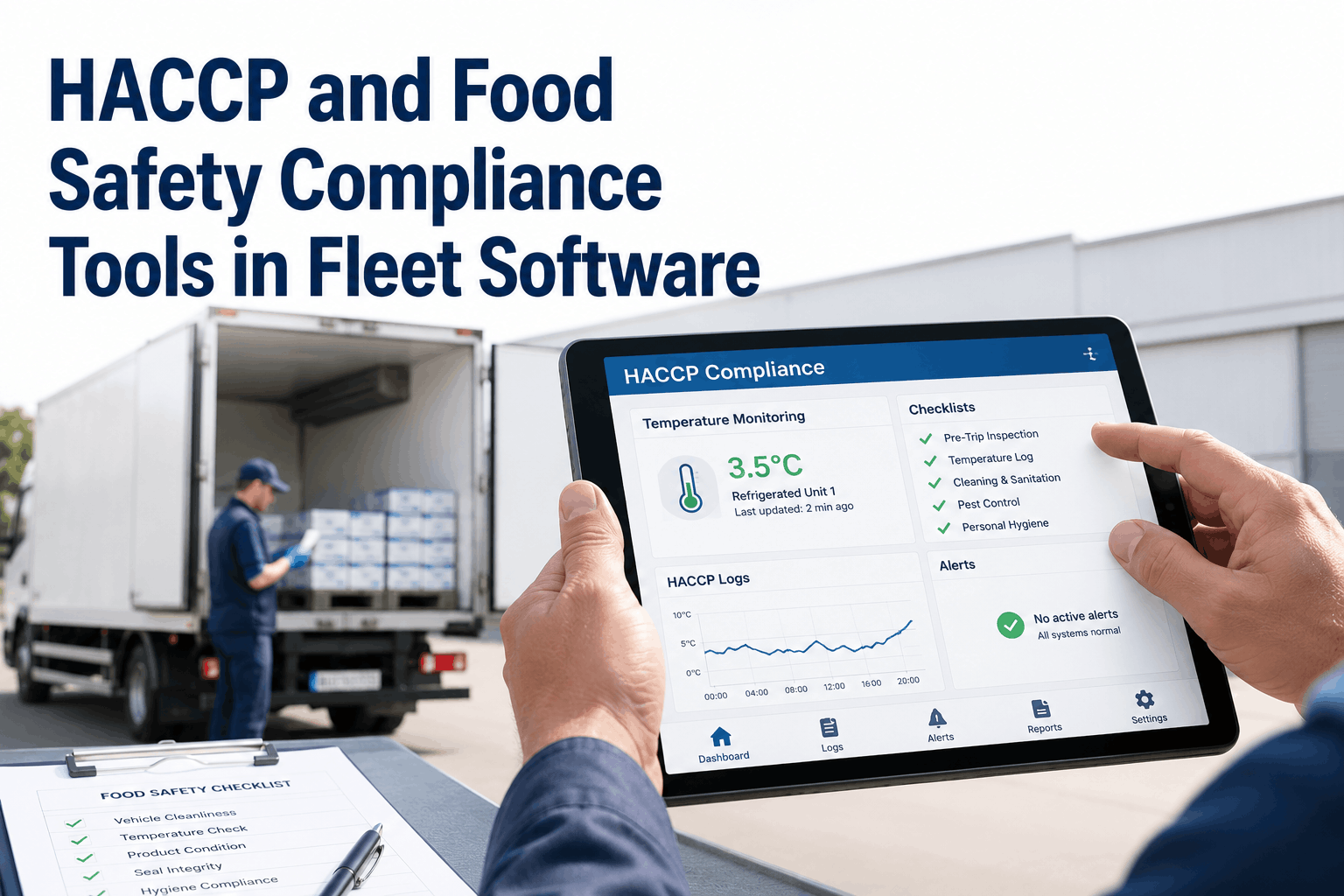
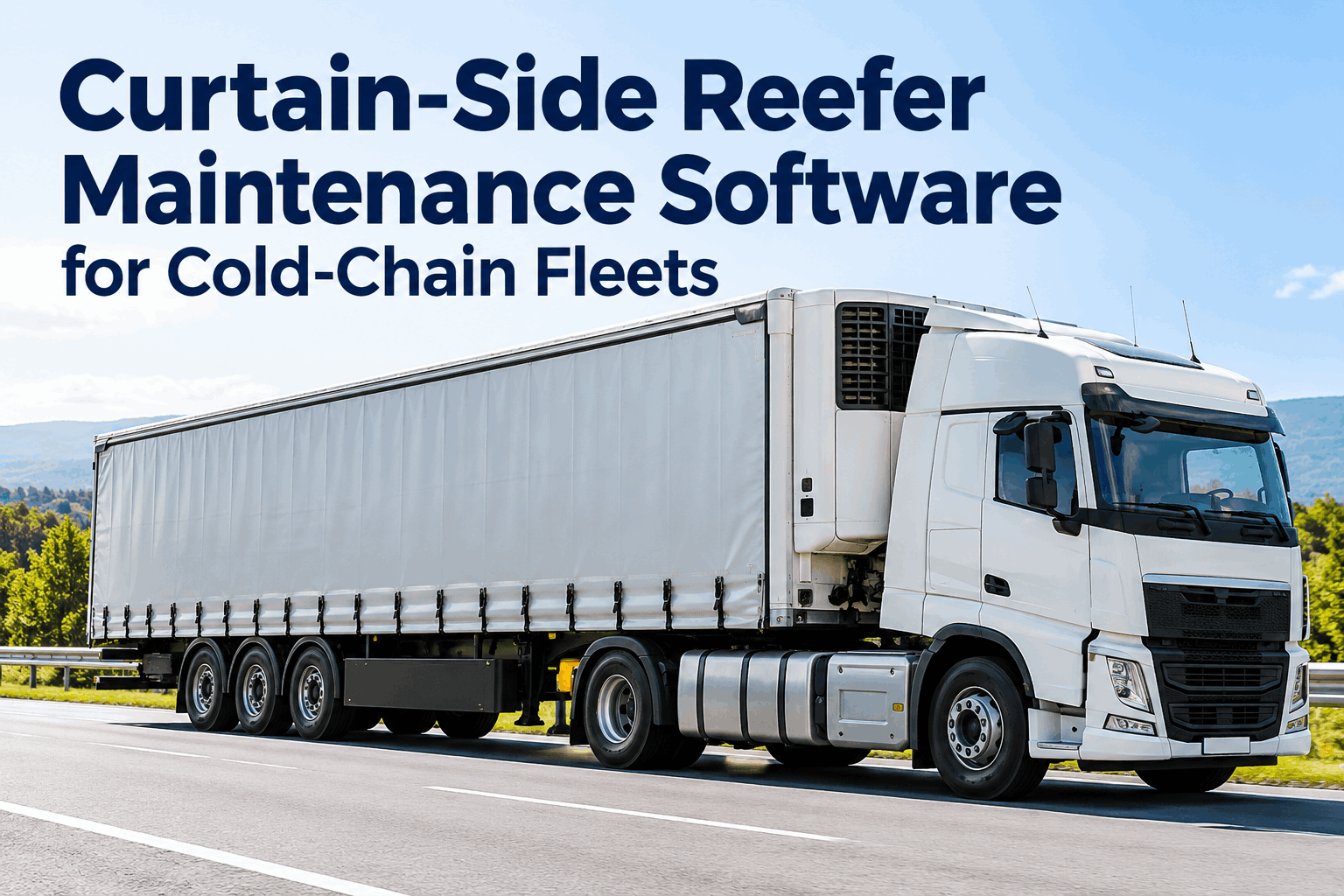
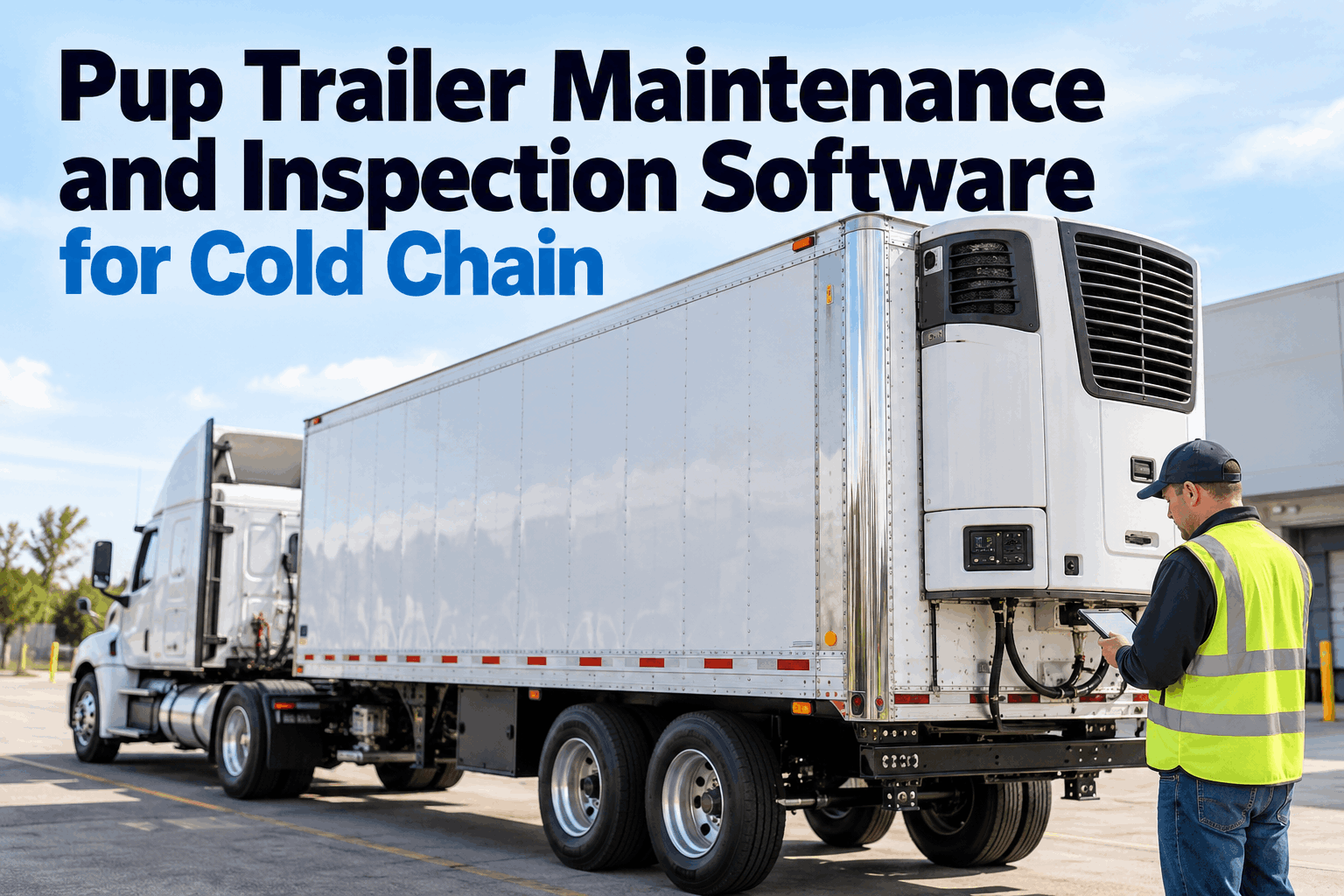
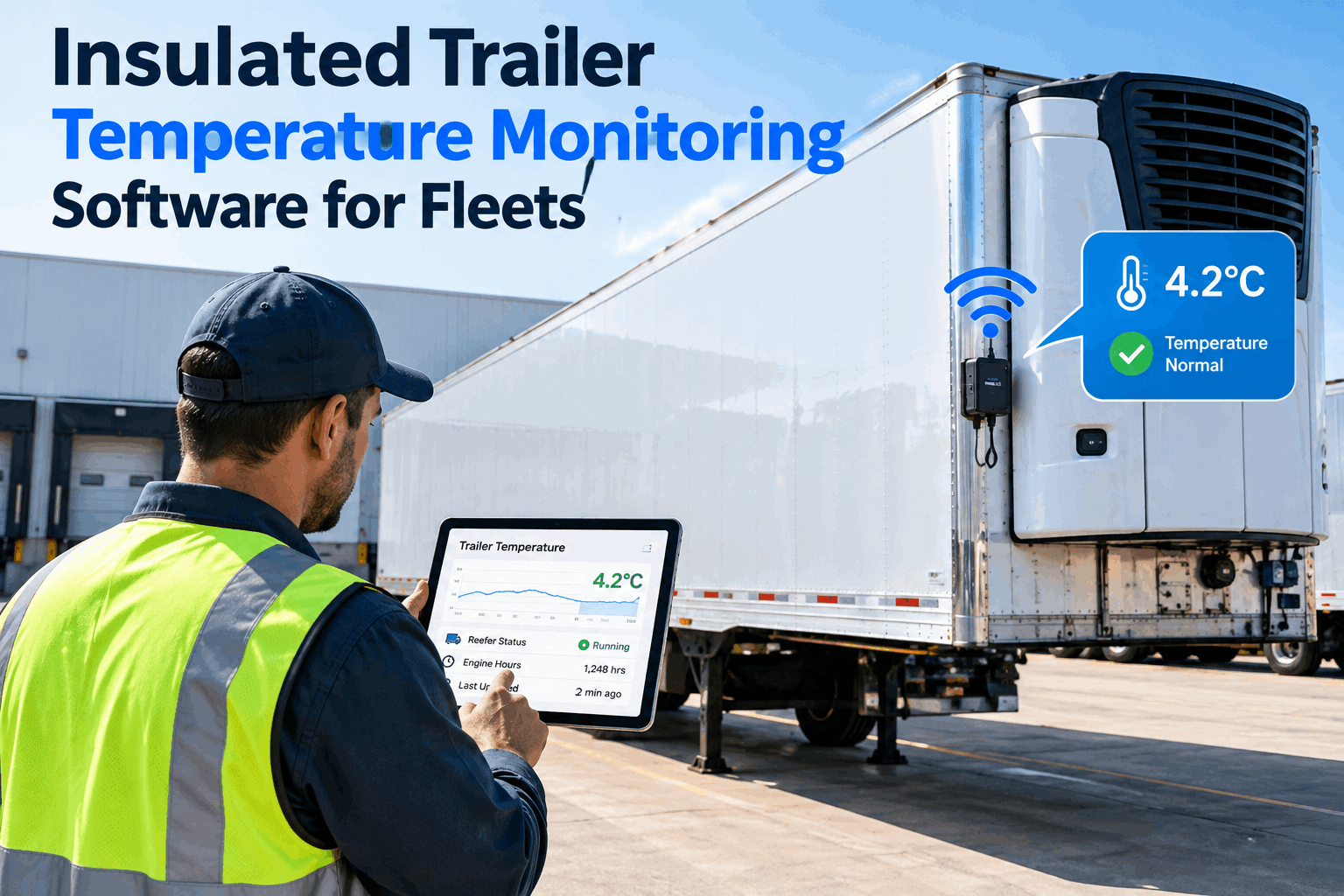
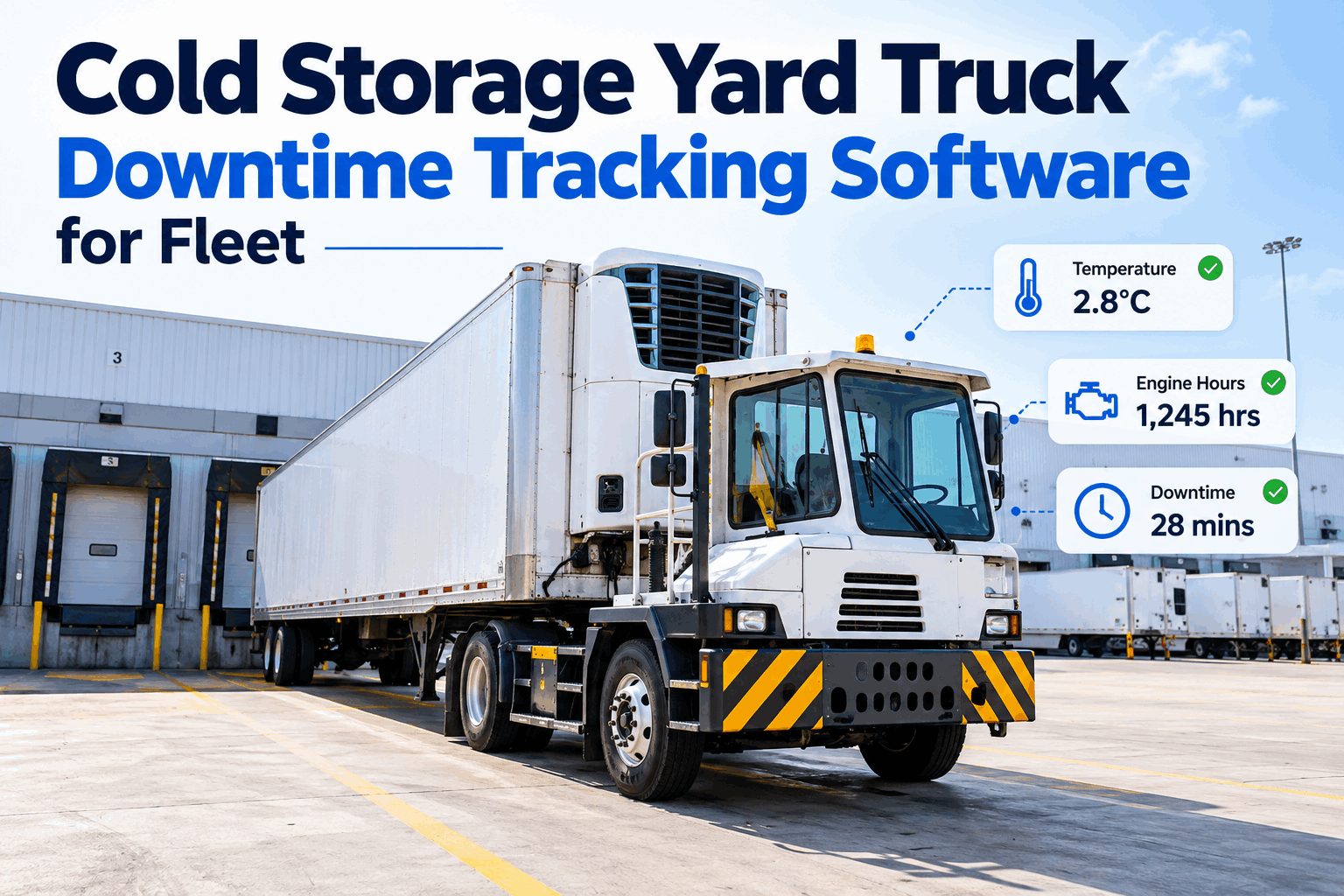
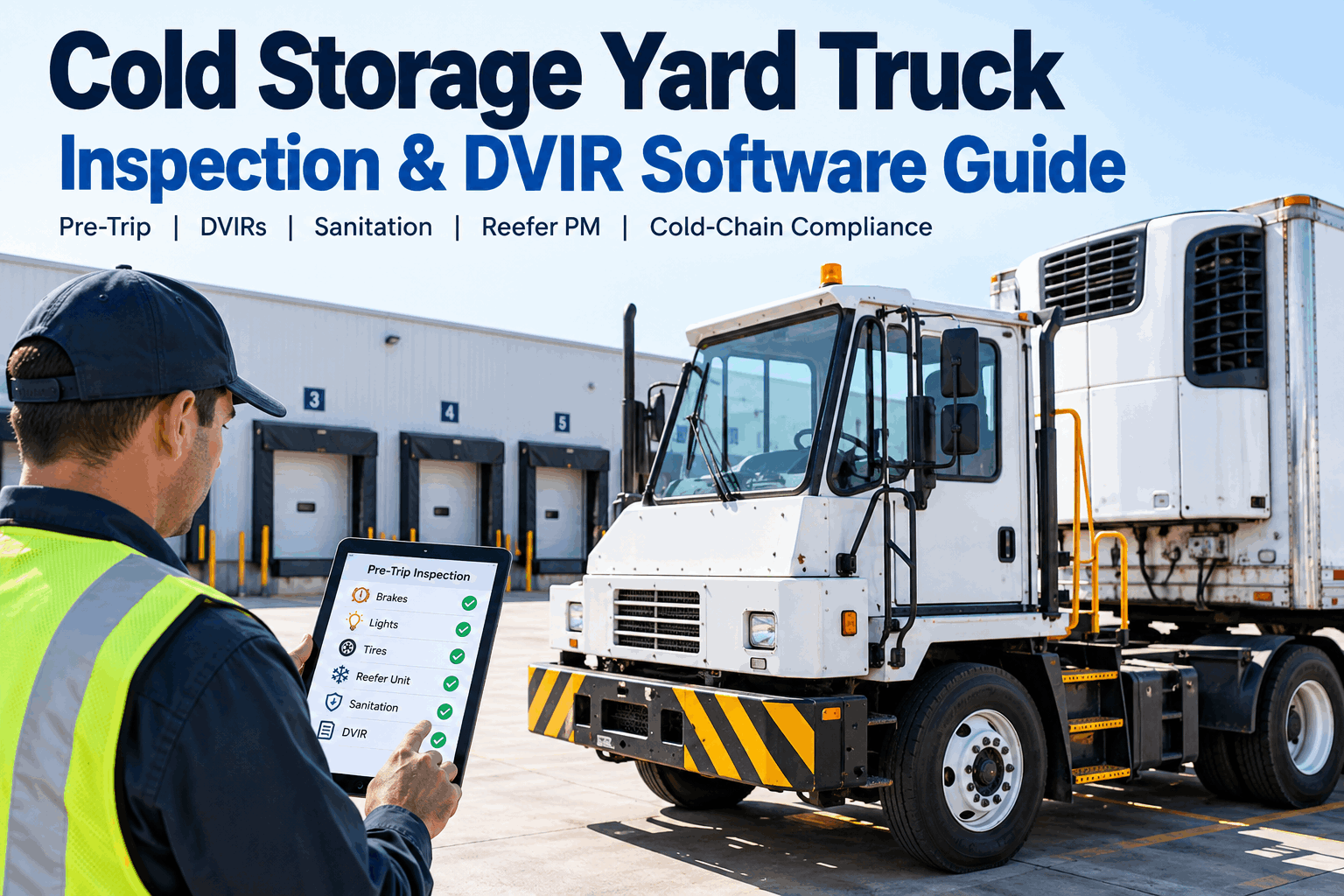
For food distribution companies, the cost of a compliance failure goes far beyond a single rejected shipment. One temperature excursion can trigger a cascade of consequences: FDA citations, product recalls, lost retailer contracts, and irreparable damage to brand trust. Yet, many food fleets still manage Hazard Analysis and Critical Control Points (HACCP) programs using paper temperature logs, manual checklists, and disconnected spreadsheets. This fragmented approach leaves carriers vulnerable to food safety gaps and makes proactive cold chain management nearly impossible.
Modern Food Safety Fleet Software transforms HACCP compliance from a reactive burden into a strategic advantage. By centralizing temperature records, vehicle inspections, driver training, and regulatory documentation into a unified digital platform, food distributors can ensure cold chain integrity while protecting consumers and their license to operate. This guide provides a complete framework for building a digital HACCP ecosystem that satisfies FDA, FSMA, and state-level food safety requirements. Start your free trial today.
Food Fleet Compliance Guide 2026
HACCP & Food Safety Fleet Software
Cold chain compliance is non-negotiable. From refrigerated transport to last-mile food delivery, fleet operators face complex HACCP and FSMA obligations. This guide equips food safety managers, fleet directors, and logistics leaders with digital frameworks to automate temperature monitoring, enforce HACCP principles, and prevent violations before they occur.
$10M+Avg. Recall Cost
60%Paper Log Reduction
ZeroCold Chain Gaps
100%Audit Readiness
The HACCP Maturity Spectrum
Food distribution fleets typically fall into one of three compliance maturity categories. While many operators struggle in the "Reactive" phase — scrambling to document temperature excursions after the fact — the goal of a modern fleet HACCP system is to move the organization toward "Proactive" and eventually "Predictive" food safety management, where real-time sensor data identifies cold chain risks before product is compromised.
Proactive (Optimized)
18%
Regulatory Framework: The Pillars of Food Fleet Compliance
Food distribution fleets must navigate a layered web of federal regulations, customer audit requirements, and third-party certifications. Failure to maintain HACCP records, conduct vehicle pre-trip sanitation checks, or train drivers on food safety protocols can result in severe FDA citations and loss of distribution contracts. A centralized fleet HACCP system acts as the single source of truth for all regulatory obligations.
Key Regulatory StandardsFDA & USDA
21 CFR Part 117
FSMA — HARPC
Food Safety Modernization Act requires Hazard Analysis and Risk-Based Preventive Controls. Mandates written food safety plans, monitoring records, and corrective action documentation for food facilities and transporters.
High Priority
21 CFR Part 1
Sanitary Transport Rule
FSMA Sanitary Transportation of Human and Animal Food Rule. Governs vehicle design, temperature controls, cleaning, and shipper/carrier responsibilities for food-grade transport.
Audit Target
9 CFR Part 381
USDA — Poultry / Meat
USDA FSIS regulations covering temperature requirements and transport conditions for raw meat, poultry, and egg products during distribution. Requires continuous temperature documentation.
Safety Critical
Codex Alimentarius
HACCP Principles
Seven HACCP principles: Hazard Analysis, CCPs, Critical Limits, Monitoring, Corrective Actions, Verification, and Recordkeeping. The global standard for food safety management systems in transport and distribution.
International Standard
FDA 21 CFR 123
Seafood HACCP
Mandatory HACCP for seafood processors and transporters. Requires specific time-temperature records, hazard controls for pathogens, and documented verification procedures for cold chain compliance.
Enviro Risk
SQF / GFSI Standards
Third-Party Certification
Retailer-required certifications (SQF, BRC, FSSC 22000) mandate documented fleet sanitation programs, driver training records, equipment calibration logs, and real-time temperature monitoring evidence.
Retail Required
Critical Control Point Matrix: Managing Food Safety Risk
Not all points in the cold chain carry equal risk. Effective fleet HACCP management requires systematic evaluation of each Critical Control Point (CCP) based on hazard severity and likelihood of occurrence. This framework helps food safety managers prioritize monitoring resources and trigger corrective actions before a deviation becomes a recall.
5
Catastrophic
Pathogen growth (Listeria, Salmonella). Immediate product hold and recall initiation required.
4
Critical
Significant temperature breach. Product integrity suspect. Urgent corrective action and documentation needed.
3
Moderate
Minor excursion within tolerance window. Enhanced monitoring required before delivery proceeds.
2
Minor
Slight deviation noted. Within correctable range. Monitoring and documentation required.
1
Negligible
Within critical limits. Acceptable with standard monitoring procedures in place.
Digitize Your Fleet HACCP Program
FleetRabbit makes food safety compliance automatic. Monitor reefer temperatures in real time, generate digital HACCP records, track driver certifications, and produce audit-ready reports — all in one secure, cloud-based platform built for food distribution fleets.
Core HACCP Fleet Program Elements
A robust food safety fleet management system is built from several interconnected compliance modules. Each plays a vital role in maintaining cold chain integrity from origin to destination. Implementing these as automated digital workflows ensures data accuracy, traceability, and real-time visibility across every vehicle in your fleet.
Core
Temperature Monitoring
Continuous / Real-Time
Live reefer and cargo temperature tracking via IoT sensors. Automated alerts when readings breach critical limits. Full digital temperature logs auto-generated for every trip.
Live Sensor DataBreach AlertsAuto LogsCCP Dashboards
Critical
Driver Training Tracker
Ongoing
Manage food handler certifications, HACCP awareness training, and sanitation protocol completions. Receive alerts for expiring credentials to ensure only qualified drivers handle food-grade loads.
Cert MatrixExpiry AlertsDigital RecordsGap Analysis
Audit
Vehicle Inspections & Sanitation
Pre-Trip & Scheduled
Schedule and conduct pre-trip sanitation checks, reefer unit inspections, and cargo area audits via mobile app. Convert failed items directly into corrective maintenance work orders.
Mobile ChecklistsPhoto EvidenceOffline ModeScorecards
HACCP
Digital HACCP Records
Per Delivery
Auto-generate complete HACCP documentation for every shipment: temperature logs, CCP monitoring records, corrective action reports, and verification sign-offs — all timestamped and tamper-proof.
Trip RecordsCCP Sign-offsFSMA ExportAudit Trail
Cold Chain
Cold Chain Event Logs
Continuous
Track door-open events, loading dock dwell times, and transfer point temperature readings. Identify cold chain weak points with aggregated analytics across the entire fleet and route network.
Door AlertsDwell TrackingRoute AnalyticsTrend Reports
Action
Corrective Actions (CAPA)
As Triggered
The loop-closing mechanism for HACCP. When a CCP deviation is detected, automatically assign corrective actions to the responsible team member, track resolution, and verify closure with documented evidence.
Auto-AssignmentDeadline TrackingVerificationAudit Trail
Common Cold Chain Hazard Points by Fleet Type
Understanding the specific critical control points across different food transport operations is the foundation of effective HACCP planning. From refrigerated grocery distribution to pharmaceutical-grade cold chain, different fleet types present unique hazard profiles that must be monitored, documented, and mitigated through digital controls.
Grocery / Produce Distribution
Reefer Temperature Excursions
Loading Dock Cross-Contamination
Improper Load Sequencing
Driver Sanitation Non-Compliance
Cargo Area Pest / Allergen Risk
Meat, Seafood & Dairy
Pathogen Growth (Listeria / Salmonella)
Frozen Thaw During Transit
Failed Pre-Trip Sanitation
Inadequate Reefer Unit Maintenance
Missing Temperature Records (USDA)
Food Service & Last Mile
Repeated Door-Open Events
Extended Delivery Dwell Times
Ambient Temp Spikes in Summer
Unverified Vehicle Cleanliness
Undocumented Delivery Exceptions
The Cost of Non-Compliance: Incident Escalation
The "Food Safety Pyramid" mirrors Heinrich's Law: for every product recall, there are dozens of temperature deviations and hundreds of near-miss cold chain events. Ignoring the base of the pyramid leads directly to the top. Investing in digital HACCP fleet tools creates exponential ROI by preventing the cascading direct and indirect costs of a food safety incident or recall event.
$0 – $2K
Temperature Near-Miss
Brief excursion logged, corrective action documented, load re-inspected. Cheapest moment to act with proactive monitoring.
Frequency: High
$20K – $500K
Shipment Rejection / FDA Citation
Load rejected at destination, FDA warning letter issued, retailer contract review triggered. Lost product, transport, and remediation costs mount.
Frequency: Medium
$10M+
Product Recall / Litigation
Class-action liability, brand destruction, loss of distribution contracts, potential criminal negligence charges, and permanent market exit risk.
Frequency: Low (But Catastrophic)
Protect Your Product. Protect Your Brand.
Don't wait for an excursion or an audit to upgrade your fleet HACCP program. FleetRabbit provides the digital infrastructure to monitor temperatures, document CCPs, manage driver training, and close corrective actions — proactively, automatically, and compliantly.
FleetRabbit HACCP Platform Features
FleetRabbit's food safety fleet software is purpose-built to link vehicle operations with HACCP compliance requirements. Rather than treating food safety as a separate administrative task, the platform embeds HACCP principles directly into daily fleet workflows — from pre-trip inspection to delivery confirmation.
A
Real-Time Reefer Temperature Monitoring
IoT-connected temperature sensors stream live data from every reefer compartment. Automated alerts notify dispatch and food safety managers the moment a critical limit is breached, enabling immediate corrective action before product is at risk.
B
Automated HACCP Record Generation
Every trip auto-generates a complete HACCP record: temperature log, CCP monitoring data, corrective action history, and verification sign-offs. Records are tamper-proof, timestamped, and instantly retrievable for FDA or third-party audits.
C
Driver Food Safety Training Matrix
Track food handler certifications, HACCP awareness completions, and sanitation training by driver and vehicle type. Receive automated notifications 30, 60, or 90 days before credentials expire to maintain continuous compliance.
D
Digital Sanitation & Inspection Checklists
Mobile pre-trip sanitation inspections, reefer unit checks, and cargo area audits — completed via smartphone. Photo evidence, digital sign-off, and automatic escalation of failures to maintenance work orders ensure no item goes unresolved.
E
FSMA Compliance Reporting Dashboard
Visualize fleet-wide food safety KPIs: CCP deviation rates, corrective action close times, training compliance percentages, and sanitation audit scores. Export FSMA-ready documentation packages with a single click for regulatory submissions.
F
Carrier & Contractor HACCP Management
Ensure third-party carriers and logistics partners meet your HACCP and food safety standards. Track their temperature equipment certifications, driver training, and sanitation protocols within the same platform used for your own fleet operations.
Frequently Asked Questions
Q. How does FleetRabbit support the 7 HACCP Principles in fleet operations?
FleetRabbit maps directly to all seven HACCP principles: it assists with hazard documentation (Principle 1), identifies CCPs like reefer temperature thresholds (Principle 2), enforces critical limits via real-time alerts (Principle 3), monitors CCPs continuously (Principle 4), automates corrective action assignment (Principle 5), supports verification workflows (Principle 6), and generates tamper-proof digital records for every trip (Principle 7).
Q. Can the platform handle multi-temperature zone vehicles (fresh, chilled, frozen)?
Yes. FleetRabbit supports multi-zone reefer monitoring with individual sensor streams, independent critical limits, and separate HACCP logs for each compartment. Each zone has its own CCP record, alert thresholds, and corrective action workflow — fully compliant with USDA and FDA requirements for mixed-load transport.
Q. How does the system help during an FDA or SQF audit?
During an audit, speed and completeness are critical. FleetRabbit allows you to instantly retrieve temperature logs, sanitation records, driver training certificates, and corrective action histories for any date range or vehicle. Demonstrating a complete, organized, and digital HACCP record history establishes good faith, reduces audit duration, and significantly lowers the risk of citation.
Q. What is the difference between monitoring and verification in fleet HACCP?
Monitoring confirms that CCPs are under control in real time (e.g., temperature sensor readings during transit). Verification confirms the monitoring system itself is working correctly (e.g., sensor calibration records, supervisor sign-offs on temperature logs). FleetRabbit manages both: automated sensor monitoring plus scheduled verification workflows with evidence capture and digital approval chains.
Q. Is cloud-stored HACCP data secure and legally defensible?
Yes. FleetRabbit uses enterprise-grade encryption, role-based access controls, and immutable audit trails. Cloud-stored HACCP records are timestamped, cannot be altered after creation, and include a full chain-of-custody log — making them more legally defensible than paper records in FDA enforcement proceedings or product liability litigation.
May 22, 2026
By Taylor
All Posts