Food fleet operators running temperature-controlled distribution routes under HACCP transportation compliance programmes are managing two categories of risk they rarely quantify separately: critical control point failures that happen in real time — a refrigerated trailer losing temperature during a four-hour highway run, a loading dock transition that spikes cargo exposure above the 4°C threshold — and documentation failures that surface during FSMA fleet compliance audits, months after the actual transport event, when no credible cold chain record exists to demonstrate that the hazard was controlled. That dual exposure — operational temperature failure and regulatory documentation failure — is where the largest unquantified liability in food distribution operations sits unaddressed. HACCP food fleet compliance closes both gaps simultaneously: by replacing manual temperature logging and paper-based corrective action records with continuous digital monitoring, automated CCP threshold alerting, and immutable audit-trail documentation that satisfies FDA, FSMA, and customer GFSI requirements without administrative burden on drivers or depot staff. FleetRabbit's food transport safety platform was built specifically for refrigerated fleet management and HACCP logistics operations — converting raw cold chain telemetry into auditable HACCP compliance records that protect cargo, satisfy regulators, and eliminate the documentation gaps that turn a single temperature excursion into a regulatory enforcement event. Explore FleetRabbit's HACCP fleet compliance platform with a free account or book a live cold chain HACCP demo with our team.
Why Traditional HACCP Monitoring Fails in Food Fleet Operations
Most food manufacturers and distributors operate robust HACCP programmes inside their production and storage facilities. Fewer recognise that the moment product leaves the loading dock and enters a refrigerated trailer, the HACCP control framework they maintain with precision in their facility is replaced by a fragmented, driver-dependent, manual recording system that would fail any serious third-party audit. Digital HACCP monitoring for food fleet operations replaces that fragmented system with continuous CCP surveillance, automated deviation alerts, and verified corrective action records — maintained per vehicle, per load, and per delivery route without any dependence on manual driver logging or retrospective temperature reconstruction.
The Food Fleet HACCP Compliance Gap
Manual Temperature Logging
43%
of manual cold chain records contain gaps, errors, or missing corrective action documentation — unusable for FSMA audit defence
Reactive Excursion Response
2–6 hrs
average delay between a CCP temperature breach and corrective action — when relying on driver-reported or end-of-route log discovery
Digital HACCP Monitoring
<90 sec
CCP threshold breach to fleet manager alert — enabling real-time corrective action before cargo safety window is compromised
FleetRabbit HACCP Platform Impact
$31K+
Average cost of a single cargo rejection event due to undocumented temperature excursion
97%
Reduction in HACCP documentation gaps within 60 days of FleetRabbit deployment
100%
Automated CCP record completeness — every route, every load, every vehicle, audit-ready
3.8×
Faster FSMA audit response with FleetRabbit digital records vs. manual log retrieval
See how FleetRabbit applies HACCP principles to your specific fleet routes and commodity types. Our food transport compliance specialists will map your CCPs to a digital monitoring architecture calibrated to your distribution operation.
The Seven HACCP Principles Applied to Food Fleet Operations
The seven HACCP principles established by Codex Alimentarius were developed for food production environments — but every principle maps directly to a food distribution and refrigerated fleet management context. FleetRabbit's cold chain HACCP monitoring platform operationalises all seven principles in the transport environment, creating a continuous HACCP control framework that travels with the product from loading dock to delivery point on every route.
01
Hazard Analysis — Transport Hazard Identification and Risk Mapping
HACCP Principle 1
Transport hazard analysis for food fleet operations must identify the biological, chemical, and physical hazards that can be introduced or amplified during the refrigerated transport process — not just in the production facility. Key transport hazards include temperature abuse during transit, cross-contamination from multi-commodity loads, refrigerant or hydraulic fluid contamination events, and pathogen growth windows created by loading dock temperature exposure. FleetRabbit's food safety transportation platform maps transport hazards per route type, commodity class, and vehicle configuration — creating a digital hazard register that drives the CCP monitoring architecture for each vehicle and load profile in the fleet.
12+Distinct transport hazard categories mapped per route and load type
Per-loadHazard profiles configurable by commodity, route distance, and season
02
CCP Identification — Defining Critical Control Points Across the Transport Chain
HACCP Principle 2
For refrigerated fleet operations, the critical control points where monitoring and intervention can prevent or eliminate food safety hazards include pre-load vehicle temperature verification, transit temperature maintenance across all cargo zones, loading and unloading dock transition management, and multi-drop delivery sequence temperature exposure. FleetRabbit's HACCP principles fleet framework identifies and configures monitoring at each CCP per vehicle type and route — ensuring that every point in the transport chain where temperature control is critical is continuously surveilled and documented, not assumed to be compliant because no one reported a problem.
6–9CCPs identified per typical refrigerated multi-drop distribution route
100%CCP coverage with continuous sensor monitoring — no manual check dependency
03
Critical Limits — Temperature and Exposure Thresholds per Commodity Class
HACCP Principle 3
HACCP transportation compliance requires that critical limits — the maximum or minimum values for temperature, exposure time, and humidity at each CCP — are established per commodity class and regulatory requirement, not applied as a single generic threshold across the entire fleet. FleetRabbit's digital HACCP monitoring platform supports configurable critical limits per load type: chilled ready-to-eat products operating at 0–4°C with zero excursion tolerance, fresh produce at 2–8°C with 15-minute breach windows, frozen product at -18°C or below. Each vehicle's CCP thresholds are set to the most restrictive commodity loaded, with the full limit configuration documented per trip as part of the HACCP record.
Per-SKUCritical limits configurable by commodity, regulatory standard, and customer spec
Auto-setCCP thresholds applied per load manifest at trip initiation
04
Monitoring Procedures — Continuous Digital Surveillance Replacing Manual Logging
HACCP Principle 4
The monitoring procedures component of HACCP logistics is where manual food fleet operations most consistently fail their own HACCP plan. A monitoring procedure that requires a driver to record trailer temperature every two hours produces a HACCP record with 12 data points per 24-hour route — and zero documentation of what happened in the 118 minutes between each recording. FleetRabbit's food fleet monitoring software replaces interval-based manual checks with continuous sensor logging at 60-second intervals across all cargo zones — producing a complete temperature history with 1,440 data points per 24 hours, per zone, per vehicle. Every data point is timestamped, GPS-located, and tamper-evident — a monitoring record that satisfies FSMA fleet compliance requirements and stands up to any third-party HACCP audit.
1,440Temperature data points per zone per 24-hour route vs. 12 from manual logging
GPS-linkedEvery reading timestamped and location-verified — tamper-evident audit trail
05
Corrective Actions — Automated Alerts and Documented Response Protocols
HACCP Principle 5
HACCP principle five requires that predetermined corrective actions are taken whenever a CCP critical limit is breached — and that those actions are documented with sufficient detail to demonstrate that product safety was restored or compromised product was identified and segregated. FleetRabbit's temperature control fleet monitoring generates automated corrective action workflows the moment a CCP breach is detected: driver alert with corrective instruction, fleet manager notification with breach severity and affected load data, and automatic corrective action record creation with timestamp, breach duration, temperature deviation magnitude, and assigned response action. The complete corrective action trail is attached to the trip's HACCP record automatically — no manual documentation required, no retrospective record reconstruction.
<90sCCP breach to fleet manager alert and corrective action initiation
AutoCorrective action records generated and attached to HACCP trip log
06
Verification — System Integrity Checks and Independent HACCP Validation
HACCP Principle 6
HACCP verification procedures confirm that the monitoring system is functioning correctly and that the HACCP plan is effectively controlling the identified hazards. For food distribution fleets, verification activities include sensor calibration scheduling, monitoring system uptime validation, CCP alert accuracy testing, and periodic route-level HACCP plan review against current load profiles and regulatory requirements. FleetRabbit's automated fleet record-keeping platform schedules and documents all verification activities per vehicle — generating calibration due alerts, uptime reports, and periodic HACCP plan review prompts that keep the food transport safety system in continuous verified compliance rather than compliance-at-the-time-of-last-audit.
Auto-schedSensor calibration and system verification triggered on operating-hour cycles
99.4%Monitoring system uptime across FleetRabbit-managed cold chain fleets
07
Record Keeping — Automated HACCP Documentation for FSMA and Customer Audit
HACCP Principle 7
The record-keeping requirement of HACCP is where food distribution fleets generate the greatest compliance liability — because manual logs, paper temperature strips, and driver-completed pre-trip forms create documentation that is incomplete, inconsistent, and often legally indefensible when a cargo rejection, food safety incident, or FSMA inspection demands evidence of CCP control. FleetRabbit's automated fleet record-keeping system generates a complete, structured HACCP record for every trip — CCP monitoring data, critical limit configurations, corrective action records, verification activities, and vehicle calibration status — stored per vehicle, per route, and per load, retrievable in under 60 seconds for any date range. Every HACCP record is formatted for direct submission to FDA inspectors, customer GFSI auditors, and insurance adjusters without manual assembly or data transcription.
<60sHACCP record retrieval for any trip, vehicle, or date range
FDA-readyRecords formatted for FSMA, GFSI, and customer audit submission
Get a HACCP fleet compliance gap assessment for your specific distribution operation. FleetRabbit's food safety specialists will map your current monitoring coverage against FSMA Sanitary Transportation requirements and identify the documentation gaps your next audit will find first.
HACCP Compliance Cost Comparison: Manual vs. Digital Fleet Monitoring
The financial case for switching from manual temperature logging and paper-based HACCP records to FleetRabbit's digital food fleet monitoring system is most clearly understood through a direct cost and risk comparison. The table below reflects actual data from FleetRabbit food distribution fleet customers across four key compliance and operational cost categories for a representative 15-vehicle refrigerated fleet completing 240 routes per month.
Cost / Risk Category
Manual Logging
Basic Datalogger
FleetRabbit Digital HACCP
HACCP Record Completeness
57% complete
78% complete
100% complete
CCP Breach Detection Speed
2–6 hrs lag
15–45 min lag
<90 seconds
Annual Cargo Rejection Events
11–18 events
6–10 events
1–2 events
FSMA Audit Prep Time
3–5 days
1–2 days
<60 minutes
Annual Admin Hours (HACCP records)
820 hrs
440 hrs
38 hrs
Total Annual Compliance Cost (15 vehicles)
$218,000
$134,000
$47,000
Savings vs. Manual:Basic datalogger saves $84K/yr→FleetRabbit saves $171K/yr
FleetRabbit Food Fleet HACCP Platform: Full Capability Overview
FleetRabbit's cold chain HACCP monitoring platform delivers food safety transportation compliance capabilities across every critical point in the refrigerated distribution chain — from pre-load vehicle temperature validation to multi-zone transit monitoring to automated delivery-point temperature recording. Each monitoring capability feeds a continuous HACCP compliance record that satisfies FSMA Sanitary Transportation Rule requirements, GFSI scheme expectations, and customer food safety audit standards without any dependence on manual data collection or retrospective record assembly.
Continuous Multi-Zone Temperature Monitoring
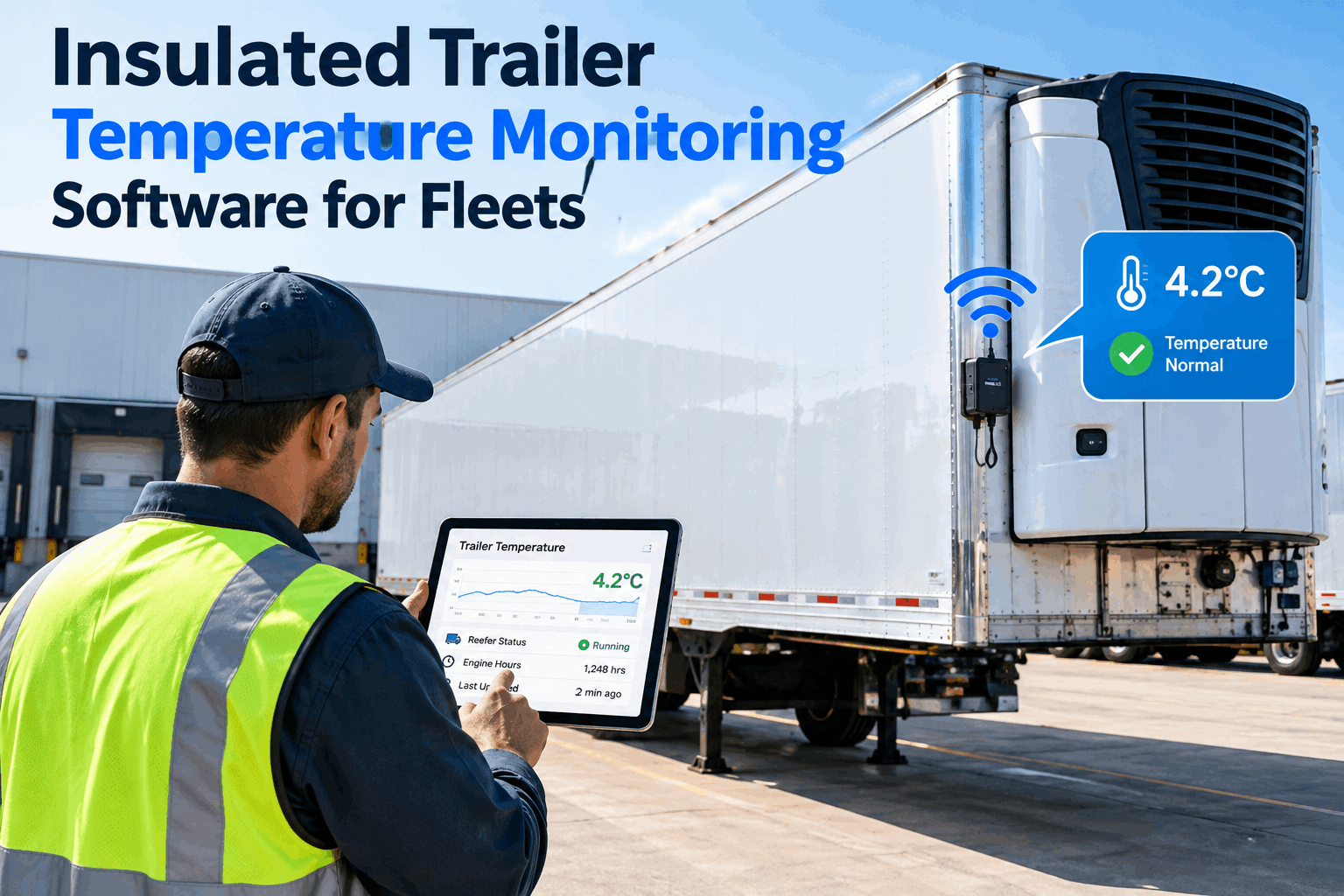
60-second interval temperature logging across all cargo zones — front, middle, rear, and door-seal proximity sensors — producing a complete CCP temperature record for every route with GPS location data attached to every reading. No data gaps, no driver-dependent recording windows.
Multi-Zone60s IntervalsGPS-Linked
Automated CCP Breach Alerting
Configurable critical limit thresholds per commodity class generate driver, dispatcher, and fleet manager alerts within 90 seconds of a CCP breach — with breach severity, affected zone, current temperature, deviation magnitude, and recommended corrective action delivered simultaneously across all notification channels.
90s AlertMulti-ChannelCorrective Action
Pre-Load Vehicle Qualification Records
Automated pre-load temperature verification records confirm that each vehicle meets the required cargo zone temperature before loading commences — documenting the HACCP prerequisite programme step that manual pre-trip inspections routinely fail to record with the specificity FSMA fleet compliance requires.
Pre-Load TempFSMA ReadyAuto-Record
Reefer Unit Performance and Refrigeration Health Monitoring
Compressor health telemetry, fuel consumption trending, and refrigeration unit alarm history integrated with cargo temperature records — identifying refrigeration equipment degradation patterns that precede CCP failures, enabling preventive maintenance scheduling before a mechanical fault causes a temperature excursion during a loaded run.
Compressor HealthAlarm HistoryPredictive Maint.
Automated HACCP Record Generation and Audit Export
Complete HACCP trip records — CCP monitoring data, critical limit configurations, breach events, corrective actions, verification status — generated automatically per route and stored per vehicle, per date, and per customer. Retrievable in under 60 seconds in FDA, GFSI, and customer-formatted export for any audit scope.
Auto-GeneratedFDA Format60s Retrieval
Fleet-Wide HACCP Compliance Dashboard
Real-time compliance status across every vehicle — CCP performance scores, excursion frequency by route and driver, corrective action close-out rates, and FSMA record completeness percentage — enabling fleet managers to identify systemic compliance vulnerabilities before they become regulatory findings or cargo loss events.
Real-Time ViewPer-DriverRoute Analysis
"
We distribute chilled ready-to-eat products across a 22-vehicle fleet serving 340 retail and food service customers. Our HACCP plan covered production perfectly — but the moment product hit the loading dock for outbound distribution, we were relying on driver temperature logs and end-of-route checklist completion to demonstrate CCP control. When our largest retail customer requested a cold chain HACCP audit covering the prior 12 months of delivery records, we spent four days reconstructing temperature data from incomplete paper logs, datalogger downloads, and driver recollections. We passed — barely — but the audit exposed that 38% of our routes had documentation gaps that we couldn't credibly defend. After deploying FleetRabbit across the full fleet, our next customer audit took 45 minutes to prepare and 20 minutes to present. The system generated a complete HACCP record for every delivery in the 18-month audit window — 100% of CCPs documented, every corrective action recorded, every breach resolved within 12 minutes of detection. The cargo rejection cost reduction alone — from 14 rejections in our final manual year to 2 in our first FleetRabbit year — recovered the full platform cost in the first quarter.
— Head of Food Safety and Quality Assurance, National Chilled Ready-to-Eat Distributor — 22 Vehicles — 340 Customer Accounts — FleetRabbit HACCP Monitoring Active
Implementation Pathway: From Manual HACCP Logs to Digital Fleet Compliance
Transitioning a food distribution fleet's HACCP monitoring from manual temperature logging to FleetRabbit's digital cold chain surveillance does not require suspending HACCP plan certification, retraining drivers on complex new systems, or taking vehicles out of service during sensor installation. FleetRabbit's phased implementation delivers the first verified HACCP digital records within days of hardware installation and progressively deepens compliance intelligence as the platform's route baseline datasets mature.
1
Fleet HACCP Gap Assessment and CCP Mapping
Days 1–5
FleetRabbit's food safety compliance specialists review your existing HACCP plan, route profiles, commodity classes, and current monitoring documentation — identifying the CCP coverage gaps, record completeness deficiencies, and corrective action documentation weaknesses that digital monitoring will close. No hardware is ordered before the assessment confirms the monitoring architecture that maps your specific HACCP plan requirements.
2
Sensor Installation and CCP Threshold Configuration
Days 6–16
Temperature sensors, door contact monitors, and reefer unit telemetry interfaces are installed across the fleet — 45–75 minutes per vehicle with no route disruption required. CCP critical limits are configured per commodity class and route type, with corrective action escalation protocols designed around your fleet's operational structure and driver communication channels.
3
HACCP Record Integration and Baseline Validation
Days 17–24
The digital HACCP record framework is validated against your existing HACCP plan documentation — confirming that FleetRabbit's automated records satisfy the specific monitoring procedure and record-keeping requirements of your plan, your customer audit standards, and the FSMA Sanitary Transportation Rule. HACCP records from the first live routes are reviewed with your QA team before full deployment sign-off.
4
Live Digital HACCP Compliance and Continuous Record Accumulation
Day 25 onwards
The full digital HACCP monitoring and record-keeping system is active across the fleet — continuous CCP surveillance generating automated corrective action alerts, complete trip records accumulating in the audit-ready repository, and the compliance dashboard providing real-time visibility into fleet-wide HACCP performance. Most fleets receive their first customer audit records request and respond within the same business day within the first 60 days of full deployment.
HACCP Fleet Compliance Platform
Stop Reconstructing HACCP Records After Audits Find the Gaps. Start Generating Verified CCP Documentation on Every Route, Every Day.
FleetRabbit gives food distribution fleets continuous multi-zone temperature monitoring, automated CCP breach alerting, corrective action documentation, FSMA-ready record generation, reefer unit performance tracking, and fleet-wide HACCP compliance dashboards — on every vehicle, across every route, without manual logging dependency.
$171KAvg. annual compliance cost saving vs. manual logging (15-vehicle fleet)
97%HACCP documentation gap reduction within 60 days
<60sHACCP audit record retrieval for any date range
QDoes FleetRabbit's digital monitoring satisfy the FSMA Sanitary Transportation Rule's HACCP record-keeping requirements for food carriers?
FleetRabbit's automated HACCP record system is designed to satisfy the record-keeping requirements of the FDA's FSMA Sanitary Transportation of Human and Animal Food Rule — including temperature monitoring records, CCP corrective action documentation, equipment cleaning and maintenance records, and training verification trails. Records are stored per vehicle and per shipment with the tamper-evident audit trail and retrieval speed that FDA inspection responses require. For carriers subject to customer GFSI scheme requirements (BRC, SQF, FSSC 22000), FleetRabbit's record format and retention architecture supports the third-party audit submission process for cold chain control evidence. Schedule a compliance review to confirm how FleetRabbit's records map to your specific regulatory and customer audit requirements.
QHow does FleetRabbit handle multi-temperature vehicles carrying products with different HACCP critical limits on the same route?
FleetRabbit supports per-zone CCP configuration on multi-temperature vehicles — enabling simultaneous monitoring of a frozen zone at -18°C or below, a chilled zone at 0–4°C, and an ambient zone, each with independent critical limits, alert thresholds, and corrective action protocols. For mixed loads where a single zone carries commodities with different critical limits, the threshold is automatically set to the most restrictive specification in the load manifest — protecting the most temperature-sensitive product while maintaining full HACCP records for the complete cargo profile. Per-zone HACCP records are generated separately and can be associated with specific customer delivery records for multi-drop routes where different customers receive product from different temperature zones.
QWhat happens to HACCP records if a vehicle loses cellular connectivity on a rural route?
FleetRabbit's cold chain monitoring hardware stores sensor data locally on-device at full resolution during any period of connectivity loss — buffering up to 96 hours of continuous temperature records, GPS data, and CCP event logs without data degradation. When connectivity is restored, the complete buffered dataset is automatically synchronised to the FleetRabbit platform with the original timestamps preserved — maintaining a continuous, uninterrupted HACCP record for the full route regardless of connectivity interruptions. CCP breach events that occur during a connectivity gap are flagged on the fleet management dashboard upon synchronisation, with full breach detail available for corrective action review and HACCP record completion.
QCan FleetRabbit's HACCP monitoring integrate with our existing food safety management system or ERP platform?
FleetRabbit supports API integration with major food safety management systems, quality management platforms, and ERP environments — enabling HACCP trip records, CCP excursion events, and corrective action data to flow directly into your existing compliance management workflow rather than existing as a separate data repository. For food distributors managing HACCP documentation across production, storage, and transport under a unified food safety management system, FleetRabbit's transport-chain records can be incorporated into the complete product traceability and HACCP evidence package that customer audits and regulatory inspections require. Create a free account to explore the integration options available for your specific food safety management environment.