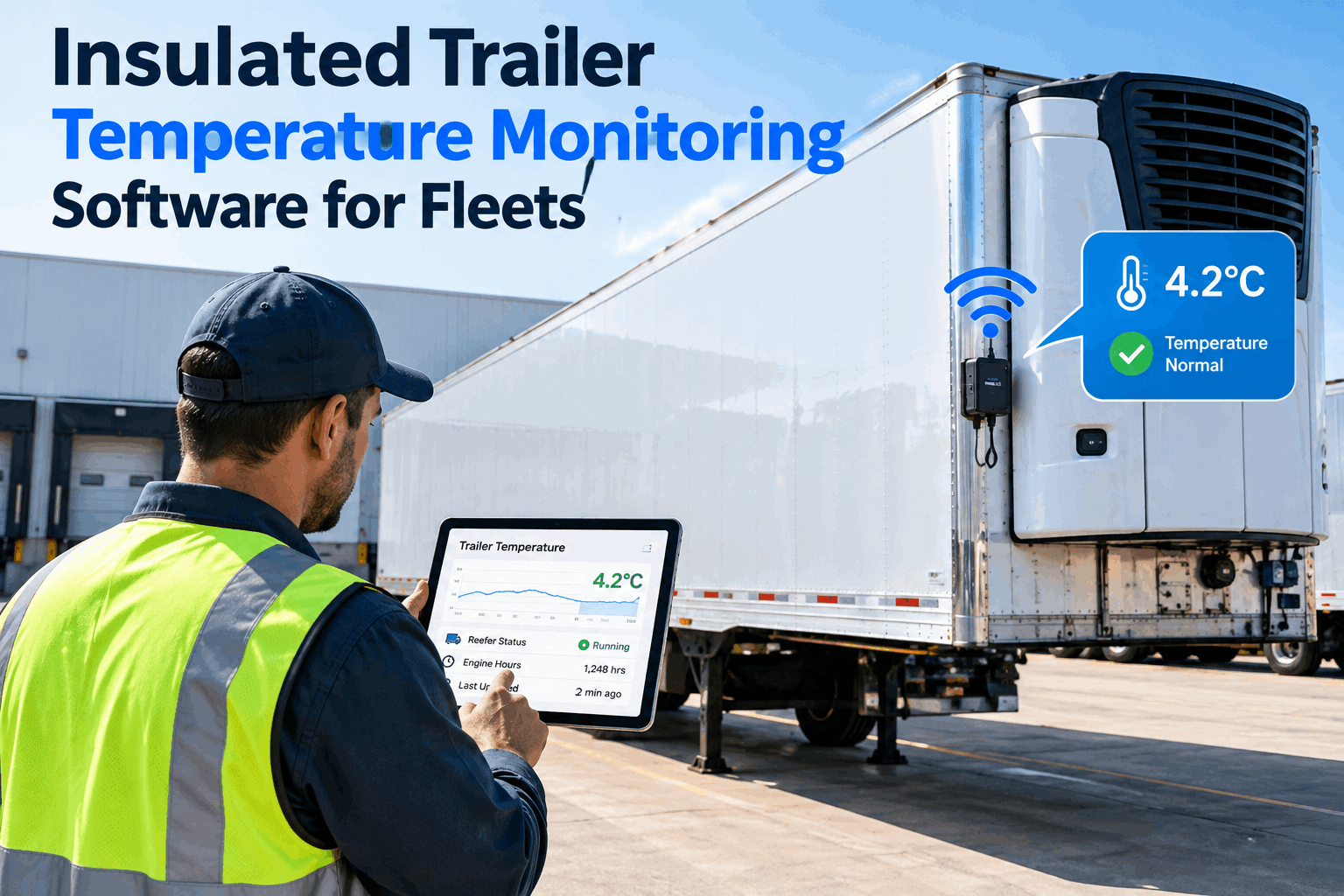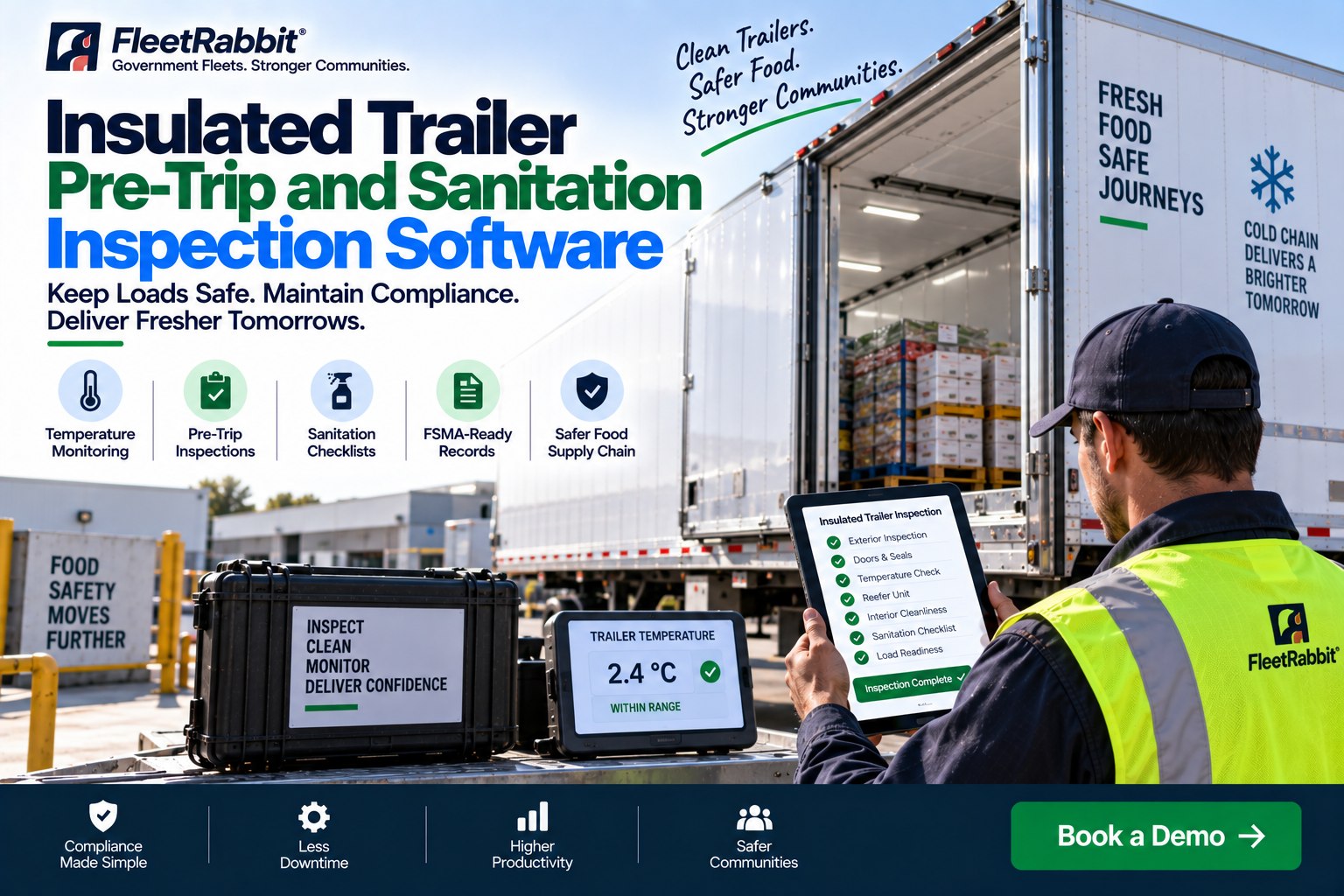
A reefer trailer can pre-cool perfectly, leave the yard at temperature, and still drift out of range three hours into the route — and if nobody's watching the data, the first sign of trouble is a rejected load at the dock. The FSMA Sanitary Transportation of Human and Animal Food Rule holds shippers, loaders, and carriers responsible for keeping temperature-sensitive food under control from pre-cooling through delivery, with records to prove it. FleetRabbit's insulated trailer inspection software pairs real-time temperature monitoring with digital pre-trip and sanitation checklists, tracks reefer unit engine hours separately from tractor mileage, and keeps every record ready for the moment a shipper, receiver, or FDA inspector asks for it. Book a demo to see it running on your own cold chain fleet.
Know the Trailer Was Cold the Whole Way, Not Just When It Left the Yard
Real-time temperature monitoring, digital pre-trip and sanitation checks, and reefer engine-hour maintenance tracking — built for cold chain fleets that answer to shippers, receivers, and federal food safety rules.
Four Areas, One Rule: The FSMA Sanitary Transportation Framework
The Sanitary Transportation of Human and Animal Food Rule builds requirements around four areas. FleetRabbit's checklists and monitoring map to each one directly.
Vehicles & Equipment
Trailers must be designed and maintained so they don't make food unsafe — cleanable surfaces, working temperature control, and pest-free storage.
Transportation Operations
Pre-cooling before loading, temperature control during transit, and preventing cross-contact between loads are all part of the operational requirement.
Records
Written procedures, agreements, and monitoring data must be kept, with retention that depends on record type but generally runs up to 12 months.
Training
Carrier personnel responsible for sanitary conditions during transport need documented food safety training on file.
A Pre-Trip Check Confirms the Trailer. Monitoring Confirms the Load.
Passing a pre-trip inspection means the reefer unit and trailer were ready to go. It doesn't mean the load stayed in range for the next six hours — that takes continuous data, not a single checkbox.
Pre-trip: interior cleanliness & sanitation
Confirm the trailer was cleaned between loads, with no residue or odor that could cross-contaminate the next shipment.
Pre-trip: reefer unit pre-cool verification
Confirm the compartment reached the required temperature before loading begins — not after the doors are already shut.
Pre-trip: door seals, curtains & insulation
Check for torn seals or damaged insulation panels that let temperature-controlled air escape during transit.
In-transit: continuous temperature monitoring
Live readings track the load from pre-cool through delivery, with an alert the moment a compartment drifts outside its set range.
Map Your Own Fleet to This Checklist
Bring your current pre-trip and sanitation form to the call — we'll show you exactly how it fits before you commit to anything.
A Reefer Unit Wears Out on Its Own Clock, Not the Tractor's
A trailer can sit at a dock for hours with the reefer running to hold temperature, long after the tractor that pulled it there has moved on. Mileage-only PM schedules miss all of that runtime.
FleetRabbit vs. Standalone Temp Loggers vs. Paper Logs
| Capability | FleetRabbit | Standalone Temp Logger | Paper Pre-Trip Logs |
|---|---|---|---|
| Real-time temperature alerts | Yes, with dispatch notification | Data only, no workflow | None |
| Pre-trip & sanitation checklist | Digital, photo-verified | Not included | Paper form |
| Reefer engine-hour PM tracking | Built in | Not supported | Manual tracking |
| FSMA-ready record export | One click | Raw data export only | Manual compiling |
| Offline trailer yard sync | Full offline mode | Depends on device | N/A |
A receiver rejected a load once because our paper log couldn't prove the trailer stayed in range the whole trip — we just didn't have the data. Now every load has a temperature history from pre-cool to delivery, and if a shipper ever asks for proof, it's an export, not an argument.
Fleet Manager, Regional Cold Chain Carrier
Frequently Asked Questions
Who does the FSMA Sanitary Transportation Rule actually apply to?
It covers shippers, loaders, carriers by motor or rail vehicle, and receivers involved in transporting human or animal food within the United States. Responsibilities can be shared between shippers and carriers through written agreements.
How long do we have to keep temperature and inspection records?
Retention depends on the type of record and when the activity occurred, but generally doesn't exceed 12 months under the rule. FleetRabbit retains records for whichever period you configure, including longer if your own contracts require it.
Does a pre-trip check satisfy the rule's temperature control requirement on its own?
No. A pre-trip check confirms the trailer left in the right condition, but the rule expects temperature control to be maintained throughout transport. That's why continuous monitoring during transit, not just a pre-trip signature, matters for compliance.
Why track reefer engine hours separately from tractor mileage?
A reefer unit can run for hours holding temperature while the trailer sits at a dock, wear the odometer never sees. Hour-based triggers catch that runtime; mileage-only schedules miss it.
Is there a free trial before we roll this out across the fleet?
Yes — start a free trial on a small group of trailers, or book a walkthrough with your current pre-trip form first.
Stop Finding Out About a Temperature Excursion at the Dock
Real-time monitoring, digital pre-trip and sanitation checklists, and reefer engine-hour PM tracking — built for how cold chain fleets actually run.