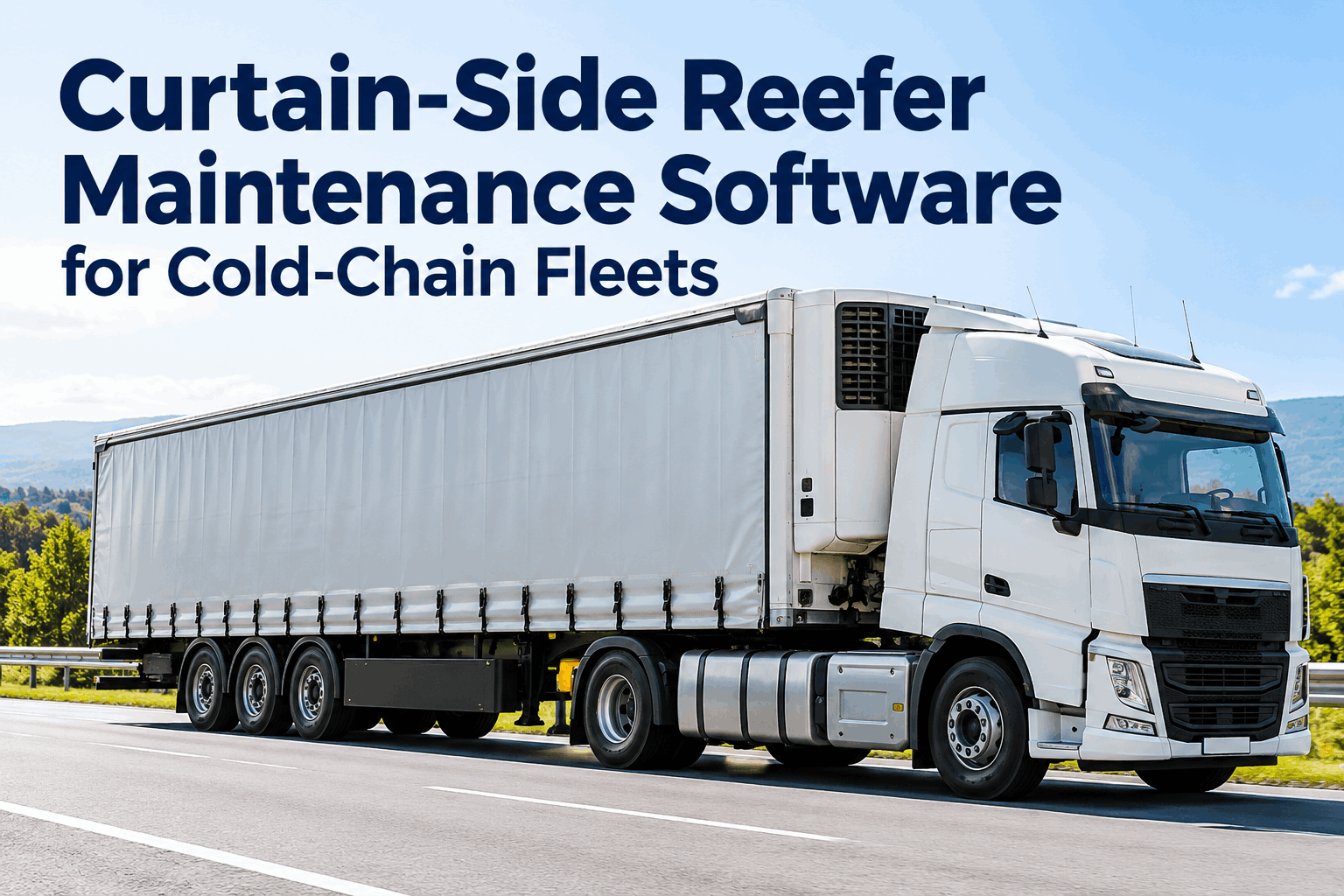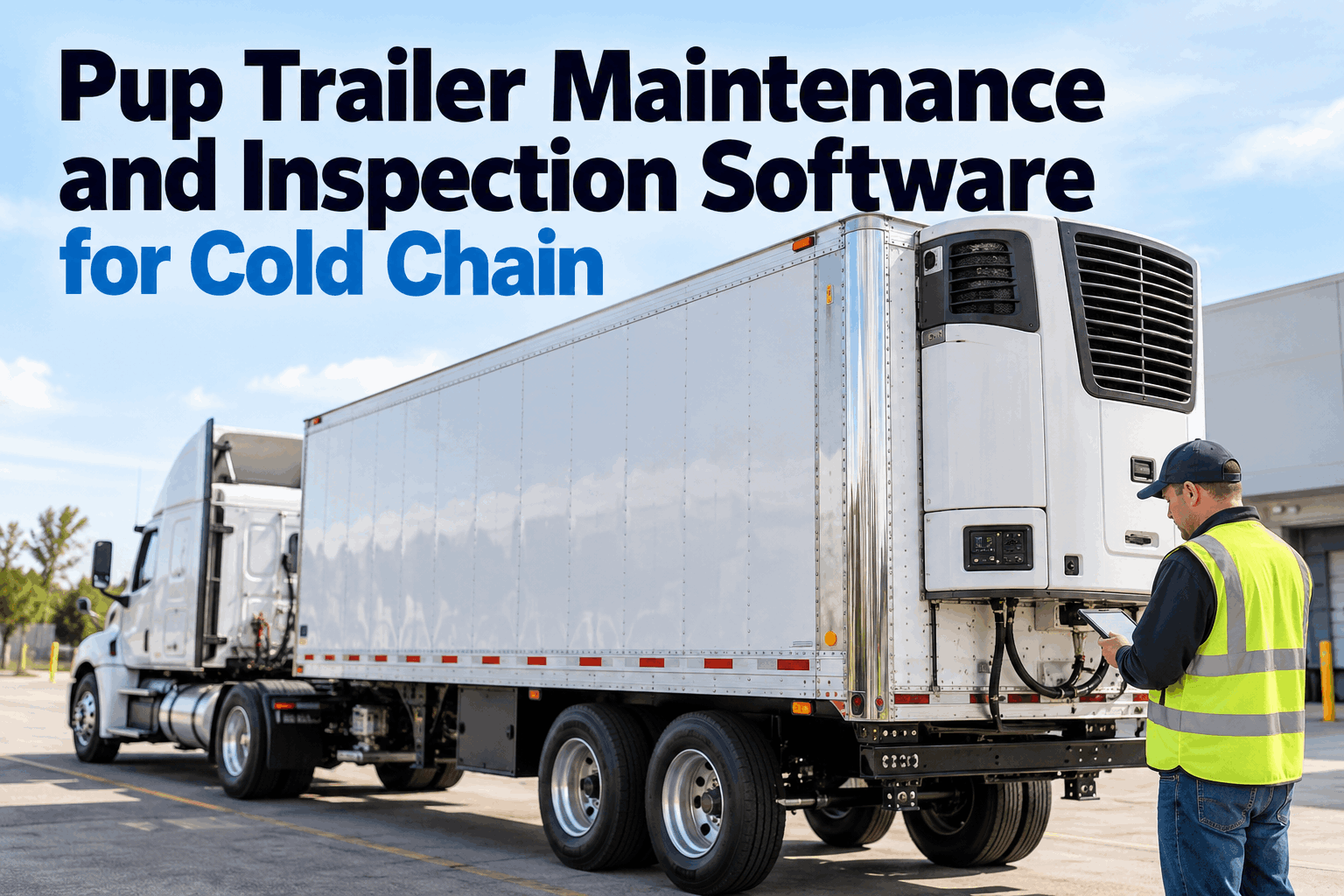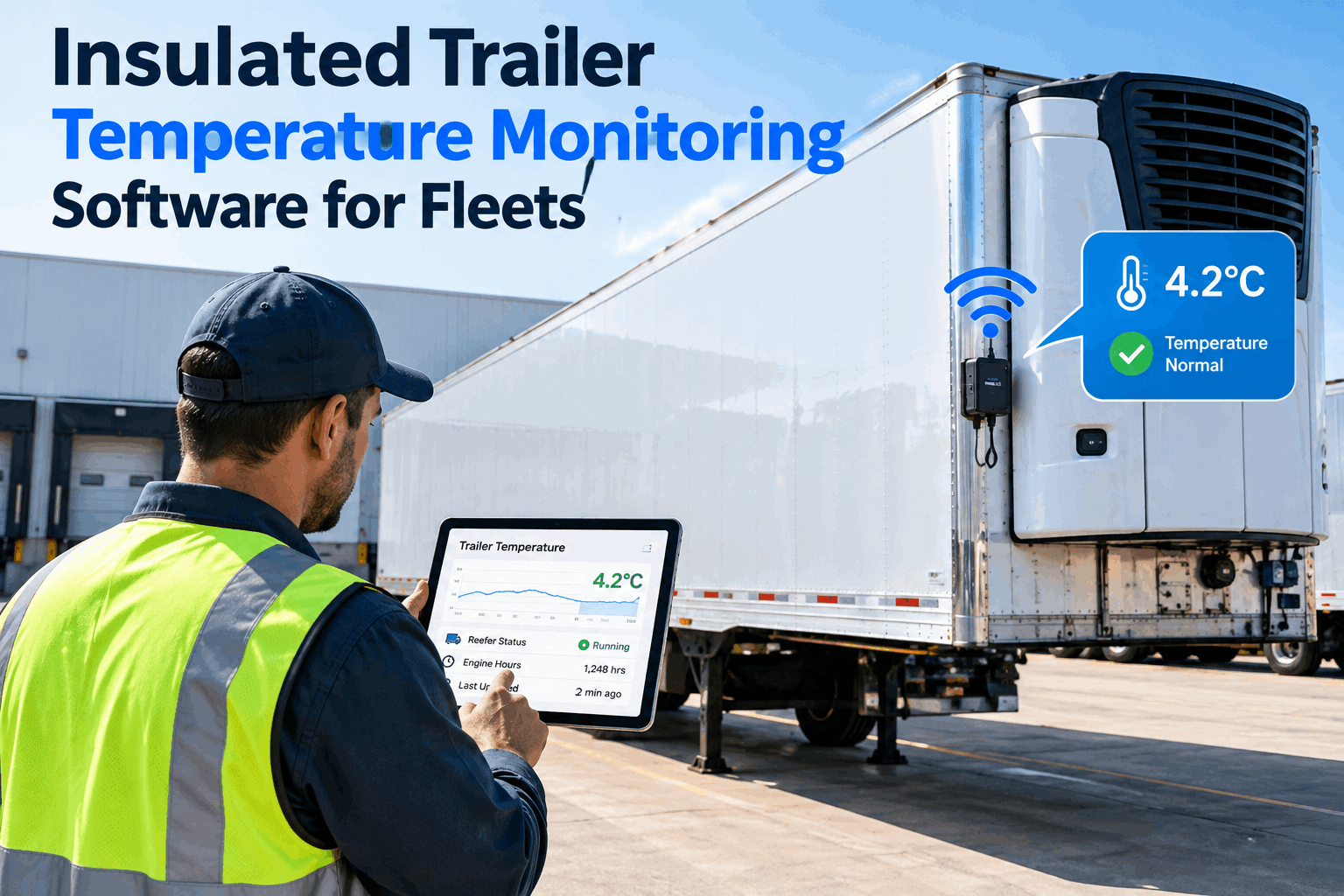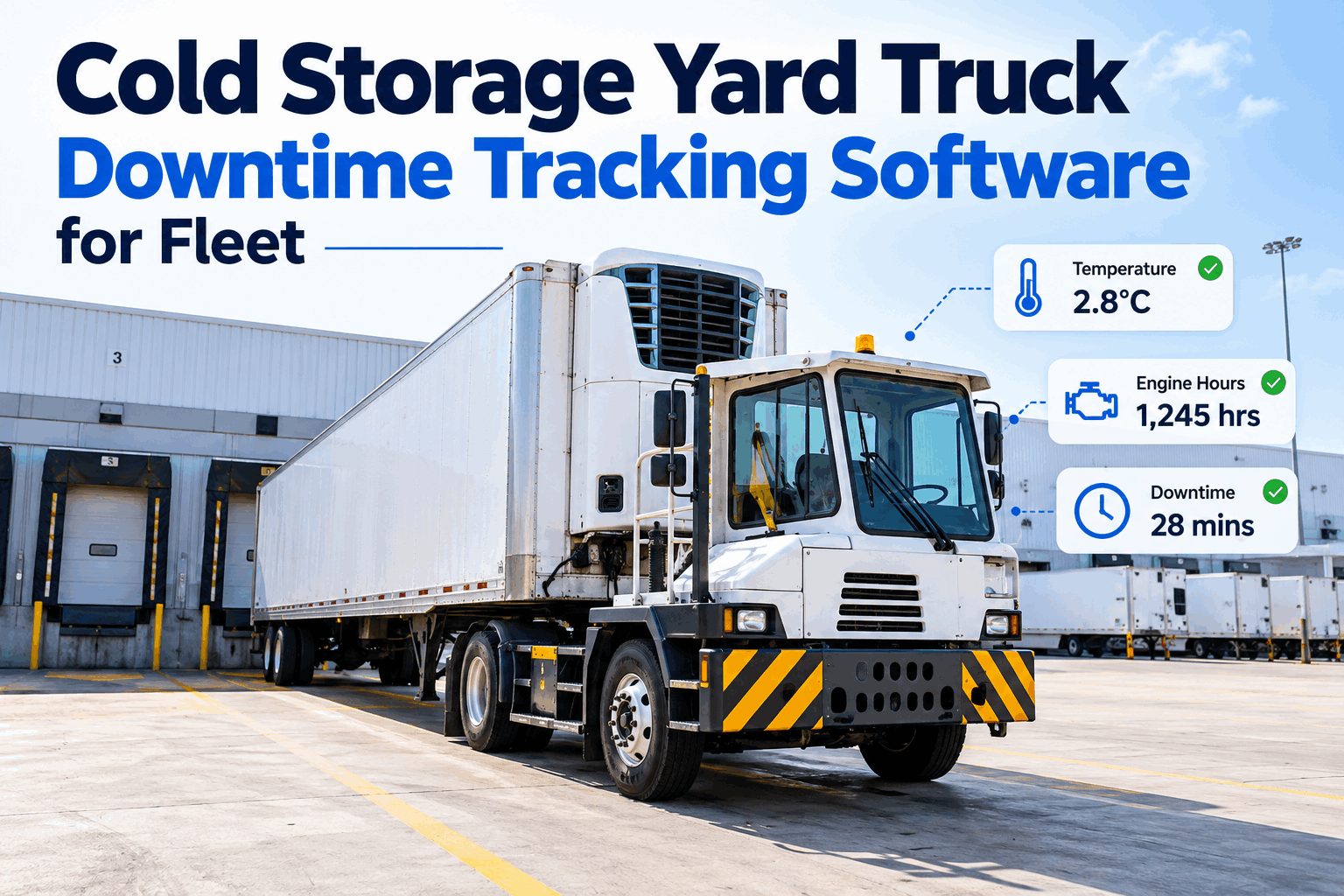
Insulated trailers don't have a diesel reefer engine screaming for attention — which is exactly why they get ignored. No engine, no alarm, no obvious warning sign when a door seal fails or wall insulation degrades. The trailer just quietly loses its ability to hold temperature, and nobody finds out until the load arrives warm. FleetRabbit's insulated trailer maintenance software gives cold-chain fleets a structured way to track insulation health, auxiliary unit engine hours, and FSMA-ready temperature records — all in one place. Book a demo to see insulated trailer tracking live.
HERO: SPLIT SCREEN WITH DASHBOARD MOCKUPInsulated Trailer Maintenance Software for Cold-Chain Fleets
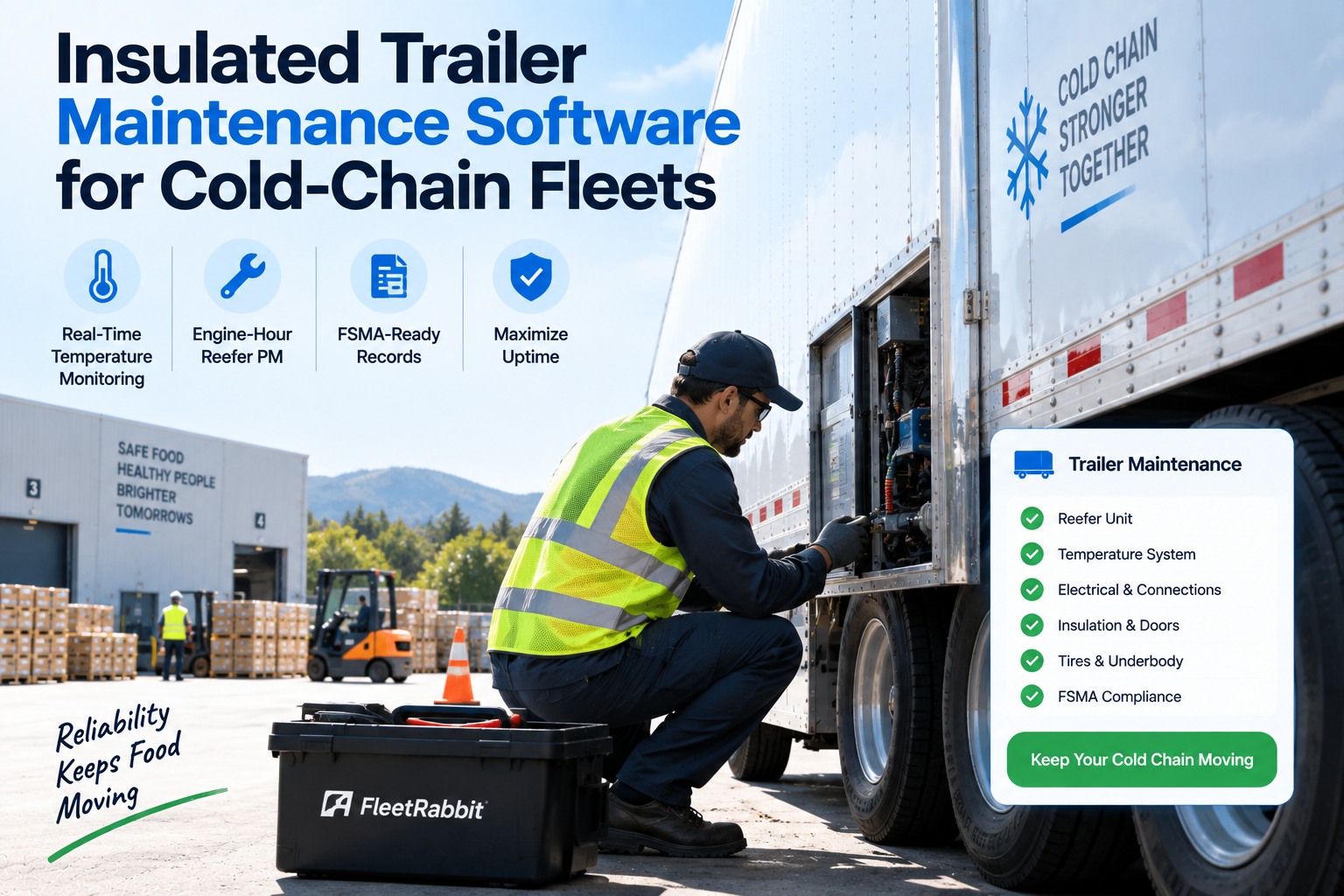
Passive insulation doesn't throw a check-engine light. FleetRabbit tracks door seal condition, wall insulation health, auxiliary unit engine hours, and temperature compliance — so a $200 seal problem never turns into a $30,000 rejected load.
An Insulated Trailer Fails Quietly, in Four Places
No engine means no obvious symptom — insulation problems show up as a temperature complaint, weeks after the real cause started.
Door Seals & Gaskets
A cracked or compressed seal lets warm air bleed in at every stop — the single most common cause of slow temperature drift.
Wall, Floor & Ceiling Insulation
Moisture intrusion or panel damage quietly reduces R-value long before it's visible from the outside.
Auxiliary Refrigeration Unit
Where a supplemental unit is fitted, compressor and belt wear track to engine hours, not trailer mileage.
Pre-Cool Performance
A trailer that used to hold setpoint in 20 minutes and now takes 45 is telling you insulation or seals are already failing.
Maintenance Scheduled Against Hours, Not the Calendar
An auxiliary unit racks up run time sitting at a dock as much as it does on the road. FleetRabbit reads true engine hours and schedules PM before a threshold is crossed.
One Platform for Insulation Health and Compliance
Continuous Temperature Logging
Every cargo zone reading captured automatically and tied to the trailer, route, and timestamp.
Seal & Insulation Inspection Logs
Digital pre-trip checklists flag seal wear and insulation issues before they become claims.
Engine-Hour PM Scheduling
Auxiliary unit service intervals scheduled against real run hours, pulled automatically from telematics.
One-Click Compliance Exports
FSMA-ready temperature and maintenance records generated in seconds for auditors and customers.
GPS-Linked Trailer History
See exactly where and when a trailer was in or out of range across its entire route history.
Threshold & Overdue Alerts
Dispatch is notified the moment a trailer drifts out of range or a service window is missed.
Aligned With the Records Auditors Actually Ask For
Before FleetRabbit vs. After
- Seal wear found only after a load runs warm
- Auxiliary unit PM tied to trailer mileage
- Temperature logs on paper or scattered spreadsheets
- Audit prep takes days of manual digging
- Seal and insulation issues flagged during digital pre-trip
- PM scheduled against real engine hours
- Every temperature reading logged automatically
- Compliance report exported in one click
Fewer temperature-abuse claims after switching to hour-based PM
Average seal repair cost vs. tens of thousands in a spoiled load
To generate an FSMA-ready compliance report
"We lost a full load because nobody had checked the auxiliary unit's hour meter in three months and a belt snapped mid-route. Now if a trailer is within range of a service window, it doesn't leave the yard. That single habit change has paid for the platform many times over."
Stop Finding Out About Trailer Problems From a Customer Complaint
See insulation health, engine-hour PM, and compliance records for every trailer in one dashboard.
Frequently Asked Questions
Does this work for trailers without an auxiliary refrigeration unit?
Yes. Purely passive insulated trailers still get temperature logging, door seal inspection tracking, and compliance exports — engine-hour PM applies only where a unit is fitted.
How is this different from tracking maintenance by trailer mileage?
Auxiliary units accumulate wear from run time, not distance traveled — a trailer sitting at a dock for hours still puts hours on the unit. Mileage-based schedules miss that entirely.
Can drivers log seal and insulation issues from a phone?
Yes. Digital pre-trip checklists let drivers flag seal wear, panel damage, or slow pre-cool times in seconds, routed straight to the maintenance team.
What records can we export for an FSMA or customer audit?
Temperature logs, seal and insulation inspection history, and auxiliary unit service records can all be exported together as one audit-ready report.
Give Every Insulated Trailer a Health Record That Actually Catches Problems
Track seals, insulation, engine hours, and compliance — before a warm load becomes a lost customer.