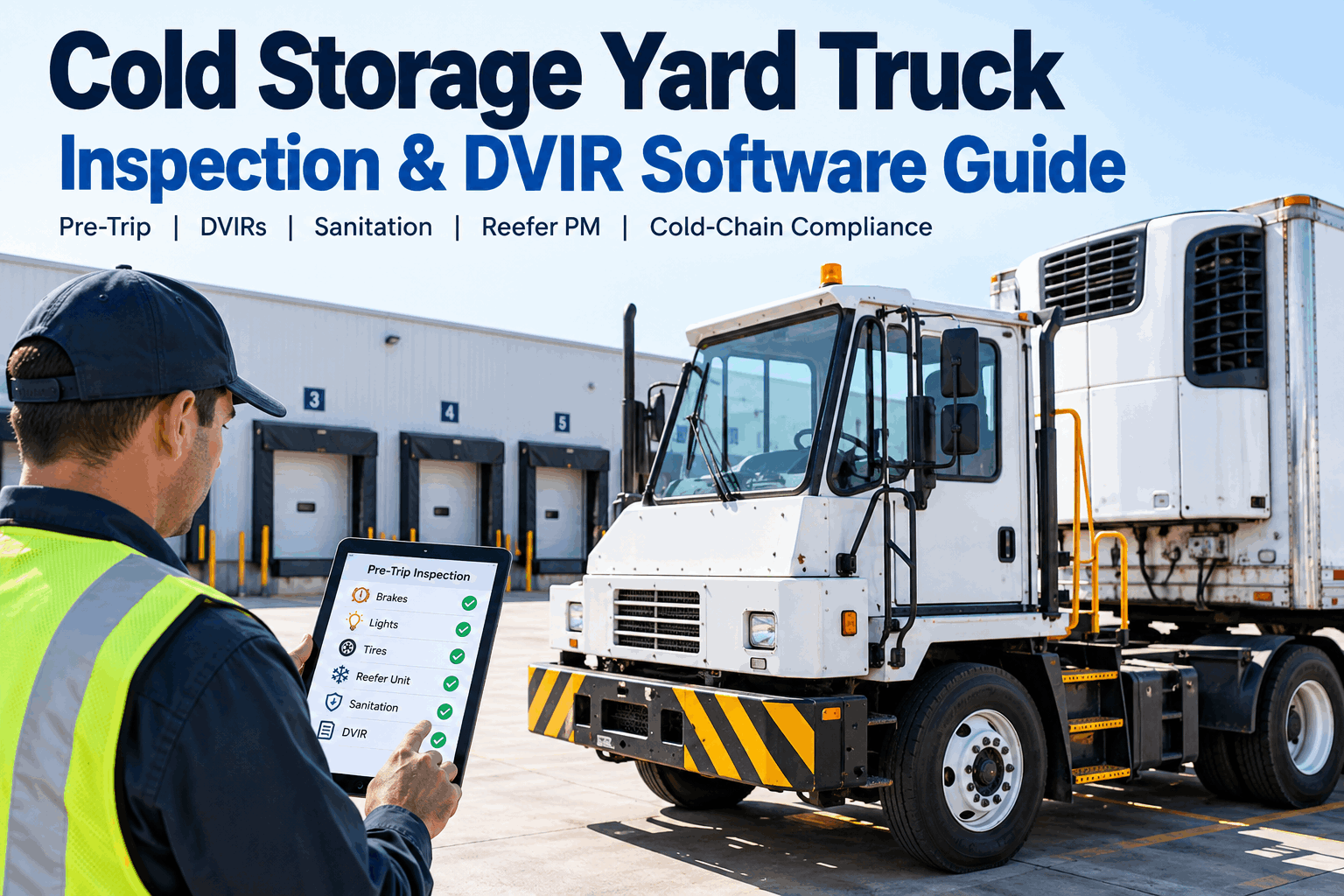
Long-haul food fleet management operates in a margin environment where the difference between a profitable route and a loss event is measured in hours, degrees, and documentation. A refrigerated trailer running a 900-kilometre overnight haul with a reefer unit that dropped 3°C below setpoint at kilometre 340 — and recovered by kilometre 390 — has a 50-minute temperature excursion that the driver never noticed, the fleet manager never saw, and the receiving depot's temperature probe at the dock door missed entirely because the cargo had restabilised four hours before unloading. That invisible excursion is a latent compliance liability, a potential cargo rejection three days after delivery when the retailer's shelf-life team queries the cold chain record, and an insurance claim in progress. Regional refrigerated delivery operations face a different but equally costly challenge: multi-drop routes where the cumulative door-open time across 14 stops in a 280-kilometre metropolitan circuit adds 38 minutes of ambient exposure to temperature-sensitive perishable goods — distributed unevenly across the load based on position in the trailer, proximity to the door, and the sequence in which stops are made. No driver log, no end-of-route temperature download, and no scheduled service inspection captures the actual thermal exposure profile of each pallet across that circuit. Cold chain fleet challenges at this operational scale require continuous monitoring, automated compliance documentation, route-level thermal modelling, and fleet dispatch solutions that translate real-time vehicle condition data into routing decisions before problems compound into cargo loss events, regulatory findings, or customer relationship damage. FleetRabbit's temperature-controlled fleet management platform was built for the operational realities of long-haul and regional food distribution — delivering the cold chain management intelligence that perishable logistics operations require to protect cargo, satisfy compliance requirements, and operate profitably across every route in every season. Start managing your food delivery fleet with FleetRabbit or book a cold chain fleet demo with our team.
FleetRabbit · Cold Chain Fleet Intelligence
Long-Haul and Regional Food Delivery Fleet Challenges & Solutions
How continuous cold chain monitoring, route-aware thermal modelling, and automated compliance documentation help refrigerated food fleets eliminate temperature excursions, reduce cargo loss, and operate profitably across every delivery route.
$31K+
Average cost of a single undetected cargo rejection from cold chain failure
68%
Of temperature excursions occur during transit — invisible to end-of-route logging
<90s
FleetRabbit threshold breach to fleet manager alert on any monitored route
100%
Automated cold chain compliance record completeness per trip per vehicle
Long-Haul vs. Regional: Two Distinct Challenge Profiles, One Platform
Long-haul food transport and regional food logistics share the same fundamental requirement — temperature-controlled cargo delivered intact, compliant, and documented — but the operational failure modes, monitoring priorities, and fleet dispatch solutions that protect against loss differ substantially between route types. Understanding the specific risk profile of each operation is the foundation of an effective cold chain fleet management strategy.
Long-Haul Food Transport
600km+ single or double-driver routes
Extended reefer unit unattended operation
8–14 hour unmonitored transit windows where reefer unit mechanical degradation, fuel depletion, or setpoint drift accumulates without detection or corrective intervention opportunity.
Border and regulatory crossing compliance
Cross-border food transport documentation requirements — temperature records, HACCP evidence, vehicle hygiene certificates — that manual logging systems produce incompletely and inconsistently.
Reefer mechanical failure in remote locations
Compressor failure, fuel run-out, or refrigerant leak 400 kilometres from the nearest service centre — with a full load of perishable goods and a 6-hour safe temperature window shrinking in real time.
Driver rest compliance vs. cargo temperature
Mandatory rest stops of 9–11 hours at facilities without electric standby hookup — reefer unit running on diesel in a truck stop bay where fuel level, engine hours, and cargo temperature require remote verification.
Regional Refrigerated Delivery
Multi-drop metropolitan and regional circuits
Cumulative door-open thermal exposure
12–18 stop metropolitan circuits accumulating 35–55 minutes of door-open ambient exposure — distributed unevenly across load positions, with rear-of-trailer cargo absorbing 3–4× more thermal load than front-positioned pallets.
Stop-sequence temperature impact
Delivery sequence decisions made by dispatchers without thermal modelling data — first-stop customers receiving cargo with full cold integrity while last-stop customers receive product with accumulated thermal exposure that may have breached safe limits at stop 11 of 14.
Multi-customer compliance documentation
Each customer on a multi-drop circuit requiring individual temperature records for their delivery — impossible to produce from a single end-of-route data logger that captures only one aggregate temperature history for the entire trip.
Traffic and delay amplification
Unplanned route delays of 45–90 minutes in urban delivery zones extend door-open windows, push cargo beyond safe transit time calculations, and generate compliance documentation gaps that invalidate the cold chain record for customers at the end of the delayed route.
Cold Chain Fleet Challenges: The Six Failure Points That Cost Food Fleets Most
Cold freight challenges across long-haul and regional food logistics consistently cluster around six operational failure points that generate the largest share of cargo loss events, compliance violations, and customer relationship damage. FleetRabbit's cold chain management platform was designed with direct architecture for each of these failure mechanisms — not as generic fleet telematics applied to a food logistics context, but as a purpose-built perishable logistics solution for the specific operational vulnerabilities that refrigerated food carriers face.
01
In-transit temperature excursion
The failure
Temperature breach occurring and recovering during transit — invisible to end-of-route data logging, undetected by driver observation, and undocumented in the compliance record. 68% of temperature excursions in refrigerated transport occur during transit rather than at loading or unloading points.
FleetRabbit solution
60-second interval multi-zone temperature logging with GPS correlation — every reading timestamped and location-tagged. Excursions detected in under 90 seconds, fleet manager alerted with zone, temperature, deviation magnitude, and GPS position. Complete excursion record generated automatically for compliance documentation.
02
Reefer unit mechanical failure in transit
The failure
Compressor failure, fuel depletion, or refrigerant leak during a long-haul route — discovered when cargo temperature has already breached safe limits. Recovery time from a remote highway location typically 4–8 hours minimum, by which point perishable goods temperature excursion is irreversible.
FleetRabbit solution
Continuous reefer unit health telemetry — compressor discharge temperature, fuel level, refrigerant pressure, operating hours since last service. Mechanical degradation trends flagged before failure; fuel level alerts fired with sufficient lead time to reach the next fuel point on the route before temperature compromise begins.
03
Multi-drop cumulative thermal exposure
The failure
Door-open ambient exposure accumulating across a 14-stop metropolitan circuit — with rear-of-trailer cargo absorbing disproportionate thermal load, and no real-time visibility into which customers are receiving product that has already exceeded its cumulative temperature tolerance.
FleetRabbit solution
Per-zone temperature monitoring with door-open event logging — cumulative exposure calculated per load position and compared against commodity-specific tolerances in real time. Fleet dispatcher alerted when a specific cargo zone approaches its cumulative safe exposure limit before the delivery sequence commits to customers at the end of the circuit.
04
Documentation gaps under audit
The failure
Customer GFSI audit or retailer compliance review requesting cold chain records for a specific shipment — and the carrier's documentation consisting of a paper temperature log with four hourly readings, a driver signature, and no GPS verification, corrective action records, or individual customer-delivery temperature evidence.
FleetRabbit solution
Automated trip-level cold chain records — complete temperature history per zone, GPS-correlated timeline, door-open events with timestamps, reefer unit performance log, corrective actions if triggered — stored per vehicle per trip and retrievable per customer delivery in under 60 seconds. Every audit request answered from a dashboard, not a filing cabinet.
05
Suboptimal food supply chain routing
The failure
Dispatch routing decisions made on distance and time optimisation without thermal modelling — creating routes that are geographically efficient but thermally catastrophic, sequencing the most temperature-sensitive deliveries last on circuits where door-open accumulation has already degraded cargo zone conditions beyond safe limits for sensitive SKUs.
FleetRabbit solution
Thermal-aware fleet dispatch solutions that integrate commodity temperature sensitivity, projected door-open accumulation, ambient forecast, and vehicle zone performance into routing recommendations. Most temperature-sensitive deliveries sequenced first on each circuit — protecting cargo integrity while maintaining route efficiency.
06
Cross-border compliance failure
The failure
International food transport requiring continuous temperature records that satisfy the importing country's food safety authority requirements — and a carrier whose documentation covers 4 readings per 24 hours, has gaps during overnight rest stops, and lacks the GPS-correlated chain of custody that border authorities increasingly require as a condition of clearance.
FleetRabbit solution
Continuous GPS-correlated temperature records satisfying EU Regulation 37/2005, FDA FSMA Sanitary Transportation requirements, and customer GFSI chain-of-custody standards — maintained without driver action, transmitted in real time, and exportable in authority-ready format for border inspection at any point in the journey.
Every cold chain challenge your fleet faces has a measurable, preventable solution.
FleetRabbit's refrigerated transport solutions platform monitors every risk point — in transit, at each stop, and through every compliance requirement — across long-haul and regional routes simultaneously.
FleetRabbit Platform: Full Capability Stack for Food Delivery Fleet Logistics
Perishable goods transport at scale requires a platform that spans every operational challenge from pre-load vehicle qualification to delivery-point temperature evidence — not a collection of disconnected sensors and manual processes that leave gaps between monitoring events. FleetRabbit's food logistics fleet management platform delivers continuous visibility, automated compliance, and actionable intelligence across the complete cold chain operation.
60-second interval logging across all cargo zones — front, mid, rear, and door-proximity sensors — with GPS location attached to every reading. 1,440 data points per zone per 24-hour route versus 12 from manual logging. Tamper-evident, connectivity-loss-buffered, and formatted for FDA, GFSI, and customer audit submission without manual assembly.
1,440 readings per zone per 24 hrs
100% GPS-correlated
96hr offline buffer
Compressor discharge temperature, suction pressure, fuel level, operating hours, and alarm history monitored continuously. Mechanical degradation trends generate predictive maintenance alerts before in-transit failure — the difference between a planned workshop visit and a cargo loss event on a remote highway.
Predictive alerts 10–18 days ahead
Fleet dispatch solutions that integrate cargo temperature sensitivity profiles, ambient temperature forecast, vehicle zone performance baseline, and cumulative door-open modelling into stop-sequence recommendations. Most sensitive deliveries protected first. Dispatcher alerted before cumulative exposure reaches commodity limit.
Real-time exposure modelling
Complete cold chain records per trip, per customer, per delivery — temperature history, reefer performance log, door-open timeline, excursion events and corrective actions — generated automatically without driver action. Retrievable in under 60 seconds for any audit scope or cargo dispute.
<60s any-record retrieval
Continuous trailer temperature and reefer unit status during mandatory rest periods — no driver present, no manual checks, full remote visibility for fleet managers. Fuel level monitoring during overnight stops at non-electric facilities ensures reefer unit diesel supply throughout the rest period. Immediate alert if temperature begins rising during an unattended rest stop before the cargo safety window is breached.
24/7 remote visibility including rest stops
Fuel alerts before reefer runout risk
"
We operate a mixed fleet — 18 long-haul refrigerated trailers running overnight national routes and 24 regional multi-drop vehicles covering metropolitan and provincial circuits for ambient, chilled, and frozen customers. Before FleetRabbit, our cold chain documentation programme was a combination of datalogger downloads at the depot and driver temperature logs — neither of which gave us any visibility into what was happening during transit, and neither of which could produce the customer-specific delivery records that our largest retail clients started requiring as a condition of supply in 2023. The first problem FleetRabbit solved was the long-haul overnight visibility gap. Within three weeks of deployment, the system flagged a reefer unit on a 740-kilometre overnight route that was cycling into defrost mode 40% more frequently than its baseline — a compressor efficiency issue that would have progressed to a full mechanical failure on a future route. We serviced the unit that weekend. No cargo loss, no emergency roadside call, no overnight recovery operation. The second problem was the multi-drop documentation gap. Our regional vehicles now generate a complete per-customer cold chain record for every delivery — temperature at the time of delivery, full transit temperature history for their specific cargo zone, and a door-open event log. Our last retail compliance audit took 22 minutes to respond to instead of the three days it previously took to manually reconstruct records that were still incomplete at the end of the process.
Head of Distribution Operations
·
National Food Wholesaler — 42 Refrigerated Vehicles — Long-Haul and Regional — FleetRabbit Cold Chain Active
Frequently Asked Questions
QHow does FleetRabbit maintain continuous cold chain records during connectivity gaps on long-haul routes through remote areas?
FleetRabbit's in-vehicle hardware stores sensor data locally at full resolution during any period of cellular connectivity loss — buffering up to 96 hours of continuous temperature records, GPS coordinates, door-open events, and reefer unit performance data without degradation or gaps. When connectivity is restored — typically within minutes on most long-haul corridors — the complete buffered dataset synchronises automatically to the FleetRabbit platform with original timestamps preserved, maintaining an unbroken cold chain record for the full route. For long-distance fleet routing through areas with extended connectivity gaps, the platform flags connectivity loss events with GPS position and duration in the trip record — providing the context that compliance auditors require to validate the continuity of the cold chain record even where network coverage was interrupted. Any temperature excursions occurring during connectivity gaps are fully captured in the buffered data and appear in the compliance record upon synchronisation with the same completeness as connected-route records.
QCan FleetRabbit generate individual per-customer cold chain records from a multi-drop regional delivery circuit?
FleetRabbit generates per-customer delivery records from multi-drop regional circuits by correlating door-open events with GPS-confirmed delivery locations and extracting the cargo zone temperature history for the time window relevant to each customer's delivery. Each customer record includes: the cargo zone temperature at the time of delivery, the full temperature history for that zone from load departure to delivery point, cumulative door-open exposure for their specific cargo position, any excursion events affecting their cargo during transit, and reefer unit performance status throughout the relevant transit period. Records are formatted per customer and exportable individually — enabling carriers to respond to customer audit requests with a specific, verified cold chain record for each delivery rather than a whole-route aggregate that contains other customers' data. For regional food logistics operations serving retailers with GFSI or customer-specific cold chain documentation requirements, FleetRabbit's per-customer record architecture eliminates the documentation gap that conventional dataloggers structurally cannot close.
QHow does FleetRabbit's thermal-aware routing work in practice for a fleet dispatcher managing a regional multi-drop circuit?
FleetRabbit's thermal-aware dispatch capability integrates real-time vehicle zone temperature performance, ambient temperature forecast for the delivery area, commodity temperature sensitivity profiles for the load, and projected door-open exposure at each stop into a stop-sequence recommendation that the dispatcher sees alongside the conventional distance-and-time routing suggestion. The dispatcher receives a recommended delivery sequence that protects the most temperature-sensitive cargo by positioning those deliveries early in the circuit — before cumulative door-open exposure has degraded cargo zone conditions — while flagging any stops where the projected arrival temperature for a specific commodity is within a configurable margin of its safe transit limit. During circuit execution, FleetRabbit monitors actual thermal exposure against the modelled projection in real time — alerting the dispatcher if unexpected delays, extended door-open events, or ambient temperature changes are causing actual cargo zone conditions to diverge from the safe-delivery projection for stops later in the sequence, enabling real-time rerouting decisions before a delivery-point temperature compliance failure occurs.
Book a demo to see the dispatch interface applied to your specific regional circuit structure.
QWhat food transport compliance standards does FleetRabbit's cold chain documentation satisfy?
FleetRabbit's automated cold chain records are designed to satisfy the documentation requirements of the primary food transport compliance frameworks that long-haul and regional food carriers operate under: the FDA's FSMA Sanitary Transportation of Human and Animal Food Rule (21 CFR Part 1, Subpart O); EU Regulation 37/2005 on monitoring temperatures in means of transport and storage of quick-frozen foodstuffs; ATP Agreement requirements for refrigerated vehicle certification and temperature record-keeping; and the cold chain control evidence requirements of GFSI-recognised certification schemes including BRC Storage and Distribution, SQF Edition 9, and IFS Logistics. For carriers operating under customer-specific cold chain standards set by major retailers or food manufacturers, FleetRabbit's record format and export architecture is configurable to match customer-specified temperature logging frequency, record retention period, and data submission format requirements.
Create a free account to review the compliance record templates against your specific regulatory and customer requirements.
FleetRabbit · Long-Haul & Regional Cold Chain
Every Route Monitored. Every Degree Documented. Every Delivery Compliant.
FleetRabbit gives long-haul and regional food delivery fleets continuous multi-zone temperature monitoring, reefer unit health telemetry, thermal-aware route dispatch, automated per-customer compliance records, real-time excursion alerts, and remote rest-stop visibility — across every refrigerated vehicle, on every route, in every season.
$31K+
Average cargo rejection cost prevented per cold chain failure detected before delivery
97%
Reduction in cold chain documentation gaps within 60 days of deployment
<60s
Per-customer cold chain record retrieval for any trip, any date range
24/7
Remote visibility including overnight rest stops, border crossings, and remote corridors
Long-Haul Cold Chain
Regional Multi-Drop Monitoring
Temperature Compliance Records
Reefer Unit Health
Thermal Route Dispatch
Perishable Logistics Solutions
June 3, 2026
By Taylor
All Posts