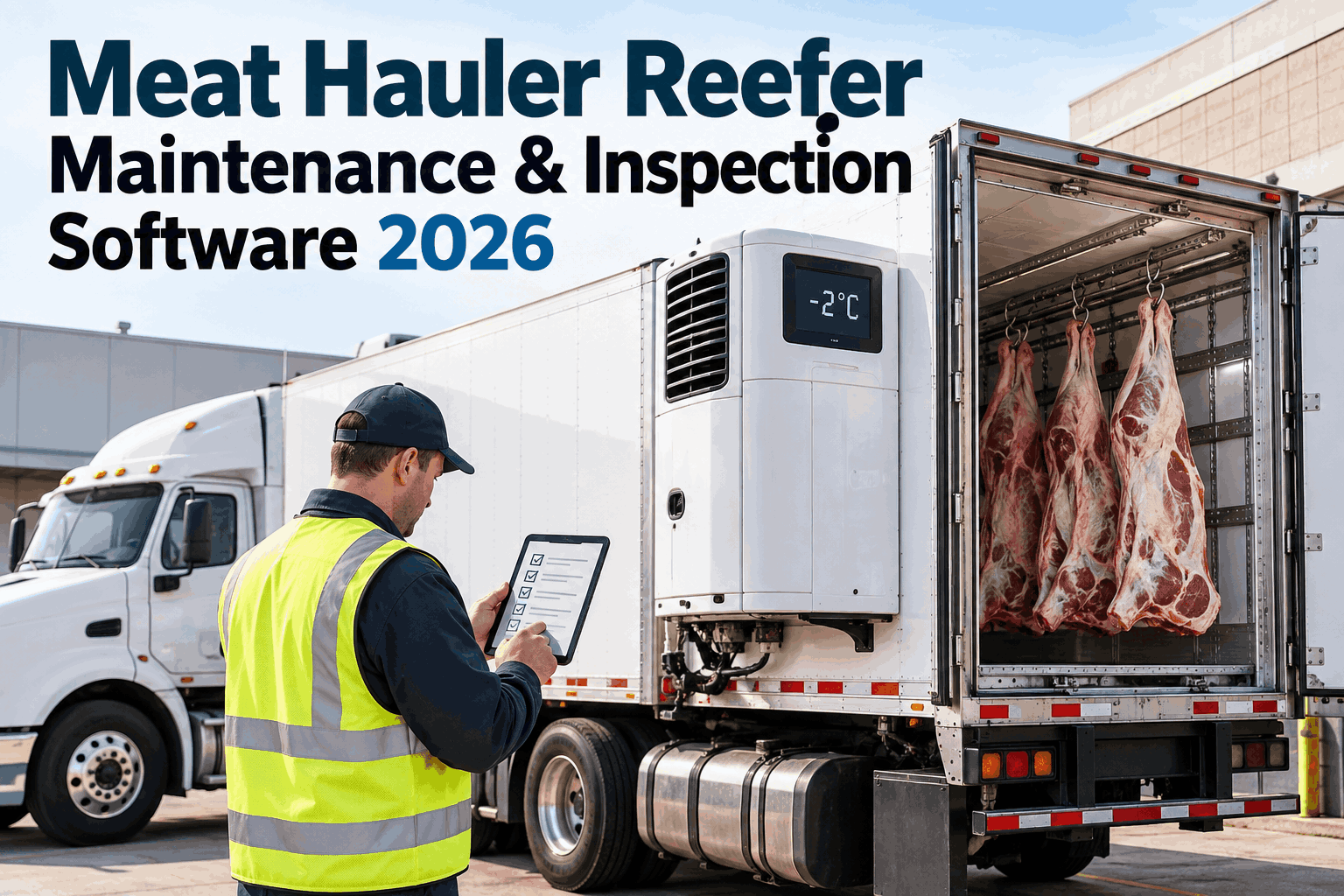
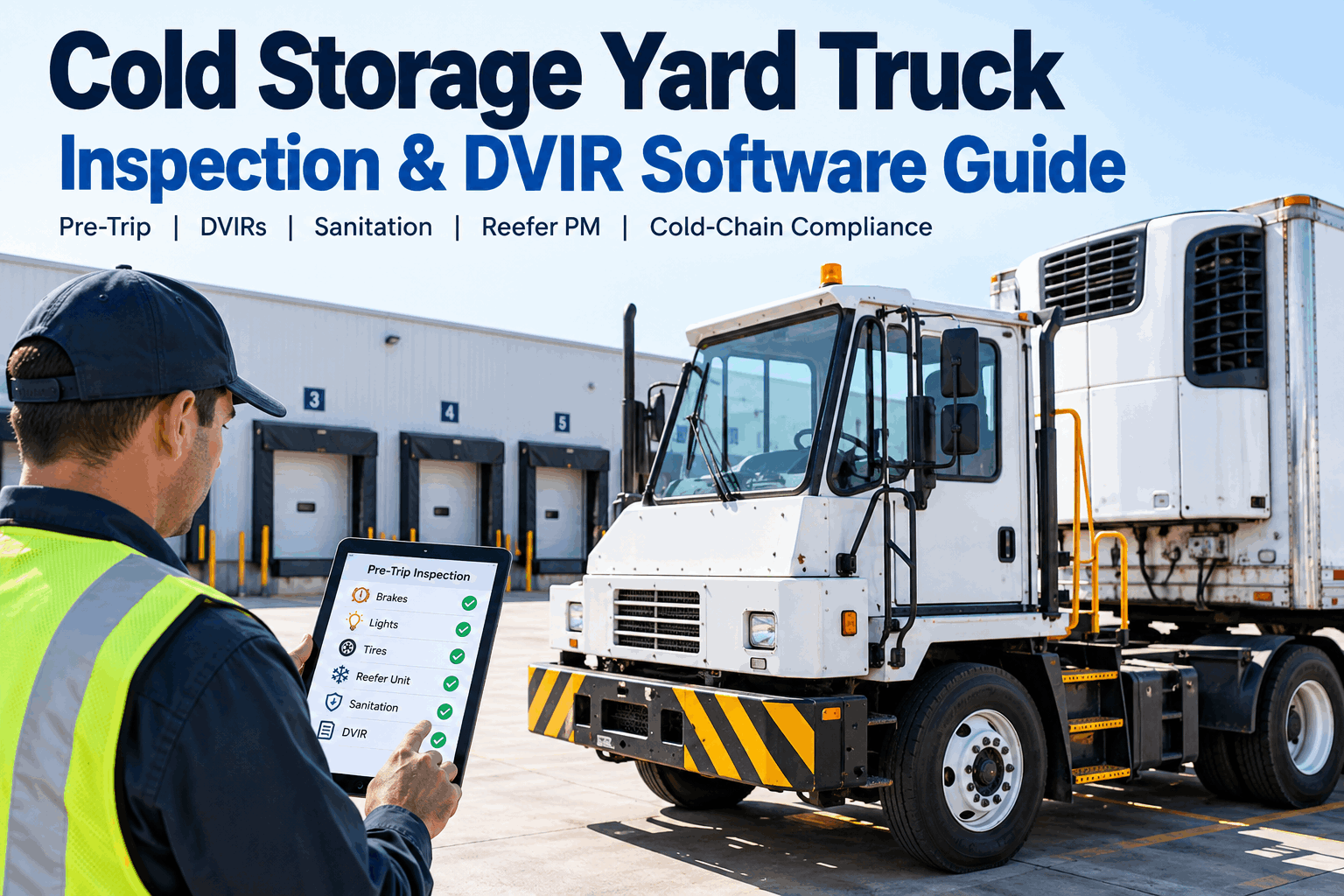
Protein logistics directors, wholesale meat carriers, cold-chain refrigerated fleet superintendents, and dedicated meat distribution managers operate under the most stringent biological and mechanical standards in commercial transportation. Hauling hanging beef carcasses, boxed pork, poultry, and processed meats requires a trailer environment that functions as both a clean biological cleanroom and a continuous deep-chill preservation chamber. Unlike hauling dry goods or pre-packaged canned freight, meat haulage subjects 53-foot refrigerated trailers to severe sanitary and physical stresses: blood and protein fluid wash-downs, chemical sanitizer exposure, floor drain kazoo blockages, meat-hanging trolley rail fatigue, and rapid temperature swings during cross-dock transfers. When carriers manage trailer wash-outs, sanitation certificates, and transport refrigeration unit (TRU) servicing using paper clipboards, laminated binder sheets, or basic driver memory, severe regulatory vulnerabilities emerge. The FDA Food Safety Modernization Act (FSMA) Sanitary Transportation of Human and Animal Food Rule and USDA Food Safety and Inspection Service (FSIS) regulations enforce zero tolerance for cross-contamination, microbial harborage, chemical wash residue, or unauthorized temperature variations between 28°F and 34°F for fresh meat. A single contaminated trailer floor, unverified wash-out certificate, or en-route compressor belt failure leads to rejected $120,000 beef consignments, immediate federal detention, and devastating commercial claims. Purpose-built meat hauler reefer maintenance and sanitation software pairs real-time wireless Bluetooth Low Energy (BLE) temperature telemetry with digital ATP wash-out verification, J1939 TRU engine-hour preventive maintenance scheduling, and cryptographic FSMA audit logging. Eliminate rejected meat loads, ensure verified sanitary cleanliness, and streamline regulatory compliance across your entire cold-chain fleet. Book a Demo to see our meat hauler reefer maintenance and sanitation software in action.
FSMA 21 CFR Part 1 Subpart O & USDA FSIS ComplianceSanitary Wash-Out & ATP Swab VerificationTRU Engine-Hour Runtime Telematics
Continuous temperature tracking and digital wash-out verification protect cargo acceptance at receiving plants.
± 0.1°C
NIST-Traceable Sensing
Multi-point wireless BLE probes monitor return air, center cargo mass, and rear door threshold zones.
100%
FSMA Wash-Out Compliance
Digital pre-trip inspections capture photo proof of sanitized trailer interiors and clear floor drainage.
$5
Per Meat Trailer / Month
Predictable cold-chain software pricing covering reefer telematics, sanitation logs, and mobile DVIR.
Eliminate Meat Spoilage Rejections and Automate FSMA Sanitation Compliance
Equip drivers with digital wash-out checklists, decouple reefer engine-hour maintenance from trailer road miles, and track live multi-zone cargo temperatures for just $5/asset/month.
The Extreme Biological and Mechanical Realities of Meat Haulage
Hauling fresh carcass beef, boxed pork, and processed poultry presents operational and sanitary hazards that standard dry or refrigerated freight operations never encounter. Raw animal proteins exude moisture and organic residues that accelerate bacterial growth, corrode aluminum floor grooving, and block drainage systems. When carriers manage sanitation and refrigeration on loose paper wash-out tickets or manual thermometer logs, major liabilities emerge that threaten cold-chain compliance and carrier operating authority. Book a demo to inspect our digital wash-out and ATP sanitation verification logs.
Meat juices, fat residues, and bone dust accumulate in the corrugations of duct-style aluminum trailer floors. If rubber duckbill drain kazoos clog with organic sludge, wash-down water and meat fluids cannot drain, forming stagnant puddles that harbor Listeria monocytogenes and Salmonella. Receiving quality assurance inspectors reject trailers showing moisture pooling or sour odors upon opening rear swing doors.
Hazard 02
The Road Mileage vs. Continuous Reefer Engine-Hour Disconnect
A meat trailer staging outside a packing plant or waiting in cross-dock holding yards racks up zero highway miles while its independent TRU diesel engine operates under continuous high displacement for 18 hours straight to hold a 28°F fresh meat setpoint. Maintenance scheduled by trailer odometer miles ignores genuine oil breakdown, compressor belt wear, and fuel filter waxing, causing sudden en-route compressor seizures. Sign up to decouple auxiliary reefer engine hours from trailer road miles.
Under FSMA and USDA FSIS standards, meat trailers must be pre-cooled to 34°F or lower before loading begins. When drivers back up to loading bays without verifying that trailer insulation has completely chilled, warm wall heat transfers into fresh meat packages. Surface temperatures rise above 40°F, prompting processing plant inspectors to reject the entire consignment before the bill of lading is signed. Book a demo to see our USDA-compliant pulldown and pre-cooling telemetry.
The Tiered Meat Hauler Reefer PM Matrix: Daily to 3,000 Operating Hours
To preserve expensive transport refrigeration compressors, maintain factory warranties, and ensure complete compliance with FSMA 21 CFR Part 1 Subpart O, meat carriers schedule equipment servicing around true auxiliary engine operating hours and sanitary swab intervals rather than arbitrary calendar dates. Sign up to configure automated meat hauler preventive maintenance intervals.
Visual and photo audit of trailer interior; inspection of floor grooves for organic residue; clear front and rear duckbill drain kazoos; verify sanitizing wash contact time; verify absence of chemical odors; check door perimeter compression gasket seals; execute pre-cooling pulldown to 32°F.
Eliminate bacterial contamination from previous cargo, ensure free drainage of condensate, and satisfy USDA FSIS pre-loading sanitary requirements.
Tier 2: Meat Rail & Pre-Trip Rigging
Every 100 Operating Hours / Bi-Weekly
Inspect overhead meat-hanging rails and roof bow fasteners; test trolley switch points and drop-stops; inspect return air bulkhead for meat packaging debris; check reefer engine oil level and coolant sight glass; test automatic defrost termination sensor.
Prevent overhead carcass collapse during transit, ensure unobstructed return airflow through evaporator coils, and stop coil freeze-ups.
Tier 3: Minor TRU Service
Every 1,500 Operating Hours / 6 Months
Inspect reefer compressor drive belt tension and idler pulleys; check Delta-T cooling spread across evaporator coils; clean condenser coil fins; test electric standby motor contactor; replace primary fuel filter; chassis grease lubrication and brake stroke audit.
Prevent sudden belt snapping during linehaul transit, maintain rapid thermal recovery, and ensure dual-mode electric plug-in reliability at distribution docks.
Tier 4: Comprehensive Wet Service
Every 3,000 Operating Hours / Annual
Full synthetic TRU diesel engine oil and filter flush; primary and secondary fuel filter swap; replace compressor oil filter; calibrate multi-point wireless BLE temperature probes; inspect electronic throttling valve (ETV); flush cooling loop.
Prevent fuel filter waxing, maintain sub-minute temperature pulldown capacity, and generate audit-proof FSMA compliance files.
The 4 Core Pillars of Meat Hauler Reefer Maintenance Software
Equip drivers and wash bay technicians with a guided mobile inspection application. Drivers photograph the cleaned floor, document wash station sanitizing certificates, log ATP swab results, and confirm clear floor drain kazoos, generating a digitally signed, tamper-proof wash-out record before rolling to the loading dock.
Pillar 02
Dedicated TRU Engine-Hour Runtime Decoupling
Extract verified diesel run-hours, loaded cooling hours, and electric standby runtime directly from Thermo King SmartReefer and Carrier Transicold APX microprocessor controllers. Maintenance counters advance strictly by actual refrigeration workload, preventing unmonitored compressor wear during staging yard dwell.
Pillar 03
Meat-Hanging Rail & Floor Drain Structural Logs
Standardize structural audits of overhead carcass rails, trolley switch stops, and corrugated aluminum flooring. The software logs fastener torque checks, flags localized corrosion from sanitizing chemicals, and stages preventive repair tickets before rail fatigue causes dangerous overhead drops. Sign up to automate hanging beef meat rail and floor drain inspection workflows.
Pillar 04
Automated FSMA 21 CFR Digital Compliance Dossiers
Every temperature reading, door open event, and wash-out sign-off is cryptographically watermarked with satellite GPS coordinates and UTC timestamps. Generate instant 1-click exportable PDF dossiers proving continuous 28°F to 34°F holding compliance to meatpackers, receivers, and USDA FSIS inspectors. Book a demo to inspect our digital FSMA sanitary transport audit dossiers.
The Step-by-Step Meat Hauler Pre-Trip & Pulldown Pipeline
Technicians wash out trailer interior with food-grade sanitizing detergents, clear front and rear floor drain kazoos, and upload photo proof of cleaned aluminum floor corrugations.
Phase 02
Mechanical & Meat Rail Inspection
Driver audits door perimeter compression gaskets, checks overhead meat-hanging rails for loose fasteners, and verifies reefer engine oil, coolant, and belt tension.
Phase 03
Pre-Cooling Pulldown Verification
The reefer unit starts and executes an automated pulldown cycle. The system verifies the cargo box reaches and holds 32°F for thirty minutes before dispatch unlocks loading clearance.
Phase 04
Cryptographic FSMA Loading Sign-Off
Receiving dock staff inspect the verified digital wash-out certificate and continuous pre-cooling temperature graph on the driver's tablet, clearing the trailer for immediate meat loading.
Platform Comparison: Manual Paper Logs vs. Fleet Rabbit Platform
Commercial Fleet Case Study: Heartland Protein Transport
Learn how an interstate meat carrier operating 54 refrigerated trailers and meat-hanging reefers eliminated dockside load rejections and streamlined USDA FSIS audit compliance.
Meat Logistics Case Study
0
Rejected Meat Consignments
100%
FSMA Wash-Out Compliance
$142,000
Annual Spoilage & Claim Savings
Interstate Protein Carrier Eliminates Load Refusals Across 54 Refrigerated Trailers
Transporting hanging beef carcasses and vacuum-packed pork across seven Midwestern states, Heartland Protein Transport faced crippling consignment rejections. Quality assurance inspectors at major packing houses refused two loads of premium beef due to residual blood odors and clogged floor drain kazoos from an unverified wash-out. Furthermore, an en-route alternator failure caused cargo temperatures to rise to 42°F during cross-dock staging, spoiling a $130,000 shipment of boxed beef. The carrier was tracking reefer maintenance strictly by trailer road mileage, completely unaware that long yard staging was doubling auxiliary compressor engine hours.
By deploying Fleet Rabbit at $5/asset/month, the carrier implemented digital pre-trip wash-out inspections requiring high-resolution photos of floor drains and sanitized walls before loading. The platform connected directly to Thermo King and Carrier microprocessors to track true auxiliary engine hours, scheduling PM-A and PM-B services based on real cooling workload. Multi-zone wireless BLE probes streamed live cargo temperatures directly to dispatch, alerting drivers immediately during loading door dwell. Over 12 months, dockside load refusals dropped to zero, wash-out audit compliance reached 100%, and the carrier saved $142,000 in prevented cargo claims, avoided towing, and reduced administrative paperwork.
Frequently Asked Questions
What specific sanitation requirements does FSMA mandate for meat haulers?
Under the FDA FSMA Sanitary Transportation Rule (21 CFR Part 1 Subpart O) and USDA FSIS guidelines, carriers transporting raw meat must ensure that vehicles and equipment are maintained in a sanitary condition to prevent adulteration. Requirements include thorough washing to remove organic matter, blood, and fat residue; use of approved food-contact sanitizers with adequate contact time; complete drying and clearing of floor drains; verification that no chemical wash odors remain; and maintenance of continuous temperature control between 28°F and 34°F for fresh meat. Written procedures and wash records must be retained for at least 12 months.
Why is auxiliary engine-hour tracking essential for refrigerated meat trailers?
Refrigerated meat trailers spend substantial time stationary at meat packing docks, inspection stations, and staging yards while the refrigeration unit runs continuously under heavy thermal displacement. A trailer dropped over a weekend may accumulate 35 hours of reefer engine run-time while adding zero tractor road miles. Scheduling maintenance strictly by trailer road miles neglects engine oil breakdown, drive belt fatigue, and fuel filter waxing, causing sudden highway compressor seizures.
Why are floor drain kazoos critical to inspect during trailer wash-outs?
Refrigerated trailers feature one-way rubber duckbill drain valves (kazoos) at the front and rear corners of the floor to allow wash-down water and melting ice to escape while preventing warm road air and exhaust fumes from entering. When hauling meat, fat solids, bone chips, and protein residues easily lodge inside the kazoos, causing wash water to back up. Stagnant puddles harbor dangerous pathogens such as Listeria, leading to immediate load rejection by packing plant inspectors.
Can drivers complete wash-out and pre-trip inspections without cellular reception?
Yes. Fleet Rabbit features an offline-first mobile architecture. Drivers and wash bay technicians can perform complete sanitation checklists, capture high-resolution photos of cleaned floors, record ATP swab results, and review past service logs inside metal wash bays or remote processing facilities without cellular service. All inspection data caches securely on the mobile device and automatically synchronizes to central dispatch the moment cellular or depot Wi-Fi connectivity returns.
What are the pricing details and contract terms for Fleet Rabbit's software?
Fleet Rabbit is priced at a transparent flat rate of $5 per active refrigerated asset per month billed annually. This gives complete access to digital wash-out verification, real-time wireless BLE temperature monitoring, auxiliary TRU engine-hour PM scheduling, meat rail inspection logs, and 1-click FSMA audit dossiers. We provide a 14-day free live trial on up to 3 assets with zero setup fees or long-term locked enterprise contracts.
Ready to Automate Sanitation & Maintenance Across Your Meat Hauler Fleet?
Deploy digital wash-out certifications, decouple auxiliary reefer engine-hour maintenance, and eliminate rejected meat loads for just $5/asset/month.