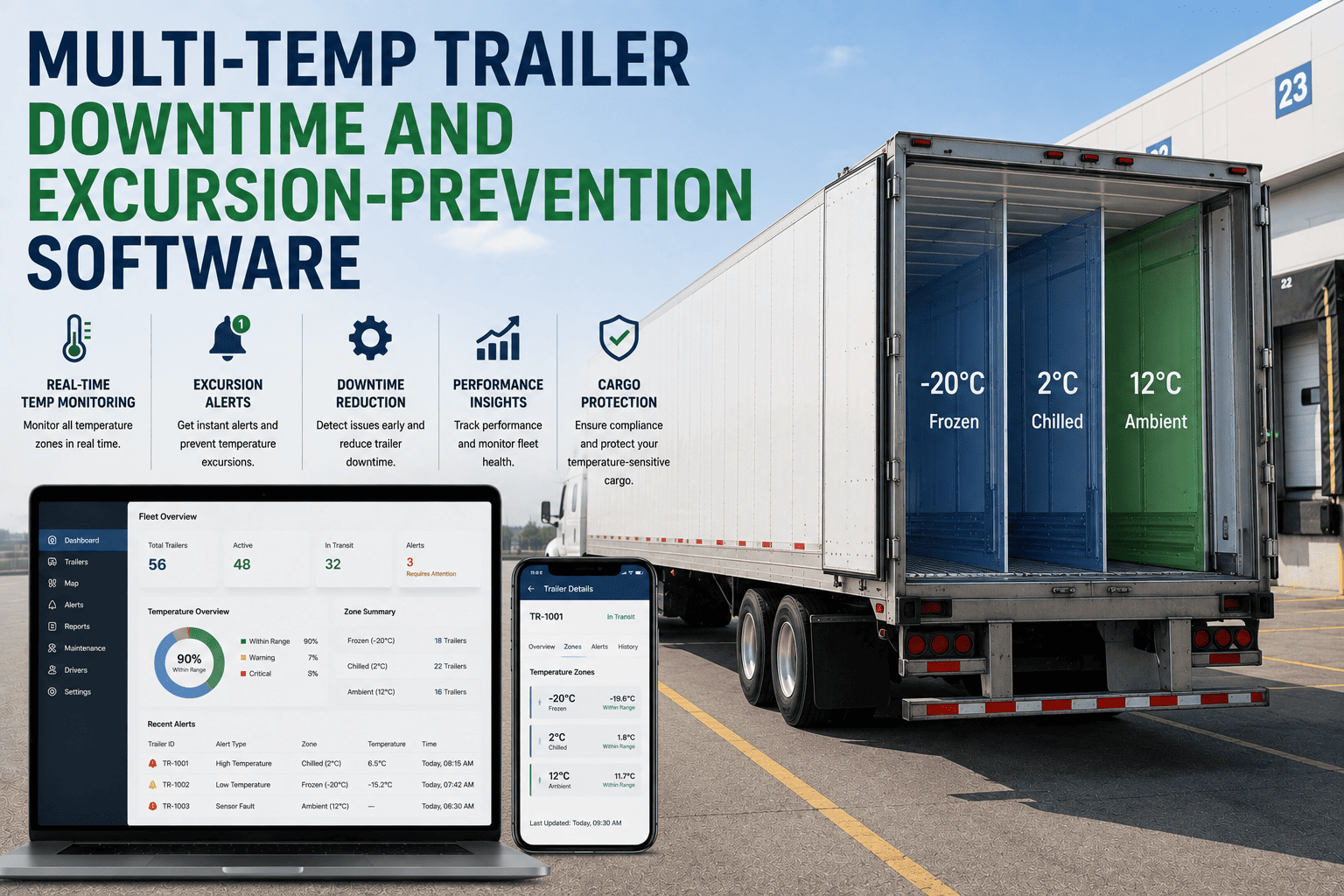
A single multi-temperature trailer can be hauling frozen chicken, dairy, and fresh produce in the same box at the same time, split across bulkheads that each need to hold a completely different number. That is efficient right up until one bulkhead seal drifts outside Amarillo and three different product categories are suddenly sitting in a truck nobody can fully vouch for. Multi-temp trailers do more work per trip than any other refrigerated asset in a fleet, and they carry more components, more compartments, and more ways to fail while doing it. This page walks through why multi-temp downtime looks different from single-temp downtime, where excursions actually start, and how a fleet keeps every zone provable without living on the phone with a driver mid-route.
Every one of those zones has its own air chute, its own probe, and its own damper or door, which means a single trailer can carry three times the sensor points and three times the failure points of a standard single-temp box. Fleets that manage multi-temp assets on the same paper log as a plain dry van are almost always the ones with the highest excursion rates, because nobody is watching all three zones at once. The fix starts with getting every fleet manager to sign up for zone-level visibility instead of a single trailer-wide reading that hides which compartment is actually in trouble.
Notice that the top two causes are not big, dramatic breakdowns. A bulkhead seal loses its gasket tension slowly, and a fan motor starts drawing a little more amperage weeks before it actually seizes. Both are the kind of quiet drift that a driver on a 500-mile run has no way of noticing, which is exactly why fleets that catch these early tend to book a demo of a monitoring platform rather than wait for a rejected load to force the conversation.
Connect your multi-temp trailers and see every compartment, every probe, and every bulkhead reading live in one screen.
That zone-by-zone escalation is the entire difference between an excursion that gets caught in minutes and one that gets discovered at the dock. A trailer-wide average temperature can look perfectly fine while the frozen compartment is three degrees over, and a paper clipboard has no way to separate the two. This is the reason so many cold-chain fleets that carry mixed loads eventually sign up for per-zone alerting instead of a single average reading that hides the actual problem.
Multi-temp maintenance only works when every one of those triggers is tracked independently, because the deep-frozen zone's compressor logs engine hours at a completely different rate than the fresh zone's damper wears out. A fleet running a single blended PM schedule across a multi-temp trailer is effectively guessing at half the intervals, which is why the interval table above exists as separate rows instead of one combined line.
None of that is optional paperwork, it is what stands between a fleet and a rejected load when a customer disputes a delivery. Fleets that still hand-write a single temperature number for a three-zone trailer are the ones scrambling during an audit, while fleets that book a demo of automated per-zone recordkeeping walk into the same audit with a report already built.
- One reading covers three very different compartments
- Excursions found at delivery, not in transit
- Bulkhead and fan wear tracked only when something breaks
- Audit records assembled by hand after the fact
- Independent live readings for every compartment
- Alerts fire the moment one zone drifts, mid-route
- Engine-hour PM scheduled per zone component
- Audit-ready export generated automatically
The gap between those two columns is usually the gap between a spoiled load and a load that never left its band in the first place. Multi-temp trailers were built to move more product per trip, and the fleets that pair that efficiency with real per-zone monitoring are the ones actually keeping the savings instead of losing them to chargebacks. If your fleet runs mixed-temperature routes, this is a good moment to sign up and connect your first trailer.
Book a demo and see how FleetRabbit turns three compartments into three clean, defensible records.