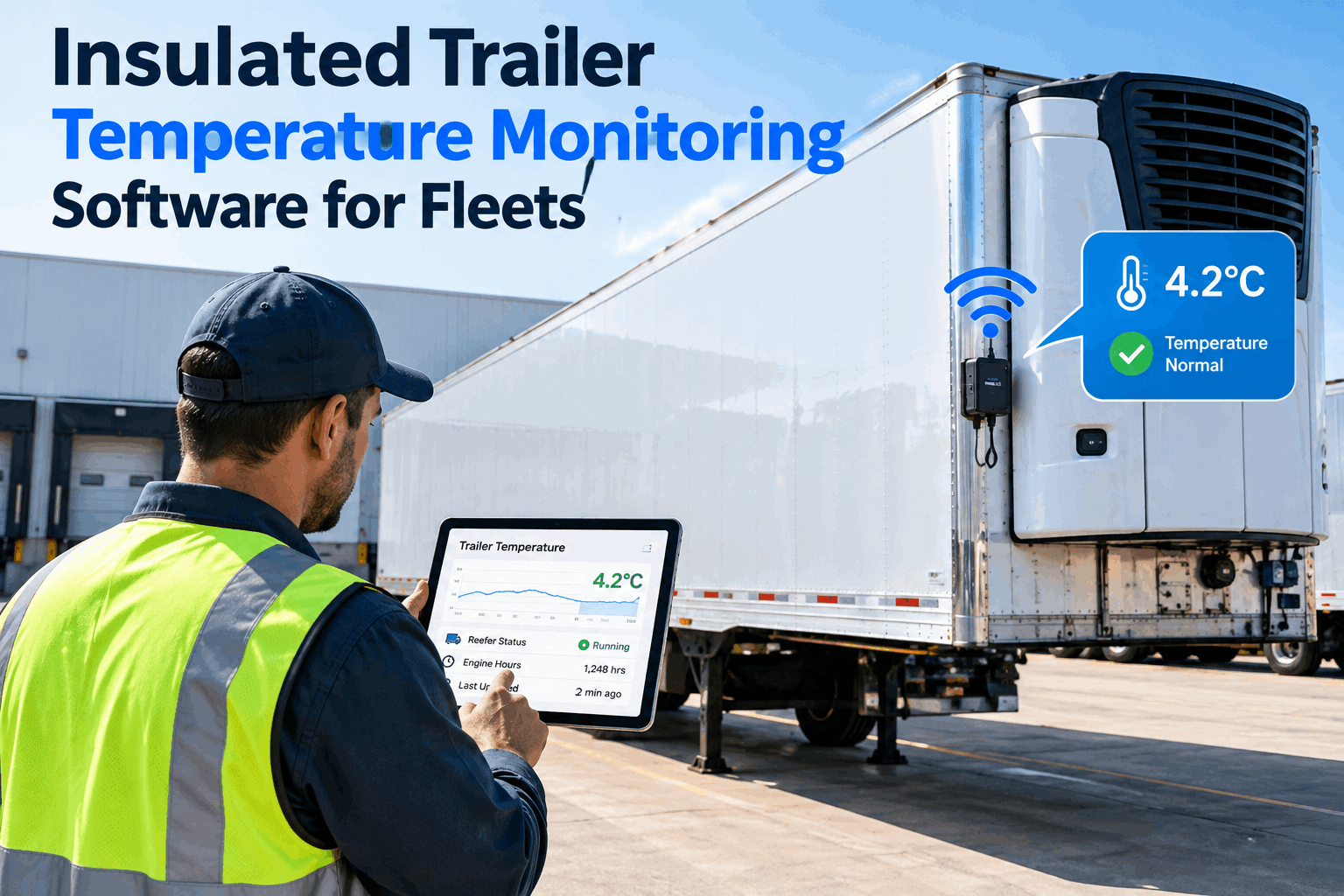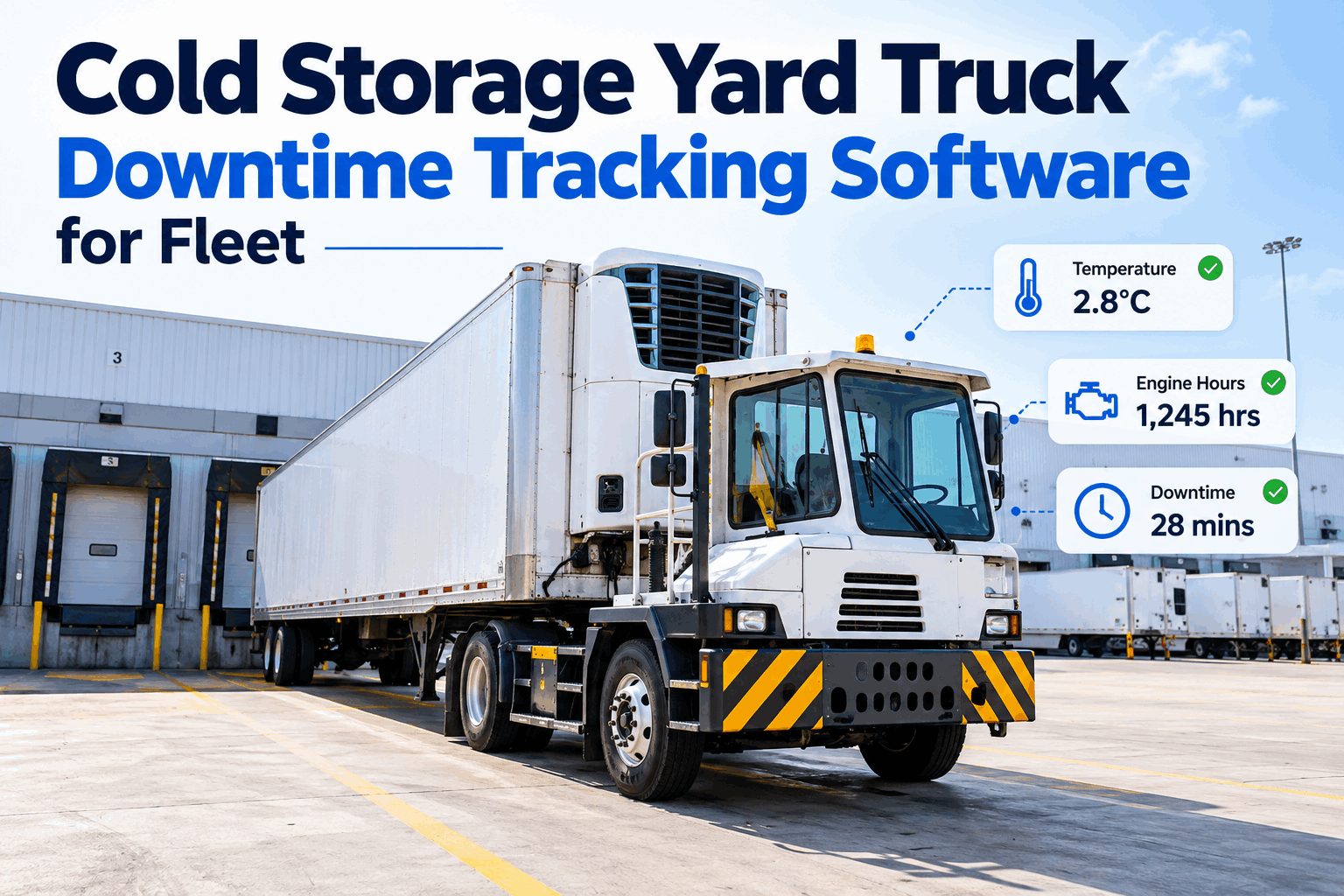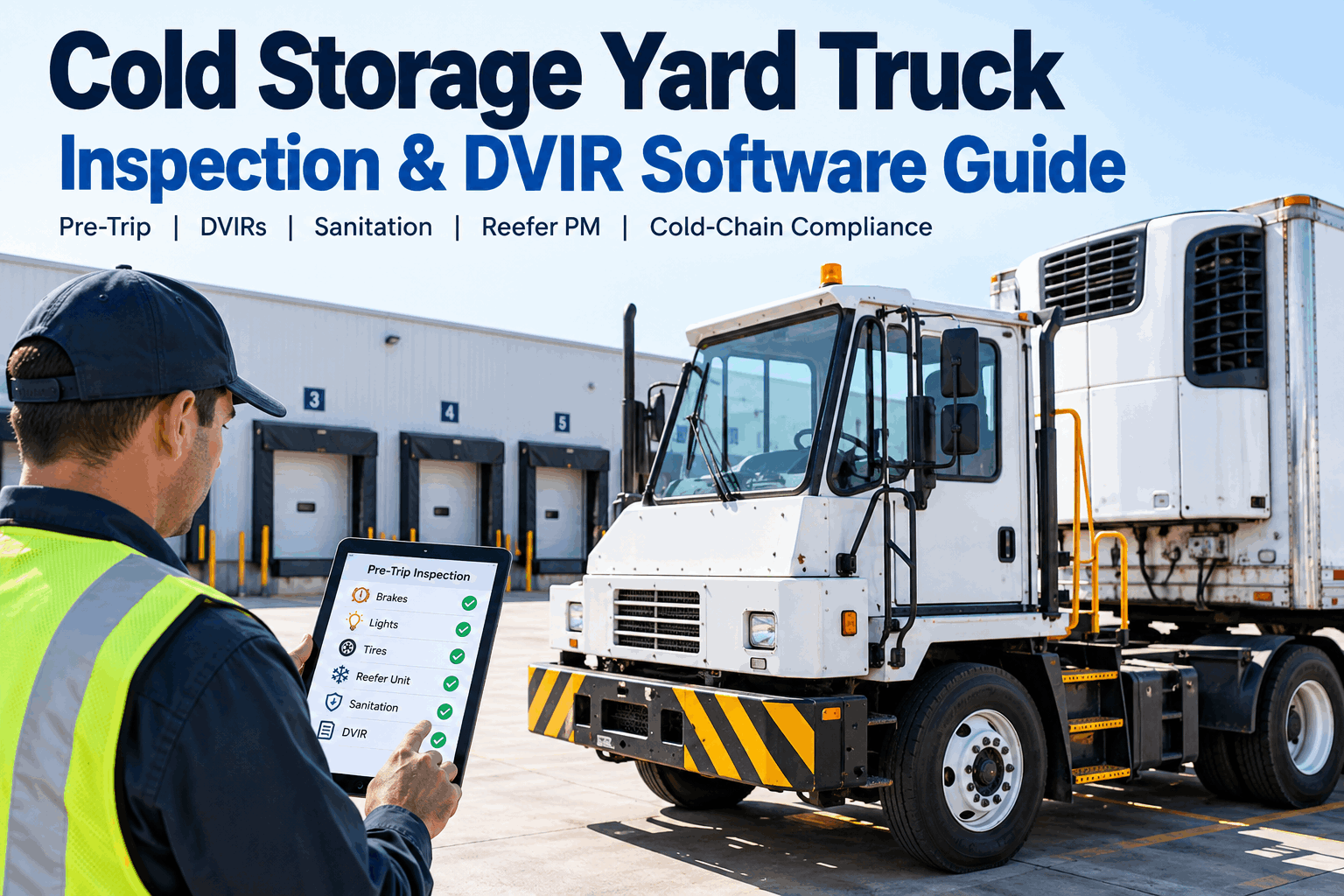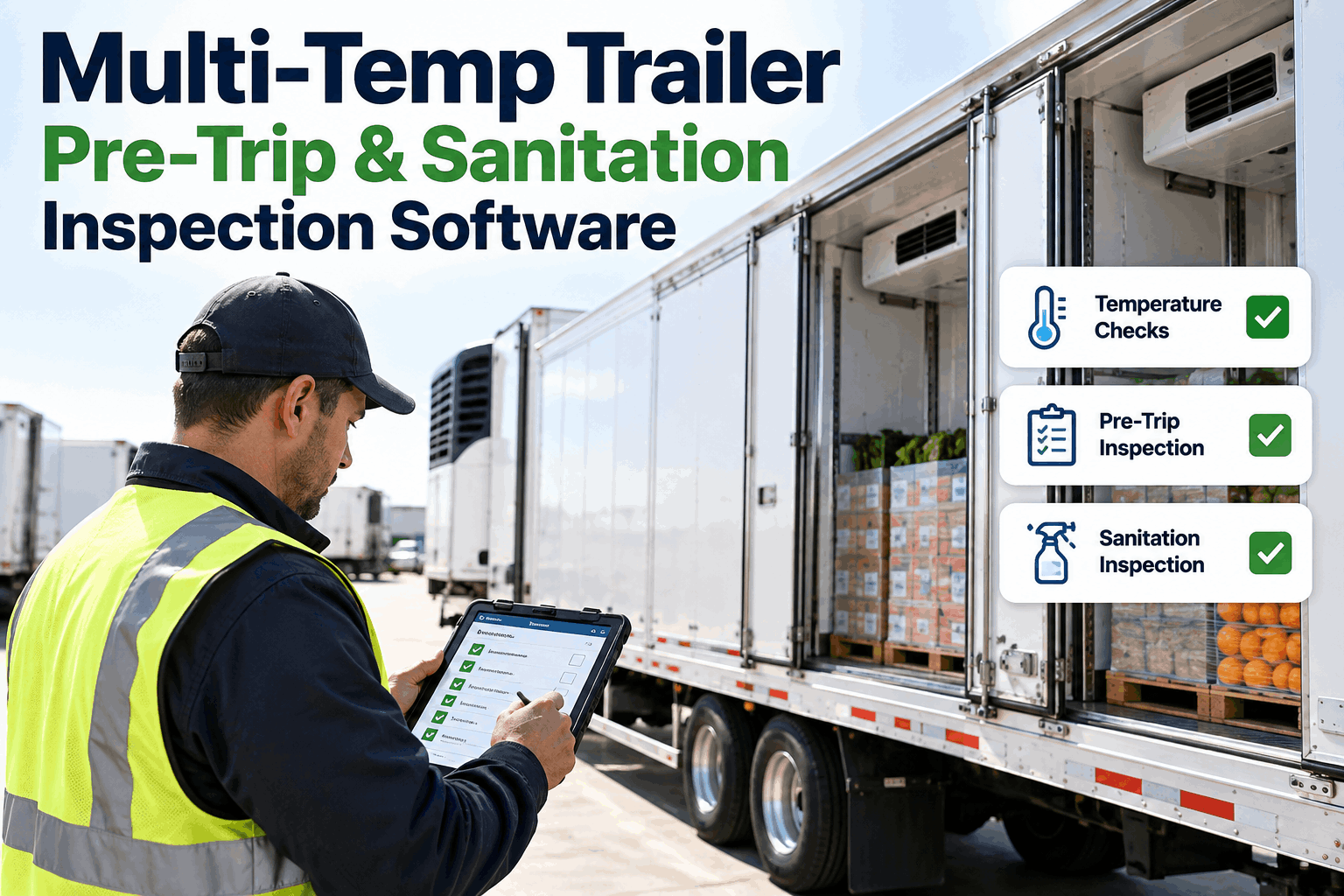
Wholesale food purveyors, cold-chain logistics directors, and perishable freight carriers manage a severe operational liability every time a multi-compartment refrigerated trailer backs into a loading bay. Unlike single-temperature boxes, multi-temp trailers transport incompatible biological commodities in adjacent zones—such as frozen meat at -10°F in Zone 1, fresh produce at 36°F in Zone 2, and ambient dry goods in Zone 3. When drivers rush through inspections with traditional paper clipboards, critical mechanical and biological points of failure go unrecorded: worn movable bulkhead gaskets that allow thermal cross-bleeding, lingering fish or allergen odors, clogged floor drain kazoos, and malfunctioning remote ceiling evaporators. Under the FDA Food Safety Modernization Act (FSMA) 21 CFR Part 1 Subpart O, carriers must prove vehicles are clean, sanitized, mechanically sound, and properly pre-cooled prior to loading. Missing documentation leads to rejected multi-pallet freight drops, severe cargo claim losses, and regulatory penalties. Fleet Rabbit delivers dedicated multi-temp trailer pre-trip and sanitation inspection software that guides drivers through photo-verified zone inspections, automated pre-cooling verification, and instant mechanic defect ticketing. Protect biological cargo integrity, streamline morning gate departures, and maintain audit-proof FSMA compliance. Book a Demo to see our multi-temp trailer inspection software live.
Multi-Temp Trailer Pre-Trip & Sanitation Inspection Software
The definitive operational and sanitation inspection guide for multi-zone refrigerated freight fleets: standardize photo-verified trailer washouts, audit movable thermal bulkhead seals, verify remote ceiling evaporator pulldown, and eliminate dockside load rejections.
The Costly Dangers of Incomplete Multi-Temp Trailer Inspections
Inspecting a multi-temperature trailer involves far more complexity than checking tire tread and light harnesses on a dry van. Carriers manage an active refrigeration plant distributing refrigerant across multiple ceiling evaporators divided by insulated bulkheads. Overlooking minor pre-trip defects leads to catastrophic cargo loss. Sign up to digitize your multi-temp trailer inspection workflows.
The 4-Zone Multi-Temp Inspection and Sanitation Protocol
Fleet Rabbit replaces generic checklists with a structured inspection protocol tailored to multi-compartment transport refrigeration units (TRUs) and sanitary food safety rules. Book a demo to walk through our 4-zone mobile driver inspection flow.
- Fluid Inspection: Verification of diesel engine oil, engine coolant level, and refrigerant sight-glass bubbles.
- Belt & Pulley Drive: Visual inspection of water pump, alternator, and compressor drive belts for wear and tension.
- Electric Standby Wiring: Inspection of 460V shore-power receptacle pins, ground connections, and phase switches.
- Microprocessor Self-Test: Running automated pre-trip diagnostics on Thermo King SR-4 MT or Carrier APX controllers. Sign up to capture reefer fault codes during pre-trip walkarounds.
- Remote Fan Motors: Confirmation that remote evaporator fan blades rotate freely without motor bearing squeal.
- Coil Cleanliness: Inspection of remote aluminum fin coils for frost build-up, dirt, or packaging film debris.
- Drain Pan Heaters: Checking that electric defrost pan elements are operational to prevent ice dam formation.
- Flexible Vinyl Chutes: Ensuring air distribution ducts are unclamped and deliver uniform airflow to rear zones.
- Perimeter Gaskets: Inspecting top, bottom, and side rubber bulkhead seals for tears, cracking, or gaps.
- Trolley & Track Locks: Verifying ceiling rail rollers move smoothly and lock securely into position.
- Wall Scuff Plates: Inspecting seamless fiberglass liners for puncture wounds that let moisture into insulation.
- Door Gaskets: Verifying rear roll-up and side swing door seals are pliable and airtight. Book a demo to inspect our thermal envelope verification tools.
- Washout Photo Proof: Mandatory wide-angle photos of clean ribbed aluminum floor channels and clean scuff plates.
- Odor & Residue Audit: Affirmative confirmation that no chemical sanitizer odors, organic blood, or debris remain.
- Floor Kazoo Clearance: Physical verification that front and rear drain kazoos are cleared of ice and packaging dirt.
- Independent Zone Pulldown: Confirming each compartment reaches target temperature before dock clearance. Sign up to automate independent zone temperature validation.
The Closed-Loop Inspection, Defect Triage & Shop Workflow
A digital inspection is only as valuable as the maintenance response it automates. See how Fleet Rabbit turns reported pre-trip defects into prioritized garage work orders in seconds. Book a demo to explore our shop maintenance triage interface.
Compliance Comparison: Paper Clipboards vs. Fleet Rabbit Platform
Evaluate the clear operational differences, evidence defensibility, and food safety safeguards between manual inspection sheets and Fleet Rabbit’s connected software. Book a demo to evaluate your fleet's cold-chain inspection ROI.
| Inspection & Sanitation Capability | Fleet Rabbit Multi-Temp Suite | Paper Checklists & Clipboards | Generic Commercial GPS Trackers |
|---|---|---|---|
| Subscription Rate | $5 / asset / month | High claim write-offs & manual labor | $25 – $45 / vehicle / month |
| Multi-Zone Inspection Architecture | Independent host & remote evaporator checks | Generic single-box checkbox form | Location tracking only (no reefer tools) |
| Sanitation & Washout Proof | Time-stamped, mandatory photo capture | Subjective checkbox (unverified) | Not supported |
| Movable Bulkhead Gasket Audit | Dedicated seal integrity & lock verification | Ignored completely | Not available |
| Independent Zone Pre-Cooling | Digital sensor verification per zone | Estimated or skipped by drivers | Trailer GPS breadcrumbs only |
| FDA FSMA Audit Readiness | 1-click 12-month exportable digital dossier | Boxes of physical paper sheets | Not compliant with food safety rules |
| Contract Terms & Rollout | 14-day free trial, self-serve in 14 days | Not applicable | 1 to 3-year auto-renewing contract |
Commercial Fleet Case Study: Heartland Perishable Logistics
Learn how a multi-facility refrigerated food carrier deployed Fleet Rabbit across 48 multi-temperature trailers to eliminate dockside load rejections and cross-contamination claims. Sign up to achieve similar cold-chain delivery reliability.
Operating 48 three-compartment refrigerated trailers delivering dairy, meat, and fresh produce to regional grocery distribution centers, Heartland Perishable Logistics experienced frequent dockside freight disputes. Receivers repeatedly rejected fresh produce pallets that had frozen during transit due to undetected tears in movable bulkhead gaskets separating Zone 1 (-10°F) from Zone 2 (36°F). Furthermore, two shipments of organic poultry were rejected due to biological odor complaints from prior seafood deliveries, costing the carrier over $90,000 in unrefuted claim write-offs.
By implementing Fleet Rabbit at $5/asset/month, the carrier deployed digital 4-zone mobile inspections with mandatory trailer washout photos and bulkhead seal audits. Drivers photograph clean floor channels and verify remote ceiling evaporator pulldown before completing departure clearance. During the first year, product temperature rejections dropped to zero, customer credit memo requests plummeted by 92%, and the fleet saved $82,000 in eliminated cargo claim payouts and reduced reefer repair overtime.