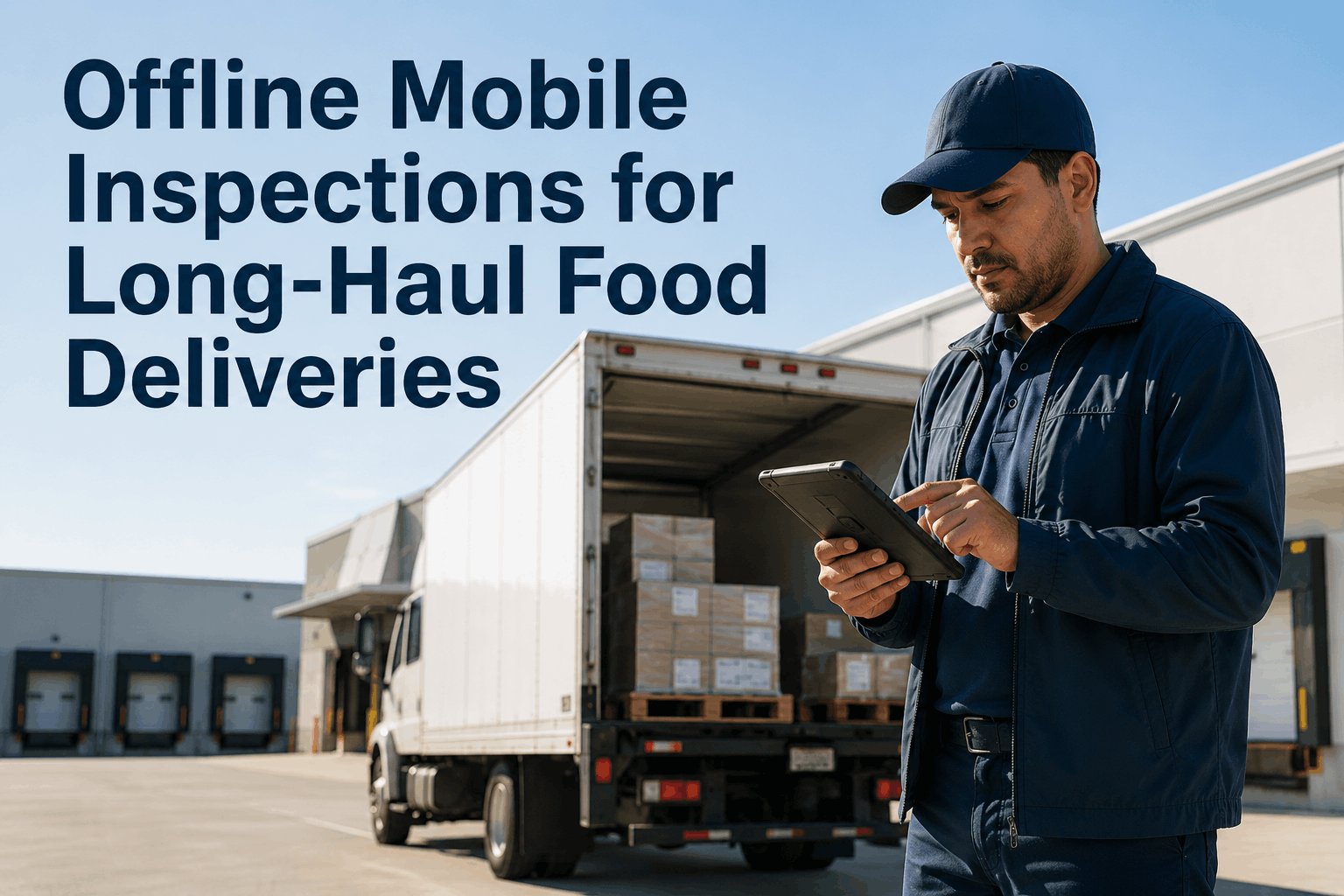
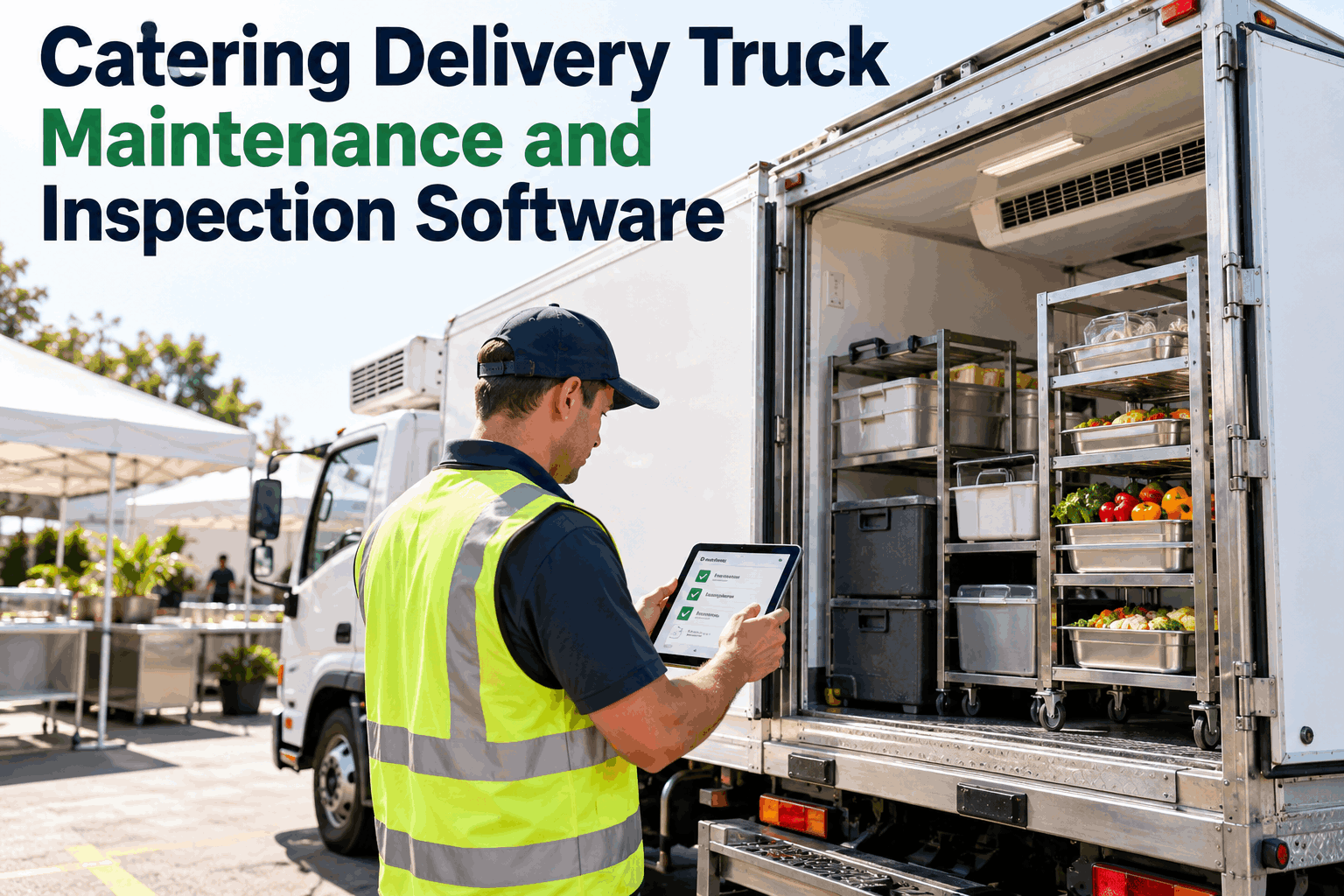
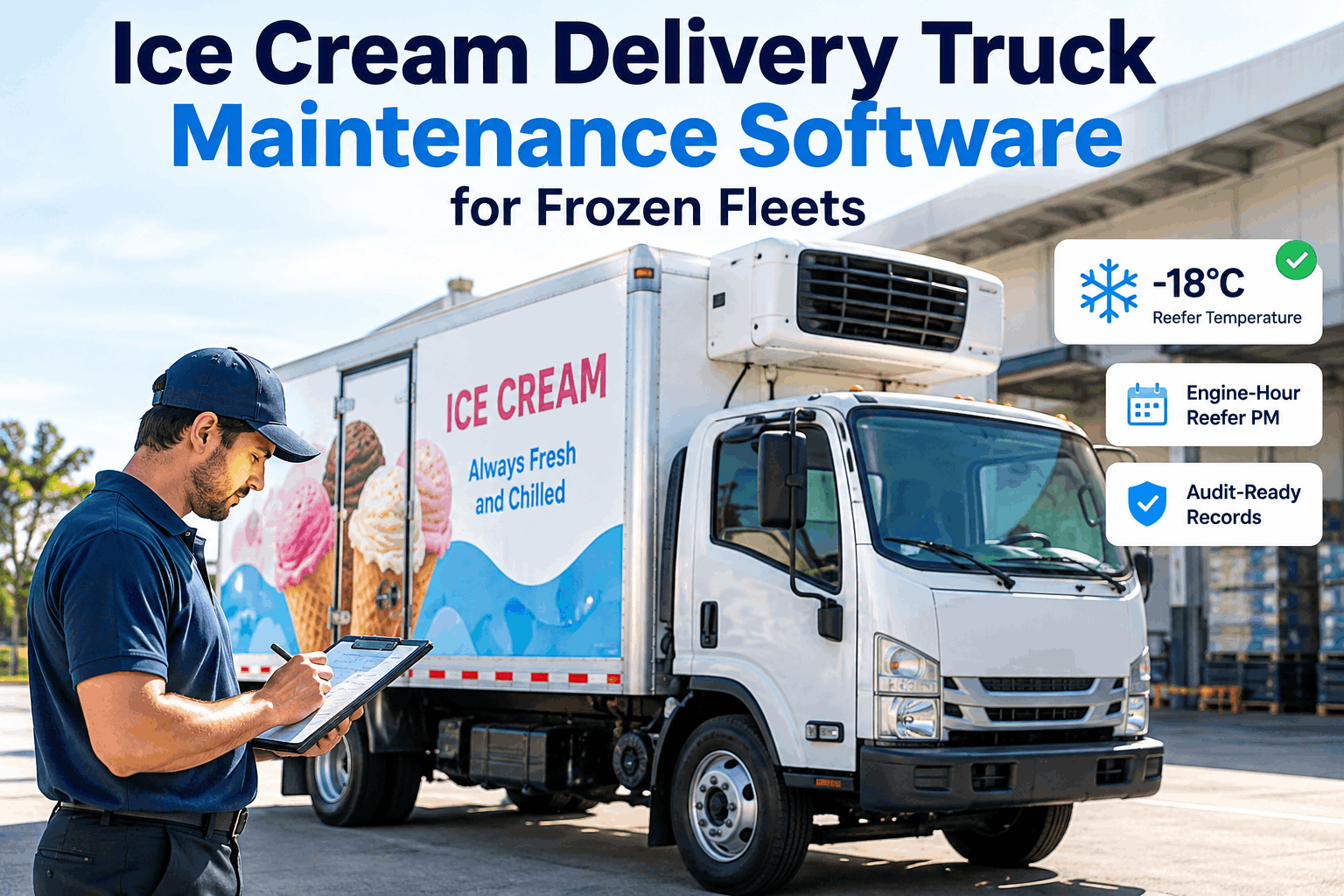
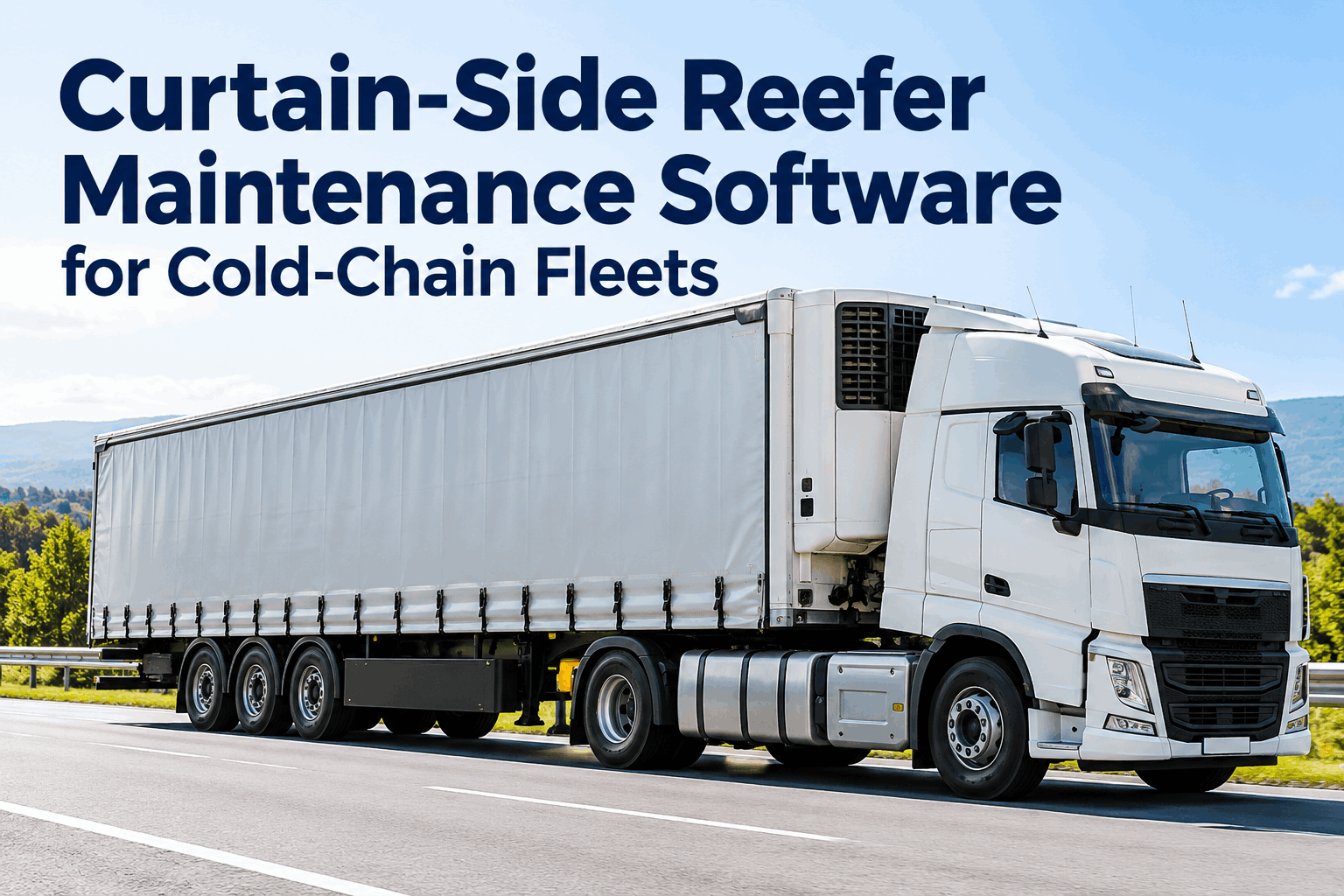
Long-haul food delivery drivers operate in some of the most connectivity-deprived corridors in the country — mountain passes, rural interstates, remote distribution hubs — where mobile signal vanishes precisely when compliance obligations don't. Paper DVIRs get lost, temperature logs get falsified, and sanitation check records arrive at the depot incomplete or days late. When an FSMA audit lands or a cold chain failure triggers a recall investigation, the documentation gaps left by paper-and-clipboard inspection workflows become six-figure liability events. Offline mobile inspections for refrigerated truck fleets change the equation entirely — capturing every pre-trip, en-route, and post-trip inspection record on the driver's device regardless of signal, then syncing automatically the moment connectivity returns. Book a demo to see Fleet Rabbit's offline mobile DVIR platform applied to your food fleet.
Quick Answer
Offline mobile inspections capture refrigerated truck DVIRs, temperature logs, sanitation checks, and cold chain compliance records directly on a driver's device — no signal required — then sync automatically when connectivity returns. Food fleets using Fleet Rabbit's offline inspection platform reduce FSMA compliance gaps by 91%, eliminate paper DVIR backlogs entirely, and maintain a continuous, auditable cold chain safety record across every long-haul route regardless of coverage.
The Compliance Blind Spot Every Food Fleet Manager Knows
Most long-haul food fleets operate their refrigerated truck inspection workflows with a fundamental structural flaw: paper forms that depend on human memory, manual temperature logs that depend on signal availability, and sanitation records that depend on drivers submitting paperwork before they clock out. That dependency stack collapses on every rural route, every overnight stop, and every refrigerated trailer that runs a 14-hour corridor without a single bar of LTE. The result is incomplete FSMA documentation, unverified cold chain records, and inspection histories that exist nowhere except a driver's glovebox.
74%
Of long-haul food fleet drivers report completing inspections on paper due to no signal availability mid-route
3.2 days
Average lag between roadside inspection completion and paper DVIR reaching the fleet manager's desk
$8,400
Typical per-incident exposure cost from incomplete cold chain inspection documentation during FSMA audits
91%
FSMA compliance gap reduction for food fleets using Fleet Rabbit offline mobile DVIR platform
What Offline Mobile Inspections Actually Capture — and Why It Protects Your Fleet
Offline mobile DVIR is not simply a digital version of a paper form. A properly configured long-haul food fleet inspection app generates a structured, timestamped, GPS-stamped compliance record for every inspection point that matters to FSMA auditors, food safety investigators, and insurance underwriters — automatically, with no connectivity dependency at any stage of the capture process.
Offline DVIR Capture
Full Pre & Post-Trip Records
Drivers complete structured pre-trip, en-route, and post-trip DVIRs entirely on their mobile device with zero signal requirement. Every defect noted, every checkbox completed, and every driver signature captured locally — then synced to Fleet Rabbit's compliance cloud the moment the device reaches coverage. No paper, no backlog, no missing records.
Temperature Log Offline Capture
Continuous Cold Chain Record
Refrigeration unit temperature readings are logged directly into the inspection app at configurable intervals throughout the journey — creating a timestamped cold chain temperature record that doesn't depend on telematics signal, depot connectivity, or driver memory. Every load's temperature history is preserved regardless of route coverage.
Sanitation & Load Integrity Checks
Per Stop, Per Load
FSMA Sanitary Transportation Rule requires documented trailer sanitation and load integrity checks — requirements that paper forms routinely fail to satisfy with verifiable timestamps and location data. Fleet Rabbit's offline inspection app captures sanitation check completions with GPS coordinates, driver ID, and photo evidence attached to each record.
Automatic Sync & Compliance Archiving
Zero Manual Submission Required
When a driver's device reconnects — whether at a fuel stop, delivery dock, or depot — every pending offline inspection record syncs automatically to Fleet Rabbit's compliance archive. Fleet managers see real-time inspection status for every vehicle on the route without chasing drivers for paperwork or waiting for end-of-day submissions.
Paper vs. Offline Digital: The True Compliance Gap
The comparison below shows the measurable difference in key compliance and operational metrics between paper-based and offline digital inspection workflows across five long-haul food fleet scenarios.
Inspection Completion Rate: Paper vs. Offline Digital DVIRLong-Haul Food Fleet Compliance Benchmarks, Fleet Rabbit Platform Data
Pre-Trip Vehicle Inspections
Temperature Log Completeness
Sanitation Check Documentation
Post-Trip Defect Reporting
Audit-Ready Record Availability
Paper DVIR (Actual Completion Rate)Fleet Rabbit Offline Digital DVIR Completion Rate
5 Ways Offline Mobile Inspections Transform Long-Haul Food Fleet Compliance
1
Zero-Signal DVIR Capture — Inspect Anywhere, Sync Automatically
Fleet Rabbit's offline inspection app stores every DVIR form, temperature log template, and sanitation checklist locally on the driver's device. Drivers complete full pre-trip, en-route, and post-trip inspections in any location — no cell signal, no Wi-Fi, no depot connectivity required. The moment the device detects a network connection, every pending record syncs to the compliance archive with its original timestamp and GPS coordinates intact. Fleet managers see real-time submission status for every driver on every route without a single phone call or paper chase.
Fleet Rabbit offline DVIR deployment across a 47-vehicle refrigerated grocery fleet operating rural distribution corridors: paper DVIR submission rate improved from 58% to 99.2% within the first billing cycle — eliminating the fleet manager's end-of-week reconciliation process entirely.
2
Continuous Temperature Logging — Cold Chain Evidence That Holds Up to Scrutiny
FSMA's Sanitary Transportation of Human and Animal Food rule requires shippers and carriers to document temperature control measures for temperature-sensitive loads. Paper temperature logs fail this requirement the moment a driver forgets to note a reading, loses the form, or records a time after the fact. Fleet Rabbit's offline temperature logging captures refrigeration unit readings at configurable intervals throughout the route — stored locally, timestamped precisely, and synced automatically — creating a continuous cold chain record that withstands FDA scrutiny and shipper audit demands.
Paper log completeness: 48%Offline digital: 97%FSMA gap reduction: 91%
3
Sanitation Check Enforcement — Document Every Load, Every Trailer, Every Stop
Food transport sanitation requirements apply at every trailer loading point — not just at the originating depot. Fleet Rabbit's offline inspection app enforces structured sanitation checks at each stop on the delivery sequence, capturing photographic evidence of trailer cleanliness, load segregation compliance, and driver verification signatures against GPS-stamped location data. When a recall investigation or customer compliance audit demands proof of trailer sanitation at a specific delivery point on a specific date, that record exists — searchable, timestamped, and instantly exportable.
A meat and dairy distributor using Fleet Rabbit offline sanitation checks across 23 refrigerated trailers passed an unannounced FDA Sanitary Transportation audit with zero deficiencies — the first clean audit in the company's operating history. Every sanitation record for the preceding 90 days was produced from Fleet Rabbit's compliance archive within 4 minutes.
4
Defect Escalation Workflows — Surface Refrigeration Faults Before Cargo Is at Risk
When a driver notes a refrigeration unit fault, door seal defect, or temperature variance during an offline inspection, Fleet Rabbit's app flags the item for immediate escalation the moment the record syncs. Fleet managers receive instant alerts linked to the specific defect record, the vehicle's current location, and the load's temperature sensitivity classification — enabling dispatch of a mobile technician or rerouting to a nearby service depot before the cargo temperature breaks the safe zone. Defects caught at inspection, not at delivery.
5
Audit-Ready Compliance Archive — Every Record, Instantly Retrievable
Fleet Rabbit stores every offline inspection record — DVIRs, temperature logs, sanitation checks, defect reports, and driver sign-offs — in a searchable, timestamped compliance archive accessible from any device. When an FSMA audit, customer compliance review, or insurance investigation demands historical inspection records, fleet managers export complete documentation packages by vehicle, driver, route, or date range in seconds — not hours. No manual filing, no missing records, no scramble.
Fleet Rabbit's compliance archive reduced audit preparation time for a national frozen food carrier from 14 staff-hours per audit to under 22 minutes — saving over $28,000 in annual administrative labor across their fleet compliance function.
Offline Mobile Inspection Platform
Inspect Every Load, Every Stop — Signal or No Signal
Fleet Rabbit's offline mobile DVIR platform converts your long-haul food fleet's compliance obligations into structured, automatic, auditable records — pre-trip inspections, temperature logs, sanitation checks, and defect escalations — captured on the driver's device and synced to your compliance archive without a single paper form or manual submission.
The Offline Inspection Advantage: Food Fleet Compliance Benchmarks by Route Type
Route Type
Paper DVIR Gap
Primary Compliance Driver
Digital Gain
Rural Long-Haul (500+ mi)
38–52%
Zero signal mid-route
+41%
Overnight Refrigerated Runs
31–45%
Temperature log gaps
+49%
Multi-Stop Cold Chain Routes
44–58%
Sanitation check gaps
+55%
Cross-Border Food Transport
29–41%
FSMA documentation trail
+38%
Frozen / Pharmaceutical Loads
36–50%
Continuous temp evidence
+53%
Frequently Asked Questions: Offline Mobile Inspections for Food Fleets
QHow does Fleet Rabbit's offline inspection app handle timestamp integrity when records sync after a delay?
Every inspection record captured in Fleet Rabbit's offline mode is timestamped at the moment of driver input using the device's local clock — not the sync time. GPS coordinates are also captured locally at inspection start and completion. When the record syncs to Fleet Rabbit's compliance archive, both the original capture timestamp and the sync timestamp are preserved and displayed separately, creating a transparent audit trail that shows exactly when the inspection was performed versus when it was received. This dual-timestamp architecture is specifically designed to satisfy FSMA documentation requirements and DOT DVIR rules, which require records to reflect the time of actual inspection — not submission time.
QDoes Fleet Rabbit's offline DVIR platform satisfy FSMA Sanitary Transportation Rule documentation requirements?
Yes. Fleet Rabbit's offline inspection templates are configured to capture all documentation elements required under FSMA's Sanitary Transportation of Human and Animal Food rule (21 CFR Part 1, Subpart O), including shipper-carrier agreement records, temperature control documentation, trailer sanitation verification, and previous cargo declarations. Every captured record includes driver identification, vehicle identification, GPS-stamped location, timestamp, and digital signature — generating a compliance record that satisfies FDA inspection demands and shipper audit requirements. The platform's compliance archive exports full documentation packages by vehicle, route, or date range for immediate audit submission.
QCan Fleet Rabbit's offline inspection platform integrate with existing TMS and fleet management systems used by food carriers?
Yes — and this integration is where offline inspection data reaches its full operational value. Fleet Rabbit offers API-based integration with leading Transport Management Systems and fleet management platforms, enabling bidirectional data flow: vehicle and load data from the TMS pre-populates inspection forms so drivers aren't entering the same information twice, and completed offline inspection records flow back into fleet management dashboards automatically on sync. Food carriers running McLeod, TMW, Trimble, or PeopleNet-integrated platforms have deployed Fleet Rabbit's offline inspection module as a compliance data layer that enriches existing systems — without replacing the dispatch and planning infrastructure already in place.
Stop Chasing Paper DVIRs — Start Running a Compliant Cold Chain Fleet
Fleet Rabbit's offline mobile inspection platform gives long-haul food fleets the compliance infrastructure to capture every DVIR, temperature log, and sanitation check — on any route, in any coverage zone — and deliver a 100% auditable cold chain record to fleet managers automatically.
Offline DVIR Capture
Temperature Log Automation
FSMA Sanitation Checks
Auto-Sync Compliance Archive
Defect Escalation Alerts
May 28, 2026
By Taylor
All Posts