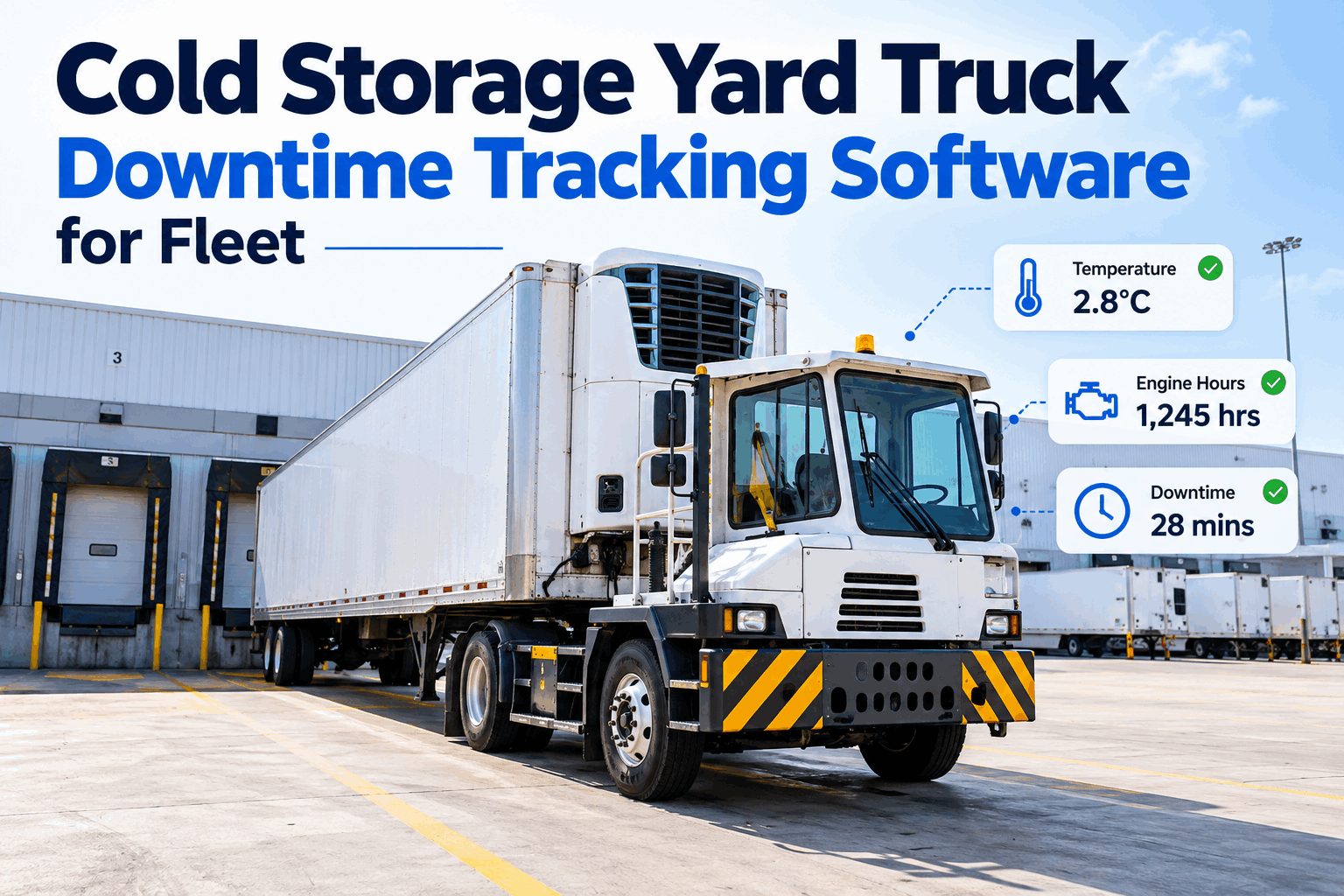
Product spoilage in refrigerated food fleets rarely happens all atonce. It accumulates in gaps — a reefer unit that ran two degrees above setpoint for six hours because nobody received the alert, a door seal that failed during a loading dock collision and wasn't flagged in the post-shift inspection, a temperature logger that lost connectivity mid-route and left a four-hour data gap that nobody noticed until the receiver's food safety team did. Each individual failure is manageable in isolation. But when your fleet has no real-time temperature monitoring, no automated alerting, and no centralised visibility across vehicles and routes, these gaps compound into spoilage events that cost thousands per incident and erode the customer relationships your operation depends on. The fleets that consistently protect perishable goods in transit don't have better luck — they have better systems. They know what every reefer unit is doing, right now, and they act before a temperature drift becomes a product loss. Start protecting your cold chain with FleetRabbit or book a live demo with our team.
FleetRabbit Cold Chain Intelligence
How to Prevent Product Spoilage in Refrigerated Food Fleets
Real-time temperature monitoring, instant reefer alerts, and end-to-end cold chain visibility — the proven strategies food distribution fleets use to protect perishable goods, reduce waste, and stay FSMA compliant on every route.
$35B+Annual cold chain food loss in the US
68%Of spoilage events caused by temperature exceedances
<90sFleetRabbit alert response time
Real-TimeVisibility across every reefer in your fleet
Why Refrigerated Fleets Keep Losing Product — and What's Actually Causing It
Most refrigerated fleet operators know spoilage is expensive. Fewer have a clear picture of exactly where in the cold chain it's happening and why. The root causes are almost never equipment failures alone — they're detection failures. The reefer unit drifted, but no alert fired. The door was left ajar, but no sensor flagged it. The temperature data existed, but nobody reviewed it until after the delivery was refused. FleetRabbit gives cold chain logistics teams the real-time visibility and automated alerting infrastructure to catch every one of these events before product is lost — not after.
01
Undetected Temperature Exceedances
A reefer unit running 5°F above setpoint for four hours of a six-hour route is enough to push TCS foods into the temperature danger zone and render an entire load unsaleable. Without real-time monitoring and automated alerts, this event completes without intervention — the driver doesn't know, the dispatcher doesn't know, and the receiver finds out first. FleetRabbit's IoT temperature sensors stream live compartment data to a central dashboard with configurable threshold alerts that fire the moment a deviation is detected, giving dispatchers the window to intervene before product is compromised.
02
Door Open Events During Transit
Every cargo door opening during a multi-drop route introduces a spike of ambient air into the refrigerated compartment. On a hot day, a 90-second door opening can raise compartment temperature by 8–12°F — and if product isn't positioned to recover quickly, the temperature gain compounds across stops. FleetRabbit's door state sensors log every opening and closing event with timestamp and GPS location, flagging unusually long open durations and generating post-route door event reports that let operations managers identify which stops are driving the most cold chain stress on perishable loads.
03
Equipment Failures With No Early Warning
Reefer unit compressor degradation, refrigerant loss, and evaporator coil icing all follow predictable patterns before they result in complete cooling failure — but only if you're monitoring unit performance data in real time. Paper-based maintenance records and quarterly service intervals miss the early indicators entirely. FleetRabbit tracks refrigeration unit runtime, fuel consumption, temperature recovery times, and fault codes continuously, flagging anomalies that indicate developing mechanical issues before they escalate into mid-route failures and total load losses.
04
Loading Temperature Acceptance Gaps
Product accepted at the wrong temperature at origin compounds through the entire route. A pallet of fresh poultry loaded at 46°F instead of the required ≤40°F is already compromised before the vehicle leaves the dock — and no amount of correct reefer performance during transit recovers that margin. FleetRabbit's pre-loading inspection workflows enforce product temperature verification at the point of receipt, capturing probe thermometer readings with operator attribution and preventing out-of-spec product from entering the cold chain without a documented exception and supervisor approval.
FleetRabbit Cold Chain Spoilage Prevention Capabilities
Preventing product spoilage in refrigerated food fleets requires monitoring, alerting, documentation, and preventive maintenance working together as a unified system — not as separate tools managed by different teams. FleetRabbit integrates all four into a single cold chain visibility platform that protects perishable goods from origin to delivery, generates the compliance documentation FSMA requires, and gives operations leaders the data to continuously improve fleet cold chain performance.
Real-Time Temperature Monitoring
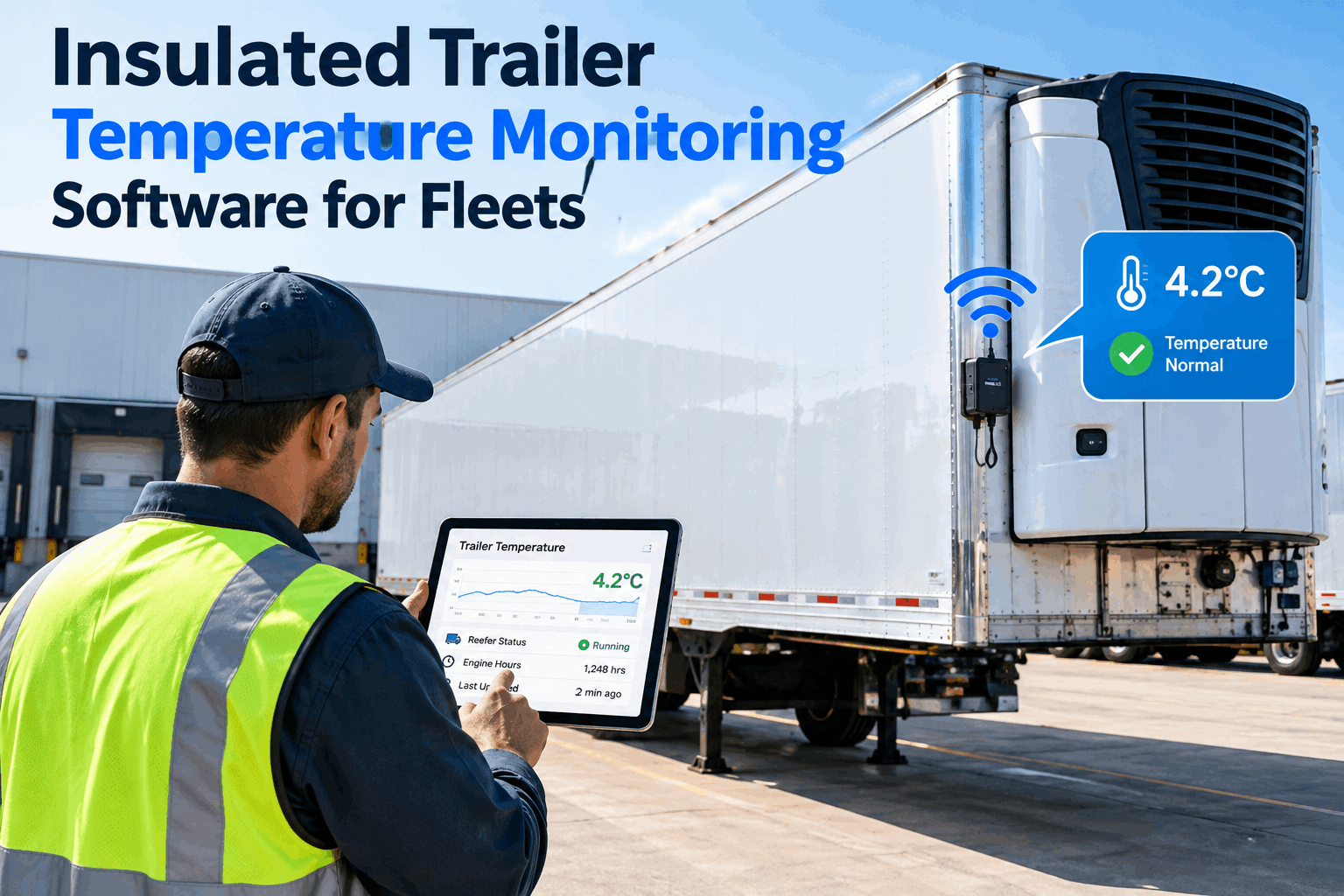
IoT sensors stream live compartment temperature data from every reefer in your fleet to a centralised dashboard — updated every 60 seconds. Multi-zone trailers are monitored zone-by-zone. Historical temperature charts are available per route, per vehicle, and per commodity class. Every temperature reading is timestamped and stored, creating the continuous cold chain documentation that FSMA compliance and customer food safety audits require without any manual data entry.
Instant Threshold Alerts
Configurable temperature thresholds trigger instant push notifications, SMS, and email alerts to drivers, dispatchers, and fleet managers the moment a compartment exceeds or falls below acceptable limits. Alert escalation rules ensure that unacknowledged temperature events are automatically elevated to supervisors within a configurable time window. Every alert event — trigger time, acknowledgement time, and action taken — is logged, creating an auditable response record that demonstrates your team's cold chain responsiveness.
Pre-Trip Reefer Inspections
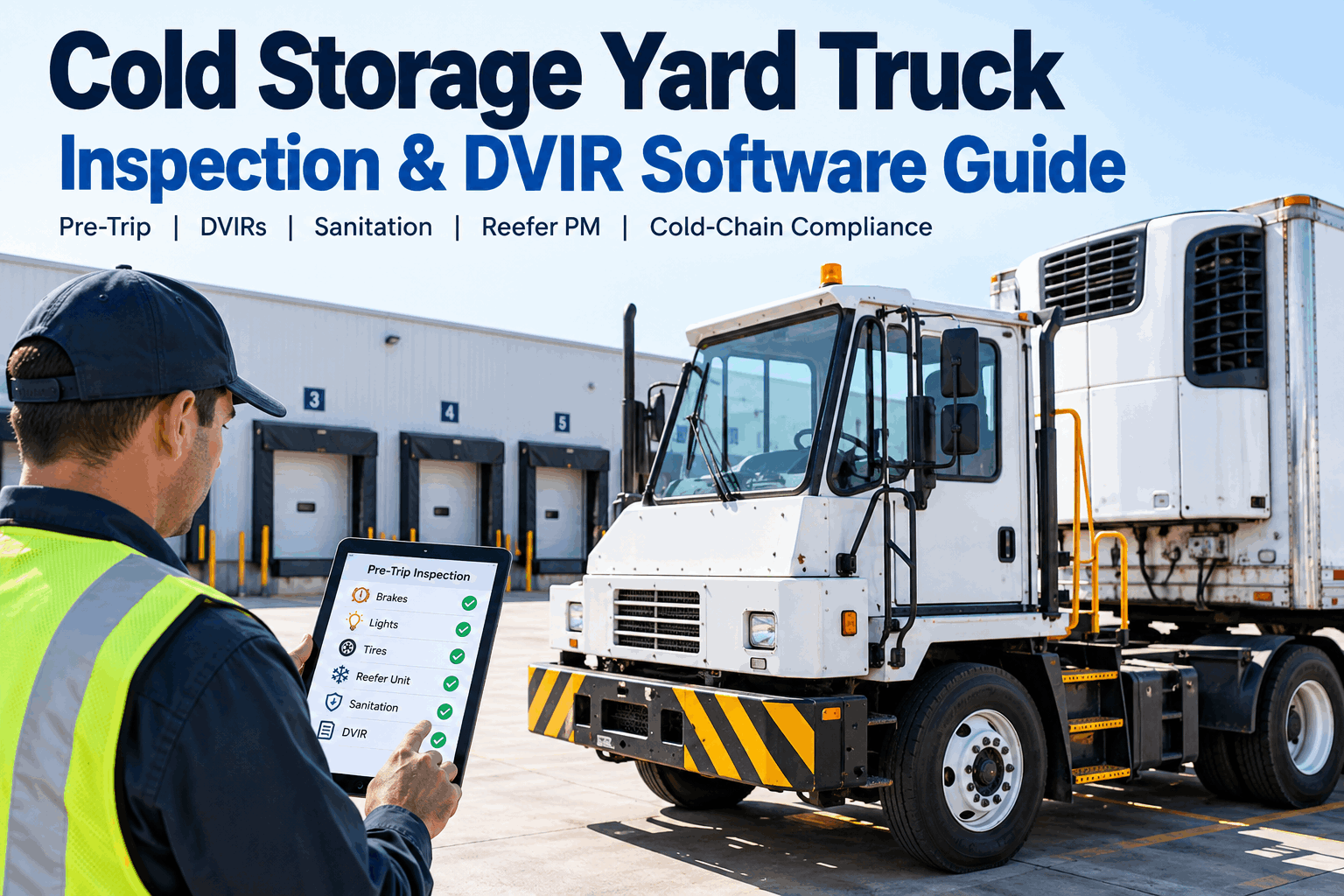
Digital pre-trip inspection checklists enforce reefer pre-cooling verification, door seal inspection, evaporator drain pan check, and sensor calibration confirmation before every route — on the driver's mobile device, with mandatory photo capture for flagged items. Inspection records are timestamped, GPS-tagged, and linked to the vehicle's asset profile. Any failed inspection item triggers an automatic escalation to the fleet maintenance team before the vehicle departs, preventing compromised equipment from entering the cold chain.
Cold Chain Analytics & Reporting
Post-route temperature reports provide complete compartment temperature histories with exceedance summaries, door event logs, and setpoint compliance percentages for every delivery. Fleet-wide cold chain analytics identify which vehicles, routes, and drivers generate the most temperature events — giving operations managers the data to target interventions at the highest-risk areas of their network. Reports export in formats suitable for FSMA compliance packages, customer food safety audits, and internal performance reviews.
Preventive Maintenance Scheduling
Reefer unit preventive maintenance is scheduled automatically by runtime hours, calendar intervals, or fuel consumption thresholds — whichever trigger comes first. FleetRabbit generates maintenance work orders at threshold, assigns them to technicians, and tracks completion with parts used and technician attribution. Maintenance histories are stored per asset, enabling trend analysis that identifies recurring fault patterns before they cause mid-route cooling failures. PM compliance rates for FleetRabbit-managed reefer fleets average 97% within 60 days of implementation.
FSMA Compliance Documentation
FleetRabbit continuously generates the documented evidence that FSMA's Sanitary Transportation rule (21 CFR Part 1, Subpart O) requires — pre-trip inspection records, temperature logs, sanitation wash certificates, driver hygiene confirmations, and corrective action records — all stored with immutable timestamps and linked to the route and asset. When a regulatory inspector or customer food safety auditor requests your cold chain documentation, FleetRabbit produces a complete compliance package in under 60 seconds, not over two days of paper record hunting.
FleetRabbit Cold Chain Intelligence
Stop Discovering Spoilage at the Receiver's Dock. Start Catching It in Real Time.
FleetRabbit gives your refrigerated food fleet live temperature visibility, instant threshold alerts, and automated cold chain documentation across every vehicle and every route — so your team intervenes before product is lost, not after the claim arrives.
Spoilage Risk Factors: Where Cold Chains Break Down
Risk 01
Pre-Cool Skipped at Loading
Loading food product into a compartment that hasn't reached setpoint raises the product's surface temperature immediately and extends the time TCS foods spend in the danger zone. FleetRabbit enforces pre-cool verification in the digital pre-trip workflow before dispatch is enabled.
Risk 02
Multi-Zone Temperature Bleed
Damaged bulkheads and zone dividers allow temperature bleed between compartments in multi-temp trailers — exposing frozen product to chilled-zone temperatures or fresh product to frozen-zone conditions. FleetRabbit monitors each zone independently and alerts on inter-zone deviation events.
Risk 03
Extended Idle & Engine-Off Periods
Reefer units relying on engine-driven power lose cooling capacity during driver rest breaks, detention at receivers, and overnight parking without shore power. FleetRabbit tracks compartment temperature continuously through idle periods and alerts when temperature drift exceeds acceptable limits during non-driving time.
Risk 04
Inaccurate or Uncalibrated Sensors
A temperature sensor reading 2°F lower than actual compartment temperature creates false confidence — the dashboard shows compliance while the product is actually at risk. FleetRabbit's inspection workflows enforce sensor calibration verification at required intervals, flagging sensors due for calibration before they generate misleading data.
Risk 05
Inadequate Airflow Around Product
Stacking product against return-air vents or floor-blocking airflow pathways creates warm pockets that the compartment sensor never detects, because the sensor reads the air temperature rather than the product environment. FleetRabbit's loading inspection checklists include airflow clearance verification as a mandatory pre-departure check.
Risk 06
No Post-Exceedance Protocol
When a temperature exceedance is detected, the critical question is: what happens next? Without a documented response protocol, drivers and dispatchers make inconsistent decisions about whether product is salvageable. FleetRabbit's alert workflow guides responders through a structured decision tree — document, assess, escalate, or quarantine — creating a consistent, defensible response record for every exceedance event.
From the Cold Chain Operations Floor
"
Before FleetRabbit, we were finding out about temperature problems when the receiver refused the load. We'd pull the paper temperature recorder tape, find the exceedance, and spend the next week arguing with our insurance carrier about whether the product was actually compromised. Our spoilage-related write-offs were running around $180,000 a year across 22 reefer units. In the first 90 days after implementing FleetRabbit, we caught seven temperature exceedances in real time — five of them during the route, before delivery. We rerouted two loads to depot, adjusted setpoints on three others, and avoided four potential receiver rejections. In our first full year with FleetRabbit our spoilage write-offs dropped to under $40,000. The system paid for itself in the first two months.
Director of Fleet Operations
·
Regional Fresh Produce Distributor — 22 Reefer Units — FleetRabbit Cold Chain Active
Frequently Asked Questions
QHow quickly does FleetRabbit detect and alert on a temperature exceedance?
FleetRabbit's IoT temperature sensors transmit compartment readings at configurable intervals — typically every 60 seconds for active cold chain monitoring. When a reading exceeds a configured threshold, an alert is generated and delivered via push notification, SMS, and email within 90 seconds of the triggering reading. Alert recipients are configurable per vehicle — drivers, dispatchers, and fleet managers can all receive simultaneous notifications. For exceedances that go unacknowledged within a configurable window, automatic escalation sends a secondary alert to the next level of management. The complete alert event — trigger timestamp, acknowledgement timestamp, responder identity, and action taken — is logged in the compliance record for that route.
QCan FleetRabbit monitor multi-zone trailers with different temperature requirements?
Yes. FleetRabbit supports multi-zone refrigerated trailer monitoring with independent sensor placement, independent setpoint configurations, and independent alert thresholds for each zone. A three-zone multi-temp trailer carrying frozen goods, fresh protein, and produce at different temperature requirements can be monitored with zone-specific thresholds — so a produce zone alert doesn't trigger on the same temperature that would be normal for a chilled zone. Inter-zone temperature deviation alerts can be configured to flag bulkhead integrity issues that cause temperature bleed between zones, catching physical equipment problems before they compromise load integrity.
QWhat cold chain documentation does FleetRabbit generate for FSMA compliance?
FleetRabbit generates continuous documentation across all categories required by FSMA's Sanitary Transportation of Human and Animal Food rule (21 CFR Part 1, Subpart O): pre-trip vehicle and refrigeration unit inspection records with photo evidence, continuous compartment temperature logs with exceedance annotations, driver hygiene and training acknowledgement records, sanitation wash event logs, loading temperature acceptance records, and corrective action documentation for any identified non-conformances. All records are timestamped, linked to the route and asset, and stored with an immutable audit trail. FSMA compliance packages can be generated per route, per vehicle, or per date range in PDF format for regulatory inspectors or customer food safety auditors.
QHow does FleetRabbit help reduce spoilage during multi-drop urban delivery routes?
Multi-drop urban routes present the highest cold chain stress of any delivery profile — frequent door openings, variable stop durations, traffic-related idle time, and high ambient temperatures combine to create cumulative temperature gain that paper-based operations have no visibility into. FleetRabbit addresses this through several integrated capabilities: door-open duration monitoring with alerts for stops exceeding configurable thresholds, real-time compartment temperature tracking that shows temperature recovery curves after each door opening, route sequencing recommendations that minimise total door-open time for the most temperature-sensitive product, and post-route analytics that show which stops in the multi-drop sequence generate the most cold chain stress — enabling route replanning and loading sequence optimisation based on actual temperature data rather than assumption.
FleetRabbit Cold Chain Intelligence
Protect Every Load. Prevent Every Preventable Loss.
FleetRabbit gives refrigerated food fleets the real-time temperature visibility, instant threshold alerting, and end-to-end cold chain documentation they need to stop spoilage before it happens — protecting perishable goods, reducing write-offs, and keeping every route FSMA compliant.
Real-Time Temperature Monitoring
Instant Reefer Alerts
FSMA Compliance Docs
Spoilage Analytics
Multi-Zone Support
Preventive Maintenance
May 24, 2026
By Taylor
All Posts