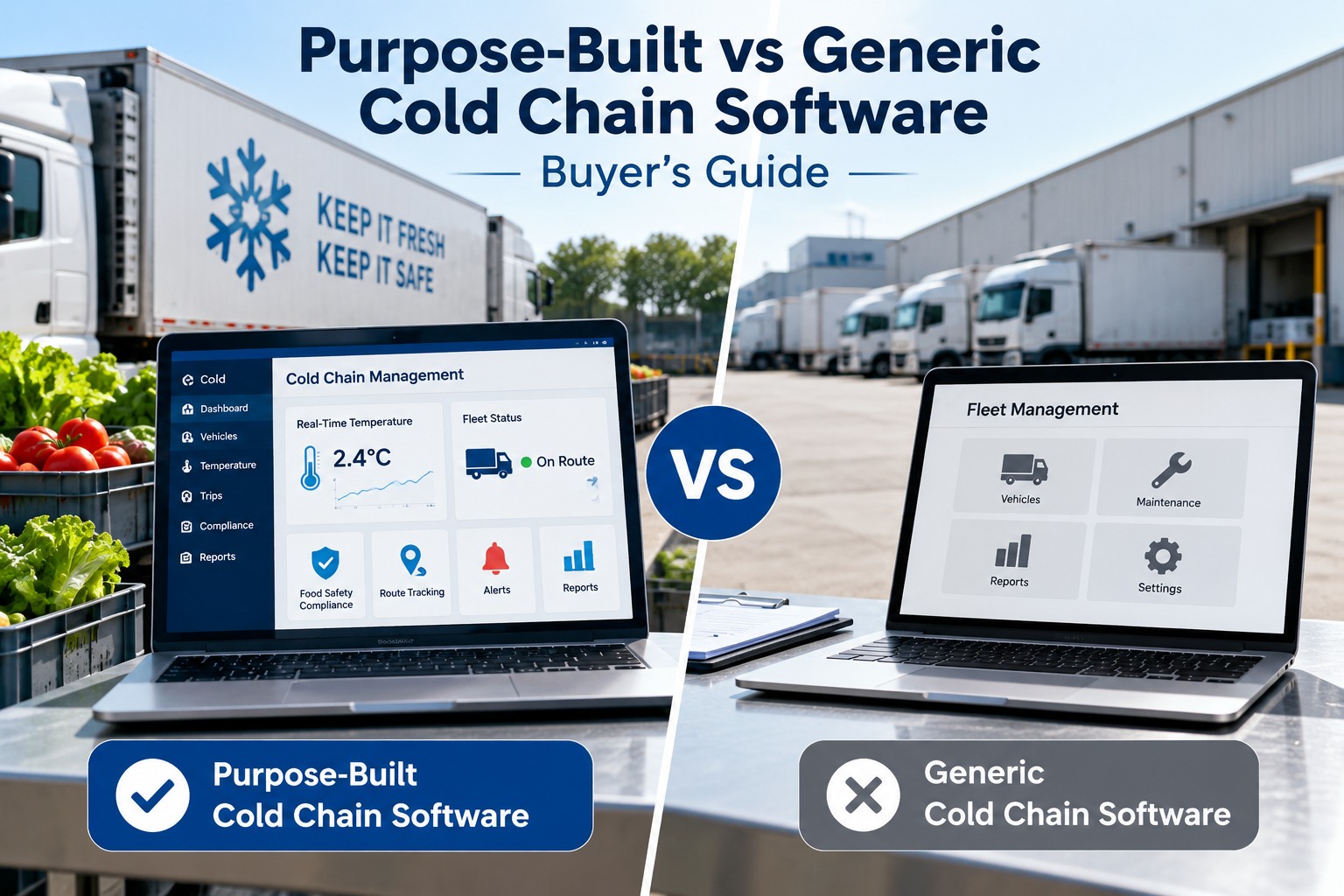
Food logistics vice presidents, cold-chain operations directors, and refrigerated fleet transportation executives often face a critical procurement crossroad: adopting generic commercial fleet management software retrofitted with basic temperature sensors or investing in purpose-built cold-chain intelligence. Perishable food distributors operating multi-temp trailers, direct-store-delivery (DSD) beverage routes, and bulk dairy networks cannot rely on standard dry-van GPS systems. Generic platforms track basic vehicle speed and location but leave operators blind to transport refrigeration unit (TRU) compressor discharge pressures, defrost cycle timing, multi-zone thermal recovery curves, and sanitary FDA Food Safety Modernization Act (FSMA Rule 204) compliance records. When food distribution teams attempt to modify generic software, operations bleed capital through rejected receiver loads, unmonitored dock pre-cooling diesel burn, unrecovered auxiliary IFTA tax credits, and catastrophic compressor seizures. To examine how purpose-built cold-chain intelligence outperforms generic GPS systems, book an executive evaluation demo with our cold-chain engineering team or launch your fleet trial immediately through our free platform sign up.
Retrofitted Dry-Van GPS Trackers
Monitors single ambient air points with zero integration into TRU microprocessors or discharge air ducts.
Dispatchers cannot remotely clear reefer alarms, change setpoints, or switch continuous and cycle-sentry run modes.
Schedules shop service by tractor road miles rather than auxiliary TRU diesel engine and compressor operating hours.
Generates generic breadcrumb trails, leaving compliance teams to manually reconcile paper delivery slips during audits.
FleetRabbit Connected Intelligence
Captures discharge, return, and simulated core temperatures across frozen, chilled, and ambient bulkheads every minute.
Direct two-way control over Carrier Transicold and Thermo King units to update setpoints and initiate manual defrost cycles.
Monitors auxiliary reefer engine hours and diagnostic trouble codes (DTCs) to generate preventative maintenance tickets.
Compiles tamper-proof trip records linking temperature charts, door openings, and customer e-POD into 1-click dossiers.
Stop Forcing Generic Fleet Software to Manage Cold Chain Risks
Discover how purpose-built temperature tracking, bi-directional reefer controls, and automated regulatory ledgers protect distributor margins starting from $3/vehicle/month with no hardware lock-in.
The Functional Blind Spots of Generic Fleet Software in Refrigerated Logistics
Commercial fleet management software designed for dry-van freight, construction contractors, or parcel delivery providers relies on vehicle telematics assumptions that fail in perishable cold-chain logistics. Standard telematics platforms treat a refrigerated trailer as an unpowered box, focusing entirely on tractor engine diagnostics, vehicle speed, and geofenced arrival pings. When generic software providers attempt to serve food fleets, they typically add a simple hardwired temperature sensor to the trailer ceiling. This approach creates critical operational blind spots: ceiling air sensors read warmer than core product temperatures, multi-temp bulkheads remain unmonitored, and dispatchers receive zero alerts when a TRU engine runs out of auxiliary diesel or throws a microprocessor diagnostic code. Fleets can evaluate the advantages of purpose-built architecture by booking a tailored platform comparison demo or test live temperature telemetry directly via our quick platform sign up.
Inability to Command the TRU Microprocessor
Generic platforms offer read-only telematics at best. If a driver accidentally sets a deep-freeze load of seafood to 34°F instead of -10°F, generic tools cannot fix it. Purpose-built cold-chain software provides bi-directional control over Thermo King and Carrier microprocessors, enabling central dispatchers to adjust setpoints, clear non-critical alarms, and switch operational modes remotely.
Ignoring Multi-Zone Thermal Dynamics
Modern food distributors run multi-temperature trailers carrying frozen meat, chilled dairy, and fresh produce separated by insulated bulkheads. Generic GPS trackers cannot monitor segregated compartment temperatures. Purpose-built software utilizes wireless Bluetooth Low Energy (BLE) probes to capture discharge and return air independently across each zone.
Missed Auxiliary Engine-Hour Maintenance
Generic fleet systems trigger maintenance based on vehicle odometer mileage. However, a reefer unit running stationary at a loading dock accumulates hundreds of auxiliary engine run hours while the tractor odometer never moves. Purpose-built platforms track TRU engine hours directly, triggering preventative maintenance for compressor oil, drive belts, and fans.
Failure to Satisfy FDA FSMA Rule 204 Audits
Generic telematics tools export basic breadcrumb spreadsheets that fail federal food safety audits. FDA FSMA Rule 204 mandates Critical Tracking Events (CTEs) and Key Data Elements (KDEs). Purpose-built software automatically compiles immutable digital dossiers linking temperature logs, door-open durations, driver walkaround checklists, and electronic proof-of-delivery.
Direct Technical Matrix: Purpose-Built vs. Generic Fleet Software
When selecting a fleet management system, food and beverage distribution executives must evaluate technical capabilities that directly impact cargo viability and operating expenses. Review how generic dry-van telematics compare directly against purpose-built cold-chain intelligence across critical performance categories. Operations leaders can review custom fleet benchmarking models by scheduling a tailored engineering demo or test multi-zone wireless probe tracking through our self-service sign up.
| Evaluation & Architecture Category | Generic Fleet Telematics Systems | FleetRabbit Purpose-Built Cold Chain | Distributor Advantage |
|---|---|---|---|
| Temperature Sensing Method | Single hardwired analog ceiling sensor | Wireless BLE multi-zone probes (air & core) | Sub-minute thermal visibility across all zones |
| TRU Controller Integration | None; completely disconnected from reefer | Bi-directional Carrier & Thermo King control | Remote setpoint changes and alarm resets |
| Reefer Preventative Maintenance | Tractor odometer-based maintenance only | Direct TRU engine-hour & DTC shop work orders | Prevents catastrophic compressor lockups |
| Pre-Cooling Management | Manual driver startup; runs empty for hours | Automated geofenced countdown timers | Saves 3.8 gallons of auxiliary diesel per load |
| Off-Road Diesel IFTA Credits | Estimated manually or completely ignored | Certified auxiliary engine fuel logs | Recovers up to $1,850/trailer in annual tax credits |
| Regulatory Compliance Auditing | Manual paper manifest gathering | 1-click immutable FSMA 204 digital archives | Instant export during state and federal audits |
4-Stage Purpose-Built Cold Chain Operational Sequence
FleetRabbit standardizes refrigerated transport across every phase of the distribution lifecycle, establishing digital accountability from initial warehouse dock staging to final customer delivery sign-off.
Dock Pre-Cool & Sensor Calibration
The system triggers automated pre-cooling countdowns based on ambient weather, trailer insulation ratings, and loading ETAs. Drivers complete mobile eDVIRs, verifying bulkhead integrity, door seals, and reefer fluid levels.
Multi-Zone Loading & Barcode Verification
During cross-dock loading, wireless probes monitor compartment thermal recovery. Warehouse personnel scan pallet barcodes into corresponding frozen, chilled, or fresh compartments, establishing cargo chain of custody.
In-Transit Bi-Directional Thermal Defense
While en route, connected telemetry monitors compressor discharge pressure, reefer engine RPM, and auxiliary fuel tank levels. Dispatchers receive real-time alerts if temperatures drift, allowing remote corrective action.
Receiver Delivery & FSMA Ledger Sync
Drivers complete doorstep drops with electronic signatures and photographic proof. Certified trip temperature charts, door-open durations, and off-road auxiliary fuel records sync directly to cloud compliance archives.
Total Cost of Ownership: The Hidden Expenses of Generic Fleet Tools
Attempting to manage a refrigerated fleet with generic GPS software leads to hidden operational drains that quickly outstrip the cost of purpose-built cold-chain technology. Analyzing these systemic cost drivers helps logistics directors build a clear business case for executive committees. Calculate your fleet's exact cost recovery by scheduling an executive consultation demo or initiate platform onboarding directly via our quick platform sign up.
Analysis of Generic Software Operating Budget Waste
Purpose-Built Architecture Highlights
Works with open-standard wireless BLE sensors, existing tractor telematics, or standard smartphones.
Direct two-way serial communication compatible with Carrier Transicold and Thermo King microprocessors.
Compiles tamper-proof temperature charts, door-open durations, and delivery signatures for instant FSMA audits.
ROI & Investment Payback Framework for Refrigerated Fleets
When selecting cold chain fleet software, executive leadership must evaluate both immediate cost savings and long-term operating resilience. FleetRabbit delivers quantifiable financial return across fuel, labor, vehicle maintenance, and customer retention metrics.
Auxiliary Fuel ROI
Automated pre-cooling countdown timers prevent empty trailers from idling for hours on terminal cross-docks, cutting auxiliary diesel consumption by up to 28%. Automated off-road consumption ledgers unlock full state and federal IFTA fuel tax credits.
Zero Load Refusals
Predictive core temperature modeling alerts dispatchers before sensitive cargo approaches critical thresholds. Geofenced electronic proof-of-delivery verifies compartment temperatures at the exact second of customer transfer, eliminating false rejection claims.
Predictive Asset Protection
Engine-hour counters and diagnostic trouble code (DTC) monitoring trigger proactive maintenance work orders for drive belts, compressor oil, and evaporator fans, avoiding catastrophic roadside breakdowns.
Frequently Asked Questions: Purpose-Built vs. Generic Fleet Software
Why can't generic fleet management software adequately manage refrigerated trailers?
Generic fleet software is designed primarily for dry-van freight, tracking basic vehicle location, speed, and tractor engine diagnostics. It lacks connectivity to trailer transport refrigeration unit (TRU) microprocessors, cannot monitor multi-zone interior bulkheads, does not track auxiliary reefer engine run hours, and fails to compile the electronic traceability records required under FDA FSMA Rule 204.
How does bi-directional control prevent food spoilage during delivery routes?
Bi-directional control allows central dispatchers to send commands directly to Carrier Transicold and Thermo King microprocessor controllers. If a driver accidentally sets an incorrect setpoint, or if a refrigeration alarm triggers mid-route, dispatchers can adjust setpoints, switch operating modes, or initiate manual defrost cycles remotely without requiring the driver to pull over.
Can our fleet migrate to purpose-built cold chain software without buying proprietary hardware?
Yes. FleetRabbit is completely hardware-agnostic. It connects with existing tractor telematics modems, in-cab tablets, factory OEM gateways, or standalone wireless Bluetooth Low Energy (BLE) temperature sensors, eliminating expensive proprietary black-box hardware purchases.
How does purpose-built software automate off-road reefer IFTA fuel tax credits?
Refrigeration units run on auxiliary diesel that is exempt from highway fuel taxes. Generic systems lump all fuel burn together, but FleetRabbit monitors auxiliary reefer engine run hours and fuel levels independently. The platform generates certified consumption reports, allowing your finance team to claim eligible state and federal IFTA tax refunds with zero manual calculations.
Upgrade to Purpose-Built Cold Chain Fleet Management Today
Eliminate load rejections, optimize auxiliary reefer maintenance, and maintain 100% regulatory compliance across every route. Experience FleetRabbit today with zero proprietary hardware lock-in.