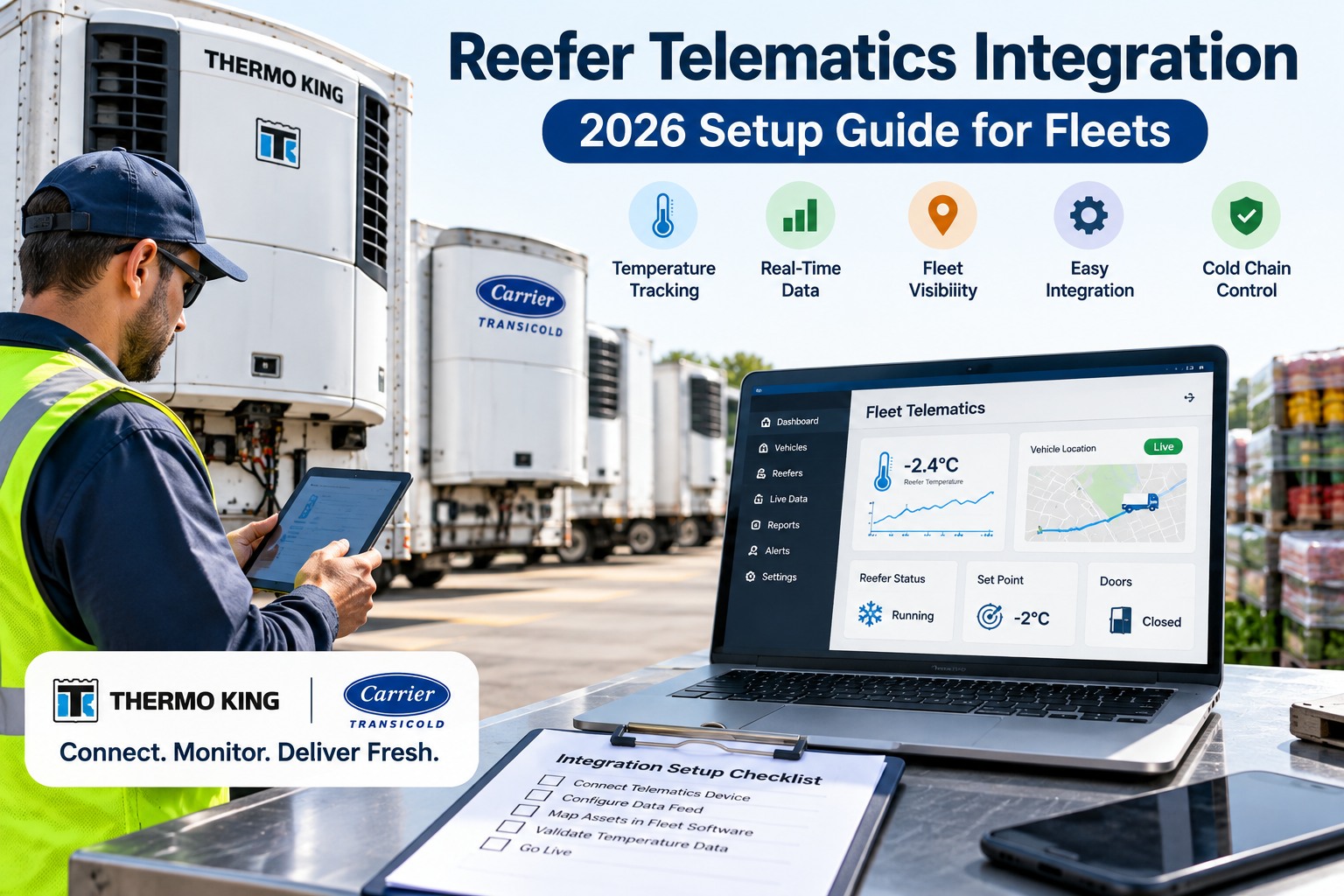
Modern refrigerated carriers, grocery distribution networks, and pharmaceutical cold-chain fleets rely heavily on transport refrigeration unit (TRU) telemetry to safeguard high-value, perishable cargo across complex delivery routes. Establishing reliable reefer telematics integration connects physical refrigeration controllers with cloud management consoles, unlocking real-time temperature tracking, bi-directional commands, automated defrost execution, and auxiliary fuel monitoring. Without standardized integration between in-cab telematics and refrigeration microprocessors, fleet managers remain vulnerable to undetected compressor shutdowns, incorrect manual setpoint entries, and regulatory audit non-compliance under FDA FSMA Rule 204. By deploying an open, hardware-agnostic integration architecture, operations teams bridge the communication gap across Carrier Transicold and Thermo King units while avoiding expensive proprietary data gateways. To discover how our integration framework protects your perishable freight operations, book a live technical demonstration with our cold chain engineering team or launch your trailer telemetry setup directly via our free platform sign up.
Standardize Your Reefer Telematics Across Every Trailer Make
Unlock bi-directional controls, automate remote setpoint updates, eliminate load rejections, and schedule predictive compressor maintenance starting from $3/vehicle/month.
Core Architectural Requirements for Enterprise Reefer Telematics
Establishing comprehensive telematics connectivity across modern refrigerated transport units requires deep integration with micro-controllers rather than superficial external temperature loggers. Passive analog probes taped inside trailer ceilings merely report ambient air temperatures; they cannot detect refrigeration compressor load variations, low refrigerant levels, or alternator voltage drops. Enterprise cold-chain operations require native digital integration that communicates directly with original equipment manufacturer (OEM) controller memory maps. This connectivity allows fleet teams to extract diagnostic trouble codes, monitor continuous discharge and return airflow differentials, and verify battery voltage reserves while assets travel between logistics hubs. Fleet engineering teams can inspect live controller commands by booking an interactive technical integration demo or configure test trailer data channels through our quick platform sign up.
Two-Way Serial Protocol Communication
Modern telematics hardware interfaces with refrigeration microprocessors using RS-232, RS-485, or CAN-bus J1939 protocols. This physical connection enables dispatchers to transmit bi-directional control strings to change setpoints, switch operational run modes, and initiate defrost cycles remotely.
Microprocessor Sensor Telemetry Extraction
Instead of relying on third-party analog sensors, direct integration taps into factory sensors installed by Carrier and Thermo King. The telematics modem reads discharge air temperature (DAT), return air temperature (RAT), ambient air, evaporator coil temperature, and engine coolant temperatures directly from the controller memory.
Auxiliary Fuel Level & Engine-Hour Tracking
Reefer units consume off-road diesel from dedicated belly tanks. Direct controller integration captures fuel level float-sensor data and exact auxiliary diesel engine operating hours, distinguishing stationary dock run-time from transit cooling.
Real-Time Diagnostic Trouble Code (DTC) Triage
When an internal sensor fails or a compressor exhibits abnormal head pressure, the reefer microprocessor triggers specific diagnostic alarm codes. FleetRabbit ingests these alerts instantly, translating technical hexadecimal codes into plain-language maintenance tickets for central garage mechanics.
Technical Comparison: Thermo King vs. Carrier Transicold Integration
Carrier Transicold and Thermo King represent the overwhelming majority of commercial transport refrigeration units globally. While both systems deliver robust thermal control, their microprocessors utilize distinct communication architectures, pinout designs, and proprietary serial data formats. Understanding these operational differences ensures your fleet deploys the correct interface wiring harnesses without risking controller communication lockouts. Fleet supervisors can review custom controller integration options by scheduling a tailored telematics consultation demo or explore our pre-configured reefer profiles via self-service platform sign up.
| Engineering Parameter | Thermo King Integration (SR-3 / SR-4) | Carrier Transicold Integration (APX / Advance) | Unified FleetRabbit Architecture |
|---|---|---|---|
| Physical Hardware Port | Rear CAN/Serial Comm Port (J12/J14 Pin Harness) | Display Module Port / Auxiliary Comms Gateway | Universal plug-and-play wiring harness |
| Supported Serial Protocols | Proprietary TK Serial Protocol & J1939 | Carrier DataCold / Standard Serial Protocol | Automated protocol detection & parsing |
| Bi-Directional Command Scope | Setpoint change, Mode toggle, Defrost, Alarm Clear | Setpoint adjustment, Continuous/Start-Stop, Pre-trip | Unified remote command console in web UI |
| Multi-Zone Sub-Compartments | Multi-Temp Zone 1, 2, 3 discrete temp channels | Multi-Temp Compartment 1, 2, 3 sensor bus | Simultaneous multi-compartment live telemetry |
| Engine Diagnostic Logging | Direct Yanmar diesel engine hours & RPM | Direct Kubota diesel engine hours & RPM | Engine-hour preventative maintenance triggers |
| Auxiliary Fuel Telemetry | Ultrasonic & float sender integration | Ultrasonic & float sender integration | Certified automated off-road IFTA reports |
4-Stage Telematics Hardware Installation and Deployment Sequence
Deploying reefer telematics across an active commercial fleet requires a structured, low-friction installation workflow that minimizes trailer downtime and ensures zero data loss on active customer routes.
Controller Assessment & Harness Routing
Inspect the refrigeration unit control box (Carrier APX or Thermo King SR-4). Connect the custom serial Y-harness to the designated communication port without cutting OEM factory wires, routing the harness securely to the telematics mounting bracket.
Auxiliary Sensor & BLE Probe Placement
Mount industrial magnetic door contacts on rear and side swing doors. Install wireless Bluetooth Low Energy (BLE) temperature probes along trailer bulkheads, assigning unique sensor IDs to corresponding cargo compartments in the cloud dashboard.
Hardware Commissioning & Serial Handshake
Power on the telematics gateway and the refrigeration unit. The system performs an automated baud-rate handshake, verifying bi-directional data flow, sensor calibration, and battery voltage levels before sealing the control enclosure.
Cloud Channel Activation & Dispatch Sync
Link the trailer serial number to your centralized dispatch workspace. Configure automated temperature alarm thresholds, geofenced pre-cooling timers, and automated SMS alerts for dispatchers and mobile repair technicians.
Capital Preservation: Eliminating Hidden Operational Leaks in Reefer Fleets
Operating a refrigerated transport fleet without integrated telematics creates compounding financial leaks across uncontrolled dock idling, unfiled fuel tax rebates, and catastrophic compressor seizures. Analyzing these systemic cost drivers helps logistics directors and maintenance superintendents justify digital integration before executive management. Measure your fleet's exact cost recovery by booking a personalized cost assessment demo or get started directly via our rapid platform sign up.
Top Causes of Refrigerated Fleet Operating Losses
Platform Engineering Advantages
Works with existing tractor telematics modems, factory OEM gateways, or standalone wireless BLE sensors.
Direct two-way serial communication compatible with Carrier Transicold and Thermo King microprocessors.
Compiles tamper-proof temperature charts, door-open durations, and delivery signatures for instant FSMA audits.
Regulatory Compliance & Preventative Maintenance Architecture
Reefer telematics integration serves as the critical backbone for regulatory food safety compliance and asset preservation. FleetRabbit replaces fragmented spreadsheets with an automated compliance framework that eliminates audit friction and protects high-value refrigeration assets.
Automated Digital Traceability
Automate sanitary transport recordkeeping with tamper-proof digital trip sheets capturing Key Data Elements (KDEs), continuous compartment temperatures, door-open durations, driver walkaround verifications, and electronic delivery sign-offs.
Predictive CMMS Maintenance
TRU engine-hour counters and diagnostic trouble code (DTC) monitoring trigger proactive maintenance work orders for drive belts, compressor oil, and evaporator fans, avoiding catastrophic roadside breakdowns.
Automated IFTA Tax Recovery
Refrigeration units run on auxiliary diesel that is exempt from highway fuel taxes. The platform monitors reefer fuel burn independently, generating certified consumption reports that unlock full state and federal IFTA fuel tax credits.
Frequently Asked Questions: Reefer Telematics Integration
Does integrating reefer telematics require cutting or splicing factory wiring harnesses?
No. Modern telematics integration utilizes custom plug-and-play Y-harnesses that plug directly into existing communication ports on Carrier Transicold (APX/Advance) and Thermo King (SR-3/SR-4) controllers. This non-invasive setup preserves factory equipment warranties and allows quick installation in under 45 minutes per trailer.
What bi-directional commands can dispatchers send remotely to the reefer unit?
Authorized dispatchers can remotely adjust cargo temperature setpoints, switch between continuous run and cycle-sentry (start-stop) modes, initiate manual evaporator defrost cycles, and clear non-critical diagnostic fault codes directly from the centralized web dashboard without driver intervention.
Can our fleet use existing in-cab telematics modems to ingest reefer data?
Yes. FleetRabbit is completely hardware-agnostic. It can ingest reefer telemetry through existing tractor telematics gateways, in-cab Android/iOS driver tablets, trailer-mounted cellular modems, or standalone wireless Bluetooth Low Energy (BLE) temperature sensors, eliminating the need to purchase proprietary black-box hardware.
How does reefer telematics integration automate IFTA off-road fuel tax credits?
Auxiliary refrigeration engines burn off-road diesel that qualifies for state and federal fuel tax refunds. FleetRabbit continuously records exact reefer engine run hours and fuel consumption independently from the truck chassis, compiling certified electronic consumption reports that simplify tax filings and recover substantial operating capital.
Upgrade Your Reefer Fleet with Complete Telematics Integration
Eliminate load rejections, automate reefer maintenance work orders, and maintain 100% regulatory compliance across every route. Experience FleetRabbit today with zero proprietary hardware lock-in.