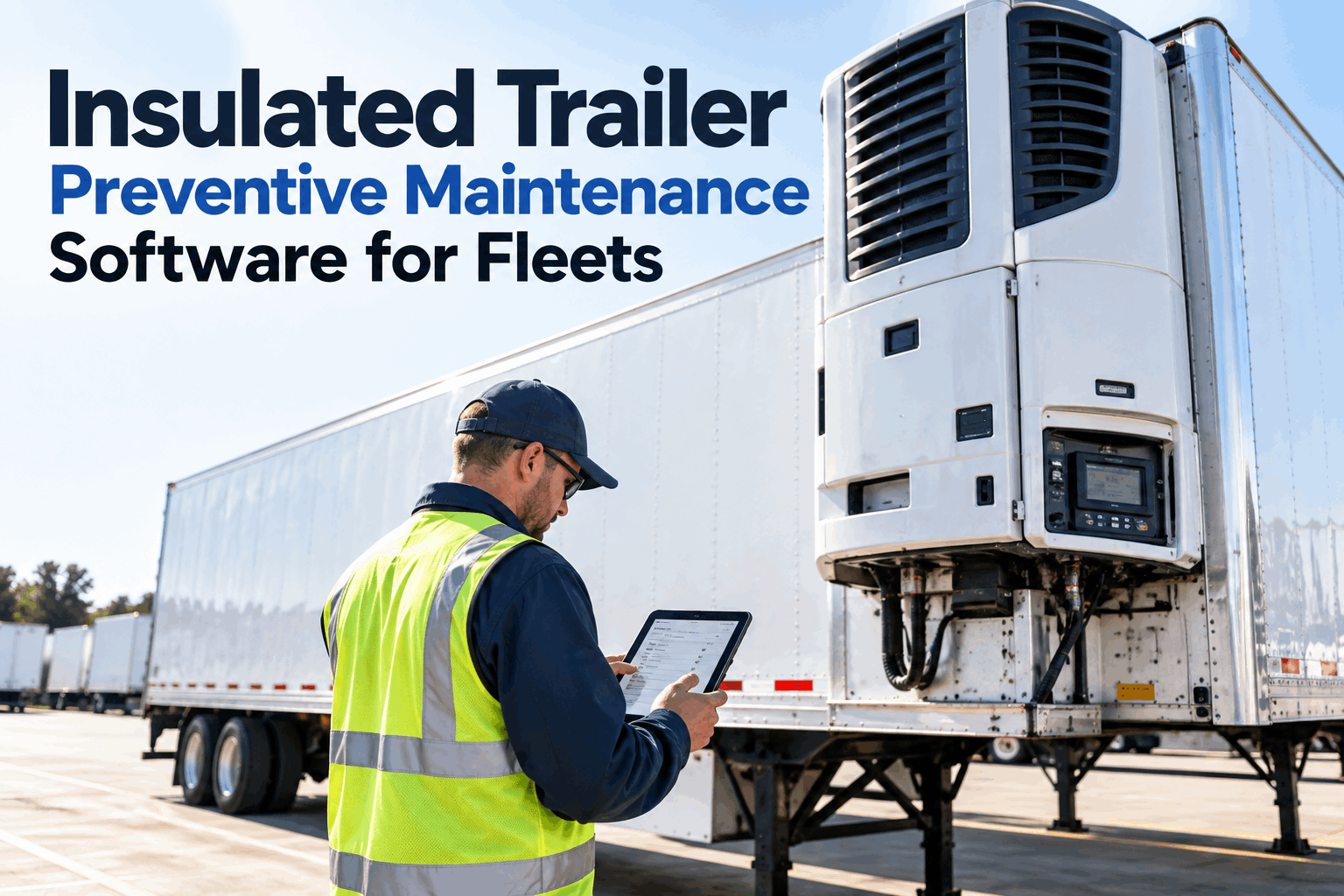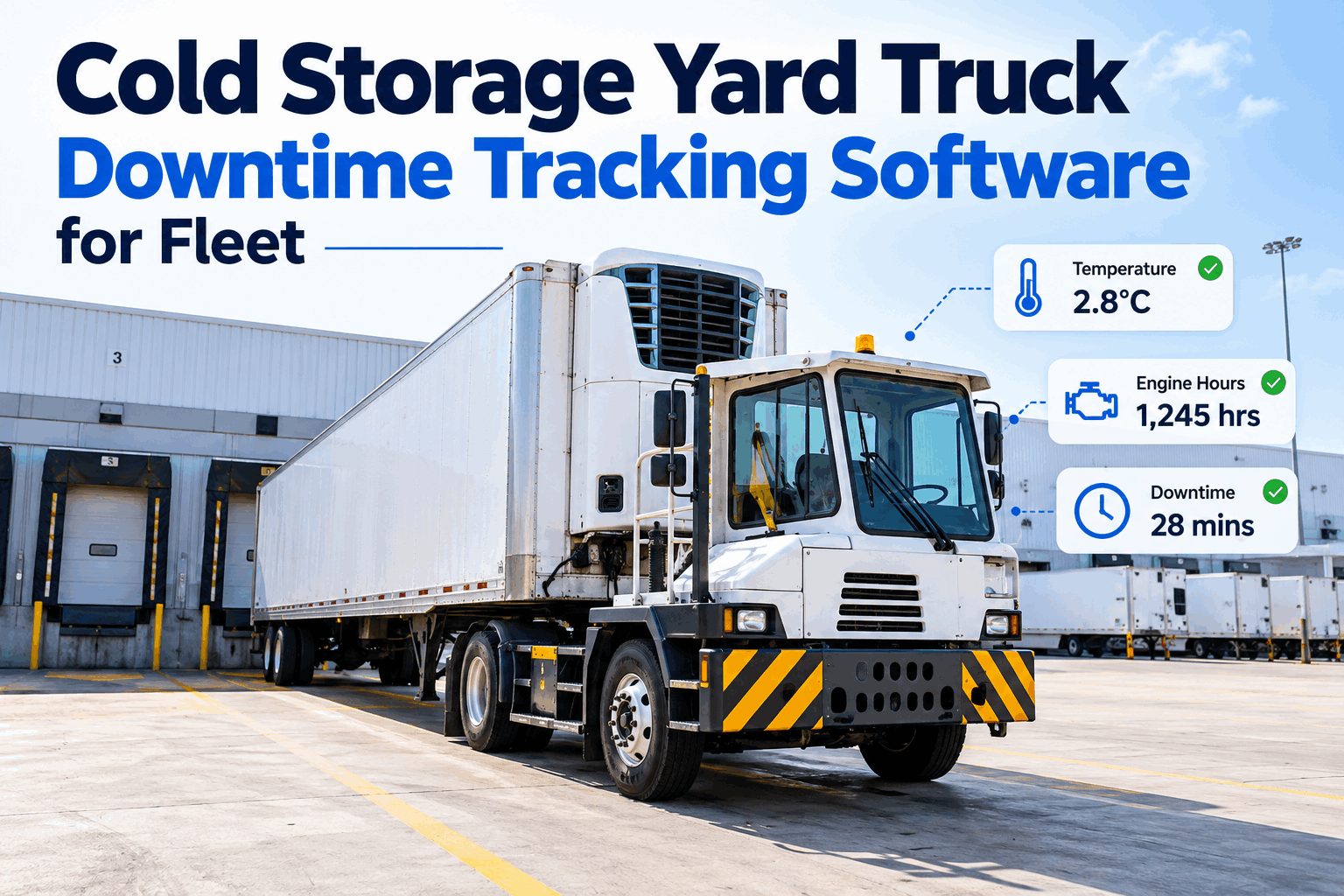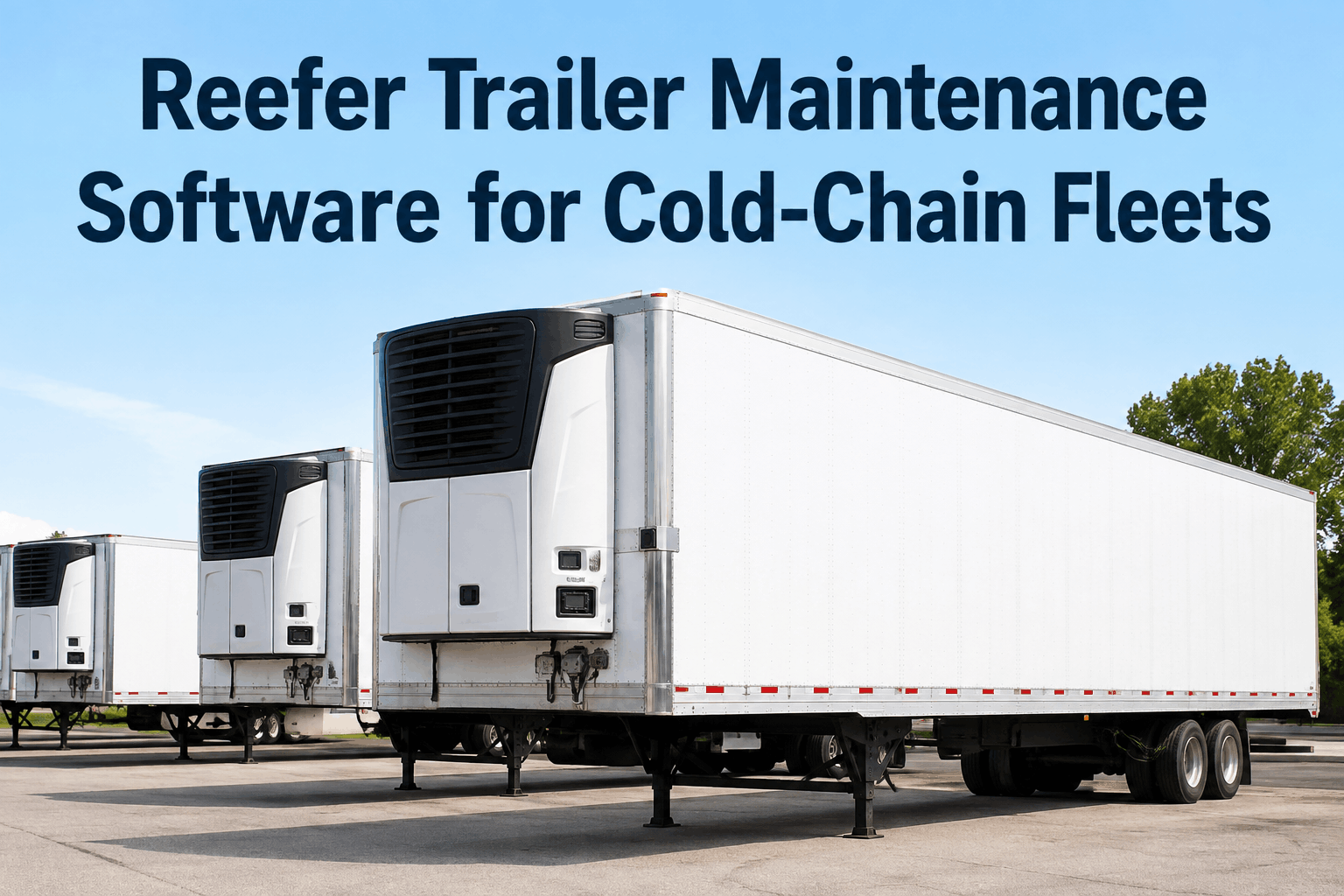
It is 2 a.m. on an interstate somewhere between a distribution center and a grocery chain's receiving dock, and a reefer unit pulling a full trailer of dairy has quietly drifted four degrees above setpoint. Nobody knows yet. The driver is asleep at a rest stop, the temperature log is a paper strip nobody will read until delivery, and by the time a receiving clerk opens the doors, a load worth tens of thousands of dollars has crossed the line from sellable to condemned. This is the scenario that reefer trailer maintenance software exists to prevent, and it is far more common than most cold-chain operators want to admit.
Unplanned refrigeration failures are now linked to roughly a third of all perishable freight claims industry-wide, and the frustrating part is that most of those failures announce themselves days or weeks in advance through small, measurable signals: a coil running a little dirtier, a compressor cycling a little more often, a door seal losing a little more air. A fixed maintenance calendar cannot see any of that. Purpose-built reefer trailer maintenance software can, and that gap is why cold-chain fleets are moving away from clipboards and toward continuous, sensor-driven monitoring.
Why Reefer Units Break the Rules of Ordinary Fleet Maintenance
A refrigeration unit is not a smaller version of a truck engine, and treating it like one is where most maintenance programs go wrong. The tractor pulling the trailer has its own diagnostic system, its own fault codes, its own service intervals, and none of it has visibility into what is happening inside the box. A compressor operating twelve percent below its rated efficiency will not throw a warning light on the dash. It will simply take longer to pull down temperature after every door opening, and lose a little more of its margin every week, until a routine delivery on a hot afternoon becomes the day the unit finally cannot keep up. Reefer trailer maintenance software closes that visibility gap by treating the refrigeration system as its own asset class, with its own engine-hour clock, its own fault history, and its own predictive models.
How a Cold Chain Failure Actually Builds, Step by Step
Almost no reefer failure is sudden. It is a chain of small, connected events that operators without live monitoring simply cannot see until the final link snaps. Understanding that chain is the fastest way to understand why software beats a clipboard.
A component starts to drift
A condenser coil collects road film, a door seal loses elasticity, or refrigerant charge drops slightly below spec. None of this is visible from the cab.
The unit compensates quietly
The compressor runs longer and cycles more often to hold setpoint. Engine hours climb faster than the calendar suggests, but nobody is tracking that ratio.
Cooling capacity falls behind demand
On a long haul, a hot dock, or a high frequency of door openings, the unit can no longer recover fast enough between events.
Temperature drifts out of range
Without continuous sensor readings, this excursion can run for hours before anyone notices it happened at all.
The load, the audit, or both are lost
A receiving clerk rejects the delivery, a compliance officer flags a missing record, or both happen on the same shipment.
Every one of those five stages leaves a data trail if a fleet is set up to capture it. Engine-hour drift, cycle frequency, and gradual setpoint variance are exactly the kind of pattern that condition-based monitoring is designed to flag, often days before stage four ever happens. Fleets that want to see this kind of early warning on their own trailers can book a demo and walk through it against a real reefer unit's history.
Stop finding out about failures at the delivery dock
Connect your reefer fleet to continuous monitoring and catch the small problems before they become a rejected load.
What Reefer Trailer Maintenance Software Actually Tracks
The phrase "temperature monitoring software" undersells what a proper cold-chain platform is doing behind the scenes. Temperature is the output that everyone cares about, but the software is really watching the mechanical and electrical inputs that produce it.
Real-time temperature and door events
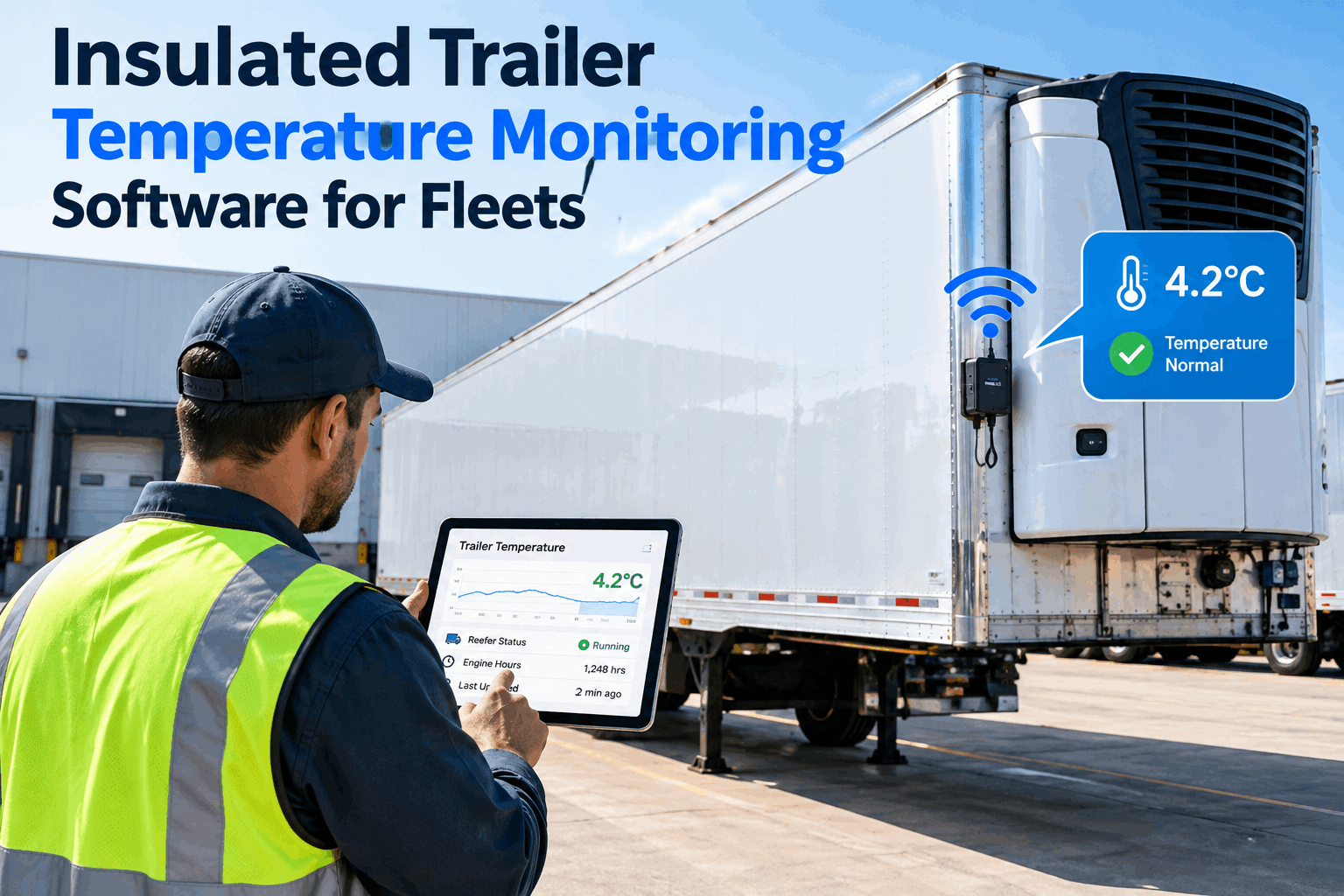
Wireless sensors and telematics gateways log cargo temperature, compartment zones, and every door-open event, typically every one to five minutes.
Reefer-specific fault codes
Direct integration with major reefer telematics pulls fault codes, fuel usage, and operating status into one dashboard, regardless of the unit's manufacturer.
Engine-hour based PM scheduling
Maintenance triggers off actual compressor run time rather than the calendar, so a hard-working trailer gets serviced sooner than a lightly used one.
Automated audit documentation
Every delivery generates a timestamped, tamper-resistant temperature record that stands up to an FSMA sanitary transportation audit without extra paperwork.
Reactive Maintenance Versus a Software-Managed Reefer Fleet
The clearest way to see the value of reefer trailer maintenance software for perishables is to put a manually managed fleet side by side with one running condition-based monitoring.
| What happens | Manually managed fleet | Software-managed fleet |
|---|---|---|
| Temperature checks | Driver glances at a dial, writes a number by hand | Continuous sensor logging every one to five minutes |
| Maintenance trigger | Fixed calendar date, regardless of actual usage | Engine hours and condition data, unit by unit |
| Excursion detection | Discovered at delivery, after the fact | Flagged in real time, often before it fully develops |
| Audit records | Paper strips, manually filed and easy to lose | Digital, timestamped, generated automatically |
| Root cause analysis | Happens after the load is already lost | Happens before the load is ever at risk |
The difference is not a matter of degree, it is a change in what kind of business a fleet is running. A manually tracked operation absorbs losses as a cost of doing business. A fleet that has moved its reefer units onto engine-hour PM and predictive alerts prevents most of those losses before they happen. Operators evaluating that shift can sign up and see how their own trailers compare once real data starts flowing in.
The Reefer PM Cycle: Maintenance That Runs on Engine Hours, Not the Calendar
Predictive maintenance for reefer units still runs on a structured preventive maintenance cycle underneath it. The difference from a traditional calendar-based program is what triggers each step. Instead of "every ninety days," the platform triggers "every 250 engine hours," which means a trailer running a punishing Southeast produce route gets serviced far more often than one making short local hops.
Engine and compressor service
Oil and filter change, belt and tensioner inspection, refrigerant charge verification.
Electrical and control check
Wiring inspection, controller diagnostics, defrost system test before the next long haul.
Exterior and airflow service
Condenser coil cleaning, door hardware lubrication, drain line flush.
Sensor and compliance calibration
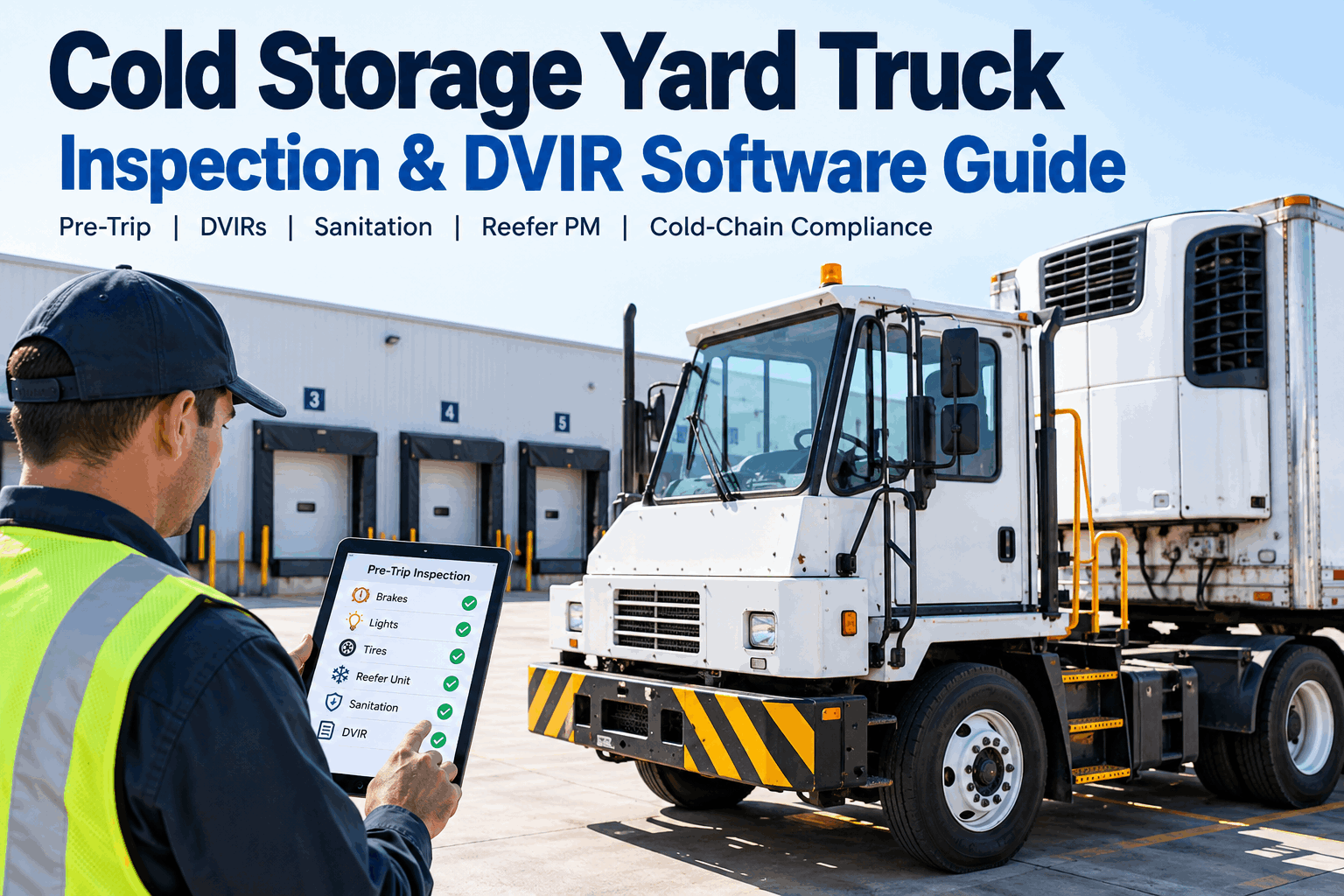
Temperature probe calibration, trailer interior sanitization log, digital DVIR sign-off.
Automated alerts that fire at 250 hours pre-due, rather than after a component has already started failing, give shop schedulers enough lead time to plan the visit around a delivery window instead of pulling a loaded trailer off the road unexpectedly. That single change in timing is often what separates a fleet with predictable uptime from one that is always one bad week away from a spoiled load.
What FSMA Compliance Actually Requires From a Cold Chain Fleet
The FDA's Food Safety Modernization Act Sanitary Transportation Rule requires carriers moving food to maintain and document temperature control from the moment a trailer is loaded to the moment it is unloaded, covering pre-cooling, transit, and delivery. A single undocumented excursion is enough to fail an audit, regardless of whether the product itself was actually compromised. Reefer trailer maintenance software for cold-chain fleets turns this from a manual filing exercise into a byproduct of normal operations: every trip generates its own proof-of-temperature report automatically, with no extra step for the driver or the office. Fleets that are still relying on paper strips for this can book a demo to see what an audit-ready digital record actually looks like in practice.
Getting Reefer Units Connected Without Taking Trailers Off the Road
One of the most common objections to adopting reefer trailer maintenance software is the assumption that it requires ripping out existing sensors or parking a trailer for days. In most cases neither is true. Modern platforms are OEM-agnostic and integrate directly with the telematics that Thermo King and Carrier units already carry, and for older units without native connectivity, wireless environmental sensors attach via a Bluetooth asset gateway in a matter of hours, not days. A twenty-unit mixed fleet, combining reefer vans and refrigerated straight trucks, can typically be fully connected within about a week while every vehicle keeps running its normal routes. Fleets ready to move past the guesswork can sign up and get their first units reporting data within days rather than weeks.
Your reefer units are already telling you something
Most fleets just are not set up to listen. Get engine-hour PM, live temperature data, and audit-ready records on every trailer.
Common Questions About Reefer Trailer Maintenance Software
Can existing reefer sensors connect without replacing hardware
In most cases, yes. Modern platforms integrate directly with major reefer telematics providers through their existing API, so sensors already installed on a trailer keep working without a hardware swap.
How is engine-hour based PM different from a normal service schedule
A calendar schedule treats every trailer the same regardless of how hard it works. Engine-hour PM ties service intervals to actual compressor run time, so a trailer running long, hot routes gets serviced sooner than one making short local trips.
Does this replace a driver's pre-trip inspection
No. It complements it. Driver-completable checklist items feed into the same digital record as sensor data, so inspection notes and mechanical history live in one place instead of two.
What happens when a temperature excursion is detected mid-route
The platform flags it in real time so a dispatcher or fleet manager can act immediately, whether that means rerouting to the nearest service point or alerting the receiving customer before the delivery even arrives.
How long does it take to connect a full fleet
A mixed fleet of around twenty refrigerated units is typically fully connected within four to seven days, with vehicles running their normal routes throughout the process.
Is the temperature data strong enough to stand up in an FSMA audit
Yes. Continuous logging every one to five minutes produces a timestamped, tamper-resistant record covering pre-cooling, transit, and delivery, which is what the Sanitary Transportation Rule requires.