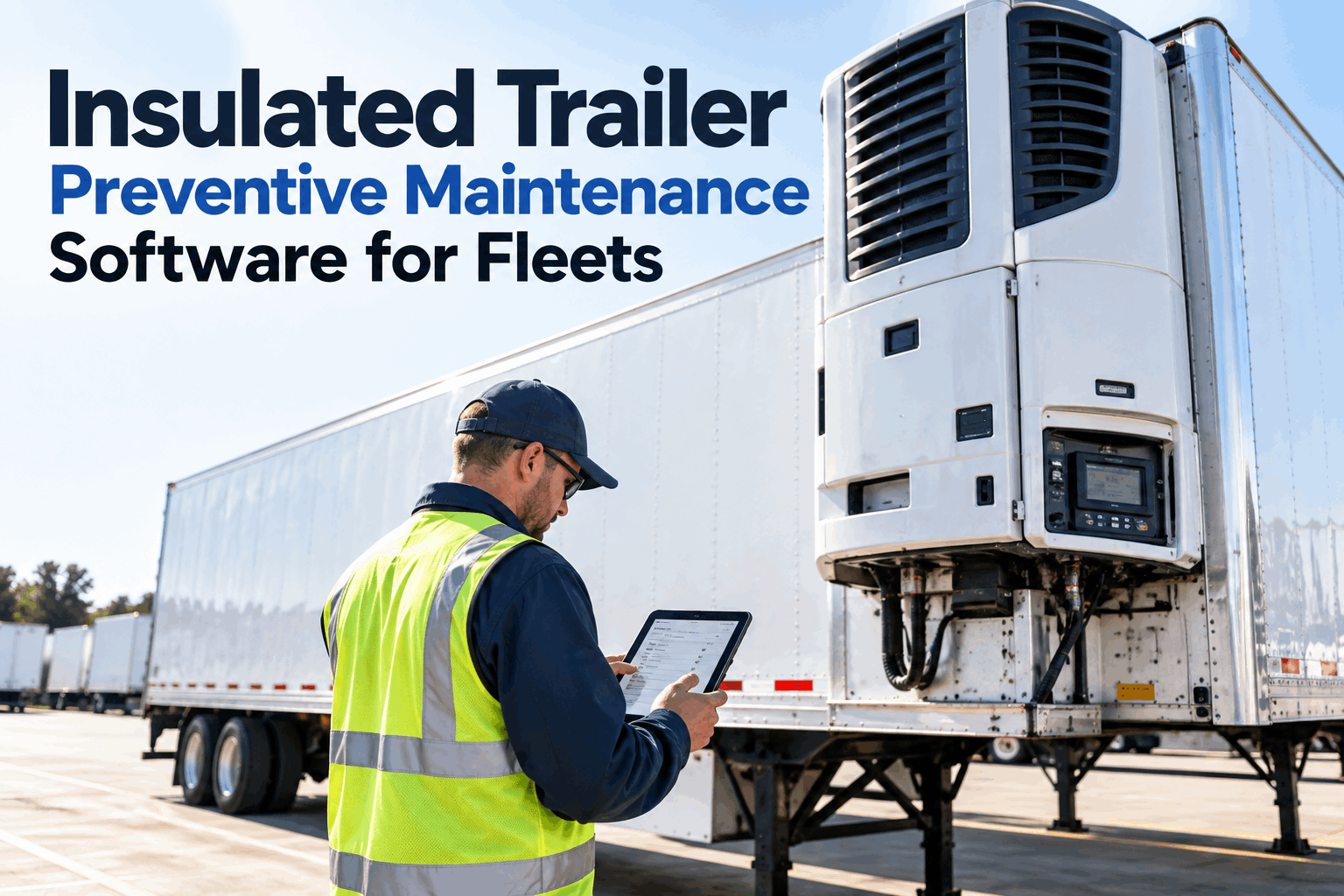
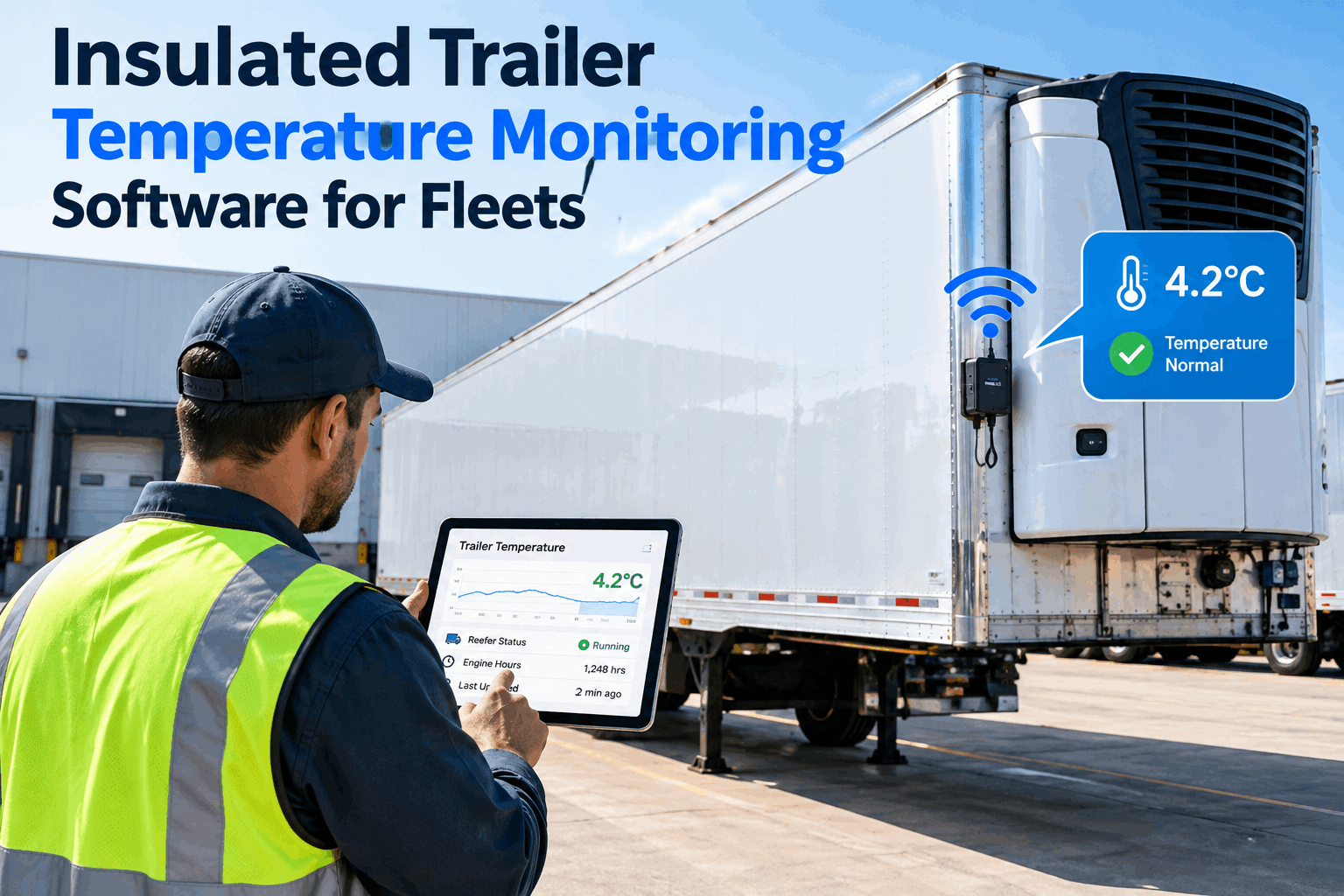
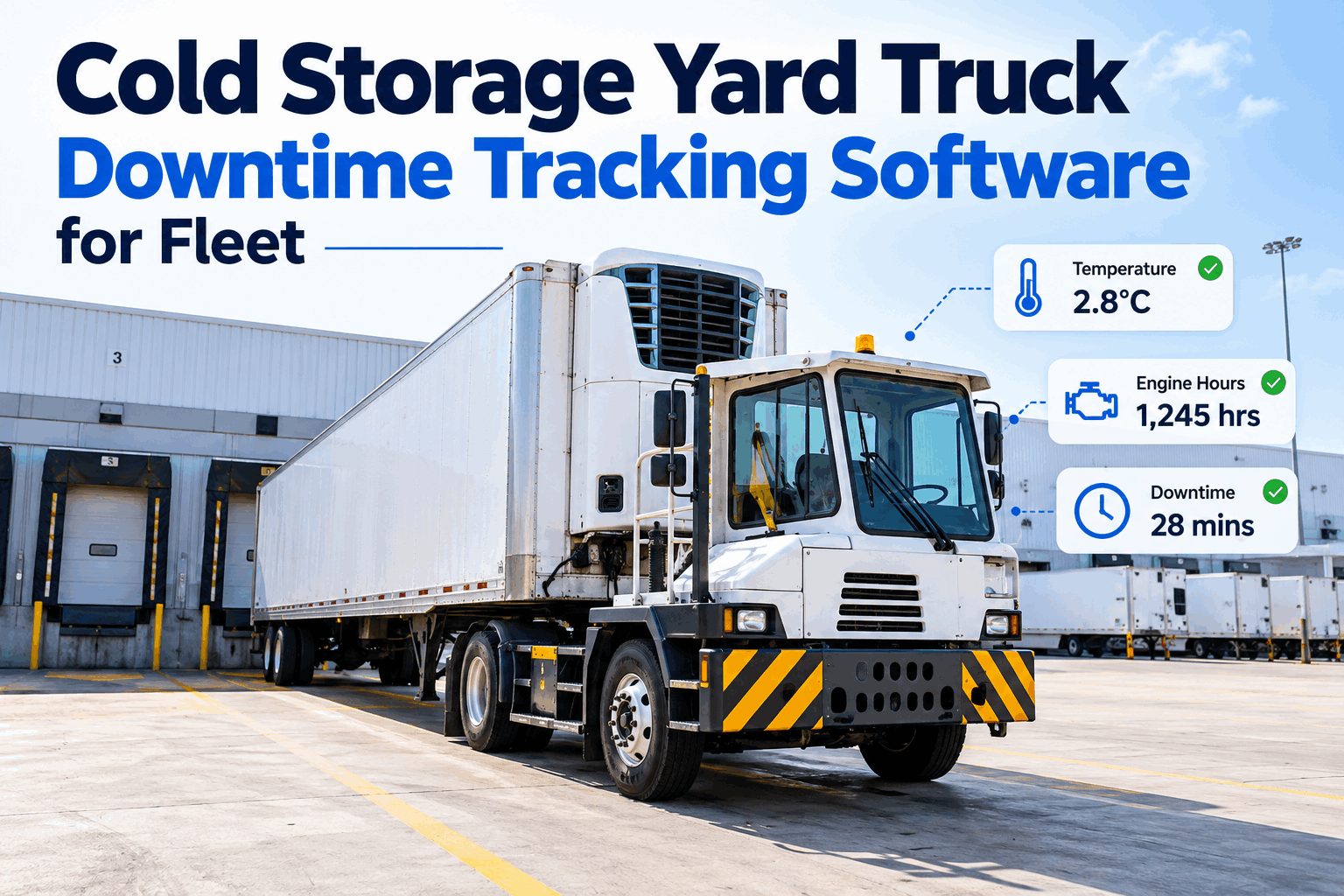
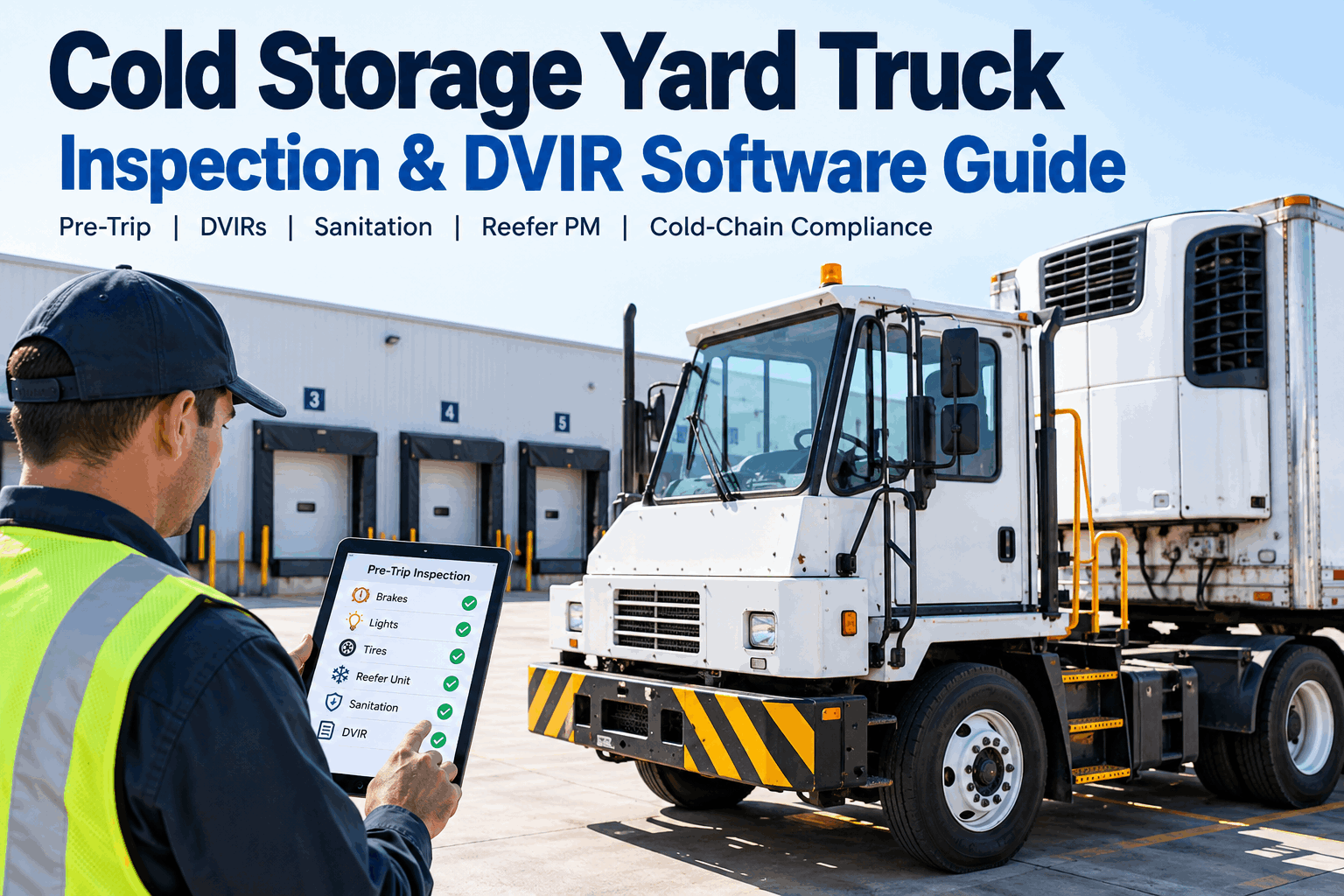
A reefer trailer does not fail the way a dry van does. There is no coasting tothe shoulder and calling a tow. When a compressor gives out forty miles from the nearest service bay, the clock starts on the cargo the moment the unit stops holding set point, and every mile driven afterward is a mile closer to a rejected load. Most of those failures do not happen out of nowhere. They show up first as a slightly longer compressor cycle, a coil running dirtier than usual, or a probe reading that has quietly drifted off calibration, weeks before anyone notices. Reefer trailer temperature monitoring software exists to catch that early signal, instead of finding out the hard way at the delivery dock.
Reefer Trailer Temperature Monitoring Software: Real-Time Visibility Built Around Reefer Uptime
Most fleets already know how to track a tractor. Oil changes, DOT inspections, and mileage-based service intervals are second nature. The reefer unit riding behind it runs on a completely different clock, measured in engine hours rather than miles, and it often accumulates wear two to three times faster than the tractor pulling it during continuous frozen runs. Treating the trailer's refrigeration unit as an afterthought on the tractor's maintenance schedule is one of the most common and most preventable causes of mid-route reefer failure.
Modern reefer trailer temperature monitoring software solves two problems at once: it watches cargo temperature, humidity, and door activity continuously in transit, and it tracks the reefer unit's own engine hours so preventive maintenance happens on a schedule the machine actually needs, not a calendar guess.
The Real Cost of Letting a Reefer Unit Run Past Its Service Window
The math on preventive reefer maintenance is not close. A scheduled service is a routine expense. An unplanned breakdown on the road is an entirely different category of cost, and it rarely stops at the repair bill.
That gap does not even count the load itself. A single trailer of frozen or fresh cargo can carry $50,000 to $500,000 in product value, and once a receiver flags a shipment as temperature-abused, the carrier typically owns the claim. It is worth ten minutes to sign up and see how much of that risk a properly scheduled reefer PM program actually removes.
Your Tractor and Your Reefer Unit Are Two Different Machines
One of the most common gaps in reefer fleet management is tracking the refrigeration unit and the tractor as a single maintenance item. They wear on completely different curves, and a schedule built around one will always miss the other.
The Tractor
Service intervals are built around mileage. Oil changes, DOT inspections, and drivetrain service all follow how far the truck has driven.
The Reefer Unit
Service intervals are built around engine hours, not miles. A unit running continuous frozen routes can log hours two to three times faster than the tractor pulling it, which means mileage tells you almost nothing about when it needs service.
Reefer trailer temperature monitoring software that tracks engine hours as an independent asset closes this gap automatically, flagging service windows based on how hard the unit has actually worked. Fleets that book a demo usually find at least a few units already overdue the moment they start tracking hours correctly.
Stop Guessing When Your Reefer Units Need Service
Track engine hours, cargo temperature, and reefer health in one place, and get ahead of failures before they cost you a load.
A Typical Engine-Hour Service Schedule
Reefer manufacturers publish service intervals in engine hours for a reason: an hour of continuous frozen running wears the compressor and belts far more than an hour of idle standby. Software that logs hours automatically means these intervals get flagged the moment they arrive, instead of relying on someone remembering to check.
Oil and filter service, belt tension check
Belt and tensioner inspection, fuel system check
Condenser coil cleaning and defrost cycle test
Full PM: oil, filters, belts, refrigerant certification
What the Software Is Actually Watching
Continuous monitoring is only useful if it is watching the right signals. The features below are what separate a platform that just logs numbers from one that actually prevents a breakdown.
Multi-zone cargo temperature
Live readings across the trailer, not just near the reefer unit, so a cold spot at the doors gets caught the same as one up front.
Engine-hour PM tracking
Service intervals triggered by actual reefer runtime, tracked as a separate asset from the tractor's mileage-based schedule.
Compressor cycle analysis
Rising discharge temperatures and abnormal cycling frequency flagged as early warning signs, often weeks before a full failure.
Probe calibration records
Return air and discharge air probes tracked and documented at every PM cycle, protecting the carrier in a temperature-abuse dispute.
Door-open event logging
Every opening timestamped and duration-logged, separating a normal delivery stop from a prolonged loss of cold air.
Audit-ready compliance reports
Continuous, tamper-resistant temperature history exportable on demand for FSMA and food-safety audit requirements.
Seeing these signals on a real fleet's data is far more convincing than reading about them. Book a demo and bring your current PM headaches to the call.
What Fleets Gain When PM and Monitoring Work Together
The value of reefer trailer temperature monitoring software compounds once temperature data and maintenance data live in the same system. A unit that is cycling harder than normal to hold set point is not just a maintenance flag, it is also an early temperature risk, and treating them separately means someone has to notice both problems independently before they connect the dots.
Fleets that connect the two typically sign up after seeing how many "surprise" breakdowns were actually visible in the data weeks in advance.
Give Your Reefer Fleet the Uptime It Deserves
Real-time temperature monitoring and engine-hour PM scheduling in one dashboard, so your reefer units get serviced before they fail, not after.
Frequently Asked Questions
What is reefer trailer temperature monitoring software
It is a platform that connects wireless sensors and a telematics gateway on a refrigerated trailer to a cloud dashboard, giving fleet managers continuous visibility into cargo temperature, humidity, door activity, and reefer unit performance, along with engine-hour based preventive maintenance scheduling for the refrigeration unit itself.
Why should the reefer unit be tracked separately from the tractor
The reefer unit runs on its own engine and its own service clock, measured in hours rather than miles. A refrigeration unit on continuous frozen routes can accumulate hours two to three times faster than the tractor pulling it, so a mileage-based schedule alone will consistently miss when the reefer actually needs service.
How early can the software actually catch a failing reefer unit
Compressor issues typically show warning signs, such as rising discharge temperatures or abnormal cycling frequency, one to three weeks before a complete failure. Monitoring software that tracks these patterns continuously can flag a unit for service well before it breaks down on the road.
Does the software help with FSMA and food safety compliance
Yes. Continuous temperature logging, timestamped door events, and documented probe calibration all feed into exportable, audit-ready records that satisfy FSMA and food safety documentation requirements without manual spreadsheet work.
What happens if a reefer unit misses a scheduled service window
Running past a service interval increases the odds of a mid-route failure, and the cost difference is significant. A routine 500-hour service typically runs a few hundred dollars, while an emergency roadside compressor repair can run into the thousands, before counting any spoiled cargo.
How quickly can a fleet get set up on the platform
Most fleets get sensors installed and reefer units connected to the dashboard without disrupting active routes. The fastest way to get a timeline specific to your trailer count and reefer models is to book a demo and walk through your fleet directly.