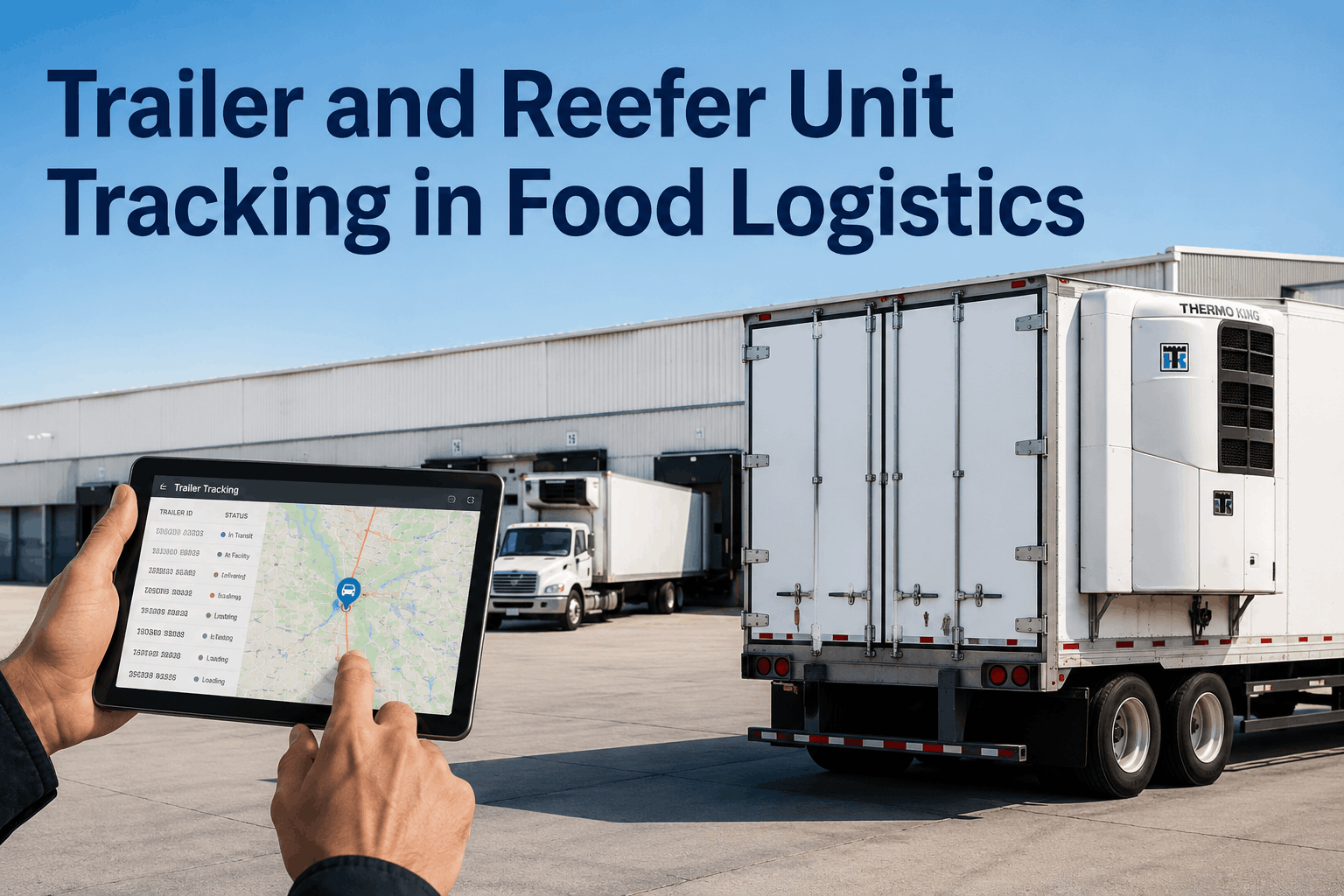
Trailer and Reefer Unit Tracking in Food Logistics
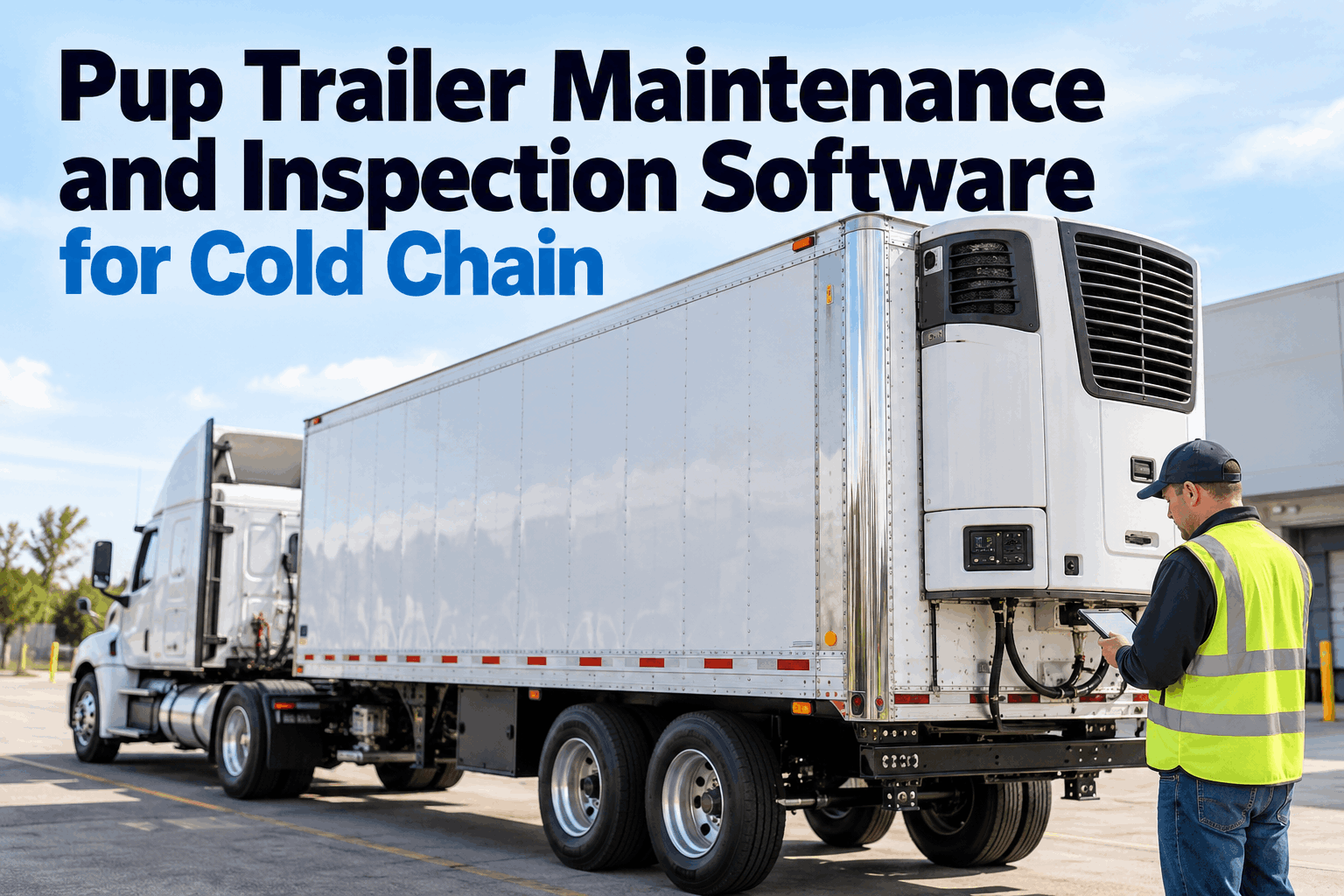
Trailer and reefer unit tracking in food logistics represents one of the most under-instrumented gaps in cold chain operations — a category of physical assets that generates the highest cargo liability exposure in the entire food distribution network, yet routinely operates with less real-time visibility than the tractor unit pulling it. A reefer trailer parked at a customer's holding bay with a failing refrigeration unit that no one in the depot knows about, a detached trailer sitting in a yard at the wrong temperature class for three hours before its next dispatch, a reefer unit cycling on and off across a long-haul overnight route while the assigned driver sleeps in the cab unaware — these are not fringe events in food logistics. They are the predictable consequence of running high-value, temperature-controlled assets without purpose-built trailer and reefer unit tracking software that gives fleet operations the same live visibility into a trailer sitting 400 kilometres away as they have into the vehicle parked in the depot yard. Book a demo to see how Fleet Rabbit delivers real-time trailer and reefer unit tracking for food logistics fleets.
Fleet Rabbit's cold chain fleet management platform gives food logistics operators, fleet managers, and operations directors live GPS location, reefer unit status, compartment temperature, door event history, and predictive maintenance alerts for every trailer in their fleet — whether attached to a tractor, parked in a customer yard, staged at a distribution depot, or in transit on a long-haul frozen route. This guide gives food logistics leaders the complete framework for deploying trailer and reefer unit tracking that delivers cold chain visibility, asset utilisation intelligence, and FSMA compliance documentation across every refrigerated trailer in their network. Start your free trial today.
HERO BANNER
Reefer Trailer Tracking Guide 2026
Trailer and Reefer Unit Tracking in Food Logistics
From long-haul frozen trailers to detached reefer units staged across multi-depot networks, food logistics operators face compounding cold chain visibility and asset management challenges every time a refrigerated trailer leaves or enters their control. This guide equips fleet managers and operations leaders with the frameworks to track, monitor, and optimise every trailer and reefer unit in their food distribution network — through Fleet Rabbit's unified cold chain fleet management platform.
Higher cargo loss rate in food logistics fleets running detached trailer assets without live reefer unit monitoring
54%
Of reefer unit failures in food distribution occur during detached trailer periods — when no driver is present to detect an alarm
$248K
Average cargo and liability cost per undetected reefer unit failure on a detached trailer in a food logistics network
100%
Trailer GPS, reefer unit status, compartment temperature, and door events visible on one Fleet Rabbit dashboard simultaneously
ALERT BANNER
Critical Compliance Reality
FSMA's Sanitary Transportation rule holds food carriers responsible for maintaining temperature control for the duration of transit — including detached trailer periods at customer yards, depot staging areas, and relay points where no driver is present and no reefer alarm will be heard. Your compliance obligation does not pause when the tractor uncouples. Fleet Rabbit's trailer-independent tracking ensures your reefer unit monitoring continues whether or not a tractor is attached.
The Five Trailer and Reefer Unit Tracking Failure Points
Food logistics fleets that experience the highest frequency of cold chain cargo losses and FSMA compliance exposures share identifiable structural gaps in their trailer and reefer unit visibility infrastructure. These are not equipment failures — they are visibility architecture failures that allow equipment failures to go undetected long enough to destroy perishable cargo and generate regulatory liability. Fleet Rabbit closes all five failure points from a single platform.
FAILURE STACK — vertical numbered list variant
01
No Reefer Monitoring During Detached Trailer Periods
GapHigh Risk
The Problem
Reefer unit monitoring on most food logistics trailers depends on the tractor's telematics gateway for data transmission. When the trailer is detached — during customer dwell, depot staging, or relay handover — the monitoring connection is broken. A reefer unit fault that develops during a 4-hour detached period in a customer yard generates no alert, no record, and no response until the trailer is recoupled and a driver notices an alarm or reviews the downloaded logger at route completion.
Fleet Rabbit Fix
Fleet Rabbit's trailer-mounted telematics units operate on independent cellular power — maintaining live reefer unit status monitoring, temperature data transmission, and door event logging regardless of whether a tractor is coupled. Detached trailer alerts fire within 90 seconds of a reefer fault, temperature deviation, or door event regardless of the trailer's attachment status or location in your logistics network.
02
Trailer Location Unknown Once Detached from Tractor
GapOperational
The Problem
Fleet GPS systems that rely on tractor-mounted units lose all visibility of a trailer the moment it is uncoupled. Trailer location is then managed by driver phone calls, yard check sheets, and customer contact — a manual process that routinely results in lost trailer syndrome where fleet managers cannot confirm which customer yard holds which trailer, how long it has been there, or whether the reefer unit is still running correctly. Trailer detention billing becomes unverifiable without a continuous location record.
Fleet Rabbit Fix
Fleet Rabbit's trailer GPS tracking operates independently of tractor coupling — maintaining live position updates for every trailer in the fleet whether attached, staged in a depot yard, or parked at a customer location. Fleet managers see every trailer's current location, how long it has been at that location, and whether the reefer unit is operating correctly — enabling accurate trailer detention calculations and eliminating manual yard check procedures entirely.
03
Reefer Unit Maintenance Reactive Rather Than Predictive
GapMaintenance
The Problem
Reefer unit maintenance in most food logistics fleets is scheduled on calendar intervals rather than actual operating hours — meaning high-utilisation trailers on daily distribution routes reach service thresholds weeks before their scheduled maintenance date while low-utilisation assets cycle through unnecessary service events. Fault code history from reefer units is reviewed at the depot, not monitored in real time, meaning developing faults generate cargo losses before triggering a maintenance response.
Fleet Rabbit Fix
Fleet Rabbit tracks actual reefer unit operating hours, fault code frequency, and temperature variance patterns per trailer — generating predictive maintenance work orders when operating data indicates a developing fault before it produces a cargo-threatening excursion. Maintenance scheduling is driven by real unit utilisation rather than calendar assumption, ensuring high-demand trailers receive timely service without over-maintaining lower-utilisation assets.
04
No Multi-Compartment Visibility on Split-Temperature Trailers
GapHigh Risk
The Problem
Multi-compartment refrigerated trailers running frozen, chilled, and ambient zones simultaneously are among the highest-value assets in a food logistics fleet — and among the least monitored. Most tracking systems record a single primary temperature channel per trailer. Secondary and tertiary compartment excursions in non-primary zones generate no alert, no record, and no regulatory documentation until a customer complaint or end-of-route logger download reveals the deviation hours or days after the cargo has been delivered and potentially distributed.
Fleet Rabbit Fix
Fleet Rabbit supports multi-channel temperature monitoring per trailer — tracking each compartment zone simultaneously with independent alert thresholds configured per temperature class. Per-zone excursion alerts identify the compartment, deviation magnitude, and cargo assignment, giving fleet managers actionable intervention data rather than a single aggregated temperature reading that masks zone-specific failures on split-load trailers.
05
Trailer Utilisation and Fleet Right-Sizing Based on Assumption
GapOperational
The Problem
Food logistics fleets typically manage trailer fleets based on peak demand assumptions rather than continuous utilisation data — maintaining a pool of refrigerated trailers large enough to cover the busiest periods with no visibility into actual dwell times, interchange frequencies, or the proportion of the fleet that is generating detention costs at customer locations rather than completing active delivery cycles. Fleet expansion decisions are made without evidence of whether the constraint is trailer count or trailer utilisation efficiency.
Fleet Rabbit Fix
Fleet Rabbit's trailer utilisation analytics track active transit time, yard dwell time, customer detention duration, and interchange frequency per trailer — giving fleet managers the data to identify which trailers are consistently under-utilised, which customers are generating excessive detention, and whether additional trailers would solve a capacity constraint or simply increase the pool of under-deployed assets sitting at customer locations.
Reefer Trailer Tracking: Food Logistics Operation Type Risk Profile
The trailer and reefer unit tracking challenge varies significantly across food logistics operation types — not just in trailer size and route structure, but in the specific visibility gaps that different cargo categories, depot configurations, and customer dwell patterns generate. Understanding your operation's profile is the starting point for selecting the right tracking configuration.
Operation Type
Primary Trailer Risk
Key Compliance Driver
Tracking Priority
Fleet Rabbit Impact
Long-Haul Frozen Distribution
Reefer unit faults during overnight detached periods at relay points
FSMA Sanitary Transport + frozen chain SLAs
Independent trailer monitoring
+51% fault detection
Multi-Depot Distribution Networks
Trailer location unknown between depot handovers
Asset management + customer SLA compliance
Live trailer GPS + dwell alerts
+44% asset utilisation
Grocery Retail Supply Chain
Excessive customer detention generating reefer operating cost without visibility
Retailer cold chain standards + FSMA
Detention tracking + temp monitoring
+38% detention recovery
Split-Temperature Trailer Fleets
Non-primary compartment excursions undetected across full delivery cycle
FSMA multi-zone + customer HACCP requirements
Multi-channel zone monitoring
100% zone coverage
Pharmaceutical Cold Chain
GDP-compliant chain of custody gaps at tractor handover points
FDA 21 CFR + GDP trailer qualification
Continuous chain-of-custody logging
100% audit-ready records
MID-PAGE CTA — pill variant
Live Trailer Visibility. Every Location. Every Temperature.
Fleet Rabbit tracks every refrigerated trailer independently — GPS location, reefer unit status, compartment temperature, and door events whether attached, staged, or in transit across your entire food logistics network.
Fleet Rabbit Platform Capabilities for Trailer and Reefer Unit Tracking
Fleet Rabbit's refrigerated trailer tracking platform delivers the operational and compliance intelligence that food logistics fleets need to manage trailer assets and reefer units with the same rigour as the tractor fleet. Each capability below addresses a documented visibility or compliance gap in refrigerated trailer management — from independent GPS tracking through predictive reefer unit maintenance and FSMA audit documentation.
CAPABILITY GRID — 2-column card variant instead of vertical stack
Capability A — Live GPS
Independent Trailer GPS Tracking
Fleet Rabbit's trailer-mounted GPS units transmit live location every 30 seconds — operating on independent cellular power regardless of tractor coupling status. Fleet managers see every trailer's current position, whether it is in transit, staged at a depot, or parked at a customer location, and how long it has been at each location. Geofence alerts fire when a trailer enters or exits a defined zone — customer yard, relay point, or restricted area — with timestamps recorded in the compliance archive automatically. Historical location playback reconstructs any trailer's complete movement record for any date range in seconds, providing the chain-of-custody location documentation that FSMA audit packages and cargo liability claims require.
30s GPS updatesDetached trailer trackingGeofence zone alertsHistorical playback
Capability B — Temperature
Live Reefer Unit Temperature Monitoring
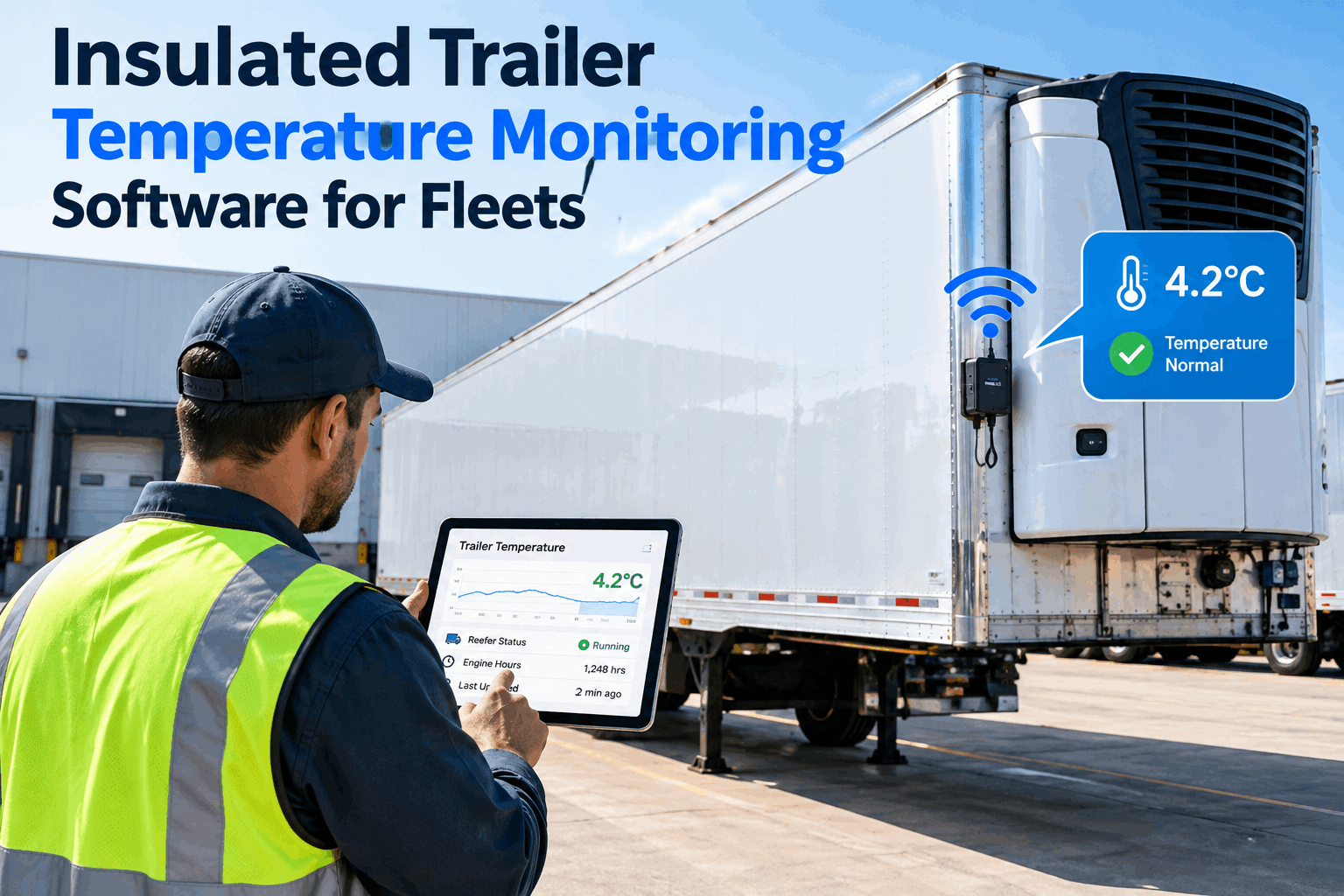
Fleet Rabbit integrates with Carrier DataLink, Thermo King TracKing, and aftermarket sensor hardware to stream live setpoint versus actual temperature from every refrigerated compartment continuously throughout the trailer's operational cycle — including detached periods, overnight staging, and relay handovers when no driver is present. Per-compartment excursion alerts fire within 90 seconds of a deviation crossing the configured threshold, identifying the trailer, compartment zone, current temperature, deviation magnitude, and GPS location simultaneously. Every temperature reading is timestamped and archived to the FSMA compliance record automatically, creating the unbroken temperature log that cold chain compliance requires without any manual data entry step.
Multi-system integration90s excursion alertsDetached period monitoringAuto-archived records
Capability C — Multi-Zone
Multi-Compartment Zone Monitoring
Fleet Rabbit supports simultaneous multi-channel temperature monitoring for split-temperature trailers — tracking frozen, chilled, and ambient compartments independently with configurable alert thresholds per zone and per temperature class. Zone-specific excursion alerts identify which compartment has deviated, the cargo assigned to that zone, and the deviation history for that zone across the route timeline. Multi-compartment monitoring data is archived per compartment per route, enabling zone-level FSMA compliance documentation for multi-load trailers where a single-channel temperature record cannot demonstrate compliance for each cargo category carried simultaneously.
Per-zone alert thresholdsSimultaneous zone trackingCargo assignment linkingZone-level audit records
Capability D — Door Events
Door Sensor Logging and Dwell Time Alerts
Fleet Rabbit's door sensor integration logs every open and close event per compartment — GPS-located, timestamped, and correlated against the temperature record for the trailer at the moment of the event. Door dwell time alerts fire when a compartment remains open beyond the threshold configured for the cargo temperature class, notifying both the driver through the in-cab app and the fleet manager through the dashboard. Door events linked to GPS coordinates identify exactly which customer delivery stop corresponds to each door event, enabling per-stop cold chain accountability that route temperature averages cannot provide. Door event data is retained in the compliance archive per route and included automatically in FSMA audit package exports.
GPS-linked door eventsDwell time alertsPer-stop accountabilityCompliance archive storage
Capability E — Asset Intelligence
Trailer Utilisation and Detention Analytics
Fleet Rabbit's trailer utilisation analytics track active transit time, yard dwell time, customer detention duration, and interchange frequency per trailer — continuously, without manual yard checks or driver call-in procedures. Fleet managers see which trailers are consistently delivering productive cycles, which are accumulating detention at specific customer locations, and which are being under-utilised relative to the fleet average. Detention duration records are timestamped and GPS-verified per customer location, providing the documented evidence needed to support detention billing claims and customer conversations about dwell time management. Utilisation distribution data enables evidence-based trailer fleet right-sizing — identifying whether capacity constraints require additional assets or improved utilisation of the existing trailer pool.
Active cycle trackingDetention documentationCustomer dwell analyticsFleet right-sizing data
Capability F — Compliance
Predictive Reefer Maintenance and FSMA Compliance Archive
Fleet Rabbit monitors reefer unit operating hours, fault code frequency, and temperature variance patterns per trailer — generating predictive maintenance work orders when operating data indicates a developing fault before it produces a cargo-threatening excursion. PM compliance rates for Fleet Rabbit-managed refrigerated trailer fleets average 96% within 60 days of deployment. Every transit event across the platform — GPS route, temperature log, door events, reefer unit fault history, maintenance records, and excursion responses — is archived in Fleet Rabbit's cold chain compliance vault per trailer and exportable as a complete FSMA audit package in under four minutes.
Frequently Asked Questions: Trailer and Reefer Unit Tracking in Food Logistics
How does Fleet Rabbit maintain reefer unit monitoring when a trailer is uncoupled from the tractor?
Fleet Rabbit's trailer telematics units are self-powered with integrated battery backup and an independent cellular modem — meaning they do not depend on the tractor's power supply or telematics gateway to maintain data transmission. When a trailer is uncoupled, the unit continues to transmit GPS location, reefer unit temperature, compartment status, and door events at the configured update frequency without interruption. For extended detached periods where battery conservation is required, Fleet Rabbit's adaptive power management reduces update frequency during stable-condition periods and resumes full-frequency monitoring immediately when a temperature deviation, door event, or reefer fault is detected. Your Fleet Rabbit implementation specialist will configure the power management profile appropriate for your trailer's typical detached dwell durations during onboarding.
Which reefer unit manufacturers does Fleet Rabbit integrate with for live temperature and fault monitoring?
Fleet Rabbit integrates with the major refrigerated trailer unit platforms used in food logistics — including Carrier Transicold DataLink, Thermo King TracKing, and Schmitz Cargobull TrailerConnect — pulling live setpoint, actual temperature, unit operating status, alarm codes, and fuel consumption data into the Fleet Rabbit dashboard. For trailer units without native telematics output, Fleet Rabbit's multi-channel sensor kits install directly to the reefer compartments and transmit via the trailer unit's independent cellular connection. The specific integration approach for your reefer unit make, trailer configuration, and fleet size is confirmed during a pre-deployment assessment at no cost before any hardware is ordered or installed.
Can Fleet Rabbit track both the tractor and trailer independently and link them when coupled?
Yes — Fleet Rabbit tracks tractor and trailer units as independent assets and automatically detects coupling events from GPS proximity and power connection data, linking the tractor and trailer records in the platform for the duration of their coupled operation. Coupled records show combined driver, vehicle, trailer, and cargo data on a single trip timeline. When the trailer is uncoupled, the records separate and each asset continues to be tracked independently — with the handover point, time, and location archived in both the tractor and trailer records. This independent-and-linked tracking architecture enables food logistics operators to see exactly which driver-tractor combination pulled each trailer for every leg of its journey — providing the continuous chain-of-custody record that GDP pharmaceutical compliance and multi-party food safety audit requirements demand.
How quickly can Fleet Rabbit be deployed for trailer and reefer unit tracking across an existing food logistics fleet?
Fleet Rabbit's refrigerated trailer tracking deployment follows a structured three-phase onboarding: trailer hardware installation and reefer telematics integration in week one, dashboard configuration, geofence setup, and alert threshold calibration in week two, and compliance archive activation and team training in week three. Most food logistics fleets achieve full independent trailer GPS and reefer temperature monitoring within 21 days of deployment commencement. Hardware installation by Fleet Rabbit-certified technicians takes 60 to 90 minutes per trailer depending on the reefer unit make and compartment configuration. Fleets with existing Fleet Rabbit tractor telematics deployments can extend trailer tracking capabilities within 5 to 7 days through a hardware extension process that integrates directly into the existing dashboard and compliance archive infrastructure.
CLOSER — Feature list variant with summary bar
Complete Trailer and Reefer Unit Tracking — From Depot Yard to Customer Dock and Back
Fleet Rabbit gives food logistics fleets independent trailer GPS visibility, live reefer unit temperature monitoring, multi-compartment zone tracking, door event logging, detention analytics, predictive maintenance intelligence, and FSMA compliance documentation — unified in a single cold chain fleet management platform that tracks every refrigerated trailer regardless of coupling status, location, or time of day.
Independent trailer GPS tracking — coupled or detached
Live reefer temperature monitoring with 90-second excursion alerts
Multi-compartment zone monitoring for split-temperature trailers
Door event logging with GPS location and dwell time alerts
Trailer utilisation and customer detention analytics
FSMA-ready compliance archive and 4-minute audit package export