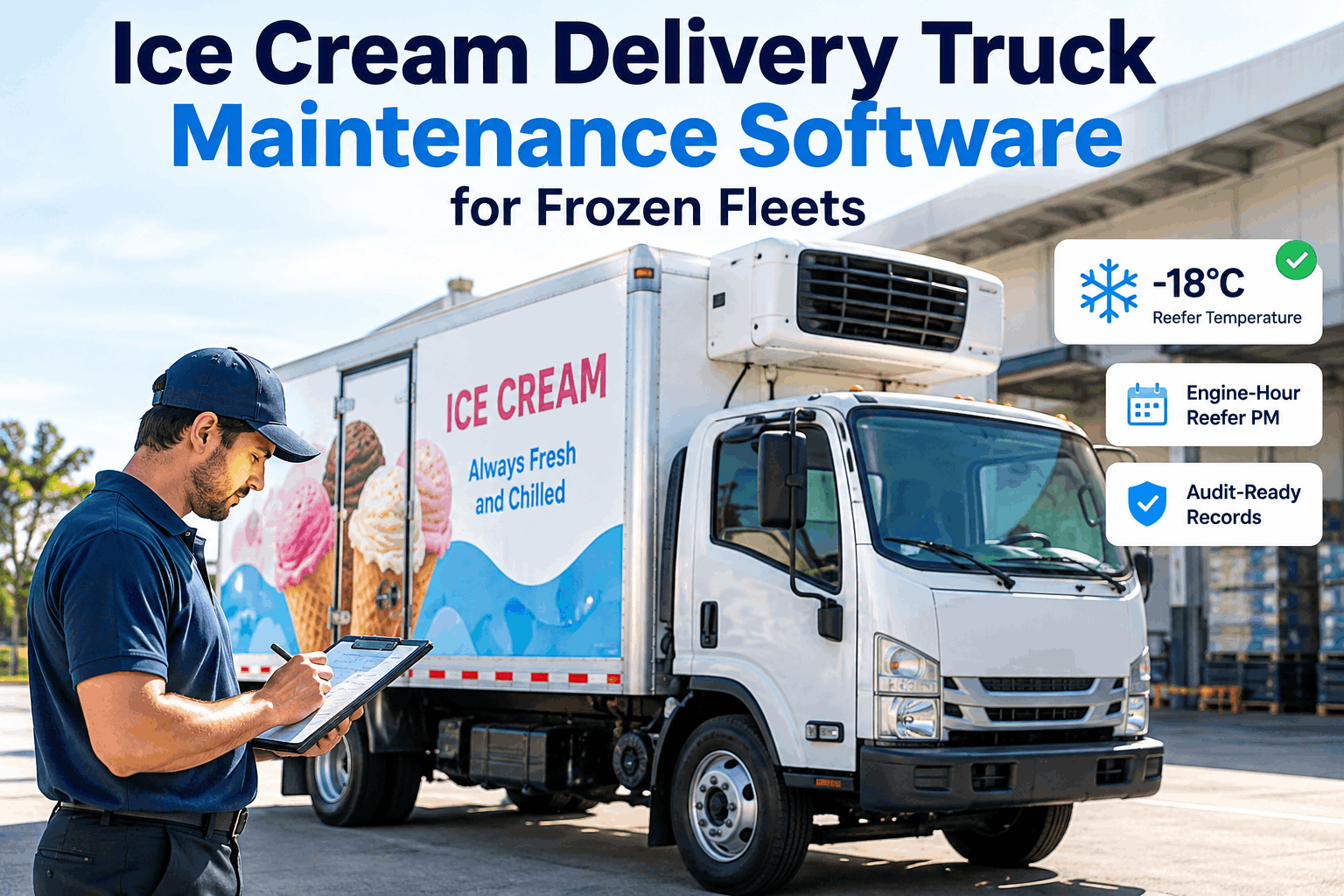
A single reefer failure on a delivery route can turn a profitable week into a write-off. Between spoiled cargo, emergency roadside repairs, missed delivery windows, and the possibility of a documented temperature excursion, refrigerated box truck downtime is one of the most expensive line items a food and beverage distributor carries — and most of it is preventable with the right visibility into what's happening inside every reefer unit, in real time.
Why Refrigerated Box Truck Downtime Costs More Than the Repair Bill
Most fleet managers price a reefer breakdown by the invoice from the repair shop. That number is only the beginning. The moment a refrigeration unit stops holding its setpoint, three clocks start running at once: the clock on the cargo's safe temperature window, the clock on the delivery appointment, and the clock on the vehicle's earning potential while it sits at a shop or on the shoulder of a highway. A box truck that isn't moving isn't making money, and in cold chain work, it may also be actively destroying the value of what's inside it.
Distributors carrying dairy, produce, meat, or prepared foods rarely have the luxury of a spare truck sitting idle for exactly this moment. A single unplanned failure forces dispatch to either delay the route, transfer product to another unit mid-run, or accept the loss. None of those options are good, and all of them get more likely the less visibility a fleet has into reefer health before the compressor actually quits. This is exactly the gap refrigerated box truck downtime tracking software is built to close, and teams that sign up for a real-time monitoring platform typically catch the warning signs days or weeks before a failure, not after one.
Where the Cost of a Reefer Failure Actually Goes
Fleets without predictive monitoring commonly absorb a version of this stack multiple times per vehicle, per year. Fleets that track engine hours, compressor draw, and box temperature together tend to catch the problem at the top of this list — long before it becomes the bottom one.
Stop Finding Out About Reefer Failures From the Driver
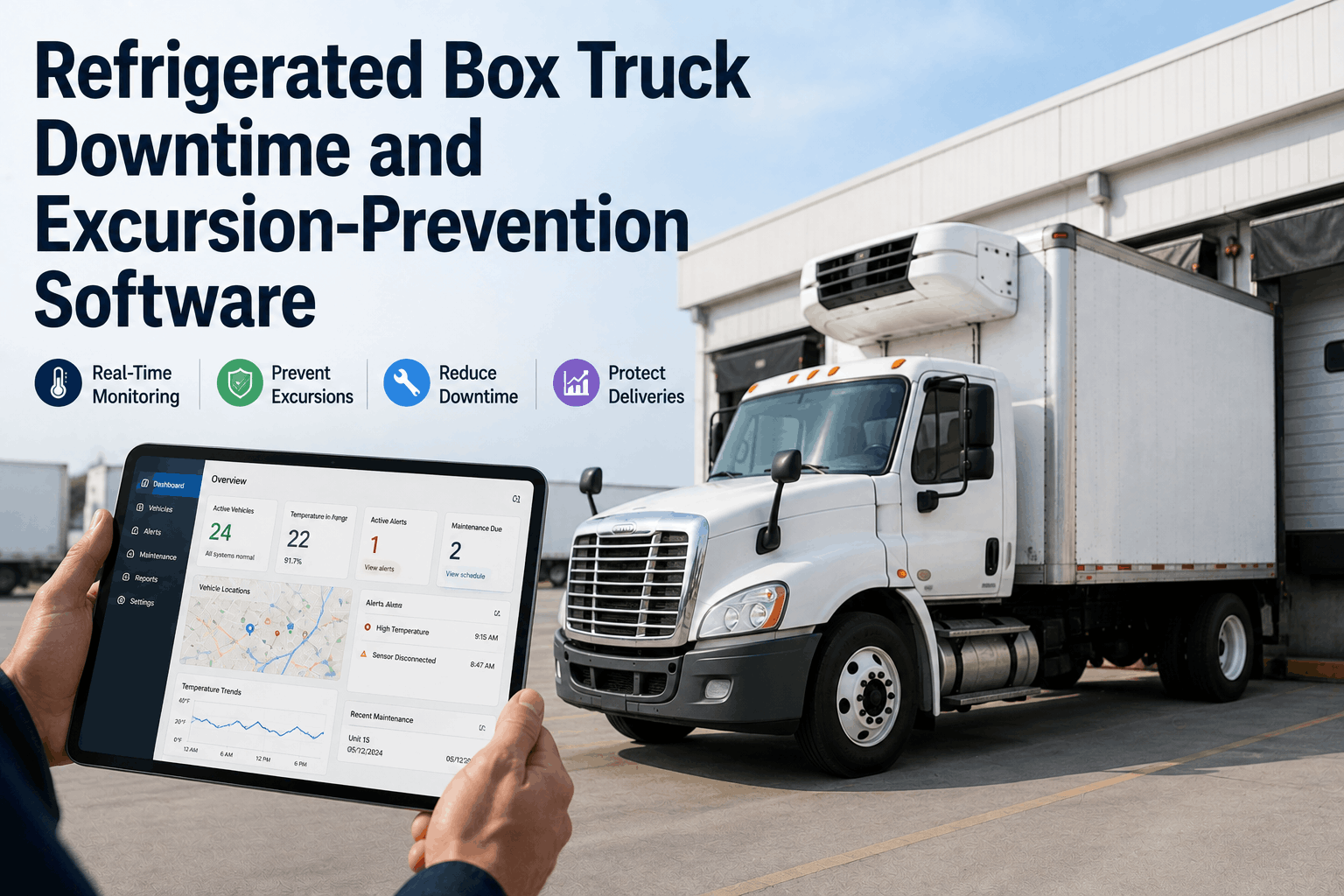
FleetRabbit gives distributors one dashboard for every refrigerated box truck: live temperature, live compressor behavior, and live engine-hour maintenance status. Sign up to connect your first unit in minutes, or book a demo to see excursion alerts and maintenance scheduling working on a live fleet.
What Actually Counts as a Temperature Excursion
A temperature excursion is any point where cargo drifts outside its required safe range for longer than the product can tolerate. It doesn't have to be dramatic. A compressor that's cycling a degree warmer than it should on a hot afternoon, a door left open two minutes too long at a delivery stop, or a unit that quietly loses refrigerant pressure over a week of short routes can all push a load out of range without anyone in the cab noticing. Once that threshold is crossed for too long, the shipment is typically treated as compromised, regardless of how brief the breach was or how it happened.
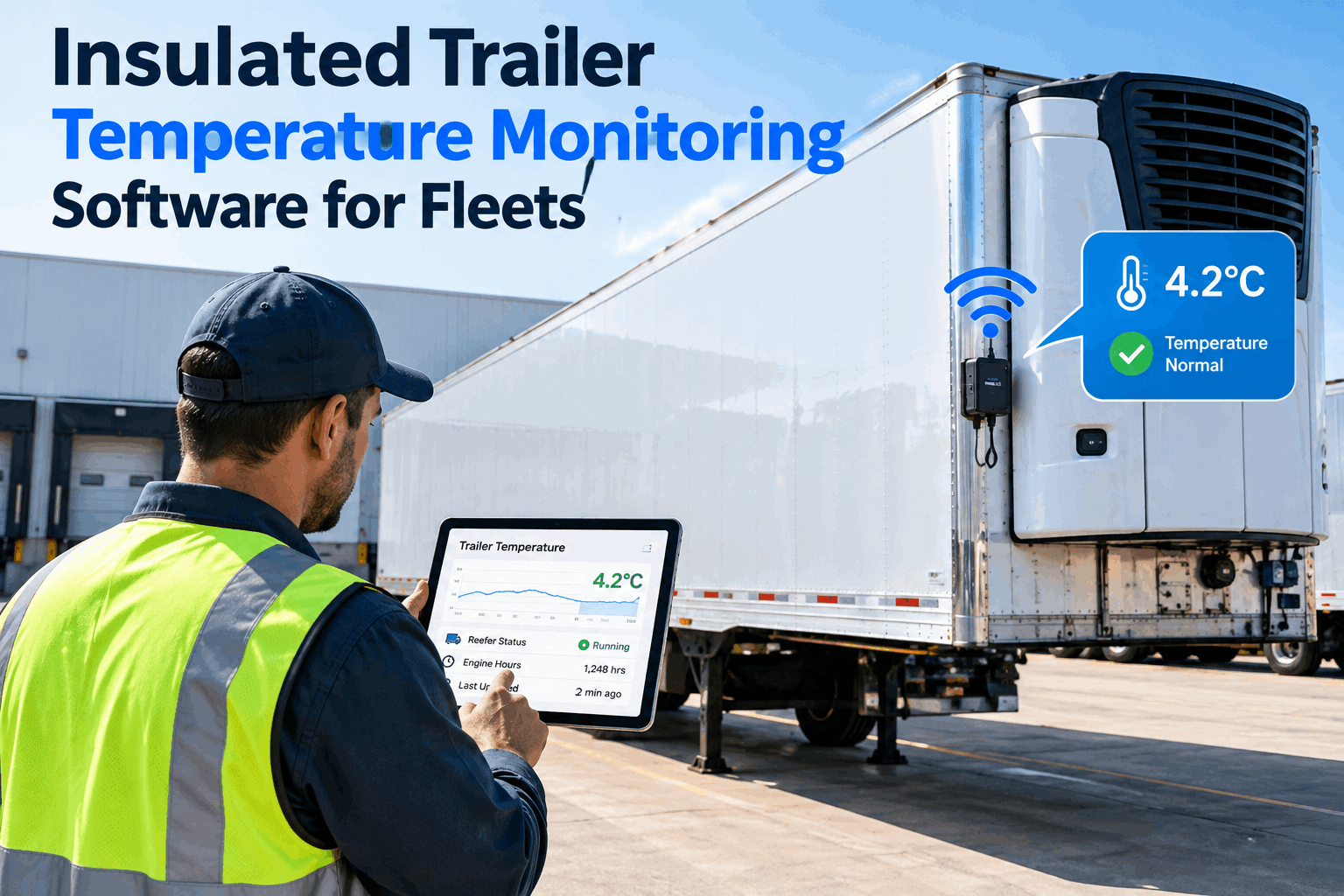
This is where paperwork and reality tend to diverge. A driver's manual temperature check every few hours can miss a ninety-minute excursion entirely. Refrigerated box truck downtime tracking software closes that blind spot by logging box temperature continuously, not periodically, and flagging a drift the moment it starts rather than the moment someone happens to look at a gauge.
From Compressor Drift to Prevented Excursion: How Real-Time Tracking Intervenes
Continuous sensing
Box temperature, compressor current draw, and engine hours are logged around the clock, not spot-checked at stops.
Baseline comparison
The system compares live readings against each unit's normal operating baseline, catching drift patterns like a compressor pulling extra current to hold temperature.
Instant alert
Dispatch and the driver are notified the moment a reading trends toward the excursion threshold, not after the load has already been out of range.
Documented outcome
Every reading, alert, and response is time-stamped into an audit-ready record, whether the load stayed safe or the driver had to reroute to a service point.
Engine-Hour Reefer PM: Maintenance That Follows the Unit, Not the Calendar
Most box trucks still get serviced on a fixed calendar schedule, but a reefer unit doesn't wear out on a calendar. It wears out on run hours. A truck doing short urban routes with the reefer cycling constantly puts far more stress on a compressor than a truck doing one long highway haul a day, even if both trucks log the same number of weeks between services. Engine-hour based preventive maintenance tracks the actual runtime of the refrigeration unit and triggers service at the interval the equipment itself calls for, not an arbitrary date on a spreadsheet.
The distributors seeing the strongest uptime numbers have generally moved away from reactive repair entirely. Instead of fixing a reefer after it fails on a route, predictive maintenance built on engine-hour and performance data identifies degradation, like rising compressor current or slipping refrigerant pressure, while there's still time to schedule the fix at a shop on a Tuesday afternoon instead of a highway shoulder at two in the morning. Teams that want to move a fleet from reactive to predictive maintenance can book a demo and walk through how engine-hour scheduling would apply to their actual routes.
Reactive vs. Predictive Reefer Maintenance
Reactive Maintenance
- Service happens after a failure or symptom appears
- Repairs often occur roadside, at premium labor rates
- Maintenance history lives in disconnected paper or binders
- Recurring issues on the same unit go unnoticed across routes
- Downtime is unplanned and disrupts delivery schedules
Predictive, Engine-Hour Maintenance
- Service is scheduled before a symptom becomes a failure
- Repairs happen at a shop, on a planned date
- Maintenance history is tied to each asset automatically
- Recurring patterns are flagged across the whole fleet
- Downtime is planned around the delivery calendar
Why This Matters More for Distributors Under FSMA
Food distributors handling high-risk categories, including leafy greens, shell eggs, fresh-cut fruit, and finfish, operate under the FDA's Food Safety Modernization Act traceability requirements, which call for detailed records connecting a shipment's handling to its temperature history. A downtime tracking platform that already logs continuous temperature data and excursion events turns what used to be a scramble through paper logs into a record that's already assembled and ready to produce. For a distributor, that's not just a compliance convenience, it's the difference between proving a load stayed safe and simply hoping it did.
The same record that satisfies an auditor also protects the distributor commercially. When a retailer disputes a rejected delivery, a continuous temperature and maintenance log settles the question quickly instead of turning into a drawn-out argument over whose responsibility the spoilage was. Fleets that want that protection built in from day one can sign up and start generating compliance-ready records on their very first load.
What a Downtime and Excursion Dashboard Should Actually Show
Getting Started Without Disrupting Routes This Week
Adopting refrigerated box truck downtime tracking software doesn't require pulling trucks off the road or rebuilding dispatch from scratch. Most fleets connect their first units, review a week or two of baseline data, and then turn on excursion alerts and engine-hour PM scheduling once the platform has learned each unit's normal behavior. The trucks keep running their normal routes the entire time. If your team is comparing options, the fastest way to see whether it fits your fleet is to book a demo with a real dataset from your own routes rather than a generic walkthrough.
Give Every Refrigerated Box Truck a Real-Time Health Record
From live temperature monitoring to engine-hour reefer PM and compliance-ready documentation, FleetRabbit is built for distributors who can't afford a surprise on the road. Get started today.
Frequently Asked Questions
What is refrigerated box truck downtime tracking software?
It's a fleet management platform that continuously monitors reefer unit performance, box temperature, and engine hours to catch mechanical degradation and temperature excursions before they cause a breakdown or a spoiled load, rather than relying on periodic manual checks.
How is this different from a standard telematics or GPS tracker?
Standard GPS tracking tells you where a truck is. Downtime and excursion tracking software goes further, reading the refrigeration unit's own performance data, such as compressor current draw and refrigerant pressure, and connecting it to engine-hour maintenance scheduling and continuous temperature logging.
What causes most refrigerated box truck downtime?
The leading causes are compressor strain, refrigerant loss, incorrect setpoints, and extended idle or dwell time that overworks the unit. Most of these develop gradually and produce measurable warning signs, like rising current draw, well before the unit actually fails.
How does engine-hour reefer PM differ from calendar-based maintenance?
Calendar-based maintenance services a unit on a fixed date regardless of how hard it has been running. Engine-hour PM tracks the actual runtime of the refrigeration unit and schedules service based on real wear, which better matches trucks running frequent short routes versus long highway hauls.
Does this help with FSMA compliance?
Yes. Continuous temperature logging and time-stamped excursion records give distributors handling FSMA-covered high-risk foods a ready-made traceability trail, which is far faster to produce during an audit or a delivery dispute than reconstructing paper logs after the fact.
How quickly can a fleet get set up?
Most distributors connect their first refrigerated box trucks and begin collecting baseline data within days. From there, excursion alerts and engine-hour maintenance scheduling can be switched on without pulling any vehicle off its regular route. Sign up to connect your first unit, or book a demo to see the setup process on a live fleet before committing.