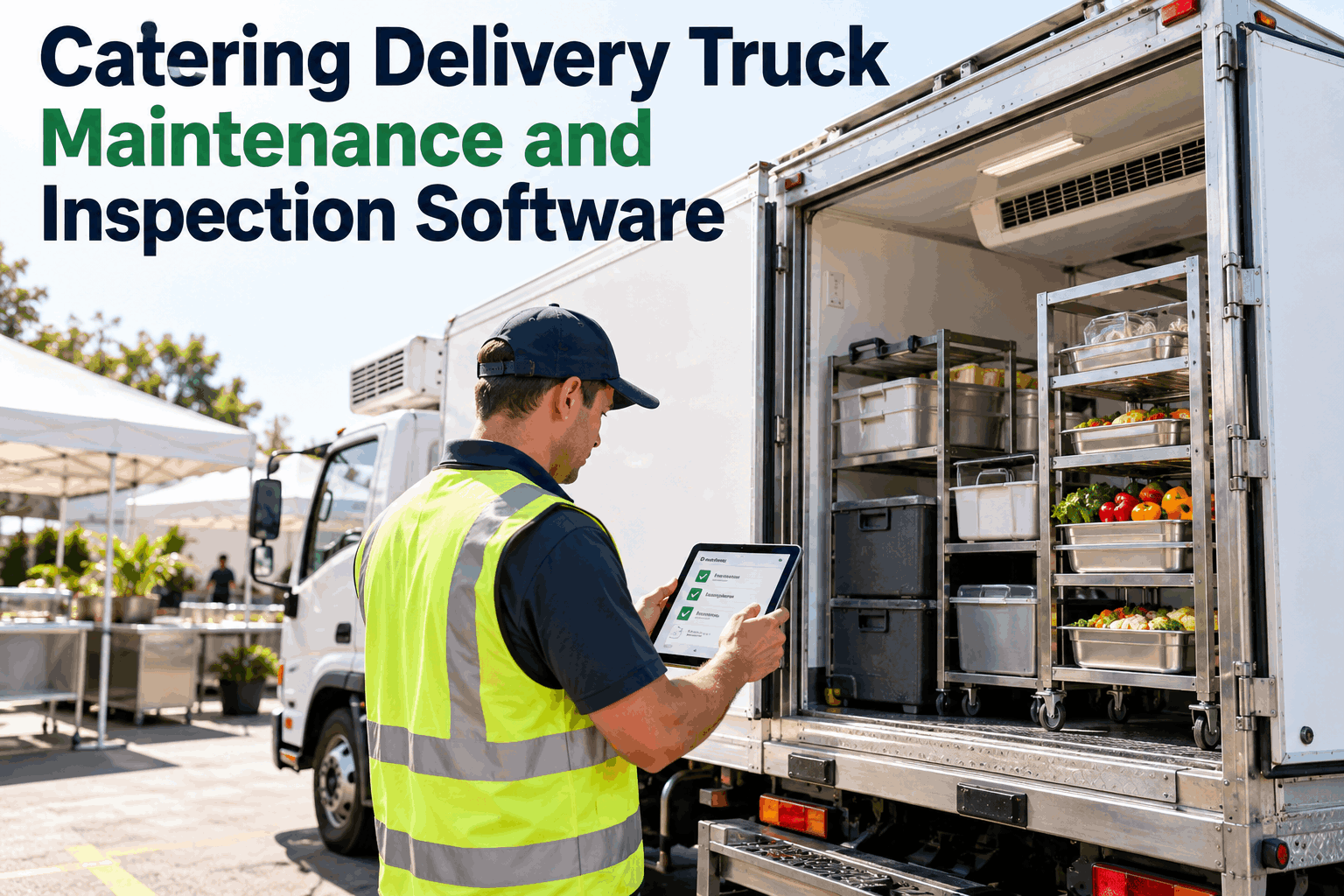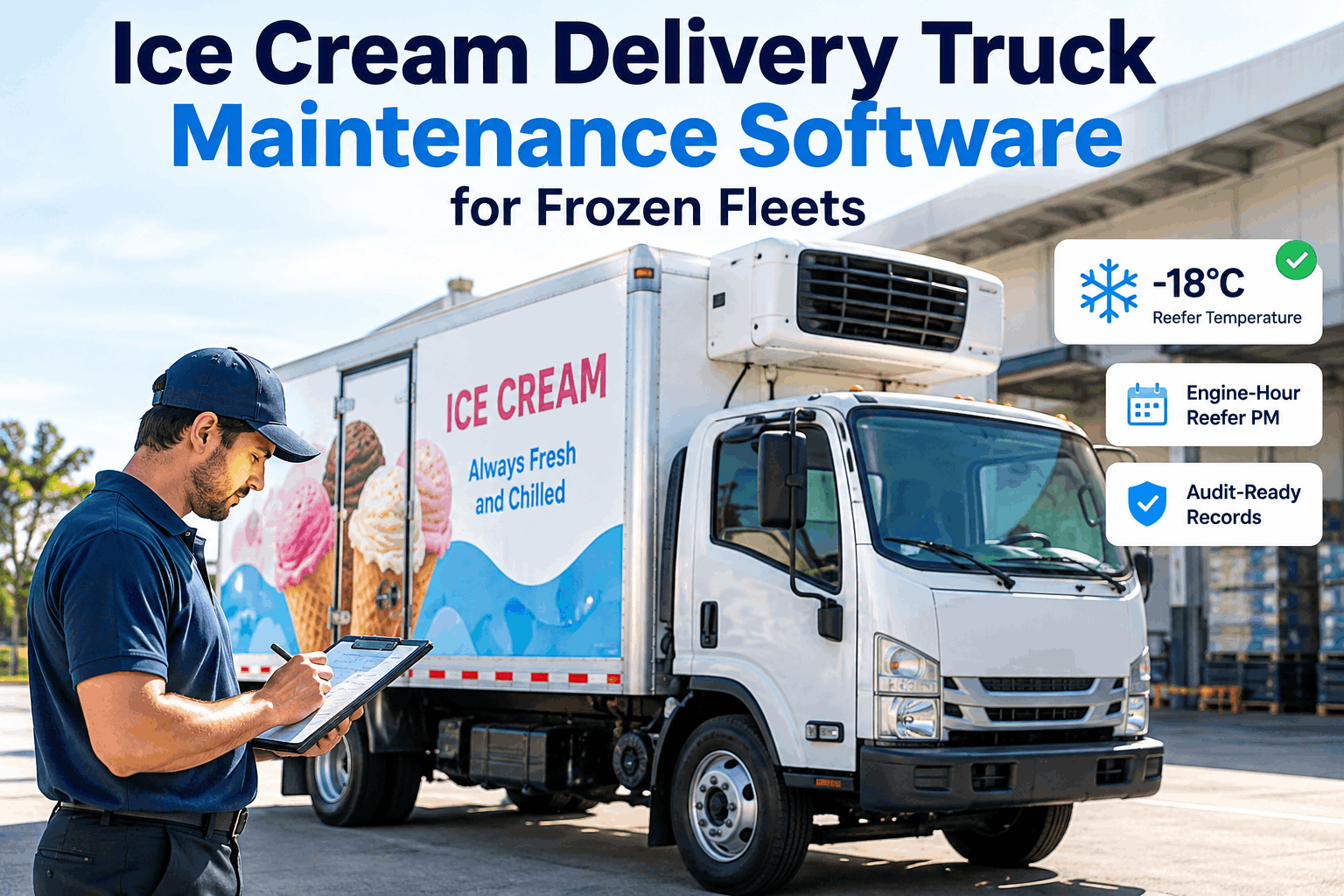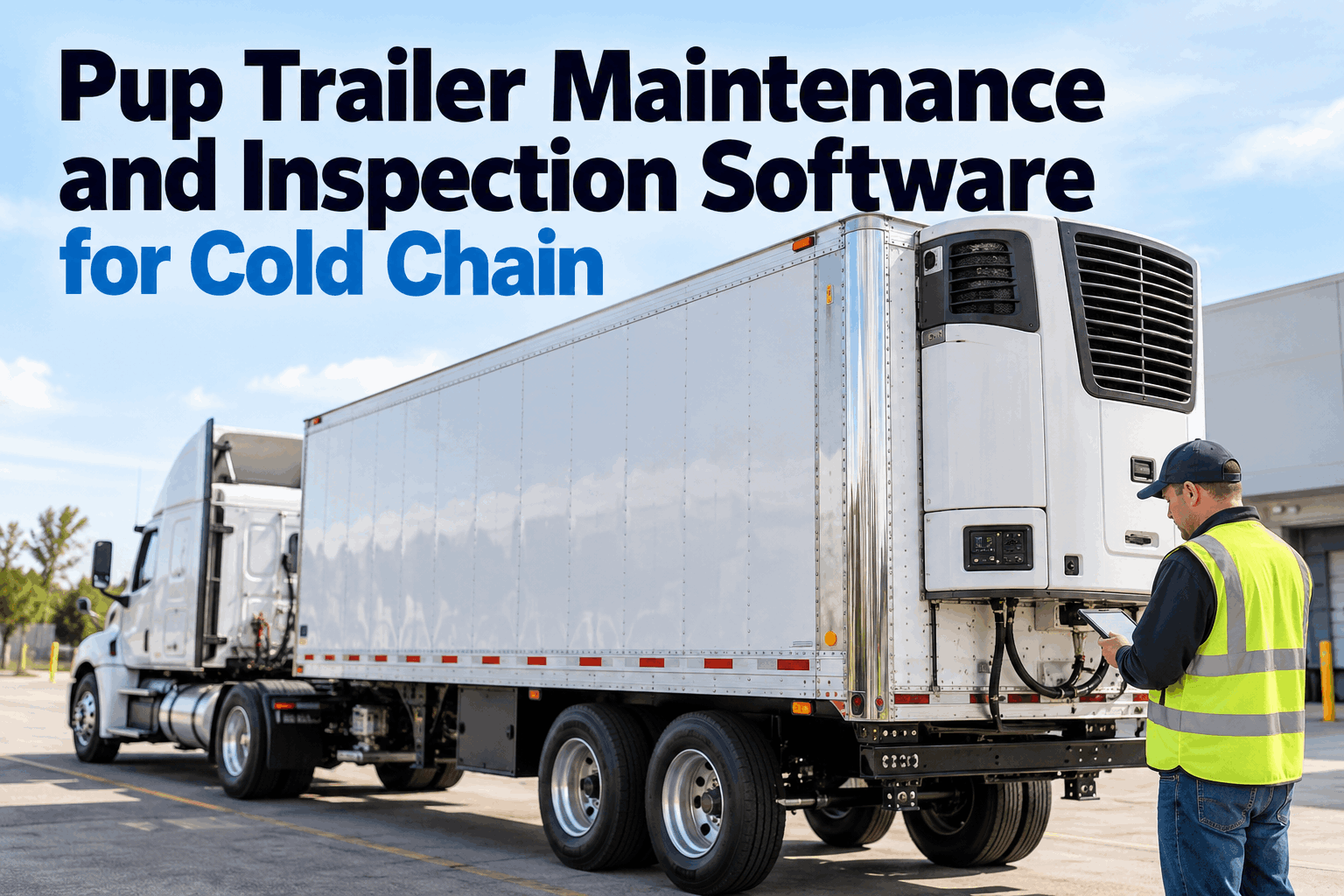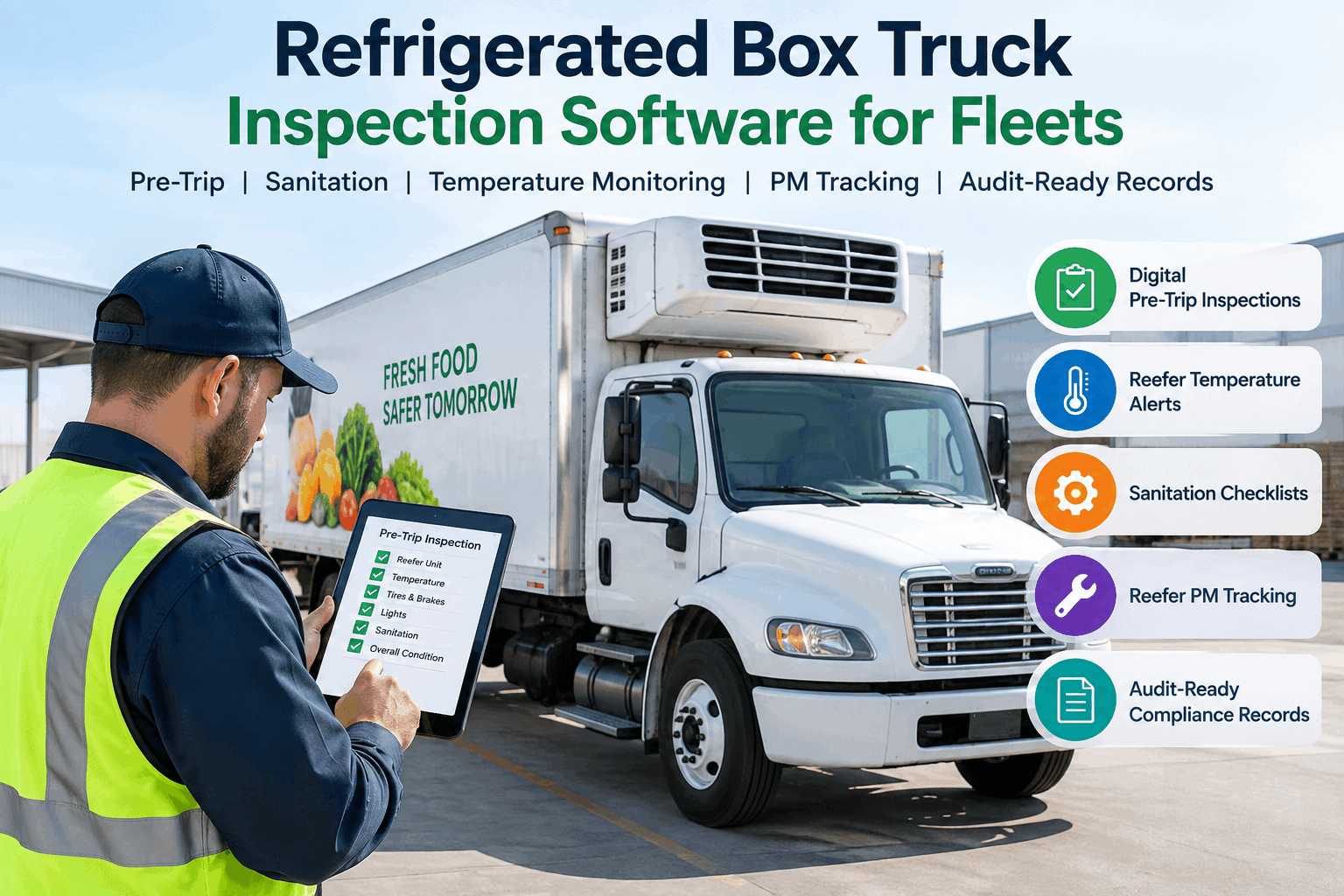
Wholesale food distributors, broadline grocery fleets, and regional refrigerated box truck operators navigate an unforgiving operational crossroads: balancing strict commercial motor vehicle pre-trip safety with complex sanitary food transport rules. Unlike dry freight vans, a refrigerated straight truck carries sensitive biological cargo where a cracked door seal, a lingering fish odor from a prior route, a blocked evaporator chute, or an unrecorded thermal setpoint deviation can ruin an entire multi-drop route. Traditional paper inspection sheets fail because drivers rush through generic checkboxes, skipping critical reefer-specific checks such as compressor oil level verification, standby electric plug testing, and pre-cooling temperature logs. Under the FDA Food Safety Modernization Act (FSMA) Sanitary Transportation of Human and Animal Food rule (21 CFR Part 1, Subpart O), carriers must prove vehicles are clean, sanitized, pre-cooled, and free from cross-contamination before loading. When inspections live on grease-stained clipboards, quality assurance managers cannot defend rejected loads or withstand federal food safety audits. Fleet Rabbit delivers dedicated refrigerated box truck inspection software that pairs mobile photo-verified pre-trip walkarounds with automated sanitation workflows, auxiliary engine-hour maintenance, and live temperature monitoring. Eliminate load rejections at receiving docks, streamline morning driver departures, and maintain audit-proof compliance across your distribution fleet. Book a Demo to see our refrigerated box truck inspection workflows in real time.
Refrigerated Box Truck Inspection Software for Fleets
An end-to-end technical inspection and sanitation management guide for perishable food fleets: replace generic pre-trip checklists with photo-verified sanitary washouts, automate reefer pre-cooling confirmation, track auxiliary compressor engine hours, and satisfy FDA FSMA audits seamlessly.
The Acute Vulnerabilities of Paper Checklists in Refrigerated Distribution
Refrigerated straight trucks operate under brutal urban delivery conditions: multi-stop dock drop-offs, persistent rear door openings, tight alley turns, and alternating cargo profiles ranging from raw poultry to fresh produce and ice cream. Relying on paper vehicle inspection reports introduces severe operational failure points. Sign up to modernize your refrigerated box truck inspection process.
The 4-Zone Refrigerated Box Truck Inspection Protocol
Fleet Rabbit replaces generic driver vehicle inspection reports with an interactive, photo-verified inspection workflow engineered specifically for temperature-controlled straight trucks. Book a demo to walk through our 4-zone mobile driver inspection flow.
- Engine Fluid Levels: Verification of auxiliary diesel engine oil, engine coolant, and refrigerant sight-glass bubbles.
- Belts & Pulleys: Visual inspection of alternator, water pump, and compressor drive belts for tension and cracking.
- Electric Standby Receptacle: Verification of shore-power electrical connection pins and safety ground wiring.
- Microprocessor Diagnostic Codes: Scanning the in-cab display for active Thermo King or Carrier Transicold fault codes. Sign up to capture reefer fault codes during driver pre-trip walkarounds.
- Door Gaskets & Seals: Checking for torn, stiff, or missing rubber gaskets along rear roll-up doors and side swing doors.
- Air Delivery Chute: Ensuring the flexible vinyl ceiling duct is unripped and unclamped to maintain front-to-rear air distribution.
- Wall Paneling & Scuff Liners: Inspecting seamless fiberglass liners for forklift punctures that allow moisture into foam insulation.
- Curtains & Bulkheads: Verifying secondary PVC strip curtains are intact to reduce air loss during multi-stop deliveries.
- Odor & Residue Audit: Mandatory confirmation that the interior is free of biological residues, raw meat fluids, or chemical odors.
- Floor Drain Clearance: Physical check that front and rear drain kazoos are clear of ice, dirt, and packaging plastics.
- Washout Photo Proof: In-app camera requirement capturing clean ribbed floor channels and scuff plates prior to loading. Book a demo to see our photographic sanitation audit modules.
- Allergen Clearance Log: Documenting specialized sanitizing washouts between incompatible cargo transitions.
- Digital Setpoint Matching: Confirming reefer controller temperature matches delivery manifest requirements.
- Pulldown Verification: Recording internal compartment probe reading after running unit for a mandatory 15-minute cycle.
- Operating Mode Check: Verifying unit is set to "Continuous" for fresh produce and meat, or "Cycle-Sentry" for frozen goods.
- Defrost Functionality: Manually initiating a short defrost cycle to verify heating elements and drain pan heater operation. Sign up to automate pre-cooling temperature capture.
The Closed-Loop Roadside Inspection & Maintenance Triage Pipeline
A digital inspection is only as effective as the maintenance actions it triggers. See how Fleet Rabbit turns reported driver defects into prioritized garage work orders in seconds.
Compliance Comparison: Paper Clipboards vs. Fleet Rabbit Platform
Evaluate the clear operational, legal, and food safety differences between traditional paper inspection logs and Fleet Rabbit’s connected inspection suite. Sign up now to explore all platform features.
| Inspection & Safety Capability | Fleet Rabbit Inspection Platform | Paper Checklists & Clipboards | Generic Commercial GPS Trackers |
|---|---|---|---|
| Subscription Rate | $5 / asset / month | High claim write-offs & manual labor | $25 – $45 / vehicle / month |
| Sanitation & Washout Proof | Time-stamped, mandatory photo capture | Subjective checkbox (unverified) | Not supported |
| Reefer Pre-Cooling Verification | Digital setpoint & probe correlation | Unrecorded or estimated on paper | GPS location only (no reefer check) |
| Auxiliary Engine-Hour Tracking | Automated compressor runtime PM | Ignored; tracks truck miles only | Truck odometer miles only |
| Offline Operational Usability | 100% functional offline in concrete docks | Functional on paper, lost during transit | Fails when cellular signal drops |
| FDA FSMA Audit Readiness | 1-click 12-month exportable digital dossier | Boxes of physical paper binders | Not compliant with food safety rules |
| Deployment & Onboarding | 14-day free trial, self-serve in 14 days | Not applicable | 1 to 3-year locked contract |
Cold-Chain Case Study: Metro Valley Cold Distribution
Learn how an urban wholesale food purveyor eliminated dockside load rejections and cut compressor breakdowns across 32 refrigerated box trucks. Book a demo to see how Metro Valley modernized their inspection workflows.
Operating 32 refrigerated box trucks delivering daily to over 240 grocery stores and institutional dining halls, Metro Valley Cold Distribution suffered from frequent dockside disputes. Receiving clerks rejected pallets of dairy and fresh meat due to elevated surface temperatures and occasional cargo odor complaints from prior seafood routes. Drivers completed paper inspection slips inconsistently, often failing to start the reefer unit until after leaving the warehouse gate.
By deploying Fleet Rabbit at $5/asset/month, the distributor introduced digital 4-zone mobile inspections with mandatory washout photos and automated pre-cooling verification. The app prevents drivers from completing dispatch clearance until internal probes confirm target temperatures have been held for at least 15 minutes. During their first year, product temperature rejections fell to zero, customer credit memo requests dropped by 88%, and the fleet saved $62,000 in avoided spoilage write-offs and reduced reefer repair costs.