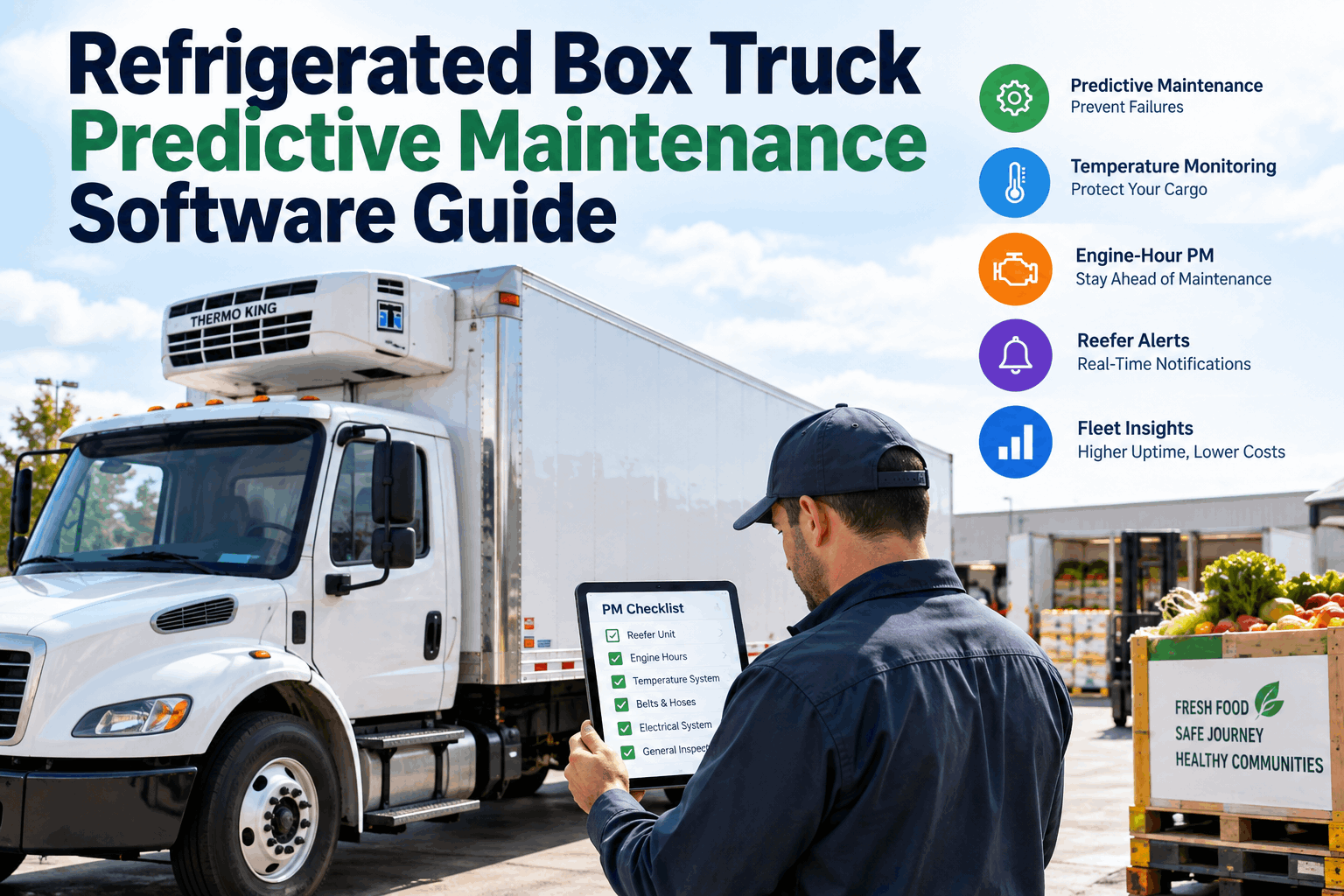
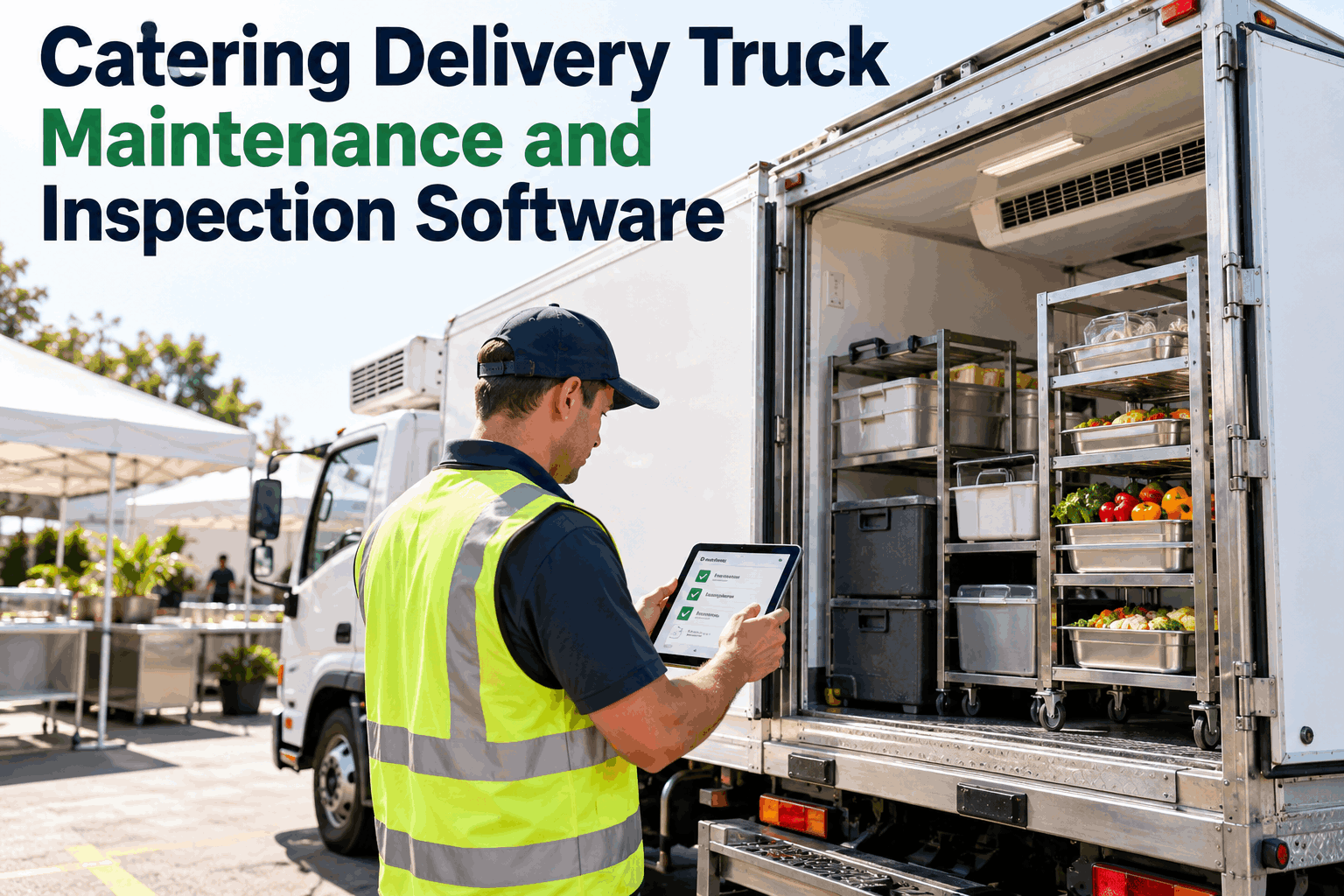
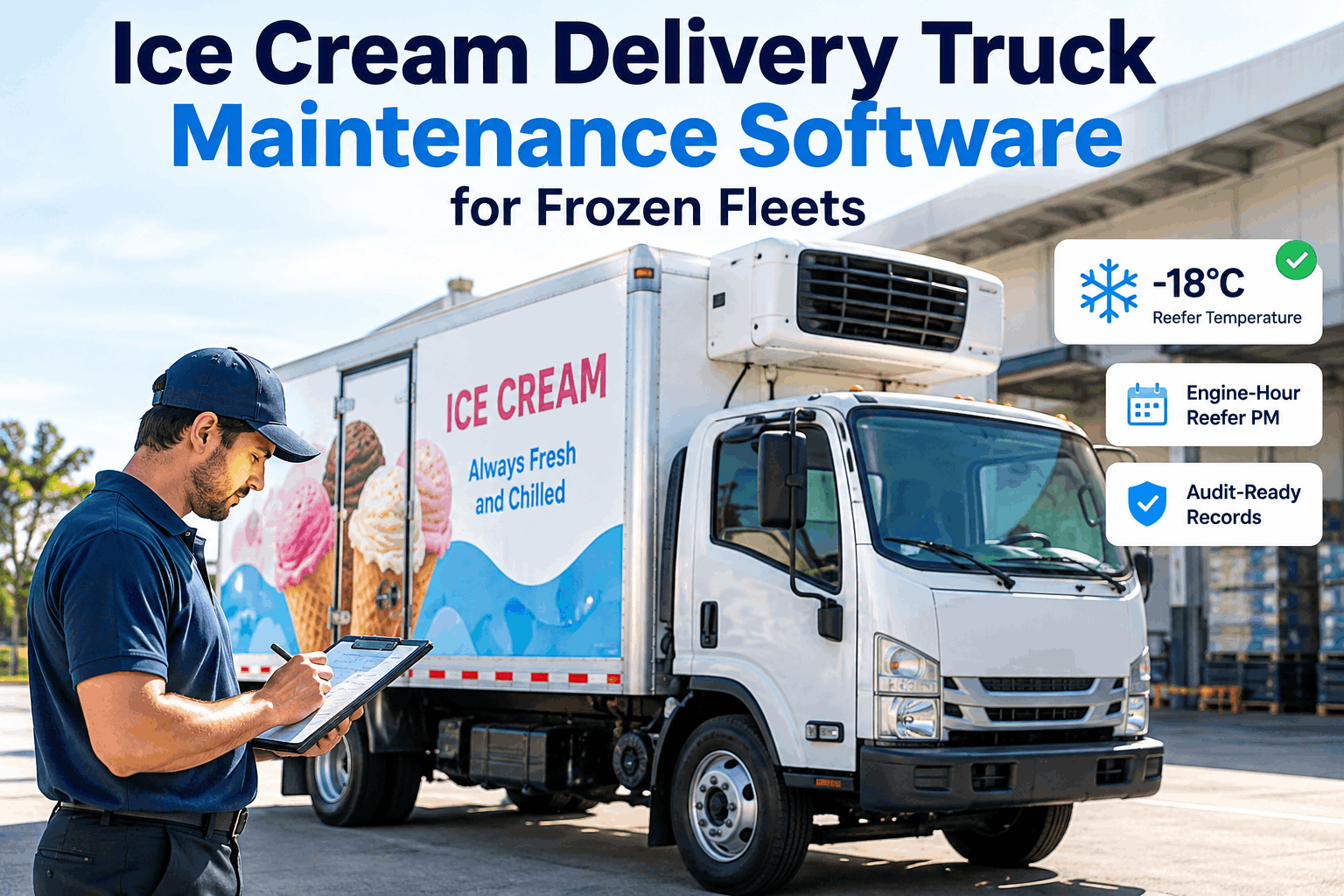
Wholesale food purveyors, perishable food distributors, and refrigerated fleet maintenance directors operate under stringent temperature safeguards where unexpected mechanical downtime directly compromises perishable cargo. In multi-stop urban food delivery, straight trucks face severe thermal duty cycles: continual rear door openings, long idling periods at store loading bays, and alternating commodity temperatures between deep-freeze dairy and fresh produce. While traditional fleet management tools schedule servicing around vehicle odometer mileage, refrigerated straight trucks carry two separate engines that wear at radically different rates: the primary truck diesel powertrain and the auxiliary refrigeration compressor unit. A box truck driving only 40 miles across city traffic may run its nose-mount reefer compressor for nine continuous hours under heavy thermal load. Predictive maintenance software eliminates the failure-prone guesswork of calendar intervals by ingesting live J1939 CAN-bus diagnostics, auxiliary diesel runtime hours, vibration telemetry, compressor head pressure, and alternator voltage curves. Intercept mechanical anomalies weeks before an in-service compressor seizure occurs, preserve perishable cargo margins, and ensure full compliance under FDA FSMA regulations. Book a Demo to see our predictive maintenance software for refrigerated box trucks.
An engineering and financial management guide for cold-chain fleet operators: decouple auxiliary compressor engine runtime from truck mileage, deploy real-time CAN-bus anomaly modeling, eradicate en-route cooling system failures, and automate shop work orders.
Live Telemetry Ingestion Architecture
52%
Fewer In-Service Spoilage Claims
Predictive sensor modeling detects cooling power degradation before internal temperatures drift.
100%
Runtime Decoupling
Auxiliary compressor maintenance intervals trigger on engine operating hours, not truck miles.
$5
Per Asset / Month
Transparent SaaS subscription covering both truck telematics and transport refrigeration maintenance.
Shift from Emergency Highway Refrigeration Repairs to Automated Uptime
Capture live compressor runtime hours, intercept micro-refrigerant leaks, and empower shop technicians with automated work orders before high-value food loads spoil.
The Costly Structural Blind Spots of Conventional Reefer Servicing
Standard fleet maintenance software was architected for dry freight parcel vans and over-the-road tractor trailers. When applied to urban refrigerated straight trucks, conventional schedule-based maintenance exposes distributors to recurring catastrophic breakdown costs. Sign up to modernize your refrigerated truck maintenance schedules.
Blind Spot 01
Odometer Distance vs. Auxiliary Compressor Workload
A commercial delivery truck stuck in inner-city gridlock moves fewer miles, yet its nose-mounted refrigeration unit runs at high RPM to combat ambient solar load. Servicing refrigeration components based purely on truck driving distance leaves compressor drive belts, alternators, and oil filters neglected for months. Book a demo to inspect our dual-engine maintenance schedules.
Vibrations from stop-and-go city driving cause microscopic fractures in refrigeration copper piping and flare fittings. Gradual Freon loss forces the compressor to run longer and hotter, eventually causing cylinder head warping and internal valve failure on summer delivery routes.
Blind Spot 03
Electric Standby Receptacle & Phase Voltage Imbalance
Overnight warehouse shore-power charging often suffers from voltage drops across older distribution panels. When a truck plugs into faulty three-phase standby power, the electric motor overheats, burning out the primary motor winding before morning dispatch. Sign up to monitor shore-power voltage health.
When a reefer unit seizes during an active delivery route, transferring 14 pallets of thawing perishables requires emergency roadside reefer cross-docking. If ambient temperatures exceed regulatory limits, the entire load is condemned, accompanied by expensive towing bills and lost accounts.
Maintenance Methodology Comparison: Reactive vs. Preventive vs. Predictive
Capture direct telematics from Thermo King, Carrier Transicold, and Zanotti controllers. Log total auxiliary diesel hours, fuel burn rate, glow plug resistance, and engine oil viscosity curves, automatically scheduling filter flushes based on true mechanical workload.
Pillar 02
Thermal Pulldown Velocity & Efficiency Tracking
Measure how many minutes the reefer unit takes to pull down a 24-foot insulated box from 70°F to 34°F. Degradation in pulldown speed indicates dirty condenser coils, failing thermal expansion valves (TXV), or worn compressor reed valves before road failures occur. Book a demo to inspect our thermal pulldown analytics.
Pillar 03
Electrical Cranking Voltage & Alternator Harmonic Analysis
Monitor starter battery voltage sags during auxiliary engine cranking and measure direct-drive alternator ripple currents. Detecting micro-voltage drops isolates weak batteries and failing brush assemblies weeks before units fail to restart on urban delivery routes.
In-cab telematics devices query the truck engine and refrigeration microprocessor every 30 seconds, capturing suction pressures, fluid temperatures, and active error codes.
Phase 02
Cloud Machine-Learning Triage
Algorithms evaluate incoming signals against baseline thermal models. Anomalies—such as extended defrost recovery times—trigger high-priority risk warnings before setpoints drift.
Phase 03
Automated Shop Work Order
The system generates a repair order inside the shop terminal, reserving required parts (such as a replacement solenoid or belt) from inventory before the truck returns to the terminal. Sign up to automate storeroom parts staging.
Phase 04
Mobile Mechanic Execution
Shop mechanics complete the guided diagnostic procedure on mobile tablets, verify post-repair pulldown curves, and return the asset to active dispatch status with cleared fault codes.
Architecture Comparison: Manual Records vs. Fleet Rabbit Platform
Operating 36 refrigerated straight trucks delivering meat, dairy, and frozen bakery goods to over 300 restaurants daily, Great Lakes Foodservice Logistics struggled with summer mechanical failures. During July heatwaves, trucks experienced four roadside compressor clutch seizures, resulting in three condemned food loads worth $48,000 and thousands more in emergency towing and mechanic overtime. The maintenance garage was servicing refrigeration units every 6,000 truck road miles, unaware that heavy stop-and-go delivery routes were doubling auxiliary compressor operating hours.
By implementing Fleet Rabbit at $5/asset/month, the distributor decoupled auxiliary compressor maintenance from chassis miles, tracking exact refrigeration operating hours and compressor suction pressures in real time. Early thermal drift alerts caught a micro-refrigerant leak and a slipping alternator belt across two trucks during normal warehouse staging, enabling mechanics to fix the components for under $200 before the vehicles departed. Over 12 months, in-transit spoilage claims dropped to zero, emergency repair overtime fell by 52%, and the fleet saved $76,000 in prevented component damage and reduced insurance loss-run reserves.
Frequently Asked Questions
Why is mileage-based servicing ineffective for refrigerated box trucks?
Refrigerated box trucks have two independent mechanical workloads: the truck powertrain and the refrigeration compressor unit. On multi-stop urban delivery routes, a truck might drive only 35 miles across eight hours while the reefer unit runs continuously under heavy thermal stress. Scheduling maintenance based on truck driving distance ignores actual compressor wear, causing drive belts, alternators, and engine oil to operate far past safe service thresholds.
Which transport refrigeration controllers can integrate with Fleet Rabbit?
Fleet Rabbit connects with major commercial transport refrigeration units, including Thermo King SmartReefer (SR-2, SR-3, SR-4), Carrier Transicold APX and Cab Command controllers, and Zanotti direct-drive systems. We capture compressor hours, active and pending fault codes, compartment temperatures, battery voltage, and operating modes directly via standardized CAN-bus and serial interfaces.
Can mechanics and drivers use the mobile application without cellular connectivity?
Yes. Fleet Rabbit features an offline-first mobile architecture. Drivers and mechanics can perform pre-trip inspections, record temperature readings, review predictive diagnostic alerts, and update work orders inside concrete distribution facilities, basement staging docks, or remote rural areas without internet reception. All recorded data caches securely on the device and syncs automatically once connectivity returns.
How does predictive maintenance support FDA FSMA compliance?
Under FDA 21 CFR Part 1 Subpart O (Sanitary Transportation Rule), carriers must prove that continuous temperature control was maintained and that refrigeration equipment was properly calibrated and maintained. Fleet Rabbit automatically logs every maintenance action, compressor runtime hour, sensor calibration record, and in-transit temperature reading, generating 1-click audit dossiers ready for regulatory review.
What are the pricing details and contract terms for Fleet Rabbit's software?
Fleet Rabbit is priced at a flat rate of $5 per active refrigerated vehicle per month billed annually. This includes complete access to predictive maintenance analytics, auxiliary engine-hour PM tracking, live multi-zone temperature monitoring, mobile technician work orders, and FSMA compliance reporting. We offer a 14-day free live trial on up to 3 assets with zero setup fees or long-term contract lock-ins.
Ready to Deploy Predictive Maintenance Across Your Refrigerated Fleet?
Decouple auxiliary engine hours, intercept mechanical failures early, and ensure 100% cold-chain uptime for just $5/asset/month.