Protecting a load in a refrigerated cargo van comes down to one question that most fleets cannot actually answer in real time: is that box holding temperature right now, this exact minute, on this exact route. A dashboard that only refreshes at the end of the day cannot protect anything, it can only confirm damage after it happened. Real-time monitoring paired with engine-hour reefer PM is what turns a small refrigerated van from a liability into a dependable cold-chain asset, and the difference shows up in fewer rejected loads, fewer emergency repairs, and a maintenance bill that stops arriving as a surprise. This page walks through what a live monitoring view should actually show, how the two common reefer systems on cargo vans differ, and the cadence that keeps a small unit protected through years of daily stop-and-go service.
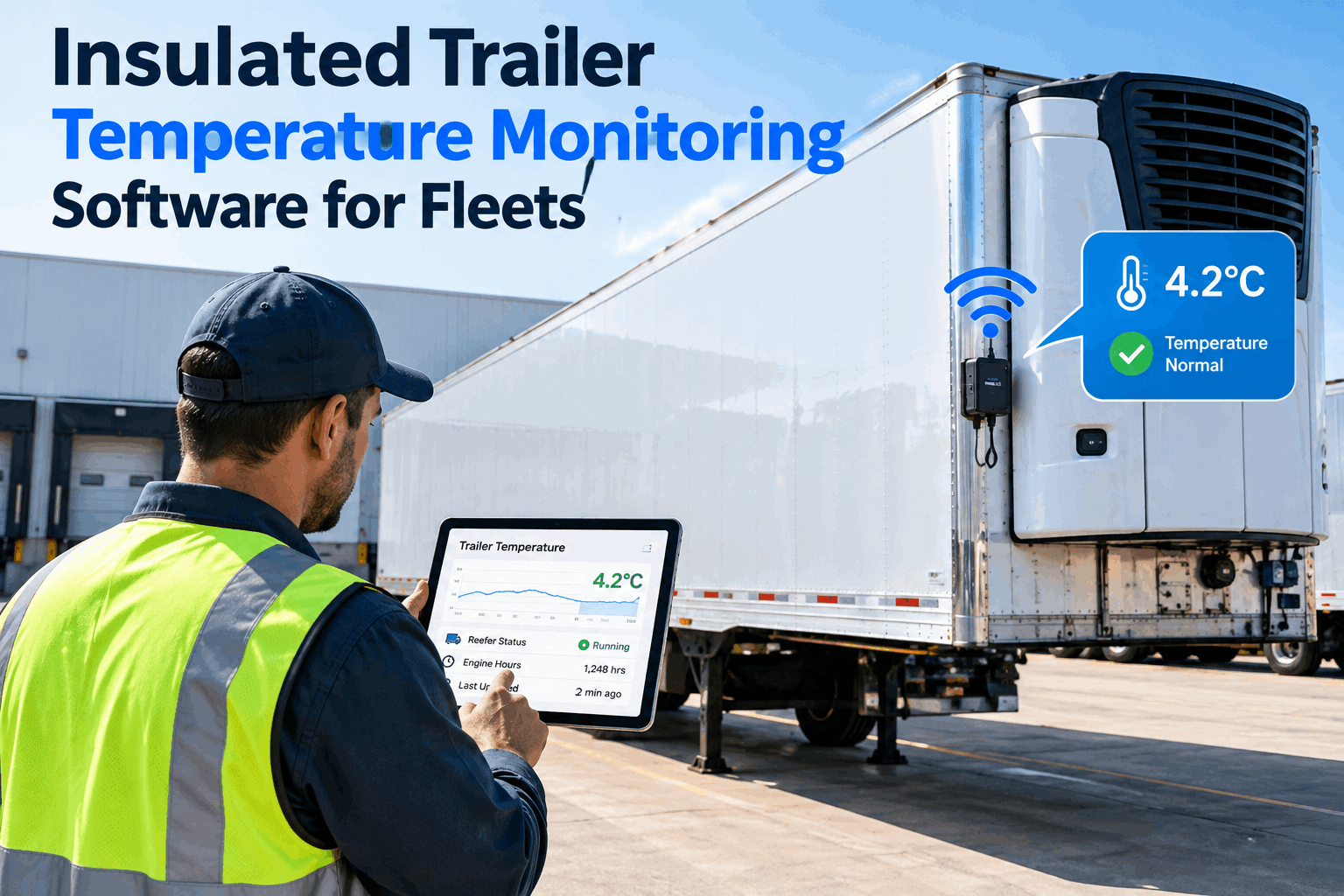
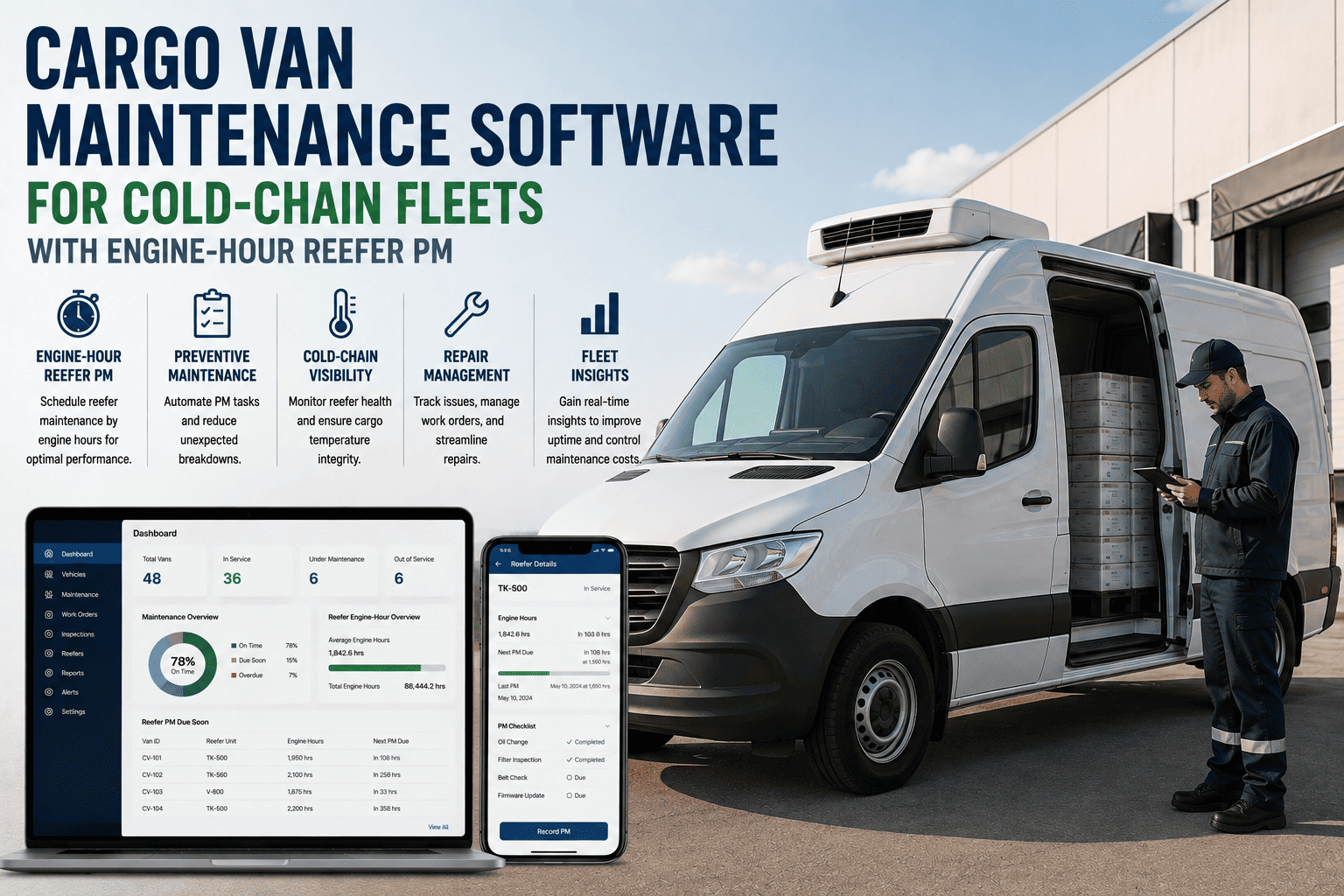
That single screen is the difference between managing a fleet and hoping nothing goes wrong with it. Setpoint and current temperature side by side catch drift the moment it starts, reefer hours next to a service countdown means PM never sneaks up on a shop, and a status badge tells a dispatcher in one glance whether a van needs attention before the next stop. Fleets ready to see their own vans on a screen like that can sign up and connect existing sensors without touching a single wire on the reefer unit itself.
- Frozen brine plates hold temperature without the engine running
- Quiet, no compressor cycling on stop-and-go routes
- Slower recovery after a long or hot delivery day
- PM centers on plate recharge time and freezer unit health
- Runs continuously off the van's engine or standby power
- Faster recovery after frequent door openings
- More moving parts: compressor, condenser, drive belt
- PM centers on engine-hour service intervals like a mini reefer trailer
Choosing between the two is a route decision as much as an equipment decision. A short, high-stop urban route with frequent door openings tends to favor a mechanical unit's fast recovery, while a long, lower-stop route where the van sits parked between deliveries can run comfortably on eutectic plates. Whichever system a fleet runs, book a demo to see how each one's maintenance plan gets tracked separately instead of forced into one generic van service schedule.
Connect eutectic and mechanical units alike and get one dashboard for temperature, hours, and service status.
A cadence like that only holds up if the hour counts behind it are actually accurate, which is where most paper-based programs quietly fail. A van sitting in a depot for a week logs zero reefer hours even while its chassis odometer keeps racking up service miles on unrelated trips, so a fleet manager who wants to sign up for real service accuracy needs the reefer's own hour meter driving the schedule, not the van's.
The value of a three-tier alert system is that most problems get handled at the Watch stage, quietly, before they ever become a Critical event that risks the load. A driver who gets a Watch notice can adjust the route, check a door seal, or radio dispatch before a delivery is ever in question, which is a very different experience from finding out at the last drop that a load ran warm for two hours. This kind of early catch is exactly what fleets are protecting when they book a demo of tiered alerting instead of a single all-or-nothing warning light.
That shift, from reacting after the fact to catching problems while there is still time to act, is the entire value case for pairing real-time monitoring with engine-hour PM on a cold-chain van fleet. It protects the product, it protects the maintenance budget, and it protects the relationship with every customer waiting on a delivery that has to arrive at the right temperature. Fleets still running vans on guesswork and a paper log are the ones most exposed the next time a route runs long, so this is a good moment to sign up and get the first van connected.
Book a demo and see real-time monitoring and engine-hour reefer PM working together on your van fleet.