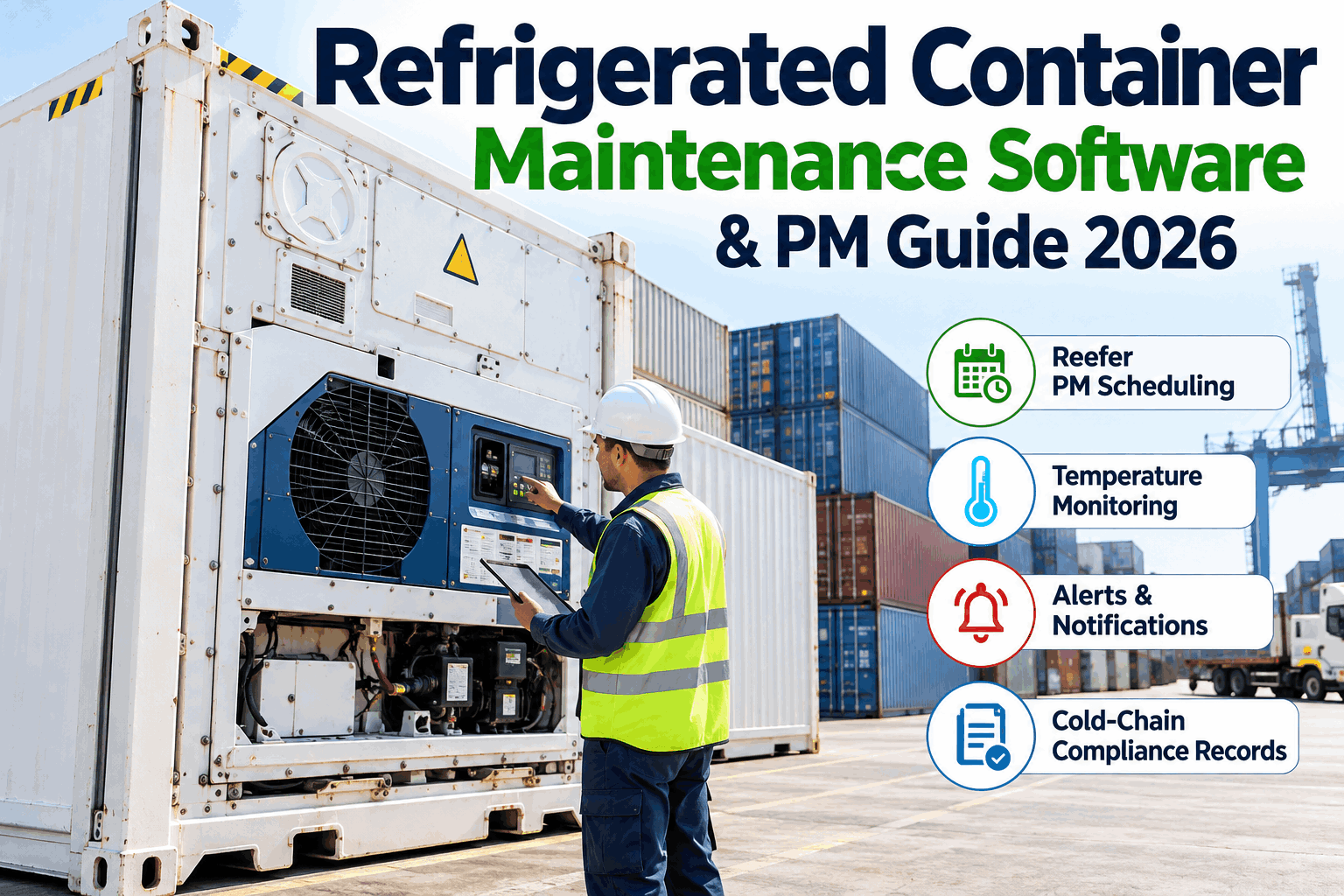
A refrigerated container changes hands more often than almost any other cold-chain asset. It moves from ship to terminal to rail to truck to warehouse, and its power source changes at nearly every step. Every handoff is a chance for a setting to be missed or a service date to slip. See how cold-chain fleets keep reefer equipment and records in one place so the container arrives as cold as it left.
Refrigerated Container Maintenance Software for Every Handoff in the Journey
Track gensets, chassis and tractors on hours, run digital inspections at every handoff, and keep temperature and service records ready.
Who Actually Maintains What
Ownership varies by contract. Containers are often owned or leased by shipping lines or lessors, while carriers typically run the tractors, chassis and gensets. Knowing the split tells you what belongs on your schedule.
The gap most fleets fall into
The genset runs on engine hours, the chassis on inspections and the tractor on miles. Three clocks on one move, and none of them tied to the container's own record.
Track each as its own asset in FleetRabbit, and the whole rig shows up as one schedule.
Three Gates, Three Checks
Confirm setpoint, plug-in status and any alarms shown on the unit. Inspect chassis and genset before leaving.
Watch genset fuel and running status. Alerts flag due-soon service or a temperature drift.
Record arrival condition and reconnect power. Log any defect before the equipment is returned.
One record for the whole journey
Put your gensets, chassis and tractors on live schedules, or let us walk you through it.
The Genset Hour Ruler
Gensets are serviced by engine hours, not miles. A drayage tractor can sit for hours with the genset running and the odometer barely moving.
The Inspection Board
Container pre-trip inspection (PTI) practices and chassis inspection rules vary by owner, contract and jurisdiction. Follow the requirements that apply to your operation.
Who Hears About a Problem, and When
Temperature alerts are available where your telematics or sensor provider supplies temperature data.
Myth or Fact?
What FleetRabbit Brings to the Rig
Frequently Asked Questions
Keeping the equipment around the container reliable: the genset, chassis and tractor, plus inspection and records at each handoff. The container's own refrigeration unit is often serviced by its owner or lessor.
The genset runs while the truck may be stationary, so its wear follows hours, not miles.
You can record inspections and condition at each handoff, which helps if a dispute arises.
Yes, where your telematics or sensor provider supplies temperature data.
Yes. Start free with three vehicles and add more as you grow.
Every Handoff Documented. Every Service On Time.
Gensets, chassis and tractors on live schedules, with records ready when a customer asks.