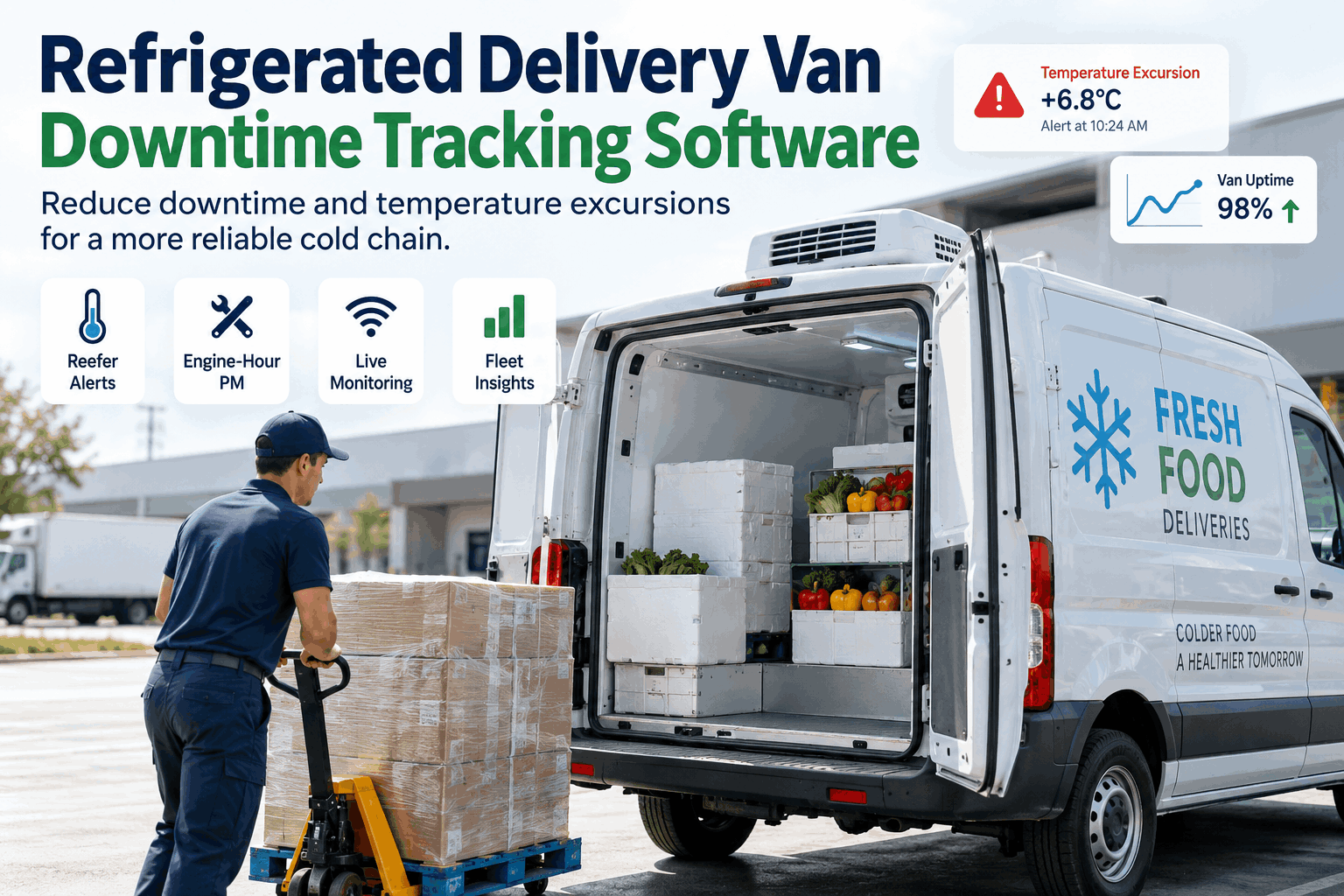
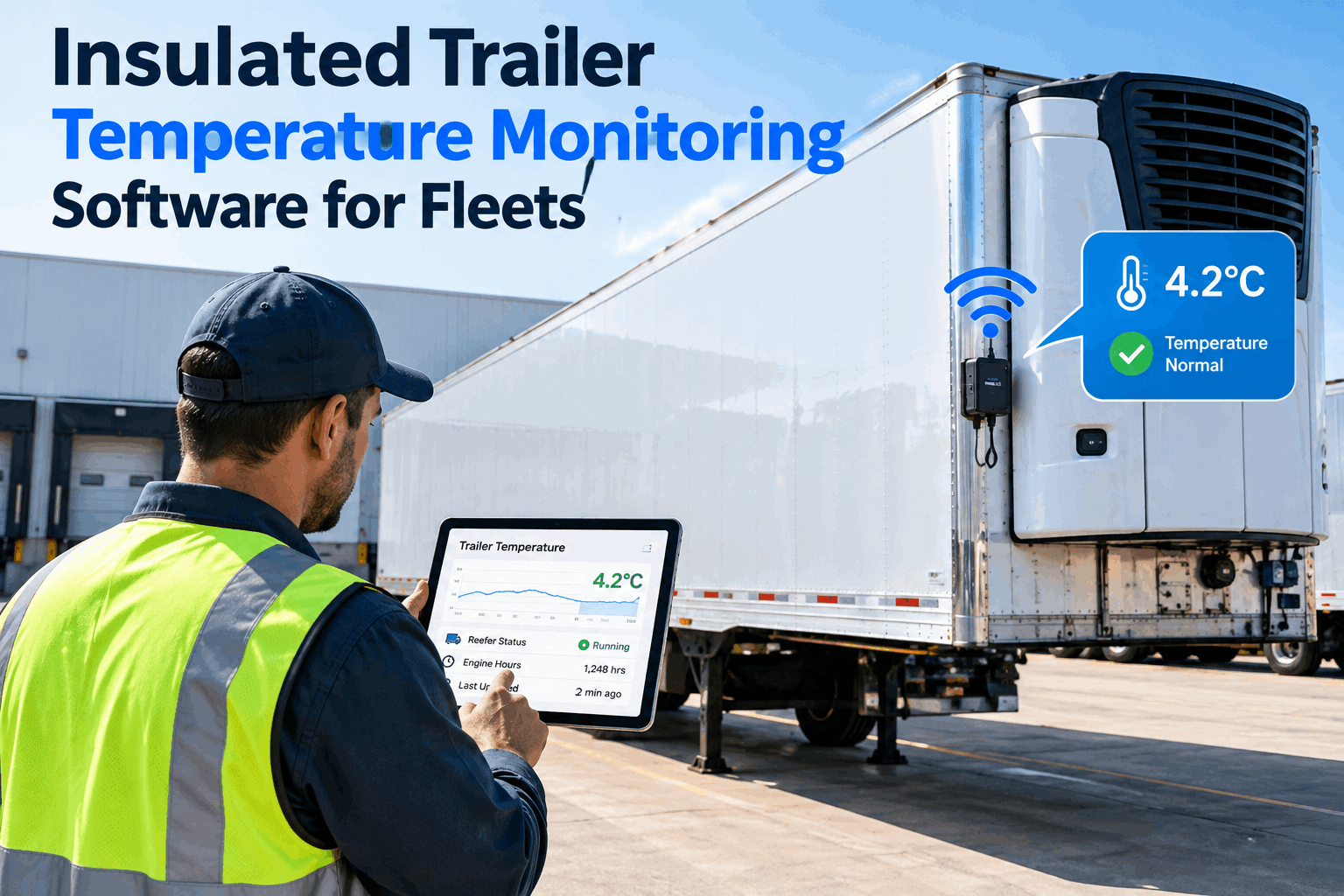
Refrigerated Delivery Van Downtime Tracking Software
Direct-to-consumer perishable purveyors, urban culinary logistics managers, and multi-drop temperature-controlled courier operations face an intense operational risk: refrigerated delivery van downtime directly results in catastrophic biological product loss. Unlike dry freight vans that can sit idle curbside with no threat to their parcels, a refrigerated delivery van carrying artisan cheeses, fresh meat, specialty pharmaceuticals, or frozen prepared meals is a mobile refrigeration ecosystem under continuous thermal stress. A broken 12V electrical standby inverter, an unmonitored direct-drive compressor belt snap, or a failing rear-door microswitch does not simply delay delivery; it causes rapid cargo compartment temperature excursions that trigger product condemnation, severe margin write-offs, and compliance violations under the FDA Food Safety Modernization Act (FSMA). Traditional fleet tracking systems monitor vehicle road miles and simple highway breadcrumbs, remaining completely blind to auxiliary cooling hours, multi-drop door-open recovery curves, and compressor duty cycles. Fleet Rabbit delivers dedicated refrigerated delivery van downtime tracking software engineered to intercept thermal deviations before product integrity is lost. Pair live Bluetooth Low Energy (BLE) multi-zone temperature telemetry with direct-drive compressor run-hour tracking, automated door dwell analytics, and rapid mechanic work orders. Eliminate roadside spoilage losses, preserve final-mile customer trust, and maintain continuous cold-chain compliance. Book a Demo to see our refrigerated van downtime tracking platform live.
Urban Final-Mile Logistics & Cold-Chain Telemetry
Refrigerated Delivery Van Downtime Tracking Software
An actionable engineering and operations playbook for urban refrigerated delivery van fleets: pair sub-minute multi-zone BLE microclimate probes with auxiliary direct-drive compressor monitoring, correlate door-open dwell times, eliminate temperature excursions, and protect customer delivery windows.
Sub-minute predictive alerts warn drivers before internal air drifts past critical limits.
0
En-Route Spoiled Drops
Runtime-based compressor belt PM eliminates sudden roadside refrigeration failures.
< 30 sec
Door Dwell Notification
Correlates multi-drop delivery door openings against thermal pulldown recovery times.
$5
Per Delivery Van / Month
Predictable all-inclusive SaaS subscription covering telematics, routing, and maintenance.
Protect Your Perishable Delivery Margins from Unexpected Van Downtime
Eliminate delivery drop rejections, track actual compressor operating workload, and empower drivers with real-time temperature excursion alerts effortlessly.
The Operational Dilemma: Urban Delivery Van Thermal Vulnerabilities
Refrigerated cargo vans operate under far harsher operational conditions than 53-foot long-haul reefer trailers. While a tractor-trailer stays sealed for hundreds of highway miles, an urban delivery van stops 40 to 80 times per shift, swinging rear and side doors open into intense summer heat. Operating without dedicated downtime and excursion software guarantees compounding financial losses. Sign up to monitor temperature excursions across your urban delivery van fleet.
Vulnerability 01
Direct-Drive Compressor Belt Snaps on Highway Lanes
Most refrigerated delivery vans run direct-drive compressors mounted directly to the van's main engine crankshaft pulley. Because these auxiliary belts operate under continuous high RPM cycling, tracking maintenance by vehicle odometer miles misses severe belt fatigue, causing unexpected mid-route snaps that leave cargo completely uncooled. Book a demo to inspect our direct-drive compressor maintenance tracking.
Vulnerability 02
Cumulative Multi-Drop Door Dwell Temperature Creep
Each time a driver opens the rear door for two minutes in 90°F weather, warm ambient air rushes in. If the van only drives three blocks to the next stop, the refrigeration unit cannot pull the temperature back down to 34°F before the door opens again. After ten consecutive stops, internal air reaches 50°F, spoiling fresh dairy and meat silently.
Vulnerability 03
12V Auxiliary Standby Inverter Overheating
Vans equipped with electric standby overnight shore-power systems utilize complex DC-to-AC inverters. In hot distribution depots, faulty cooling fans cause inverters to trip off overnight. Drivers arrive to find trucks uncooled and morning routes stranded at the loading dock. Sign up to monitor electric standby charging status.
Vulnerability 04
Catastrophic FSMA Audit and Customer Chargeback Fines
When high-value commercial restaurants, specialty grocers, or meal-kit subscribers test carton exteriors upon arrival and detect elevated temperatures, shipments are rejected. Without an unalterable digital transit log, distributors absorb the write-off and face steep regulatory compliance inquiries.
The 4 Pillars of Refrigerated Van Downtime & Excursion Prevention
Capture actual compressor clutch engagement runtime directly through CAN-bus telematics. Decouple reefer maintenance from truck road miles, automatically triggering compressor belt tensioning, idler pulley checks, and refrigerant leak sweeps based on genuine operating workload. Sign up to track auxiliary compressor engine hours.
Pillar 02
Multi-Zone Wireless BLE Temperature Probes
Deploy compact, NIST-traceable Bluetooth Low Energy sensors at the front evaporator bulkhead, center core, and rear door threshold. Probes stream microclimate readings every 30 seconds to the in-cab gateway without requiring holes to be drilled through insulated van panels.
Pillar 03
Intelligent Door Dwell & Pulldown Analytics
Magnetic door sensors correlate rear opening durations with delivery stop geofences. The platform differentiates between standard curbside drop-offs and genuine refrigeration failures, tracking thermal recovery speeds and alerting drivers if temperatures fail to pulldown within established windows. Book a demo to test our smart thermal recovery algorithms.
Pillar 04
1-Click FSMA Audit Handover Dossiers
Every temperature reading is cryptographically stamped with satellite GPS coordinates and UTC timestamps. Drivers export verified delivery certificates on their smartphones for instant receiver sign-off, protecting your business against false damage claims. Sign up to generate audit-ready digital delivery dossiers.
The Closed-Loop Excursion Triage & Downtime Workflow
Wireless BLE sensors ping compartment temperature and humidity every 30 seconds while the gateway monitors compressor clutch status and battery voltage.
Step 02
Predictive Thermal Drift Triage
If cargo hold temperature climbs by more than 1.5°F over five minutes while doors are closed, the cloud engine detects an active cooling deficit before critical thresholds are breached.
The system highlights nearest cold-storage cross-dock hubs for cargo transfer if necessary and automatically opens a priority repair ticket in the maintenance garage.
Platform Comparison: Generic Trackers vs. Fleet Rabbit Reefer Suite
Urban Gourmet Distributor Eliminates In-Transit Spoilage Across 24 Delivery Vans
Operating 24 refrigerated high-roof cargo vans delivering fresh cheeses, charcuterie, and chilled organic seafood to fine-dining restaurants and specialty grocers, Artisan Provisions Express struggled with summer cargo claims. During dense urban delivery routes with frequent stops, internal temperatures routinely crept from 34°F to 48°F. Receiving chefs with handheld thermal probes rejected entire deliveries, costing the company over $70,000 in condemned goods and damaged client relationships.
By implementing Fleet Rabbit at $5/asset/month, the carrier deployed three wireless BLE temperature sensors per van and linked direct-drive compressor runtime to shop maintenance schedules. Real-time door dwell notifications alerted drivers if doors remained open past two minutes, and automated thermal drift alerts caught a failing compressor clutch during morning staging, allowing mechanics to replace a slipping drive belt before departure. Over 12 months, temperature excursions dropped by 64%, customer delivery acceptance reached 99.8%, and the company saved $58,000 in avoided food waste and emergency repair calls.
Frequently Asked Questions
Why do refrigerated cargo vans experience more temperature excursions than large box trucks?
Refrigerated vans have a much smaller internal cubic air volume compared to large straight trucks. When a driver opens the rear door in warm weather, nearly 80% of the cold air volume escapes in under 30 seconds. On high-density urban routes with 40 to 60 drops per day, the refrigeration unit frequently lacks enough driving transit time between stops to pull the air back down to safe holding temperatures, causing cumulative thermal creep.
How does compressor engine-hour tracking reduce delivery van downtime?
Most refrigerated delivery vans utilize direct-drive compressors powered by an auxiliary drive belt connected to the van's primary engine. In city traffic, a van might drive only 30 miles in a day while the compressor runs under full thermal load for eight hours. Scheduling servicing based on vehicle road miles severely neglects auxiliary belts, idler pulleys, and refrigerant levels. Tracking compressor operating hours ensures belts and pulleys are replaced before snapping mid-route.
Can the software monitor overnight electric standby shore-power charging?
Yes. Fleet Rabbit tracks battery voltage, line voltage, and compartment temperatures while vehicles are plugged into warehouse 110V/220V electric standby power overnight. If an electrical breaker trips or an inverter overheats during the night, the platform fires automated alerts to warehouse dispatchers, preventing drivers from arriving in the morning to find warm, spoiled cargo.
Can drivers and dispatchers access temperature graphs without cellular reception?
Yes. Fleet Rabbit features an offline-first architecture. All BLE probe readings, door open/closed events, and vehicle diagnostic codes buffer locally on the in-cab gateway and driver smartphone app. Drivers can view real-time microclimate conditions via local Bluetooth connection inside concrete loading bays or underground parking structures, and all buffered data auto-syncs to dispatch the moment cellular connectivity returns.
What are the pricing details and contract terms for Fleet Rabbit's software?
Fleet Rabbit is priced at a flat rate of $5 per active refrigerated delivery van per month billed annually. This gives complete access to downtime tracking analytics, live wireless temperature probe monitoring, direct-drive compressor PM scheduling, mobile driver proof-of-delivery tools, and FSMA compliance archives. We offer a 14-day free live trial on up to 3 assets with zero setup fees or long-term locked contracts.
Ready to Eliminate Temperature Excursions Across Your Refrigerated Van Fleet?
Deploy sub-minute wireless temperature monitoring, automate compressor maintenance, and protect perishable product margins for just $5/asset/month.