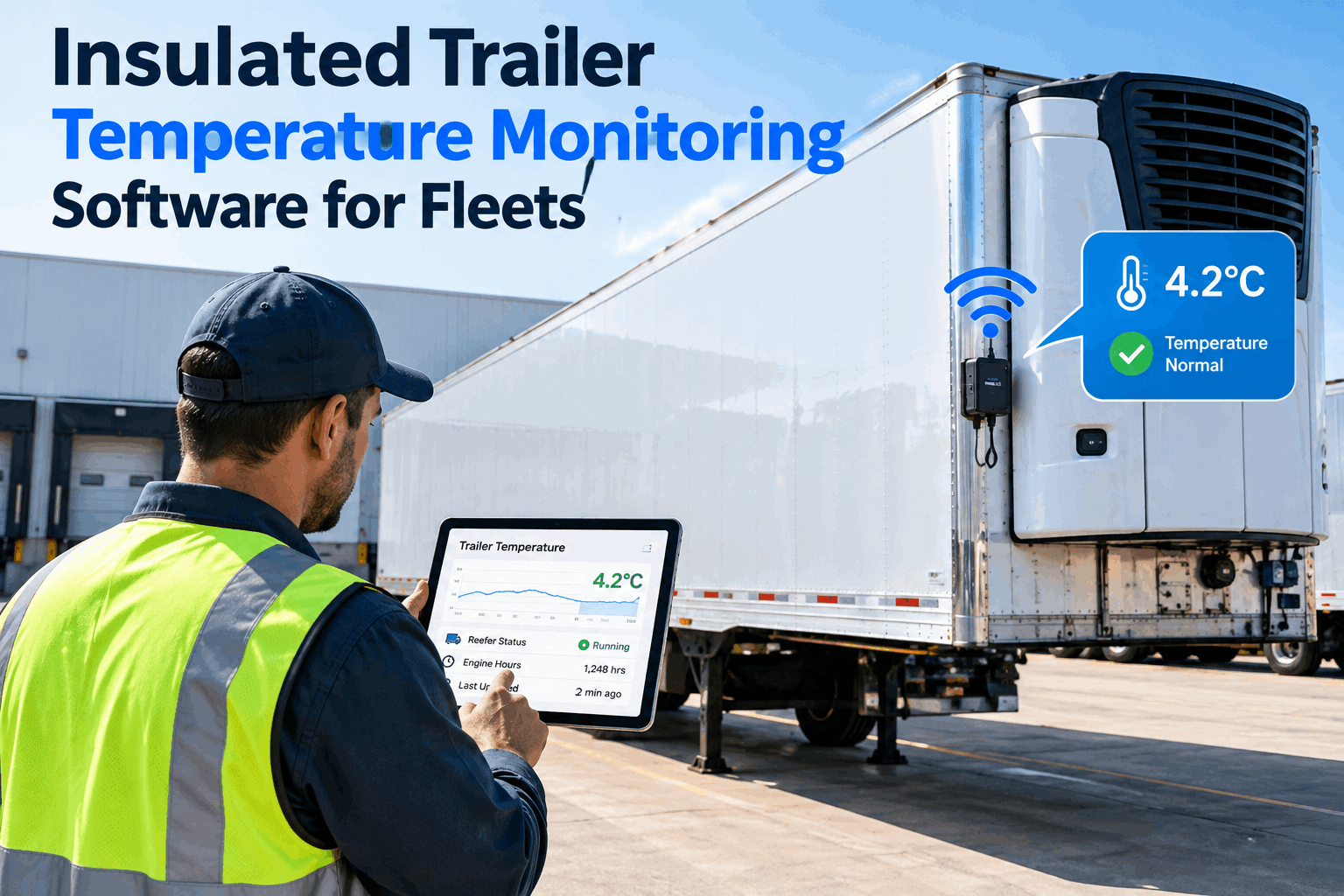
Real-time temperature monitoring
Continuous readings across the full route with alerts the moment a van drifts out of range.
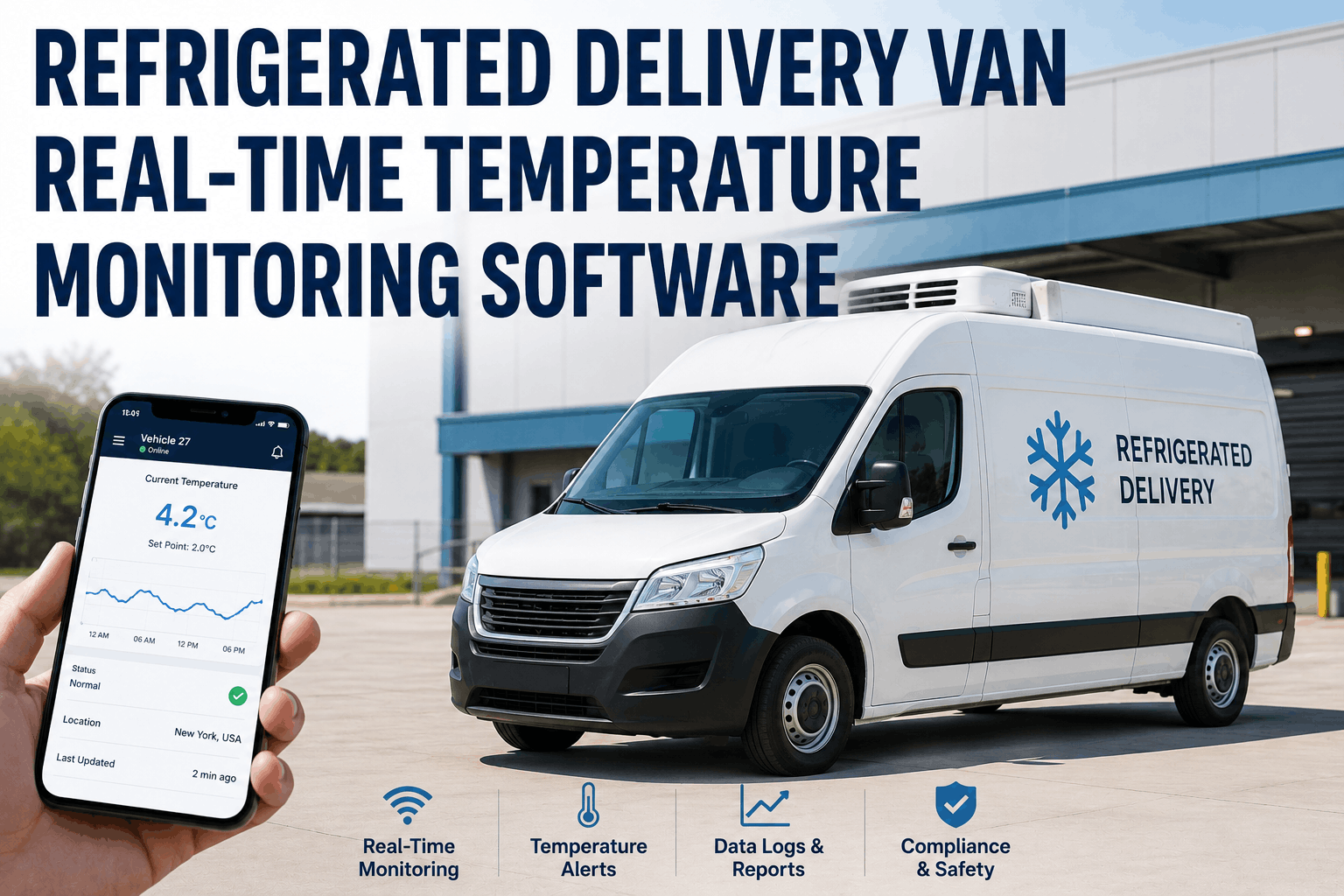
A reefer trailer holds one temperature from origin to one delivery. A refrigerated delivery van holds that same promise across fifteen or twenty stops, opening its doors at every single one. Each stop is a small temperature event on its own, and a van that looks compliant on paper can still be fighting recovery cycles all day if nobody's tracking how the compressor actually behaves stop after stop. Refrigerated delivery van temperature monitoring software is built around that multi-stop reality, not a single point-to-point haul.
Illustrative recovery load per stop, not live fleet data
Door openings, dwell time, and outside temperature all stack the load on a compressor that was sized for steady transit, not twenty stop-and-recover cycles a day. Fleets that sign up for continuous monitoring can see exactly which stop on a route is stressing the unit hardest.
Pre-cool once, load once, hold temperature for the length of the haul, deliver once. The compressor cycles on a predictable rhythm and the compliance record is one continuous line.
Every stop opens the door, lets warm air in, and forces the unit to pull back down before the next drop. Over a full route, that's a very different wear pattern than a single long haul, and it needs a very different maintenance and monitoring plan to match. Distributors that book a demo usually want to see this exact comparison against their own route data before switching platforms.
Get a live look at real-time temperature monitoring and predictive maintenance built for multi-stop cold chain routes.
A compressor that's cycling harder than normal on a given van doesn't announce itself until it fails, usually mid-route on the hottest day of the summer. Tracking run hours, cycle counts, and recovery time per stop builds a pattern over weeks, and a unit drifting outside that pattern gets flagged before it becomes a spoiled delivery.
The unit fails on route, the load is at risk, and the fix happens after the damage is done
Cycle and recovery data flags the unit days earlier, and it's serviced before the next route
Distributors that sign up for predictive tracking typically see fewer emergency van swaps during peak delivery windows, when a spare vehicle is hardest to find.
Pre-cool and load temperature confirmed before the van leaves the depot
Continuous in-transit readings, not spot checks at the driver's discretion
Temperature logged at the moment of delivery for each individual stop
A full route record retained and exportable if a customer or auditor asks for it
Continuous readings across the full route with alerts the moment a van drifts out of range.
Temperature captured and tied to each individual drop, not just the start and end of the route.
Compressor cycle and recovery patterns tracked to flag wear before it becomes a mid-route failure.
Temperature and route history exportable in the format a distributor's audit or customer expects.
See which vans are running hot on recovery load before they're due for a breakdown, not after.
Every deviation captured with the written response tied directly to the affected stop.
A compressor that had been cycling longer than usual for two weeks finally stalls on a summer afternoon, with six stops still left on the route and a full load already showing signs of warming. With predictive tracking, that same unit gets flagged during its slow decline, well before a driver is stranded with spoiling product and no spare van available. Distributors running this way describe fewer emergency route reshuffles and a temperature record that's already complete by the time a customer calls to ask about a delivery. If your dispatch team is still finding out about failures from the driver, a short book a demo session will show what an earlier warning looks like on your own fleet.
Set up your first refrigerated van in FleetRabbit and see temperature monitoring and predictive maintenance running from day one.
A trailer holds one temperature across a single haul. A van opens its doors at every stop on a multi-drop route, creating repeated recovery cycles that a single point-to-point monitoring approach doesn't capture well.
Every door opening at a stop lets warm air in and forces the compressor to recover before the next drop. Dwell time, outside temperature, and route sequence all affect how hard that recovery works the unit.
By tracking run hours, cycle counts, and recovery time per stop over weeks, a unit that starts drifting outside its normal pattern gets flagged before it fails outright on a route.
Yes. Any carrier transporting food under temperature control is covered by the FSMA Sanitary Transportation Rule, including record retention and the ability to produce temperature history on request.
Yes. Readings can be tied to the specific stop and timestamp, not just the start and end of the route, which matters when a single delivery is questioned rather than the whole trip.
Most distributors start with a handful of vans to compare monitoring against their current process, then expand across the fleet. Signing up free is the fastest way to see it on your own routes.