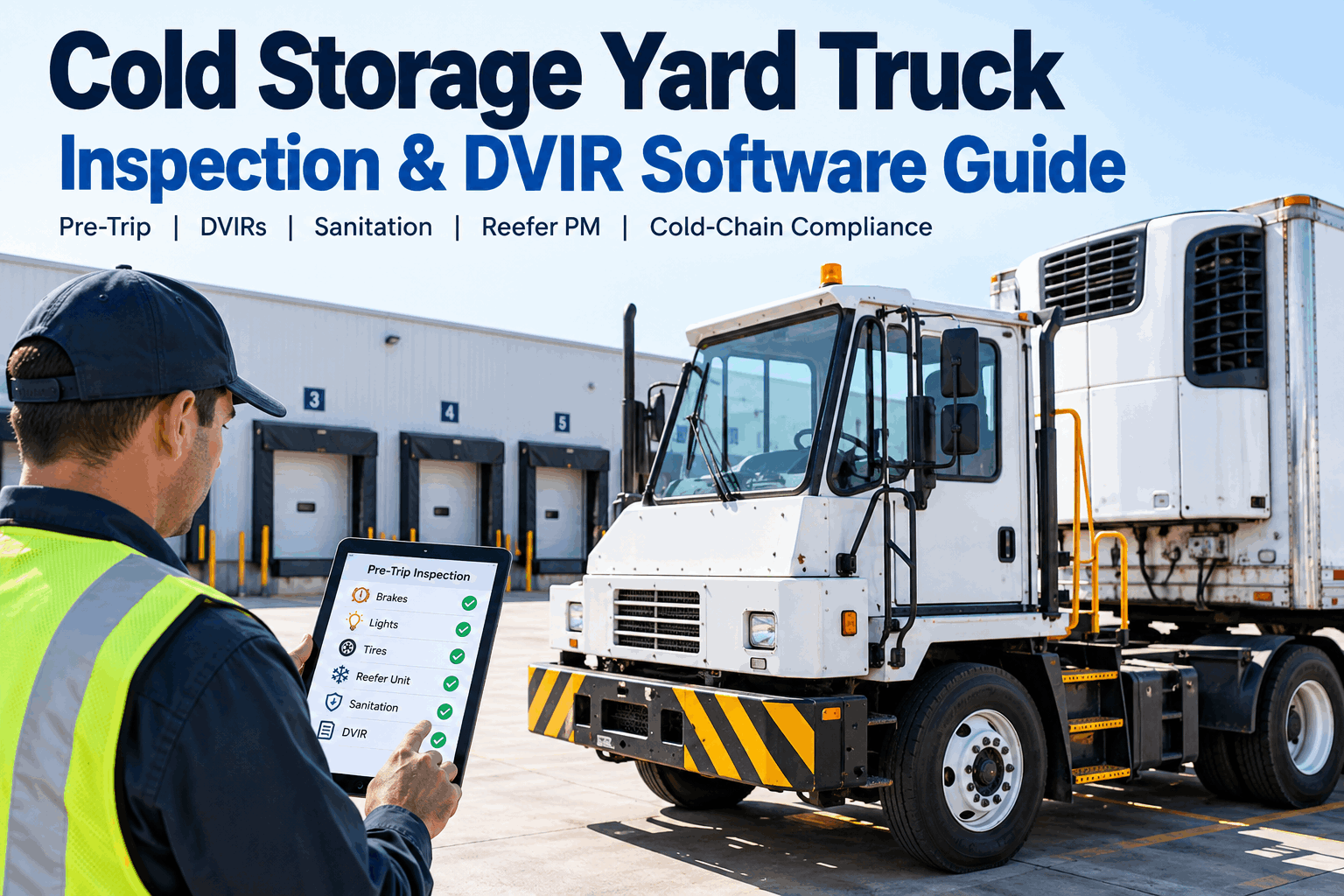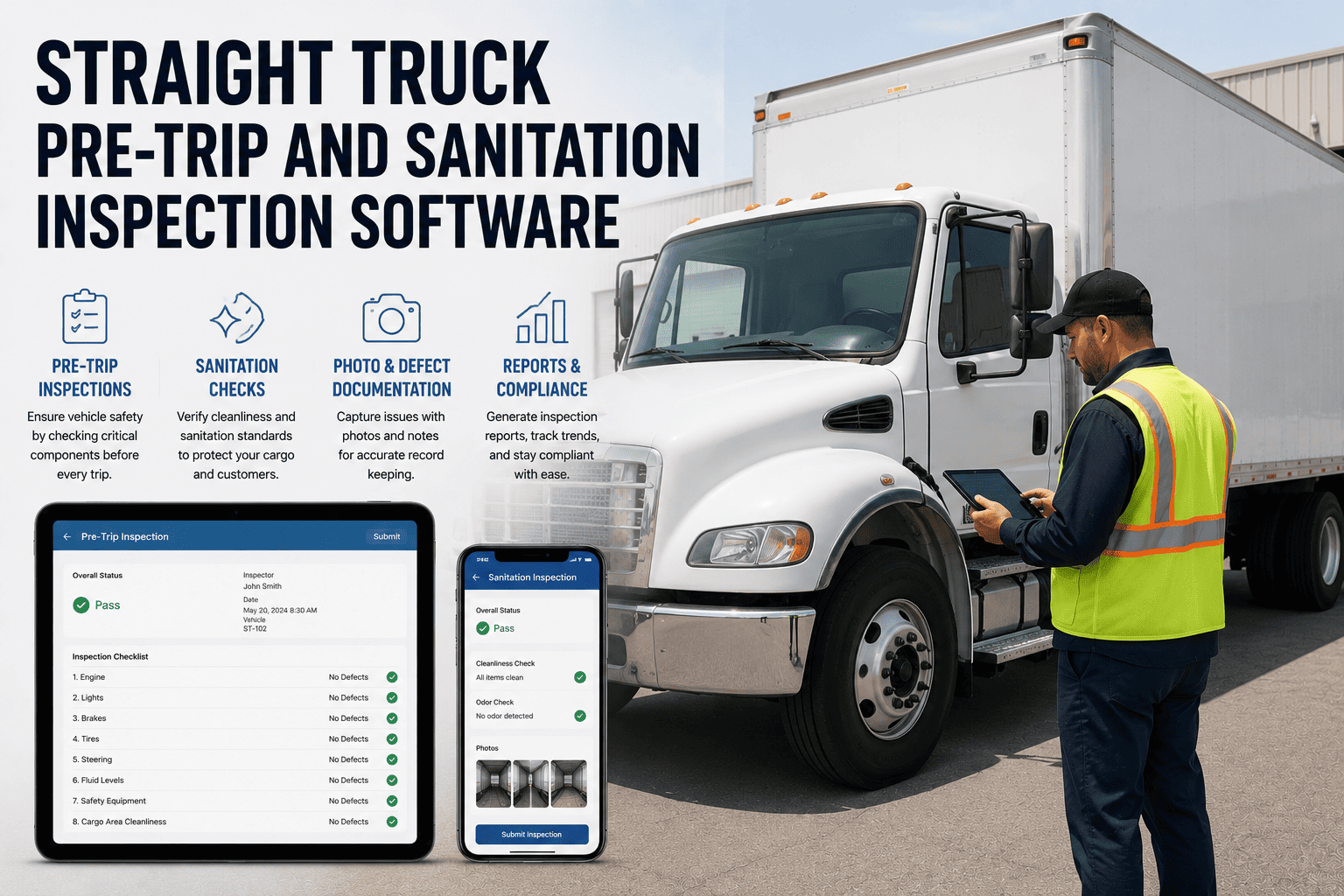
Refrigerated straight trucks carry perishable freight through some ofthe tightest margins in logistics — a few degrees off, a missed door seal check, or a skipped sanitation wipe-down can turn a full load into a total loss. For fleets running cold-chain routes, the pre-trip inspection and the sanitation log are not paperwork afterthoughts; they are the first and last line of defense before a shipper, an auditor, or a customer ever finds out something went wrong. This guide walks through what a real pre-trip and sanitation inspection program should look like for refrigerated straight trucks, and how signing up for FleetRabbit turns that program from a clipboard exercise into a system your whole fleet can trust.
Why pre-trip inspection carries extra weight on a reefer straight truck
A straight truck pulling a dry van has one job: keep the box sealed and the wheels turning. A refrigerated straight truck has a second job layered on top — keep the cargo within a set temperature band from the moment it is loaded until the moment it is signed for. That means the pre-trip inspection has to cover the standard chassis and cab items every DOT inspection expects, plus a whole second layer specific to the reefer unit, the insulated box, and the sanitation state of the interior. Skipping any part of that second layer is how fleets end up with rejected loads, contamination claims, or a failed audit. Many fleets find it easier to sign up for a system that walks drivers through both layers automatically instead of relying on memory or a paper form that gets crumpled in a door pocket.
The seven-zone pre-trip walkaround
Before a refrigerated straight truck leaves the yard, a complete pre-trip should move through seven distinct zones. Treating the reefer unit and cargo box as extensions of the standard DOT walkaround, rather than a separate afterthought, is what keeps drivers consistent from truck to truck.
Give every driver the same seven-zone checklist, every time
Paper pre-trip forms get lost, skipped, or filled out from memory in the cab. A digital checklist keeps every zone in front of the driver before the key ever turns, and keeps a timestamped record behind it.
The five-step sanitation cycle, done right
Sanitation is where most refrigerated straight truck programs quietly fall apart. Drivers rinse a box between loads and call it clean, but a defensible sanitation cycle actually has five distinct steps, and skipping straight from rinse to the next load is one of the fastest ways to fail a customer audit. Fleets that book a demo of a structured sanitation workflow usually find gaps in this exact sequence within the first week.
Temperature checkpoints from pre-trip to delivery
A sanitation record and an inspection record only tell half the story if the temperature trail between them has gaps. Refrigerated straight truck fleets that hold up best in audits track the set point at three fixed checkpoints across every run, not just at the start.
Where inspection and sanitation meet food-safety rules
The FDA's Sanitary Transportation of Human and Animal Food rule, part of FSMA, puts specific expectations on vehicles that carry perishable food, and refrigerated straight trucks sit right in the middle of that scope. Below is how the core requirements map to daily fleet practice.
| Requirement area | What it expects | How FleetRabbit supports it |
|---|---|---|
| Vehicle and equipment design | Reefer units and cargo boxes kept in sanitary, functioning condition | Seven-zone pre-trip checklist completed before every dispatch |
| Cleaning and sanitizing | Documented procedures between loads that could cause contamination | Five-step sanitation cycle logged with timestamps per truck |
| Temperature control | Adequate temperature maintenance throughout transportation | Pre-trip, mid-route, and delivery checkpoint temperature capture |
| Training | Personnel trained on sanitary practices relevant to their role | Standardized digital checklists that reduce reliance on memory |
| Records | Records retained and available for review upon request | Searchable inspection and sanitation history for every unit |
Clipboard checklist versus a connected inspection system
| Paper and memory-based process | FleetRabbit |
|---|---|
| Pre-trip zones checked from memory, inconsistently between drivers | Same seven-zone checklist prompted for every driver, every truck |
| Sanitation steps skipped or shortened under time pressure | Five-step sanitation cycle enforced with timestamped logging |
| Temperature readings noted once, if at all | Checkpoint readings captured at pre-trip, mid-route, and delivery |
| Paper records scattered across trucks, offices, and glove boxes | Centralized digital history searchable in seconds for any audit |
The gap between these two columns is usually where a failed audit or a rejected load originates. Fleets that sign up for a connected system close that gap without adding extra work for the driver.
See the seven-zone pre-trip and sanitation cycle in action
Walk through a live inspection, a sanitation log entry, and a temperature checkpoint report on your own fleet's numbers.