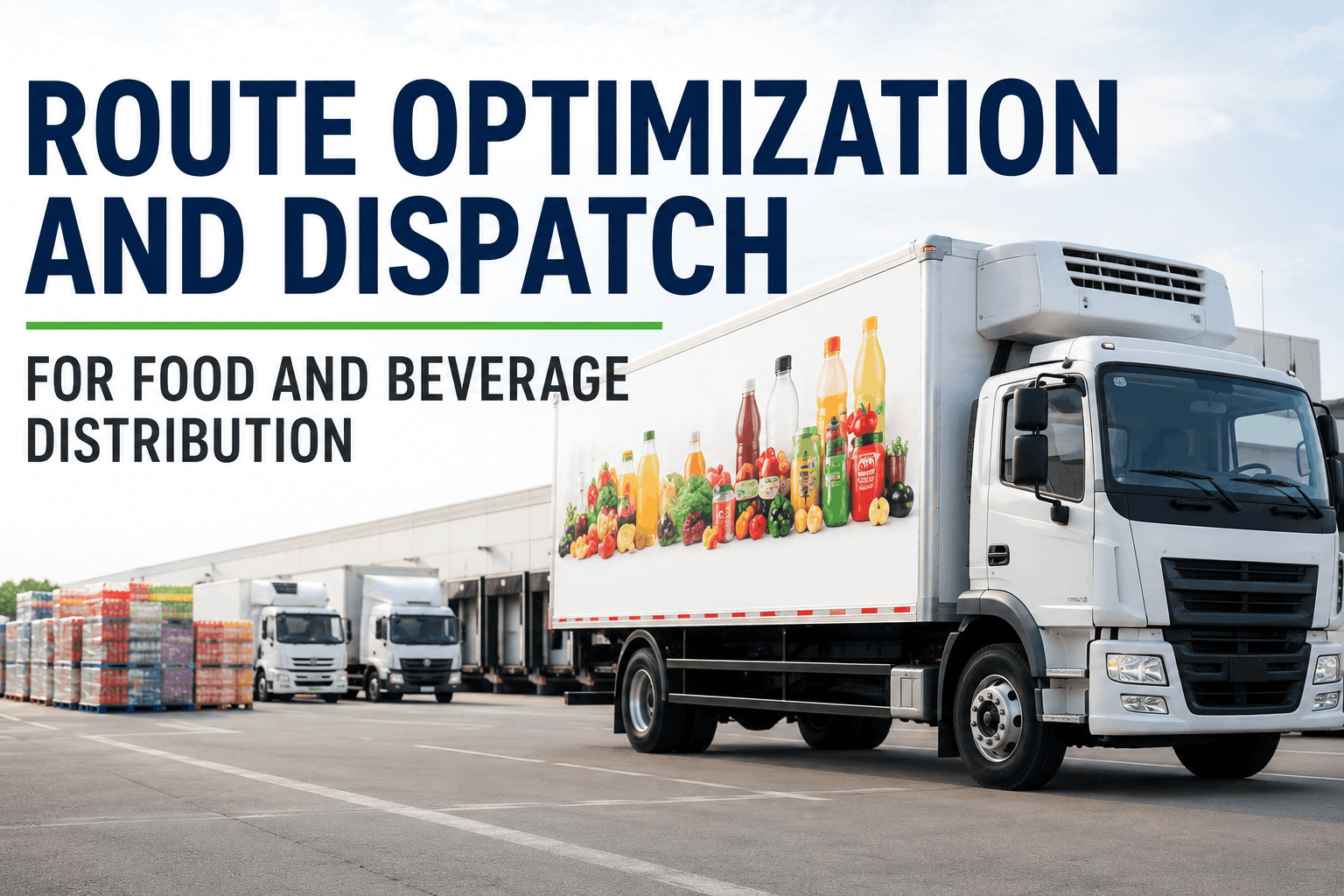
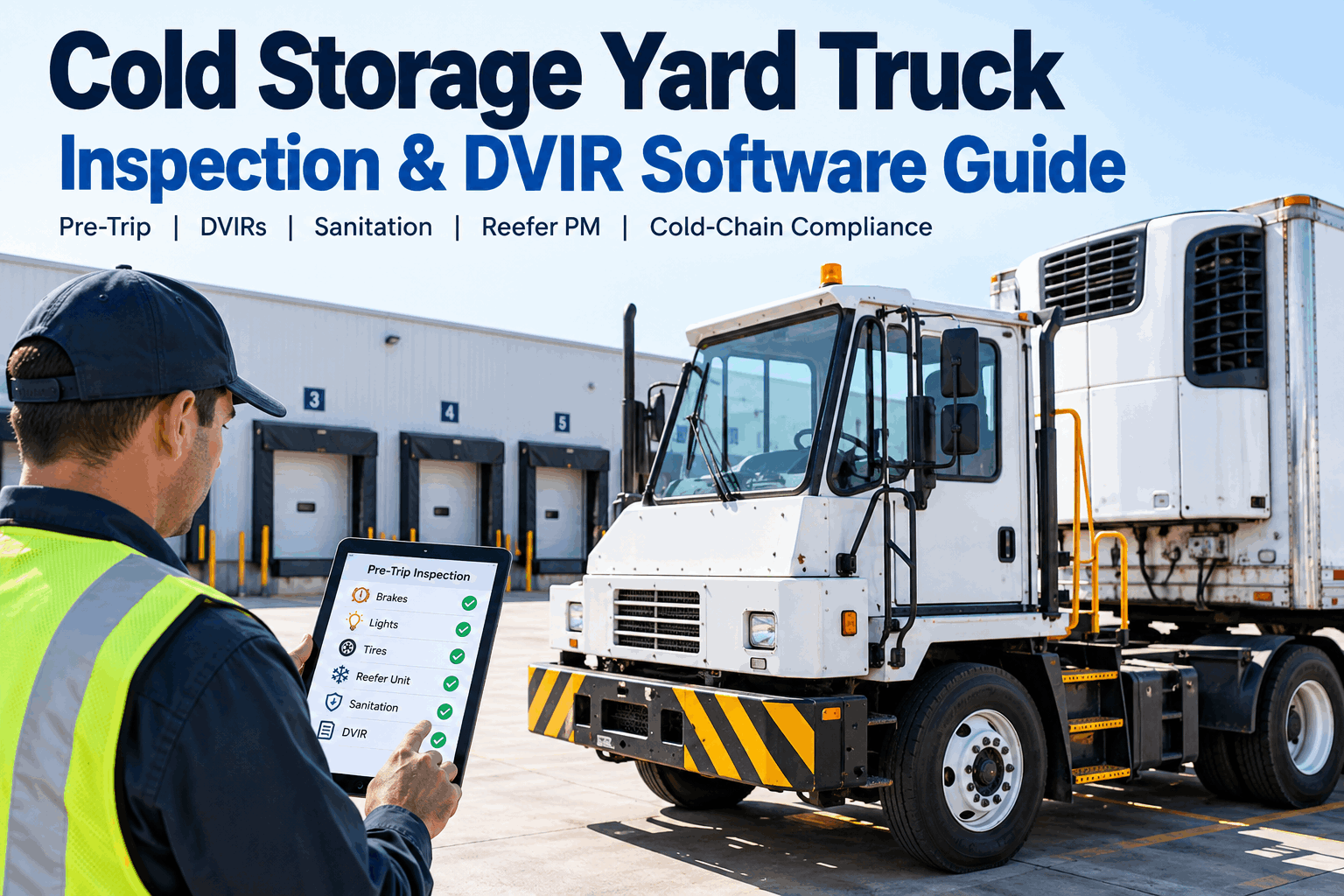
Route Optimization and Dispatch for Food and Beverage Distribution
Your food and beverage distribution operation managed thousands of delivery stops last fiscal year across restaurants, retailers, convenience stores, and institutional accounts. Every route generated decision-critical data—delivery time windows, traffic patterns, temperature logs, driver hours, fuel consumption, and customer satisfaction scores. That data told a story about a refrigerated truck fleet averaging 23% idle time per shift, routes planned on paper that ignored real-time congestion, and cold chain violations costing $180,000 annually in spoilage claims. But without intelligent dispatch software, that story went unread. The result? A cascade of late deliveries during a summer heat wave that spoiled $340,000 in perishable product, triggered 47 customer chargebacks, forced emergency re-routing that burned an extra $28,000 in fuel, and exposed the operation to food safety audits that threatened three major retail contracts. Intelligent route optimization transforms scattered delivery runs into a precision logistics framework where every mile driven delivers maximum freshness and customer value. Start Free Trial today.
Intelligent Dispatch Platform
Route Optimization Built for Cold Chain Logistics
AI-powered routing that considers time windows, traffic, and refrigeration requirements for food & beverage fleets
Of food distributors still plan routes manually or with basic spreadsheets
32%
Average fuel cost reduction with AI-optimized routing
$47B
Annual U.S. food spoilage from cold chain failures
FDA estimates 30% preventable with better temperature & route management
The Real Cost of "We Route It the Way We Always Have"
Food and beverage distributors collectively move billions of dollars in perishable product every day. Yet the majority plan routes using the same methods they used a decade ago—driver habit, paper manifests, and basic mapping tools that ignore real-world constraints. When dispatch exists only as a morning whiteboard session, operations rely on institutional knowledge that leaves with experienced drivers. FDA food safety regulations don't accept "we didn't know the truck sat in traffic for two hours" as an excuse for temperature exceedance, and neither do retail partners when your delivery window is 6–8 AM and your truck arrives at 10:15.
Anatomy of a Cold Chain Dispatch Failure
How routing gaps escalate to operational and financial disasters
Root Cause
No Real-Time Route Optimization or Cold Chain Monitoring
Day 1
Static Routes Ignore Live Traffic
Driver hits unexpected congestion; time window for frozen bakery account missed by 90 minutes
Week 3
Temperature Exceedance Goes Undetected
Refrigerated unit cycles off during extended idling; dairy products reach 48°F for 2+ hours
Intelligent dispatch software prevents this cascade at every stage. Time-window algorithms guarantee delivery sequencing matches customer receiving hours, cold chain monitoring triggers rerouting when temperature deviations are detected, and traffic-aware routing eliminates the idle time that kills refrigeration efficiency. Distributors that deploy AI dispatch don't just avoid emergencies—they build operations where every delivery is on-time, every temperature log is audit-ready, and every route is the most fuel-efficient path available. Start Free Trial.
The Five Pillars of Food Fleet Route Intelligence
Effective route optimization for food and beverage distribution isn't a single feature—it's a layered system that connects traffic data, time window constraints, cold chain requirements, driver hours, and vehicle capacity into a single optimized dispatch plan. Each pillar represents a measurable capability that transforms reactive dispatch into proactive fleet intelligence.
Route Intelligence Architecture for Cold Chain Fleets
Five integrated capabilities that eliminate late deliveries and cold chain violations
01
Time-Window Routing
Automated sequencing that guarantees delivery within customer-specified receiving windows, even when schedules shift mid-route
Eliminates missed windows
02
Live Traffic Intelligence
Real-time congestion data reroutes drivers dynamically, cutting average idle time by 40% and protecting time-sensitive cold chain deliveries
Real-time rerouting
03
Cold Chain Monitoring
Continuous temperature telemetry alerts dispatch when refrigeration drifts out of spec, triggering corrective action before product is compromised
FDA audit-ready logs
04
Multi-Stop Load Optimization
Capacity-aware loading sequences that match truck configuration to stop order, reducing re-handling and keeping frozen and fresh zones segregated
Load-sequence matching
05
Driver Hours & HOS Compliance
Route plans automatically respect Hours of Service limits, flagging compliance risks before dispatch and protecting the operation from DOT violations
DOT compliance built-in
⚡
AI Dispatch Engine
Machine learning models trained on food distribution patterns generate optimal dispatch plans in seconds—not the hours manual planning demands
Enabling Technology
From Clipboard Dispatch to Intelligent Fleet Command
The gap between having delivery data and having an effective distribution operation is the intelligence layer that connects data to real-time decisions. When time windows are integrated with live traffic feeds and cold chain telemetry, every dispatch decision is automatically optimized for on-time performance, fuel efficiency, and food safety compliance. Operators ready to see this transformation can schedule a demo to watch the FleetRabbit dispatch workflow in action.
Manual Dispatch vs. AI-Optimized Route Management
Dispatch Function
Manual / Paper-Based
Basic GPS Routing
FleetRabbit AI Dispatch
Route Planning
Driver experience & memory
Static turn-by-turn, no windows
AI-optimized with time windows & traffic
Cold Chain Visibility
No temperature monitoring
Manual temp checks at delivery
Continuous IoT telemetry, instant alerts
Traffic Response
Driver calls dispatch; manual fix
Driver-initiated reroute only
Automatic dynamic rerouting mid-route
Fuel Management
No optimization; habit-based
Shortest path, ignores idle time
Fuel-cost-weighted routes, idle reduction
Compliance & Reporting
Paper logs, weeks to compile
Basic mileage reports only
Real-time dashboards, FDA/DOT audit-ready
32%Average fuel cost reduction
94%On-time delivery rate achieved
ZeroUndetected cold chain failures
See FleetRabbit Route Intelligence in Action
Watch how FleetRabbit maps your delivery territory, applies time-window constraints and cold chain rules, and generates an optimized dispatch plan in under 60 seconds. Our 30-minute demo covers the complete food fleet workflow.
Distribution managers often view route optimization software as a cost center, but the financial case is compelling. Industry data from the Food Logistics Council, USDA, and carrier benchmarking studies confirms that every $1 invested in AI dispatch returns $5–9 in reduced fuel spend, eliminated spoilage claims, recovered contract revenue, and driver efficiency gains. For a mid-size distributor running 20 refrigerated trucks and $15M in annual revenue, the numbers translate directly to margin recovery.
Dispatch ROI Calculator
Based on distributor operating 20 refrigerated trucks, $15M annual revenue
Fuel Cost Reduction
32% savings via optimized mileage and idle time elimination
$420K/yr
$285K/yr
$135,000
Spoilage & Claims Elimination
Cold chain monitoring prevents temperature exceedances
$340K claims
$50K claims
$290,000
On-Time Delivery Premium
Retail SLA compliance unlocks incentive payments and prevents chargebacks
78% OTD
94% OTD
$180,000
Driver Productivity Gain
Optimized stop sequencing adds 2–3 extra stops per shift per driver
18 stops avg.
21 stops avg.
$210,000
Total Annual Value of AI Dispatch
$815,000
$5–9 return for every $1 invested in intelligent route optimization
Building the Optimized Dispatch Workflow: Setup to Excellence
A complete AI dispatch program isn't a one-day software install—it's a structured workflow that begins with territory mapping and progresses through route learning, cold chain integration, and continuous optimization. When each stage is tracked in FleetRabbit, the system becomes self-reinforcing: delivery data improves route models, route models drive better load sequencing, better load sequencing protects cold chain integrity, and cold chain integrity reduces spoilage costs and strengthens retail partnerships.
The Continuous Route Intelligence Cycle
Every delivery teaches the system—creating a self-improving dispatch framework
01
Territory Mapping
Import customer locations, time windows & delivery frequencies
02
AI Route Build
Algorithm optimizes stops for time, fuel & cold chain compliance
03
Dispatch & Monitor
Push routes to drivers; watch temperature & ETA in real time
04
Deviation Response
Instant alerts trigger reroutes on traffic, temp, or missed stops
05
Performance Review
Analyze OTD rates, fuel spend & cold chain KPIs by route and driver
06
Model Refinement
Delivery history trains AI for smarter next-cycle optimization
Expert Perspective: Why Real-Time Data Beats Static Routes
"
You can have perfect route plans on paper and still lose a $200,000 retail contract because your truck sat in traffic for ninety minutes on a Tuesday morning. What separates high-performing food distributors from the rest isn't planning—it's the intelligence layer that adapts plans to reality in real time. AI dispatch gives you that layer. It transforms a static route sheet into a living document: aware of traffic, temperature, driver hours, and customer windows simultaneously. A dispatch platform doesn't replace your experienced dispatchers—it gives them the data velocity to make decisions that used to take hours in seconds.
— Director, Food Logistics Technology Council
FDA FSMA Alignment
FDA's Food Safety Modernization Act requires documented temperature controls during transportation. AI dispatch with integrated cold chain telemetry creates the continuous, timestamped records that FSMA compliance audits demand—automatically, on every route.
Retail Compliance Pressure
Major grocery chains and foodservice distributors now impose automated chargeback systems for missed delivery windows. AI routing is no longer optional for suppliers who want to protect their retail shelf space and avoid penalty deductions.
Driver Retention Impact
Optimized routes reduce driver stress and eliminate the frustration of impossible schedules. Fleets using AI dispatch report 18–25% lower driver turnover—a significant cost reduction given the $8,000–12,000 average cost to recruit and train a replacement CDL driver.
The distributors succeeding with AI dispatch share common characteristics: leadership that treats route data as a competitive asset, systems that connect real-time conditions to driver instructions, and a culture where on-time delivery and cold chain integrity are non-negotiable standards. If you're ready to explore what this looks like for your fleet, our team can help design the implementation. Schedule a consultation to design your route optimization program.
Optimize Every Route. Protect Every Delivery.
Join food and beverage distributors using FleetRabbit to automate time-window routing, monitor cold chain compliance in real time, reduce fuel costs by up to 32%, and deliver on-time performance that wins and keeps retail contracts.
How does AI route optimization handle time-window constraints for food delivery?
AI route optimization ingests each customer's receiving window (e.g., 6–8 AM for grocery back doors, 10 AM–2 PM for restaurant prep time) and treats them as hard constraints in the routing algorithm. The system sequences stops to ensure every delivery arrives within its window, then recalculates dynamically if real-time traffic data indicates a window is at risk. Unlike static routing tools that plan around ideal conditions, FleetRabbit's engine continuously recalculates ETAs as routes progress—alerting dispatch and automatically proposing adjusted sequences when conditions change. This eliminates the manual "phone the driver" workflow that reactive operations depend on.
What cold chain monitoring capabilities does intelligent dispatch software include?
Comprehensive cold chain monitoring in a dispatch platform integrates with IoT temperature sensors installed in refrigerated compartments, generating continuous readings every 60–300 seconds depending on product sensitivity. The system establishes temperature thresholds per product zone (e.g., −18°C for frozen, 2–4°C for dairy, 8–12°C for produce), and triggers multi-channel alerts—to dispatch, driver, and supervisor—when readings drift outside spec. All temperature data is timestamped, GPS-tagged, and stored with the associated delivery record, creating the complete chain-of-custody documentation that FDA FSMA audits require. Some platforms also integrate with truck refrigeration unit controls, enabling remote thermostat adjustments without driver intervention.
How quickly can a food distribution operation implement AI dispatch software?
Most food distributors are fully operational with AI dispatch within 2–6 weeks, depending on fleet size and integration complexity. Typical implementation phases: Week 1 covers platform setup, customer database import, and time-window configuration. Week 2 involves driver mobile app deployment, vehicle telematics integration, and initial route generation. Weeks 3–4 focus on dispatcher training, live monitoring activation, and cold chain sensor pairing. Weeks 5–6 refine route models based on initial delivery performance data. Fleets already using a TMS or WMS can accelerate setup through API integration. The most important success factor is complete customer time-window data at implementation—incomplete window data is the most common cause of early performance gaps.
What metrics should food distribution managers track to measure dispatch optimization ROI?
Track a balanced scorecard across four categories. Delivery Performance: on-time delivery rate by customer and route (target 92%+), average minutes early/late per stop, and window exception frequency. Cold Chain Integrity: temperature exceedance events per week, average deviation magnitude, and time-to-alert-to-correction duration. Fuel & Cost Efficiency: fuel cost per stop, miles per delivery, idle time percentage, and total route cost vs. planned. Driver & Compliance: HOS violation events, planned vs. actual route adherence, and customer satisfaction scores by driver. Present weekly trends in operations reviews—not monthly snapshots—because route optimization improvements accumulate quickly and early wins build organizational momentum for continued platform adoption.
Can AI dispatch handle mixed loads with different temperature zones?
Yes—multi-zone temperature management is a core capability of modern food fleet dispatch platforms. The system maps each delivery stop to the required temperature zone on the truck (ambient, chilled, frozen), then optimizes stop sequencing to minimize the time any zone is exposed during door-open events at delivery. For operations running mixed ambient and refrigerated loads on the same vehicle, AI dispatch factors zone separation into load sequencing recommendations—ensuring frozen product at the back of the truck isn't compromised by ambient stops early in the route. This capability is especially critical for broadline distributors servicing restaurants with simultaneous produce, dairy, and dry goods orders on a single truck.