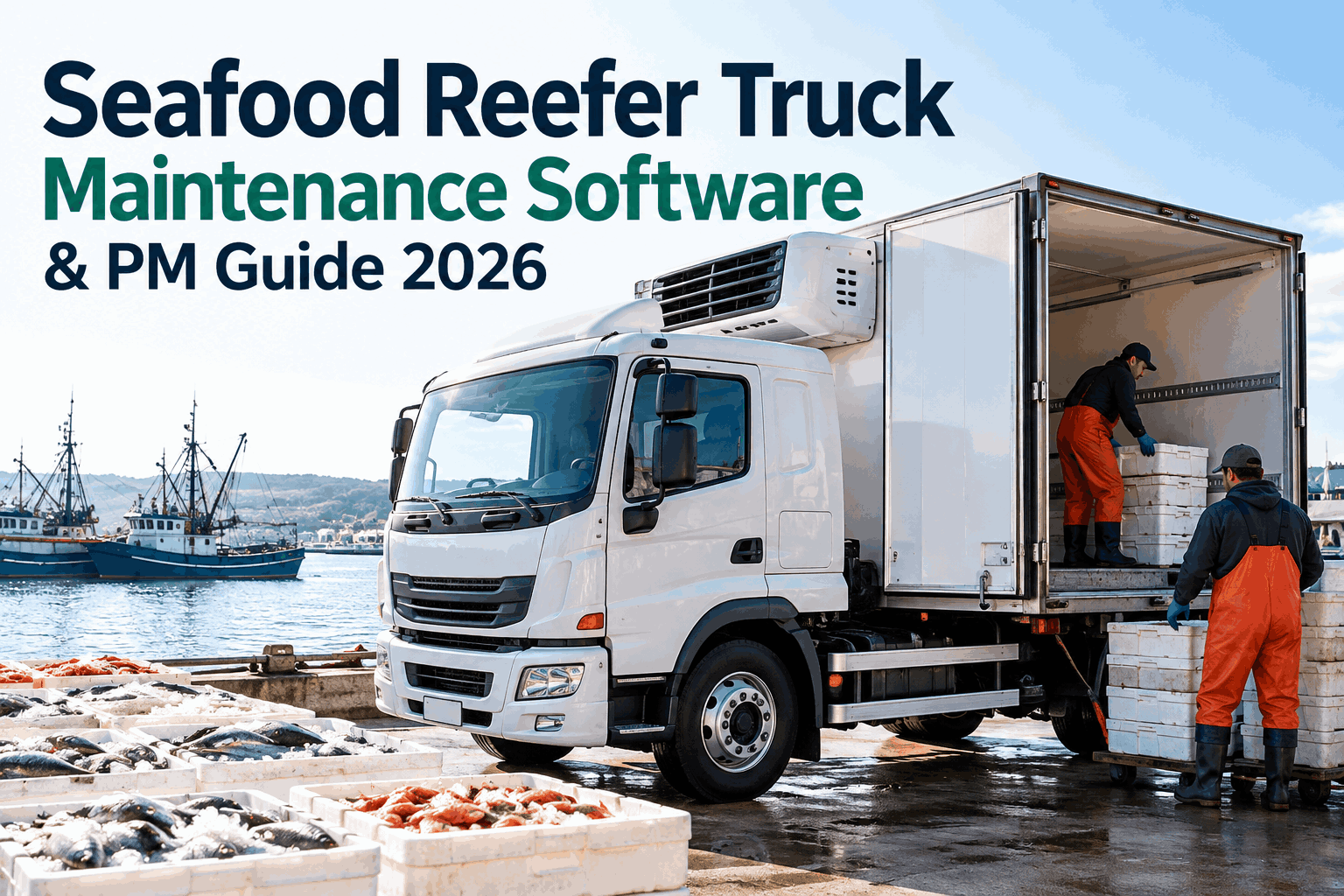
Seafoodgives a reefer very little room for error. A produce load can survive a few warm hours. A load of fresh fish, on the other hand, can be past saving before anyone notices the unit is struggling. See how cold-chain fleets keep reefer maintenance and temperature records in one place and stay ahead of the excursion.
Seafood Reefer Truck Maintenance Software Built for Zero-Excursion Delivery
Service reefer units on engine hours, watch temperatures where your telematics supplies them, and keep FSMA-ready records for every load.
Three Kinds of Seafood, Three Different Rules
"Seafood" is not one temperature. The setpoint follows the product, so the alerts and checks should too.
Held cold, often packed in ice. Species prone to histamine formation, such as tuna, are less forgiving.
Any thaw-and-refreeze cycle damages quality. Steady setpoint matters more than speed.
Oysters, clams and mussels follow state and shellfish-program rules that specify temperature limits and records.
Anatomy of a Temperature Excursion
The first two steps are maintenance problems. A reefer that is overdue for service has less capacity to recover when the doors open. Fixing step two is cheaper than explaining step three.
Your Reefer Service Countdown
Reefer engines are serviced by hours worked, not miles. This is the kind of view your maintenance team sees in FleetRabbit.
The Pre-Load Checklist Seafood Demands
FSMA Sanitary Transportation: Who Does What
Based on FSMA's sanitary transportation rule (21 CFR Part 1, Subpart O). Obligations depend on your role and written agreements, so confirm details with your compliance team.
Problem In, FleetRabbit Feature Out
Frequently Asked Questions
It depends on the product. Fresh fish is commonly held around 32–38°F and frozen at 0°F or below. Live shellfish follow specific program rules. Follow the shipper's spec.
Fresh seafood spoils quickly and some species carry added risks when warmed. Shippers and receivers often reject loads that show temperature problems.
The reefer runs independently of the truck, often while parked. Hours reflect its real workload; the odometer does not.
Yes, where your telematics or sensor provider supplies temperature data. Thresholds can be matched to each load type.
It keeps maintenance, inspection and sanitation records organised and searchable. Confirm exact requirements with your compliance team.
Keep the Cold Chain Unbroken
Engine-hour PM, pre-load checklists and audit-ready records in one place. Free for your first three vehicles.