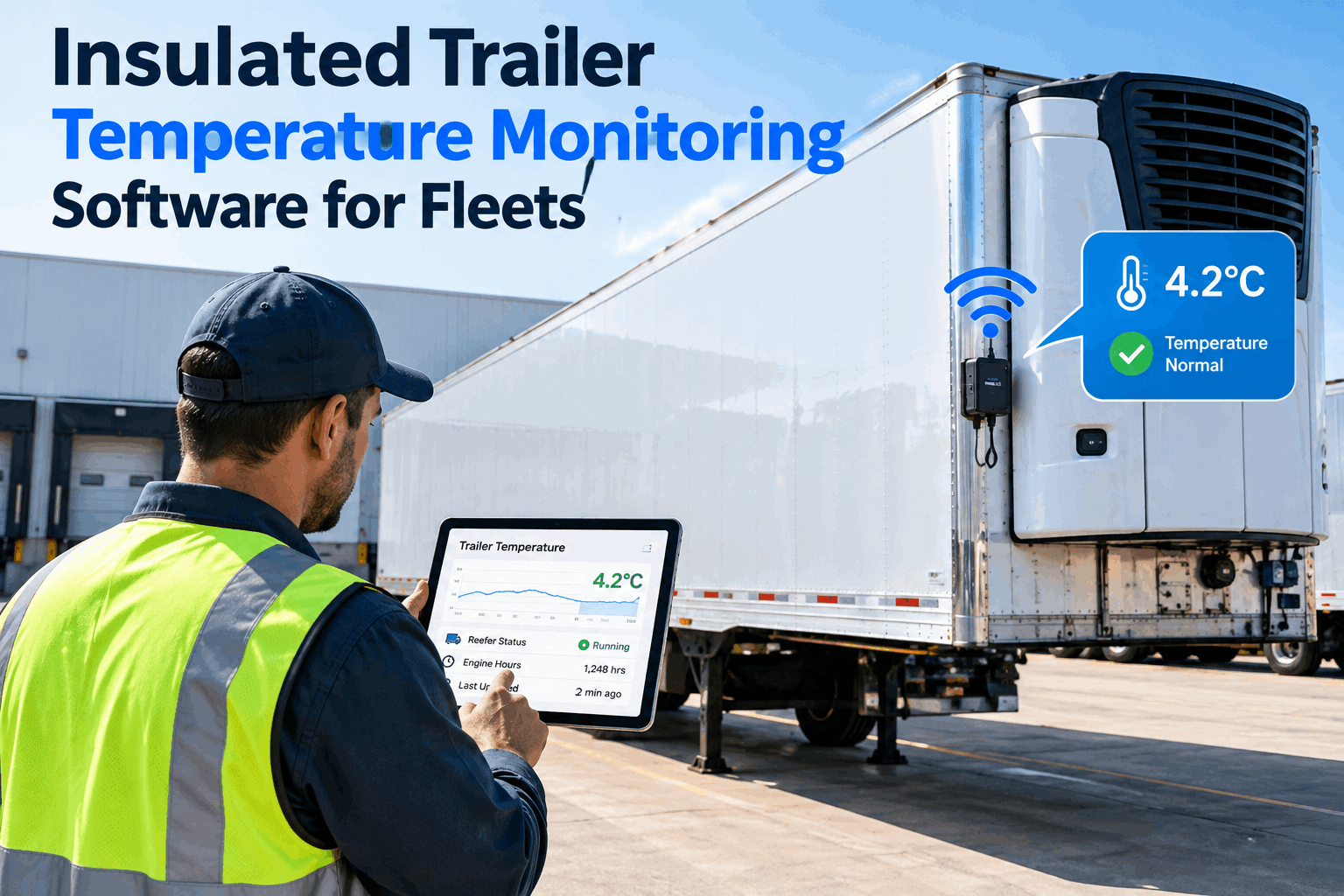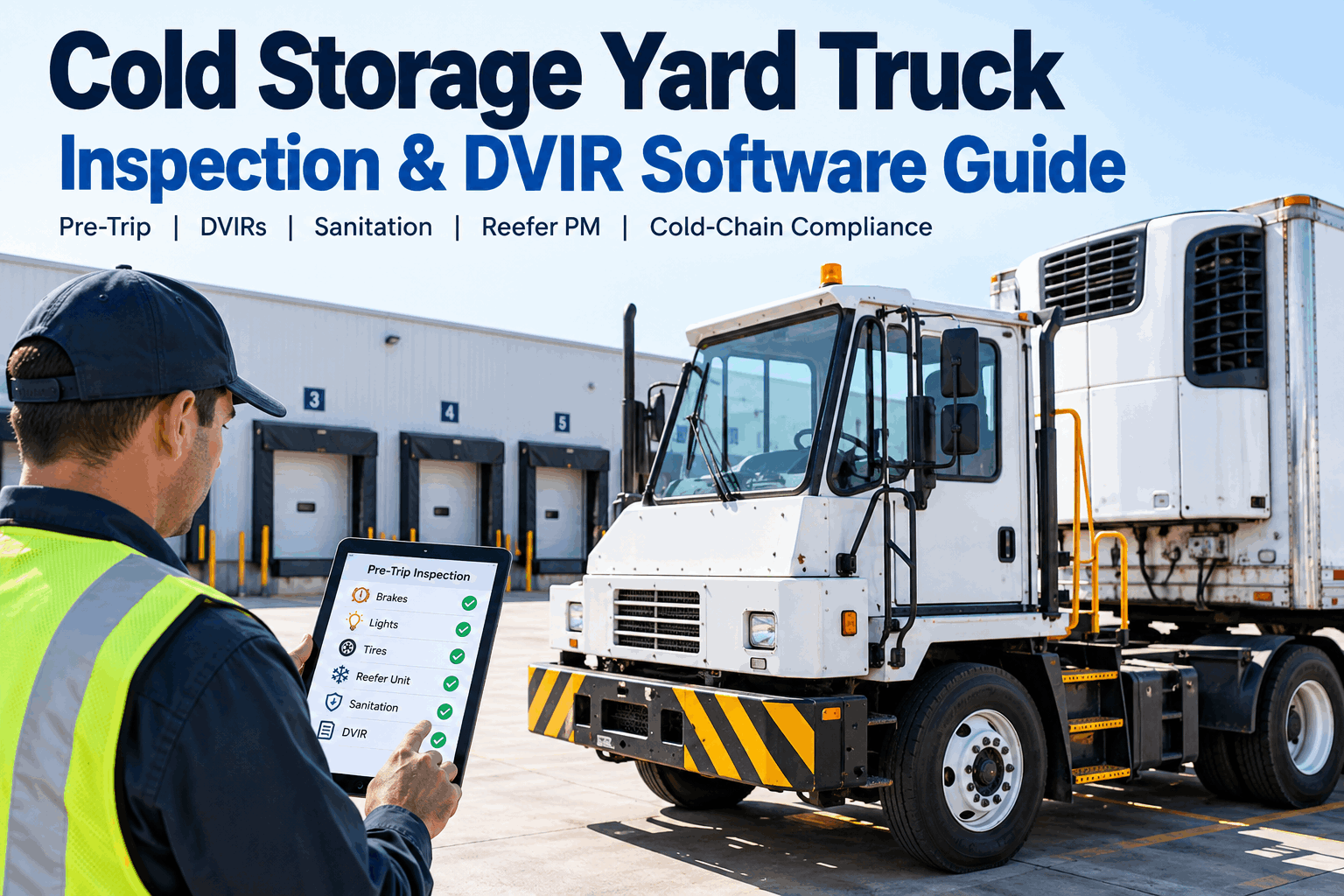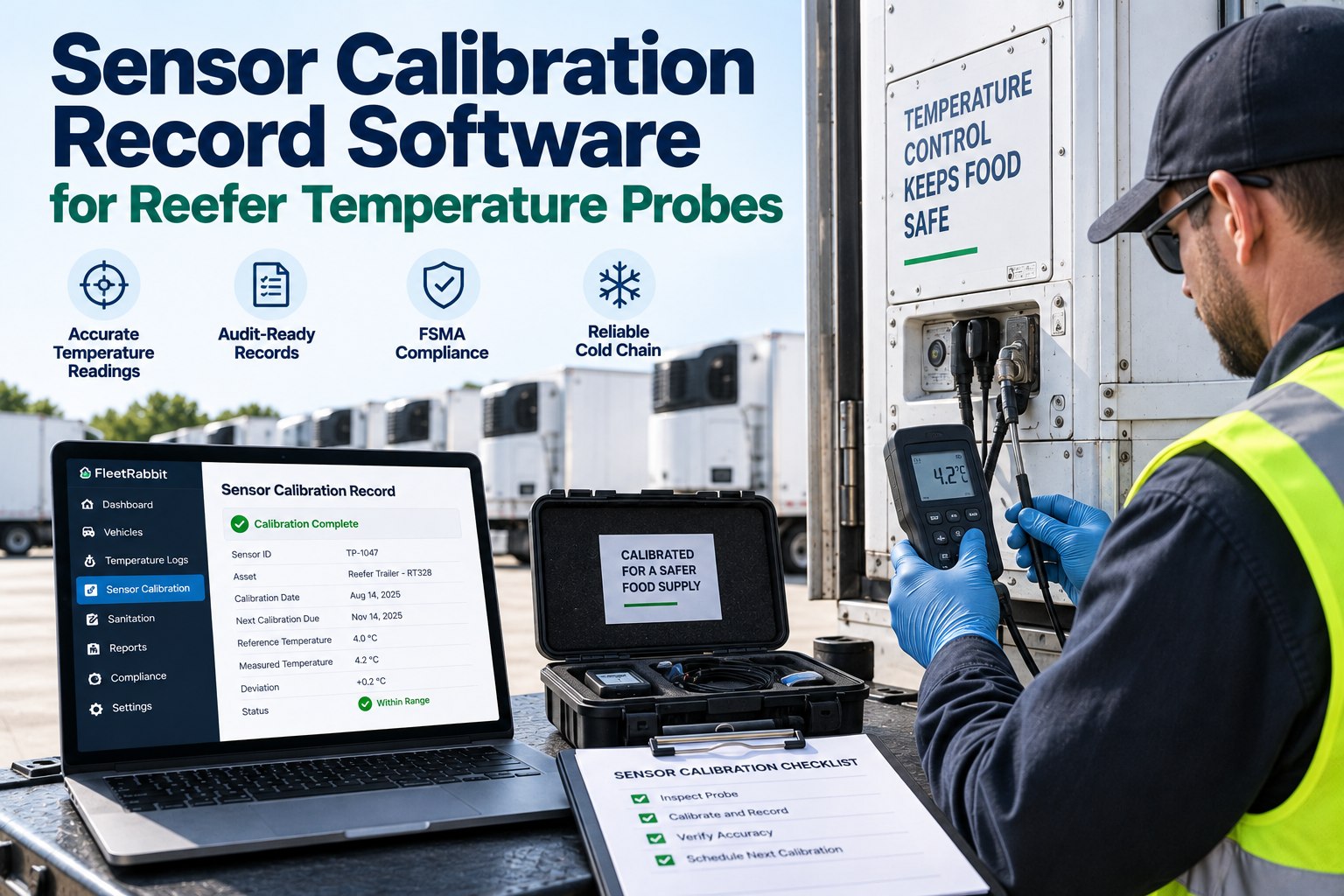
A temperature probe that has drifted out of calibration will still show a clean, in-range reading right up until someone checks it against a known standard. That is what makes probe drift so dangerous for cold-chain compliance: the trailer's display can read 36 degrees while the product inside is actually sitting at 41, and nobody finds out until a customer complaint or a failed audit forces the question. The FSMA Sanitary Transportation Rule expects monitoring devices to be maintained and calibrated, and a customer quality team asking for calibration certificates on short notice will not accept a probe that has never been checked against a reference standard. FleetRabbit turns sensor calibration into a tracked, scheduled, and fully documented part of fleet operations instead of a task someone remembers to do when they think about it. You can sign up to see your own reefer fleet's probe calibration status mapped out in one place.
A Reading That Looks Fine Can Still Be Wrong
Calibration drift happens gradually, which is exactly why it goes unnoticed without a scheduled check. A well-maintained probe stays within a tight margin of the true temperature, but a drifting probe opens a growing gap between what the display shows and what the product actually experiences.
The drifted probe in this example is still reporting a number inside the acceptable range, even though the product has already crossed into a temperature abuse zone. Fleets that sign up for FleetRabbit catch this gap on a schedule, before it shows up as a customer complaint.
See Every Probe's Calibration Status at a Glance
Instead of checking calibration dates trailer by trailer, FleetRabbit surfaces the status of every probe across the fleet in a single view, so overdue units are obvious before they become a compliance gap. Fleets that sign up get this view populated from their existing trailer and probe records.
Core Calibration Features
Each feature below exists to close a specific gap that shows up during a real customer or FDA audit. You can book a demo to see all four working together against your own fleet's probe inventory.
Automated Due-Date Alerts
Every probe gets its own calibration clock, with alerts sent well ahead of the due date instead of relying on someone to remember.
Dual-Probe Cross-Verification
Where a trailer runs both a return-air and a product-core probe, FleetRabbit can flag a growing gap between the two as an early drift signal.
Calibration Certificate Storage
Certificates from NIST-traceable reference standards are attached directly to the probe record, ready for export during an audit.
Offline Shop Capture
Technicians log calibration checks on the FleetRabbit mobile app even in shop areas with poor signal, syncing automatically once connected.
Put Every Probe on a Calibration Schedule
Automated due-date tracking, certificate storage, and drift alerts for every temperature sensor across your reefer fleet.
Sample Calibration Intervals by Probe Type
| Probe Type | Verification Interval | Why This Interval |
|---|---|---|
| Return-air probe | Every 90 days | Primary reading used for compliance monitoring, needs frequent verification |
| Product-core probe | Every 90 days | Cross-checks return-air readings against actual product temperature |
| Ambient cargo-space probe | Every 120 days | Secondary reference point, drifts more slowly under stable conditions |
| Portable handheld calibration unit | Every 180 days | Used as the reference standard, so its own accuracy matters most |
You can sign up to load your own probe inventory and see a calibration schedule built around your specific trailer and sensor mix.
Where Calibration Records Fit the Rules
None of these programs accept a probe that has simply never been checked. You can book a demo to see how FleetRabbit documents compliance against all three at once.
FSMA Sanitary Transportation Rule
Requires that temperature monitoring devices used in cold-chain transport be maintained and calibrated to a level of accuracy consistent with their intended use.
NIST-Traceable Standards
Calibration checks performed against a reference traceable to national measurement standards carry weight in an audit that an uncalibrated comparison does not.
Customer Quality Programs
Many food and beverage brands require calibration certificates as part of their carrier qualification process, separate from federal minimums.
Manual Calibration Tracking vs. FleetRabbit
| Task | Manual Tracking | FleetRabbit |
|---|---|---|
| Knowing which probes are due | Spreadsheet checked manually, easy to miss | Automated alert sent ahead of the due date |
| Storing calibration certificates | Paper or scattered digital files | Attached directly to the probe's digital record |
| Detecting slow drift | Not typically caught until a failure | Dual-probe comparison flags a growing gap early |
| Responding to an audit request | Hours of manual document search | Certificate pulled by trailer or probe ID in seconds |
| Capturing checks with poor shop signal | Paper backup, entered later | Captured offline, synced automatically |
Make Every Probe Audit-Ready by Default
Track calibration due dates, store certificates, and catch drift early across your entire reefer fleet in one place.
Frequently Asked Questions
Why does a probe need regular calibration if it still shows a reasonable reading
Calibration drift happens gradually and does not necessarily produce an obviously wrong number. A probe can drift several degrees away from the true temperature while still displaying a reading that looks normal, which is why scheduled verification against a known reference standard matters more than watching the display.
What does the FSMA Sanitary Transportation Rule require for calibration
The rule expects that temperature monitoring devices used during transport be maintained and calibrated to an accuracy level appropriate for their use. FleetRabbit tracks due dates and stores certificates so that requirement is documented rather than assumed.
Can FleetRabbit detect drift before a probe fails a scheduled calibration check
Yes. Where a trailer runs both a return-air and a product-core probe, FleetRabbit can compare the two readings over time and flag a growing gap as an early sign of drift, ahead of the next scheduled calibration date.
Are calibration certificates stored in a format an auditor can use directly
Yes. Certificates from NIST-traceable reference checks are attached to each probe's digital record and can be exported by trailer, probe, or date range in a single search.
Can calibration checks be logged in a shop area with poor cell signal
Yes. The FleetRabbit mobile app captures calibration checks offline and automatically syncs the record once the device reconnects to network coverage.