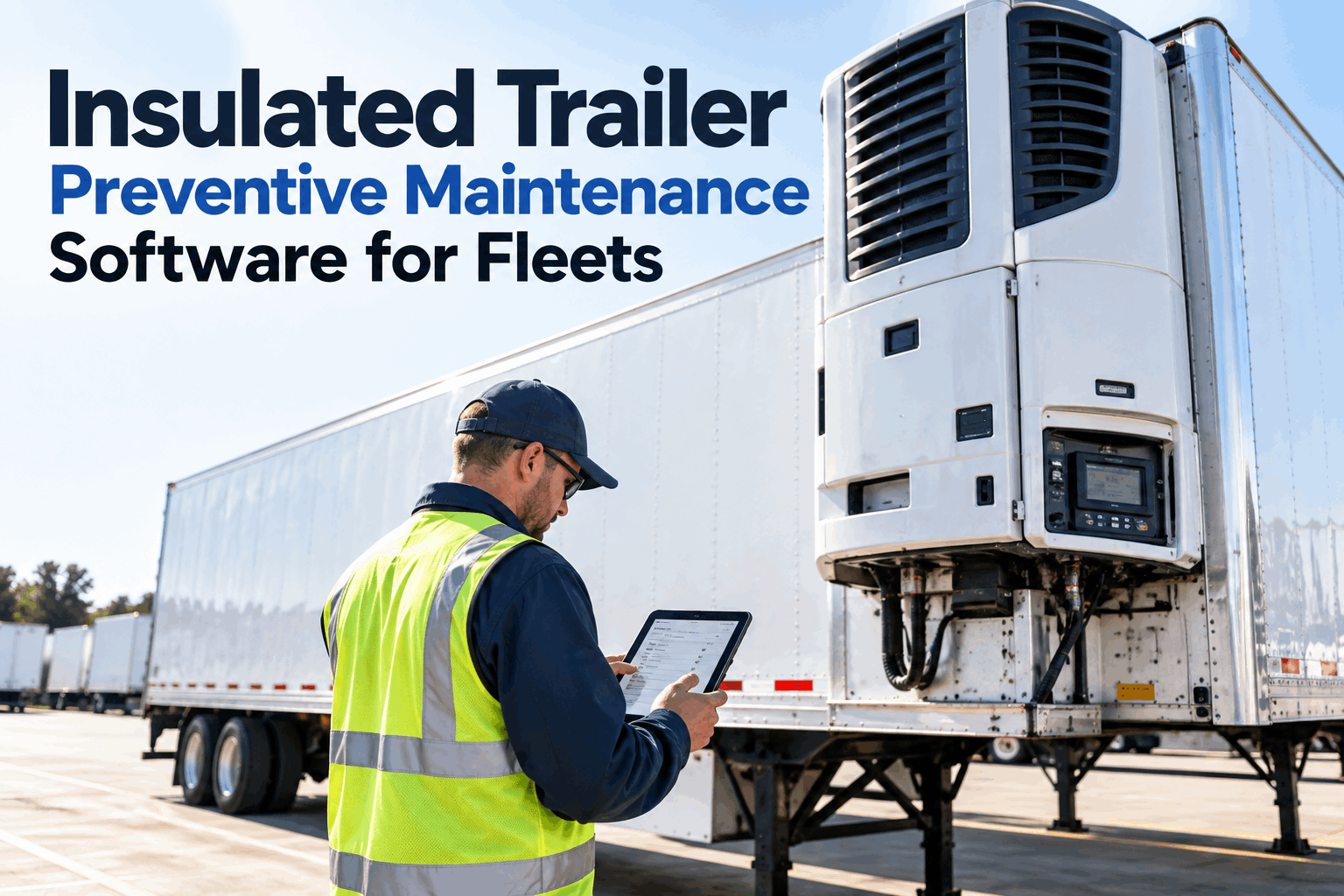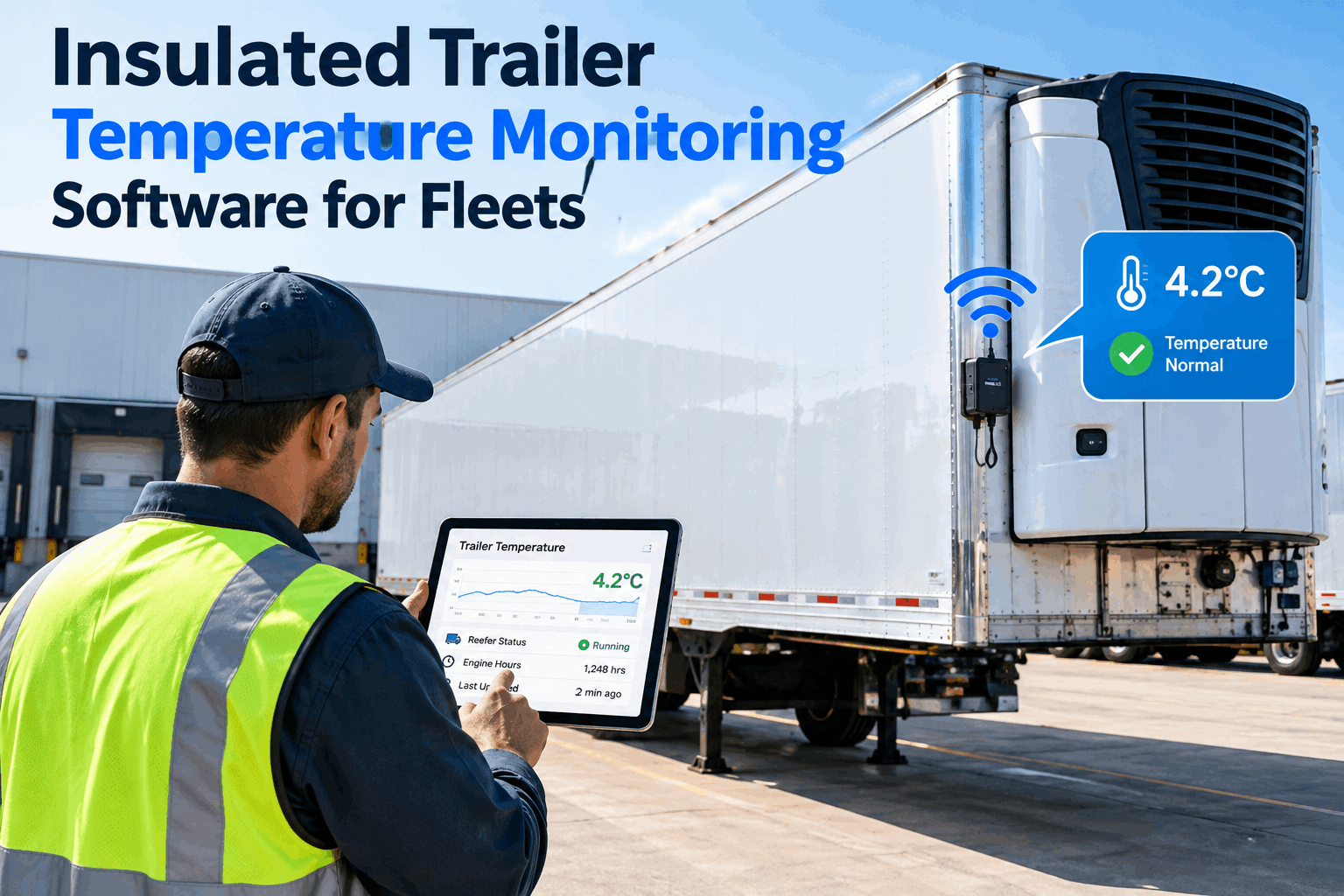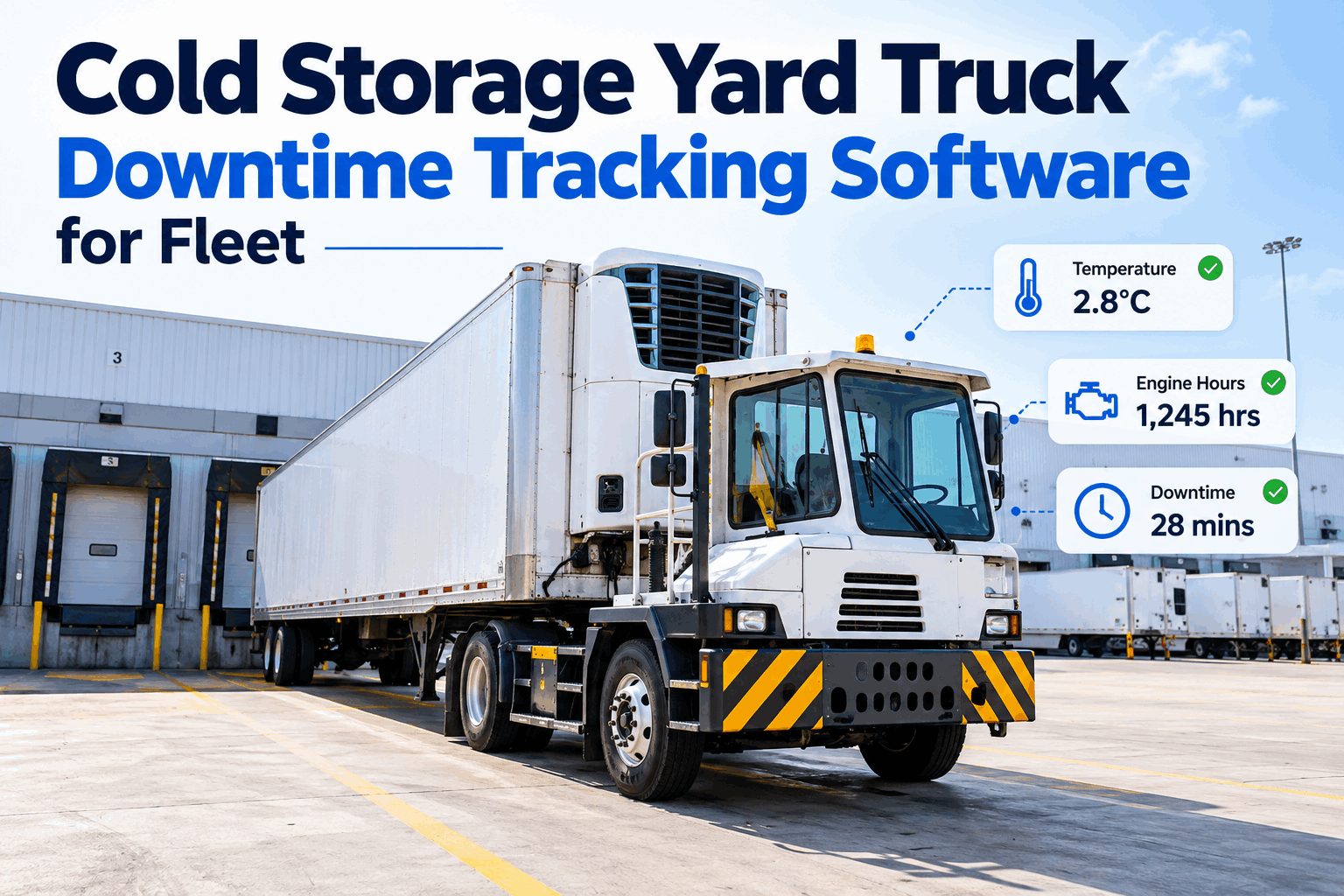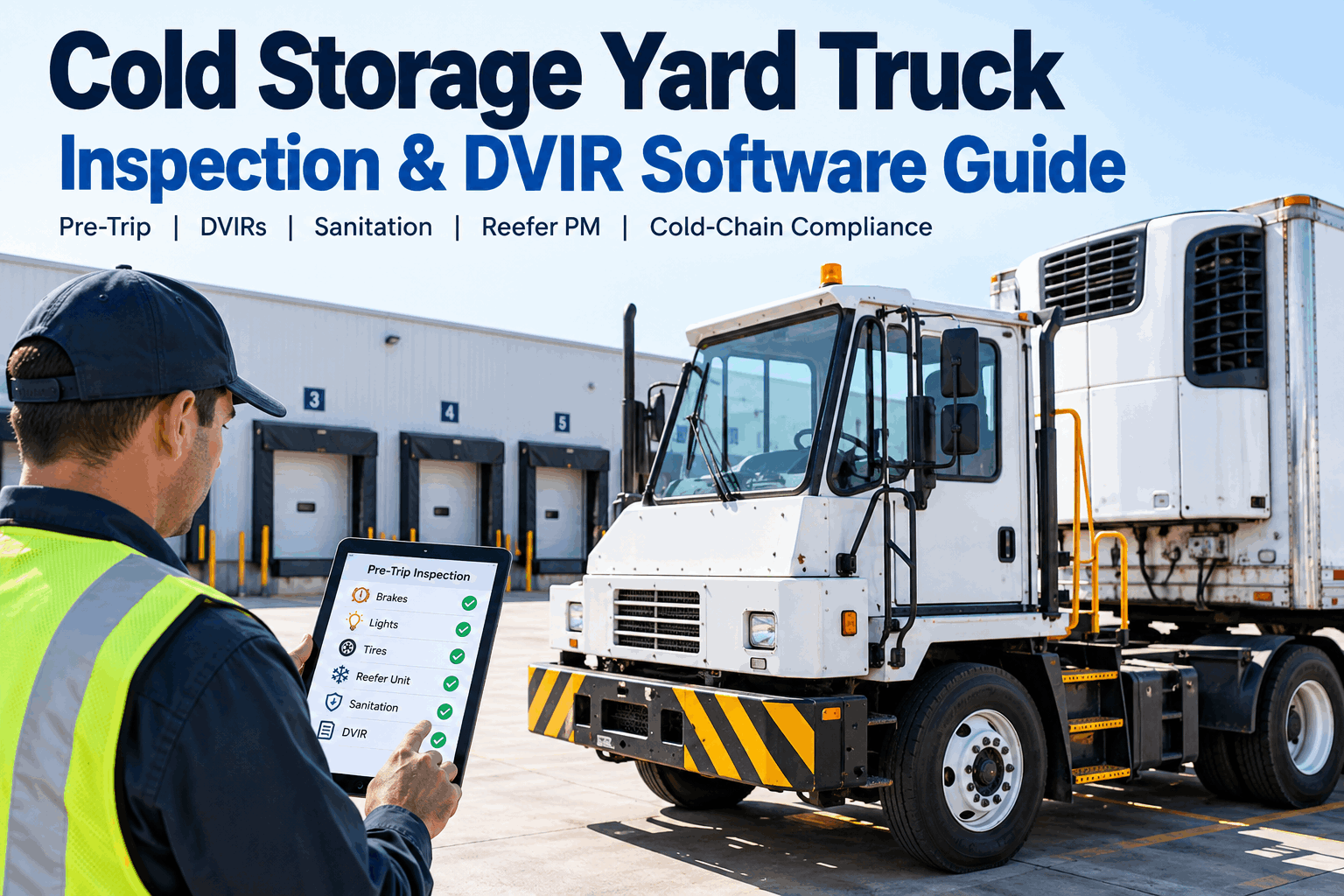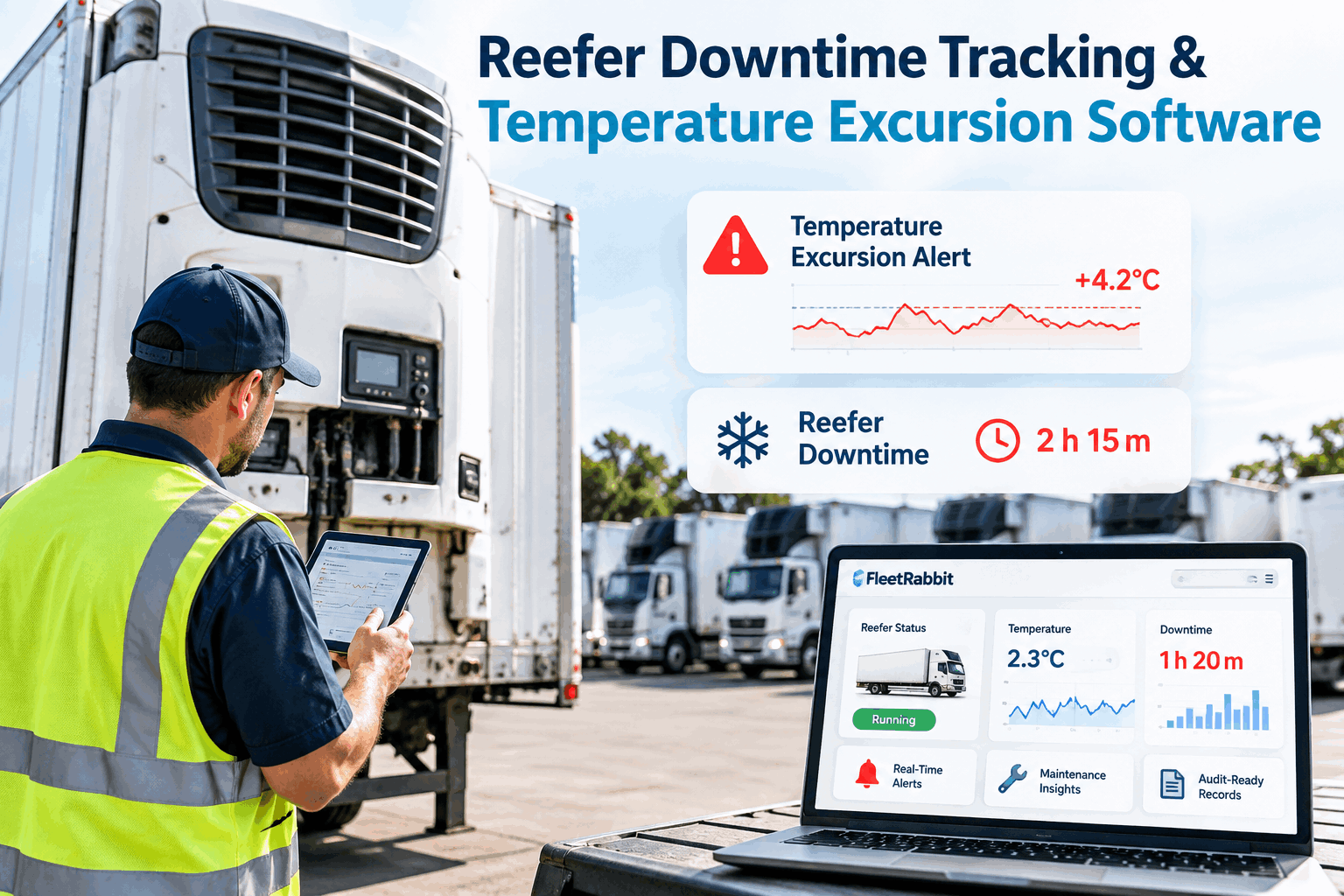
Commercial refrigerated freight carriers, pharmaceutical cold-chain couriers, broadline foodservice distributors, and grocery logistics operators face severe operational and legal risks whenever an auxiliary Transport Refrigeration Unit (TRU) fails mid-transit. Under the FDA Food Safety Modernization Act (FSMA) 21 CFR § 1.908, carriers are legally obligated to maintain continuous temperature controls, execute documented pre-cooling, and prove that perishable cargo was not subjected to thermal abuse. Yet across the cold-chain logistics sector, TRU downtime remains the leading cause of catastrophic in-transit cargo loss. When an auxiliary diesel engine suffers an alternator belt slip, an evaporator coil freezes solid from a clogged defrost drain, or an unmonitored slow micro-refrigerant leak causes temperature decay, food and pharmaceutical shipments valued between $75,000 and $150,000 can spoil in hours. Traditional fleet software tracks tractor odometer mileage while treating the refrigeration unit as an unmonitored attachment, leaving dispatchers blind to mechanical strain until high-temp alarms trigger at the receiver's dock. FleetRabbit delivers dedicated transport refrigeration unit downtime tracking and temperature excursion prevention software built specifically for cold-chain motor carriers. By fusing sub-second Carrier Transicold and Thermo King microprocessor telematics, automated auxiliary engine-hour maintenance queues, real-time delta-T thermodynamic slope analytics, and mobile driver pre-trip eDVIR checkouts into an operations platform priced at $5 per asset per month, FleetRabbit intercepts cooling breakdowns before cargo is ruined. Eliminate roadside compressor seizures, reduce unscheduled reefer downtime by up to 38%, and record temperature compliance logs completely offline inside subterranean cross-dock coolers, underground food vaults, and rural packing sheds with zero cellular reception. Discover how our software protects your perishable freight when you book a demo or start tracking your refrigeration fleet immediately when you sign up for our platform.
The 4 Primary Mechanical Breakdown Modes in Transport Refrigeration
Refrigerated unit downtime stems from specific mechanical, electrical, and thermal stress points; identifying these core failure mechanisms allows maintenance teams to intercept stalls before cargo warms.
Auxiliary Engine Belt & Pulley Seizure
Compressor drive belts, alternator tensioners, and idler pulleys operate under intense cyclic vibration. When maintenance is scheduled by truck odometer mileage rather than auxiliary engine hours, belts snap mid-transit, disabling cooling completely.
Evaporator Coil Icing & Defrost Sensor Drift
Faulty defrost termination switches or blocked air chutes cause moisture to freeze across evaporator fins. Ice chokes trailer airflow, driving box temperatures upward even while the diesel auxiliary engine screams at continuous high speed.
Slow Refrigerant Leaks & Delta-T Decay
Vibration-induced micro-fractures in refrigeration line fittings allow synthetic gas to escape gradually. The TRU loses cooling capacity, causing supply and return air differentials (delta-T) to collapse while burning extra diesel fuel trying to hold setpoint.
Dockside Hot-Loading & Inadequate Pre-Cooling
Loading chilled product into a heat-soaked trailer shell forces the TRU to pull heat out of composite insulation, aluminum flooring, and wooden pallets at the same time. Without verified pre-cooling, cargo experiences dockside rejection.
The Compounding Financial Penalties of Unmonitored TRU Downtime
Managing refrigerated trailers reactively across paper clipboards and unmonitored telematics portals creates severe financial liabilities across food supply chains. Review our cold-chain risk models when you book a demo or start testing our cloud tools directly when you sign up today.
Receiving Dock Cargo Rejections and Claim Deductions
Receiving managers at grocery distribution centers probe internal product temperatures immediately upon arrival. If an unmonitored compressor stall or airflow blockage causes core cargo temperatures to breach the 41°F threshold, the receiver rejects the entire load. The carrier absorbs $60,000 to $120,000 in cargo claims and disposal costs.
Emergency Highway Road Calls & Wrecker Surcharges
A TRU failing on a remote interstate requires emergency roadside refrigeration technician callouts carrying $250+ per-hour rates. If the cooling unit cannot be repaired curbside within two hours, arranging an emergency cross-dock transload adds thousands more in handling fees.
Runaway Auxiliary Diesel Fuel Dissipation
Reefer units running with degraded thermal insulation, torn door gaskets, or low refrigerant charges remain trapped in continuous high-speed diesel mode instead of cycling into economical start-stop operation. This constant high-speed running burns an extra 0.6 to 1.2 gallons of diesel per hour.
Subterranean Food Vaults & Concrete Staging Dead Zones
Trailers dwell inside concrete cross-docks, below-grade food staging basements, and remote packing facilities with zero cellular reception. Cloud-only tracking tools freeze, dropping vital temperature excursion alerts and leaving dispatchers blind to developing thermal failures.
Built Specifically for Transport Refrigeration Unit Reliability
FleetRabbit connects reefer microprocessor telemetry, automated engine-hour work orders, driver pre-trip inspection walkarounds, and parts inventory into an integrated command platform. Discover how our software streamlines your refrigeration operations when you book a demo with our technical specialists.
Auxiliary Engine-Hour PM Scheduler
Directly tracks cumulative diesel run hours and electric standby runtime from Carrier and Thermo King microprocessors, automating 1,500-hour and 3,000-hour service schedules before mechanical failures occur.
Predictive Delta-T Slope Analysis
Continuously evaluates supply air versus return air temperature slopes against ambient weather, alerting dispatchers to low refrigerant charges, torn door seals, or iced coils hours before cargo warms.
Automated Pre-Cool Dispatch Lockouts
Trailers that fail to achieve verified temperature pulldown, show active microprocessor diagnostic trouble codes, or have overdue engine-hour PMs are automatically blocked on the central dispatch board.
Cold Storage Offline Mobile Sync
Drivers perform pre-trip eDVIR walkarounds, log core pulp readings, and photograph clean washouts inside concrete distribution vaults with zero cellular reception; all records auto-sync upon departure.
CARB ATCM & Shore-Power Vault
Tracks ultra-low emission TRU engine compliance, particulate filter status, electric shore-power runtime logging, and state-specific clean reefer registry documentation in an auditable database.
1-Click 12-Month FSMA Dossiers
Compile certified compliance binders containing continuous multi-zone temperature traces, engine operational mode histories, door event dwell logs, and mechanic repair sign-offs in under 60 seconds.
Direct Mapping to Federal Food Safety & Transport Standards
Operating a refrigerated trailer fleet with automated downtime tracking ensures full compliance with federal sanitary transport directives, commercial vehicle safety rules, and environmental standards.
Enforces carrier obligations to maintain refrigerated vehicles in suitable operational condition, execute required pre-cooling, prevent thermal abuse during transit, and ensure adequate refrigeration capacity for agreed setpoints.
Mandates that food transport carriers maintain electronic records of written operating procedures, carrier-shipper agreements, continuous temperature traces, and equipment maintenance logs for at least 12 months.
Standardizes daily pre-trip and post-trip driver walkarounds (§ 396.11), auxiliary reefer engine structural mount checks, qualified mechanic corrective action signatures (§ 396.13), and 90-day maintenance record retention.
Governs auxiliary diesel engine emissions: requires particulate matter filtration verification, tracks electric standby operation hours at distribution facilities, and maintains official state equipment registry profiles.
TRU Downtime & Maintenance Software Comparison
A feature-level comparison evaluating TRU downtime tracking depth, auxiliary engine maintenance integration, and offline mobile resilience as of 2026. Schedule a personalized walkthrough when you book a demo with our team.
| Platform Capability | FleetRabbit | Legacy Enterprise Fleet CAD | Basic Telematics Portals | Whiteboards & Spreadsheets |
|---|---|---|---|---|
| Pricing (per asset/month) | $5/month flat | $35–$70/month | $20–$45/month | High emergency repair costs |
| TRU Engine-Hour Maintenance PMs | Automated run-hour scheduler | Manual hours entry only | Sensor ping only | Tractor odometer miles only (Inaccurate) |
| Delta-T Cooling Decay Analysis | Thermodynamic slope analytics | Not supported | Raw temperature display only | None (Undiscovered refrigerant leaks) |
| Automated Pre-Cool Dispatch Lockout | Instant block on warm trailer | Manual supervisor note | Not supported | None (Warm departures roll) |
| Basement Dock Offline Mobile Sync | Full store-and-forward | Network dependent | Data dropped offline | Paper receipts only |
| Free Trial Access | 14 days, up to 3 assets | Sales demonstration only | Limited sandbox demo | None |
| Contract Commitment | Monthly or annual (No lock-in) | 3 to 5-year lock-in | 2 to 3-year contract | None |
5-Step TRU Downtime Tracking Implementation Pathway
FleetRabbit embeds cleanly into your refrigerated fleet operations, maintenance bays, and driver mobile devices in under two weeks without freight disruption. Begin testing immediately when you sign up for a free trial.
TRU Roster & Microprocessor Ingestion
Import refrigerated trailers, straight trucks, reefer serial numbers, compressor models (Carrier / Thermo King), and historical auxiliary engine run hours via automated CSV tools or direct API.
Engine-Hour PM & Delta-T Threshold Setup
Configure automated maintenance intervals matching manufacturer specifications: establish 1,500-hour minor service buffers, 3,000-hour major services, and delta-T recovery alarms.
Pre-Cooling & Dispatch Lockout Rules Setup
Configure digital eDVIR walkaround checklists tailored to food safety: establish mandatory pre-cooling validations, sanitation checks, and dispatch lockouts for active defects.
Drivers & Reefer Technicians Mobile Rollout
Equip refrigerated transport drivers and certified shop mechanics with the offline-first mobile app on standard iOS or Android smartphones for rapid pre-trips and PM sign-offs.
TRU Uptime Command Go-Live
Activate live fleet temperature monitoring, automated engine-hour maintenance queues, auxiliary fuel dissipation analytics, and 1-click FDA 21 CFR § 1.912 compliance audit exports.
2-Week Deployment Plan & Milestones
A structured timeline designed to transition refrigerated fleet operations from manual whiteboards to automated digital uptime governance with zero disruption to scheduled customer shipments. Review our full onboarding plan when you book a demo today.
Week 1: System Integration & Microprocessor Calibration
- Audit paper maintenance work orders, historical cargo spoilage claims, and fuel consumption receipts
- Connect Carrier and Thermo King telematics feeds to verify real-time auxiliary engine-hour streams
- Configure mobile pre-trip eDVIR walkaround checklists and photo-verified pre-cooling inspection forms
- Assign user access permissions for Fleet Directors, Certified Reefer Mechanics, and Transport Drivers
Week 2: Yard Rollout & Live Verification
- Distribute mobile app to drivers and conduct 15-minute training on digital pre-cooling walkarounds
- Validate store-and-forward offline syncing inside concrete cross-dock coolers and staging sheds
- Simulate an overdue engine-hour PM threshold to verify automated dispatch lockout gating and shop routing
- Launch live fleet temperature dashboard and automated FSMA compliance reporting archives
Real-World Transport Refrigeration Reliability Results
Operational improvements documented by commercial refrigerated motor carriers who deployed digital TRU downtime tracking software. Review the complete cold-chain case study when you book a demo with our team.
42% Reduction in Highway Reefer Breakdowns Across 60 Trailers
A regional refrigerated motor carrier operating 60 trailers suffered frequent summer compressor failures caused by servicing auxiliary units on tractor odometer mileage rather than diesel run hours. FleetRabbit deployed automated engine-hour PM scheduling and delta-T failure alerts, cutting highway road calls by 42% and saving $84,000 in emergency wrecker tows and repair fees in year one.
Zero Uninspected Pre-Cool Departures and 100% FSMA Compliance
A broadline foodservice carrier managing 45 multi-temp trailers faced recurring customer delivery disputes over warm dairy cases. FleetRabbit automated mobile pre-cool verification eDVIRs and dispatch safety lockouts, achieving 100% verified pre-cooling compliance and zero rejected deliveries.
When you operate sixty refrigerated trailers, your Transport Refrigeration Units are the most critical mechanical assets in your business. A tractor breakdown delays a shipment, but a reefer failure destroys the shipment completely. For years, we tracked our reefer maintenance on a garage whiteboard and serviced our units whenever the tractor came in for an oil change. We didn't realize our auxiliary diesel engines were running twice as many hours as the truck odometers because our trailers were sitting on docks pre-cooling for hours. We lost two eighty-thousand-dollar loads in one summer because compressor belts snapped on the interstate. FleetRabbit completely changed our operational posture. It connects directly to our Thermo King microprocessors, tracks our real diesel run hours down to the minute, forces our drivers to verify pre-cooling on their phones, and locks out any trailer with an overdue service or an active alarm code. It has saved our business tens of thousands of dollars and given our shippers complete peace of mind.
Frequently Asked Questions
Take Control of Your Transport Refrigeration Unit Uptime in Less Than 2 Weeks
Automate auxiliary engine-hour maintenance, eliminate cargo spoilage claims, and maintain 100% FSMA compliance at $5/asset/month with a 14-day free trial.