Engine-hour PM scheduling
Service milestones tracked against the TRU's own runtime, independent of tractor mileage.
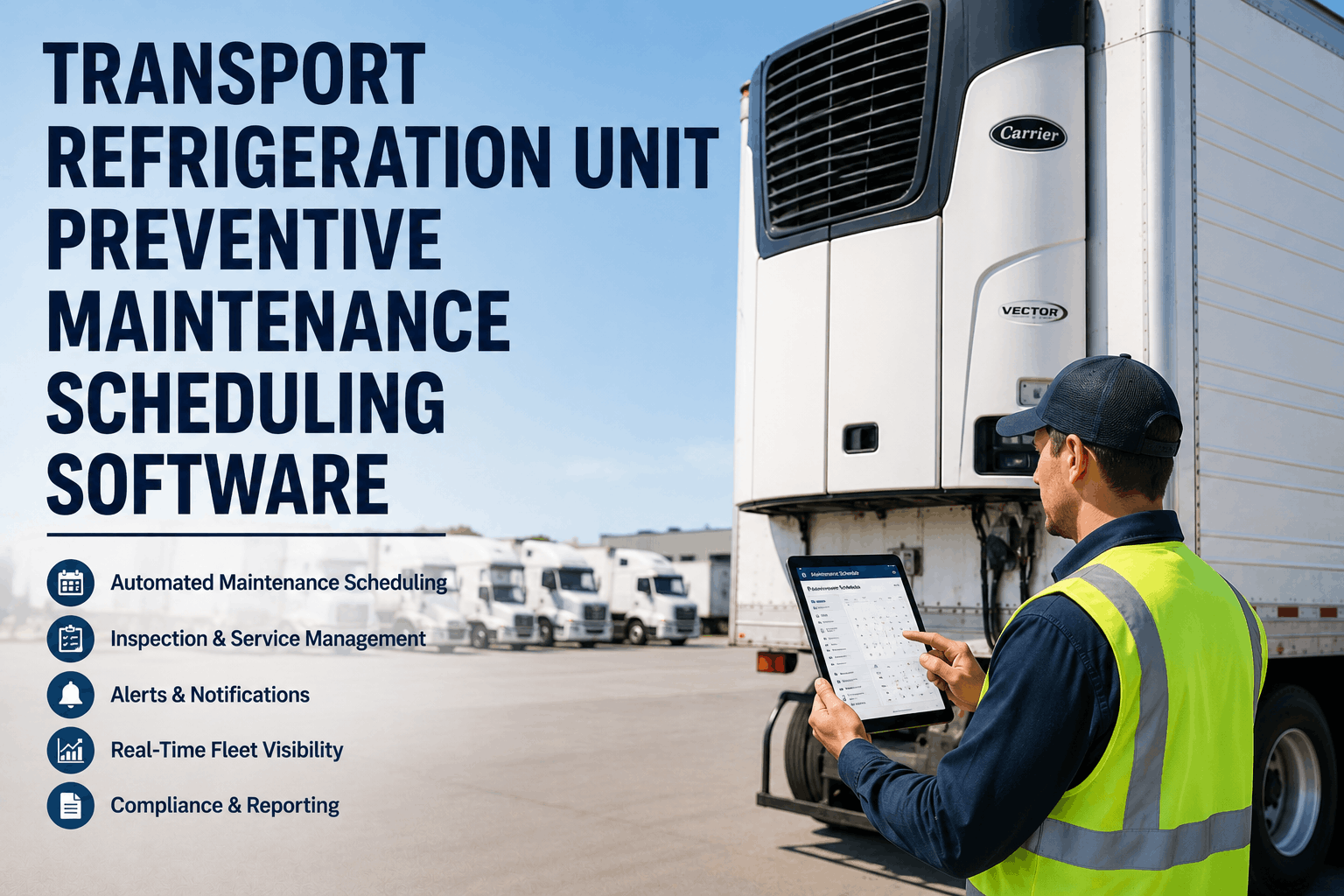
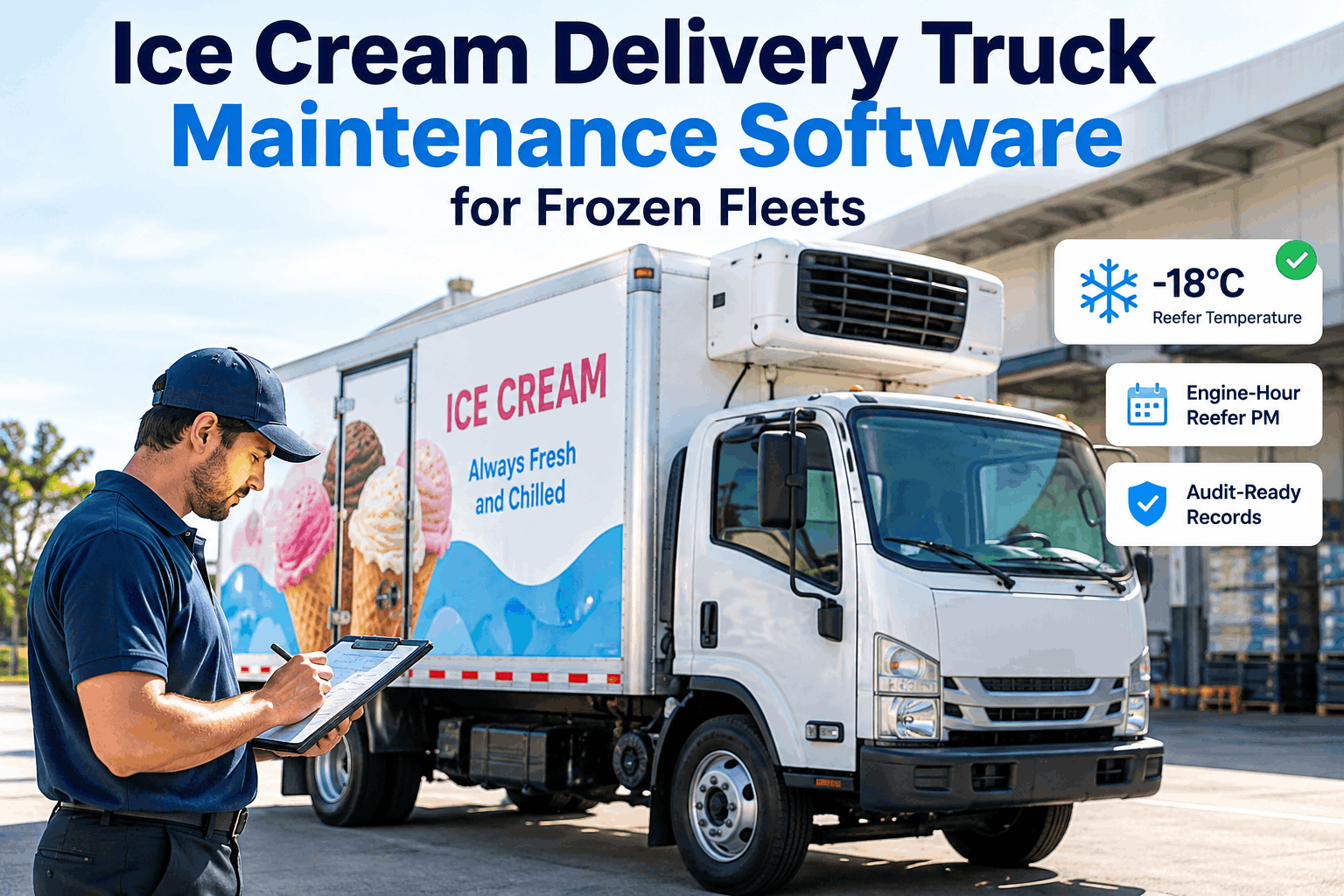
A truck engine reports to a driver sitting six feet away, watching gauges the whole trip. A transport refrigeration unit runs behind the driver with no dashboard at all, its only signal a single status light mounted on the corner of the trailer, visible for a half-second in a mirror. Everything else about how that unit is wearing has to come from data, not a driver's attention. Transport refrigeration unit preventive maintenance software exists to schedule service around real engine hours and surface problems the driver was never in a position to notice.
Full inspection: oil, filters, belts, refrigerant pressure, and electrical checks
Major service on newer units, extending the interval older reefers can't match
Water pump and thermostat replaced proactively before they become a road failure
Refrigerant charge and operating pressure still get a separate check roughly every six months, on a calendar cycle that runs alongside the hour-based schedule, not instead of it. Fleets that sign up for engine-hour scheduling stop guessing which of these milestones a given unit already passed.
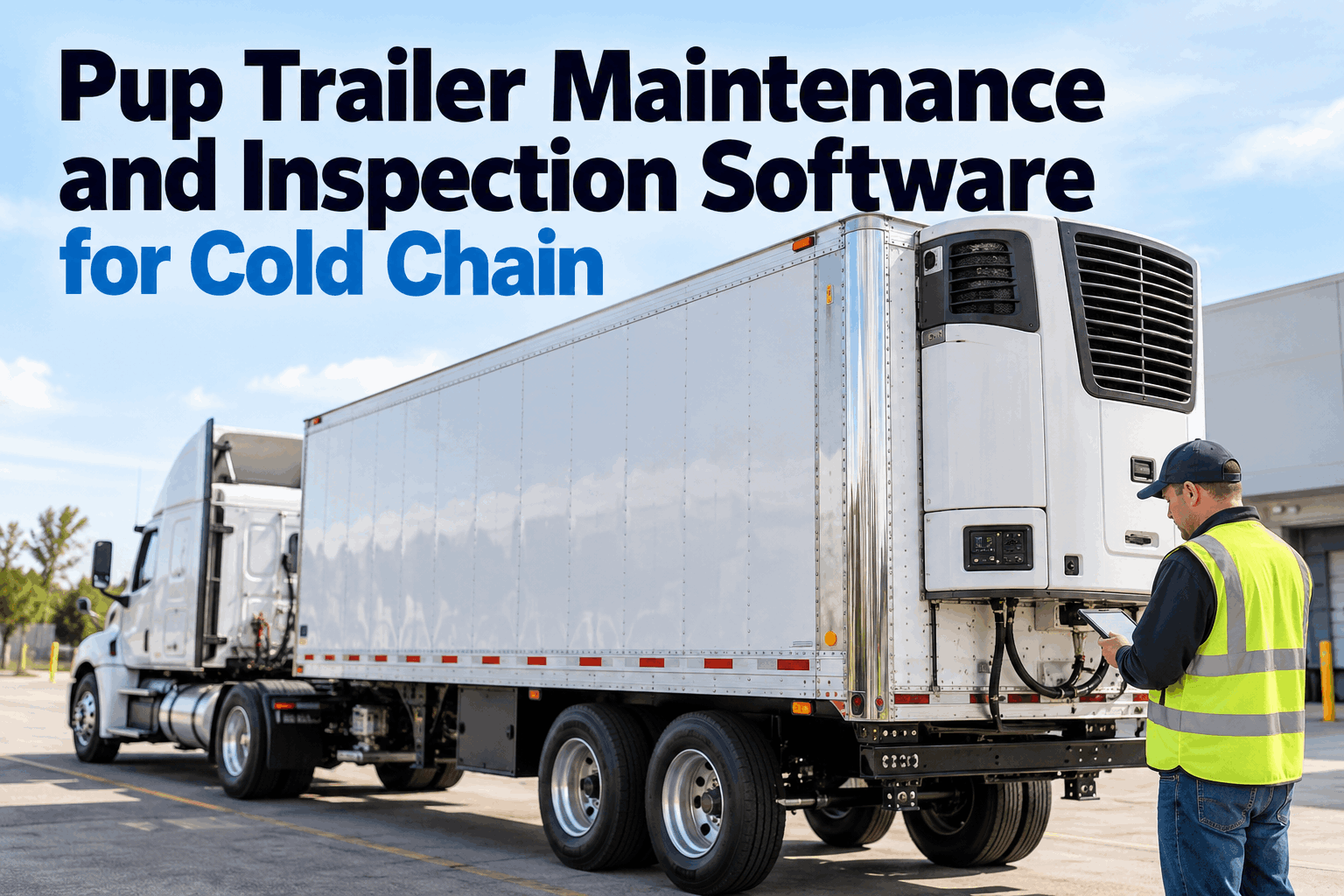
A transport refrigeration unit is powered by a small diesel engine that's entirely separate from the tractor pulling the trailer. It can run continuously to hold a hard set point, or cycle on and off in an energy-saving mode, and either way its runtime has almost no relationship to how far the truck actually drove that day. A unit parked at a dock holding temperature for six hours logs real engine hours without the tractor moving at all.
Scheduling maintenance off the tractor's mileage, or off a generic once-a-year calendar reminder, misses that entirely. Fleets that book a demo usually want to see how engine-hour data from the unit itself, not the truck, drives their service calendar.
See engine-hour tracking, milestone alerts, and temperature-monitored PM built for transport refrigeration units.
Compressor operation and pressure readings against manufacturer specification
Condenser and evaporator coils cleared of debris that reduces cooling capacity
Belts, hoses, and wiring ties inspected for wear before they fail on route
Refrigerant charge and operating pressure verified on its own semiannual cycle
Microprocessor and electrical system checked for fault codes before they escalate
Fuel tank drained of water and vents cleared to keep the engine itself reliable
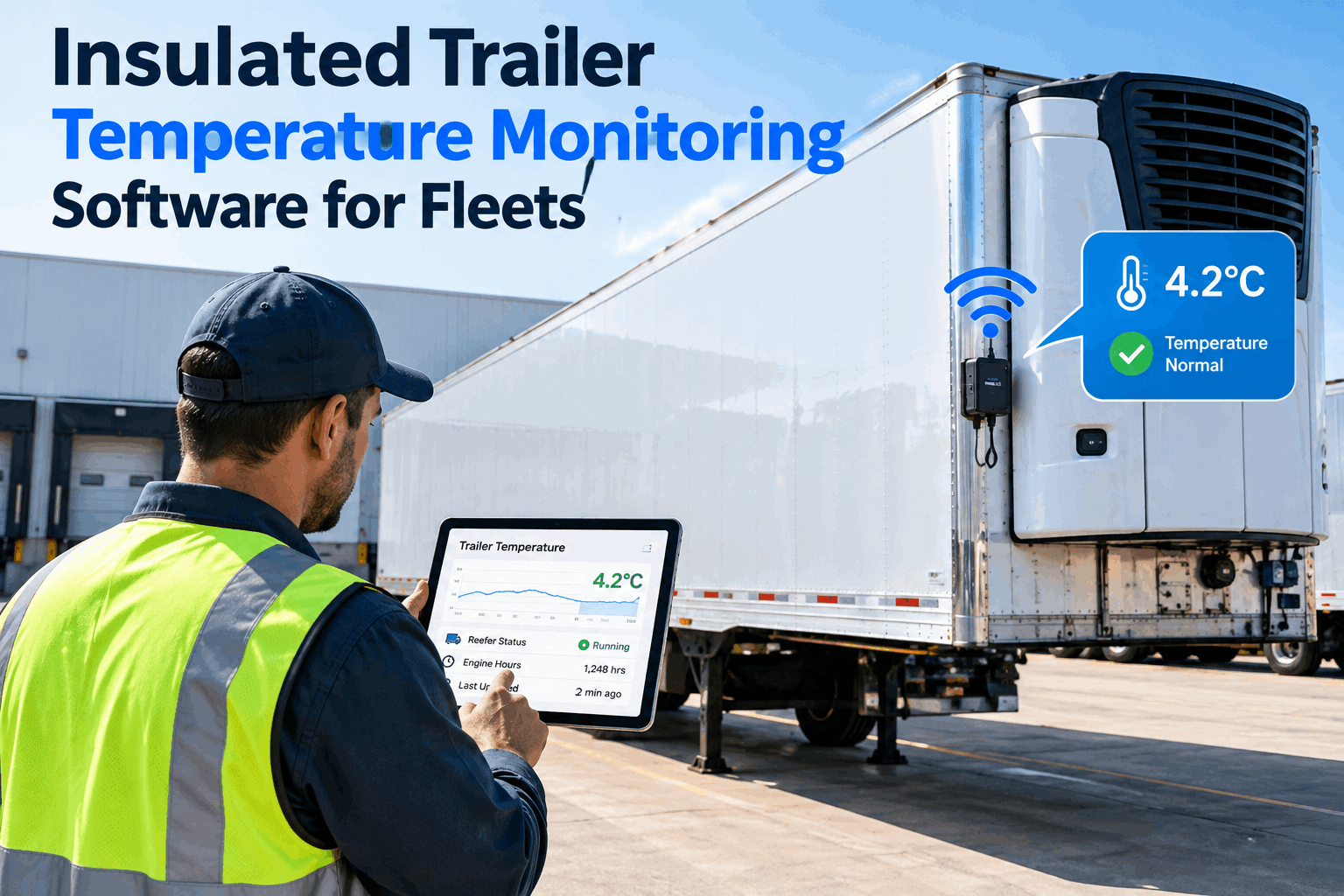
Unlike a truck engine, a TRU gives a driver almost nothing to go on beyond a single indicator light, and by the time that light signals a real problem, the unit is often already underperforming. Telematics data from the unit itself, fault codes, engine hours, refrigerant pressure, and run mode, gives a fleet manager the picture a driver was never equipped to see. Teams that sign up for that visibility typically catch a fault code days before it turns into a stalled unit and a rejected load.
Service milestones tracked against the TRU's own runtime, independent of tractor mileage.
Fleet managers notified as a unit approaches its 1,500, 3,000, or 12,000-hour service point.
Continuous readings tied to the unit's operating condition, not a separate disconnected system.
Electrical and microprocessor codes surfaced to the fleet manager as they happen, not after failure.
The semiannual charge and pressure check scheduled on its own cycle alongside hour-based PM.
Every inspection and repair logged against the unit's serial number, exportable on request.
A TRU quietly logs past its major service interval while the tractor pulling it still shows low mileage on paper, and nobody catches the gap until the compressor starts underperforming on a hot afternoon. With engine-hour tracking on the unit itself, that same milestone triggers a reminder weeks earlier, while the truck is still in for a routine stop instead of stranded with a load at risk. Fleets running this way describe far fewer surprise TRU failures and a service history that's already complete when a customer or auditor asks for it. If your PM schedule is still built around the tractor, a short book a demo session will show what unit-level tracking looks like on your own fleet.
Set up your first transport refrigeration unit in FleetRabbit and see engine-hour PM and temperature monitoring running from day one.
The TRU has its own diesel engine, completely separate from the tractor, and it can run for hours holding temperature while the truck is parked. Mileage tells you nothing about that runtime.
A full inspection covering oil, filters, belts, refrigerant pressure, and electrical checks typically lands around 1,500 hours, a major service around 3,000 hours on newer units, and water pump or thermostat replacement is often done proactively around 12,000 hours.
Not usually. Refrigerant charge and operating pressure are typically checked on a separate roughly six-month calendar cycle, alongside the hour-based service plan rather than instead of it.
Telematics data from the unit itself, including fault codes, engine hours, and operating pressure, gives a fleet manager visibility a driver watching a single indicator light never had.
No. It's built to track and alert against those intervals accurately, using the unit's actual runtime data instead of relying on someone remembering when a unit was last serviced.
Most fleets start with a handful of units to confirm engine-hour tracking against their current service records, then expand fleet-wide. Signing up free is the fastest way to see it on your own units.