Refrigerated transport carriers, commercial food distributors, and perishable freight fleet managers operate under strict federal cleanliness mandates governed by the FDA Food Safety Modernization Act (FSMA) Sanitary Transportation of Human and Animal Food rule. Before a 53-foot refrigerated trailer, multi-temp straight truck, or intermodal reefer container can load fresh produce, dairy, unpasteurized juices, or raw animal proteins, shippers and receiver distribution centers legally mandate verifiable proof that the cargo bay has been thoroughly cleaned, sanitized, and decontaminated from previous hauls. A reefer washout certificate serves as this formal, auditable verification token. When fleets rely on loose paper receipts from truck-wash bays, faded thermal slips, or unverified verbal driver claims, carriers face immediate trailer turnaways at loading docks, costly detention fees, cross-contamination claims, and severe statutory citations during FDA food safety audits. Transitioning to automated digital washout documentation pairs certified wash station receipts, high-resolution interior trailer photographs, sanitizer chemical concentration logs, and temperature pull-down telemetry into an audit-ready compliance docket. To examine how digital washout recordkeeping protects your refrigerated fleet against dock rejections, book an executive compliance consultation with our cold chain engineering team or launch digital sanitation verification immediately via our free platform sign up.
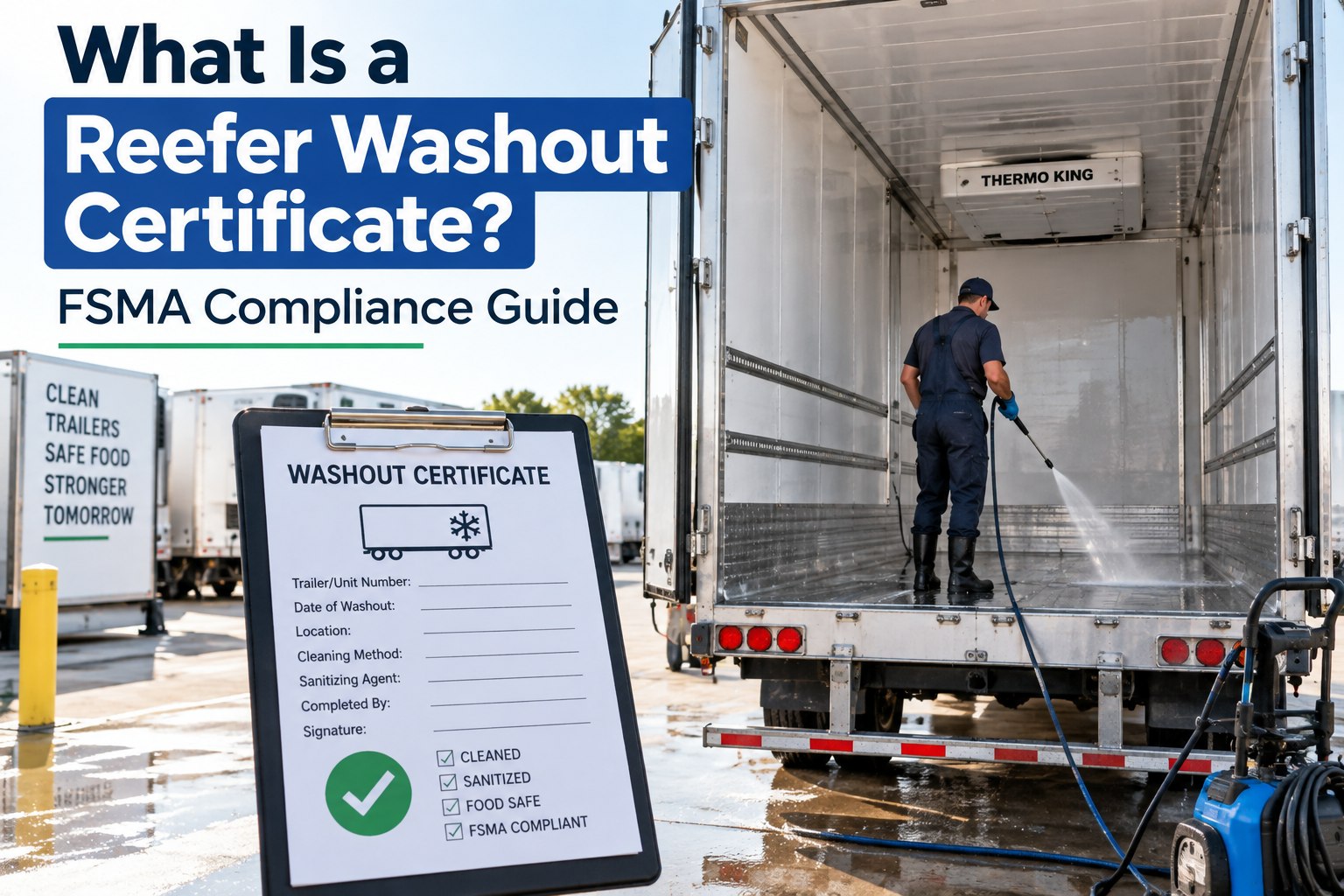
What Is a Reefer Washout Certificate? FSMA Compliance Guide
An authoritative regulatory guide for perishable carriers, food distributors, and fleet compliance officers. Understand statutory washout mandates, critical certificate data fields, cross-contamination prevention, and digital audit readiness under FSMA guidelines.
Protect Your Fleet from Costly Shipper Turnaways and FSMA Citations
Automate digital reefer washout certificates, link certified wash facility receipts to asset work orders, and verify pre-cooling readiness starting from $3/vehicle/month with no hardware lock-in.
The Legal & Operational Anatomy of a Reefer Washout Certificate
A reefer washout certificate is an official written or digital record certifying that the interior cargo bay of a refrigerated trailer has undergone rigorous washing, chemical sanitization, and sensory inspection to eliminate physical, chemical, and biological hazards. Under FDA 21 CFR Part 1, Subpart O (the Sanitary Transportation of Human and Animal Food rule), shippers, loaders, carriers, and receivers share legal liability to ensure that transportation conveyances do not cause food to become adulterated. If a carrier previous hauled raw poultry, fresh seafood, tree nuts, or organic fertilizer, microscopic organic residues, pathogens (such as Salmonella or Listeria monocytogenes), or severe allergens can contaminate subsequent food items loaded into the same trailer. A standard paper receipt stating "Trailer Washed" does not fulfill statutory due diligence: shippers require documented wash temperatures, chemical sanitizers used, and verification that floors, scuff boards, and evaporator blower coils are free of foul odors or standing water. Fleet compliance executives can review digital certificate workflows by scheduling an interactive sanitary compliance demo or establish custom washout validation templates directly via our quick platform sign up.
Conveyance & Asset Identification
The record must unambiguously identify the transport asset, including the unique trailer number, license plate jurisdiction, tractor fleet unit, and VIN. Without precise equipment mapping, auditors cannot verify which specific trailer cargo area was sanitized prior to bill-of-lading execution.
Chain of Previous Cargo Documentation
FSMA requires carriers to disclose the three immediate prior shipments transported in the trailer upon request. Documenting previous cargo identifies high-risk cross-contact hazards (such as transitioning from raw pork hides to fresh table grapes) that demand heightened chemical wash procedures.
Sanitization Method, Chemistry & Temperature
The certificate must state the cleaning methodology applied: high-pressure cold water rinse, steam sanitization, hot water wash (typically 140°F to 160°F), and the exact EPA-registered food-contact sanitizer utilized (such as quaternary ammonium compounds or peracetic acid) along with parts-per-million (PPM) concentration.
Sensory Verification & Drain Clearance
A certified wash technician or driver must physically inspect the cargo interior, attesting that the trailer is dry, pest-free, structurally sound, and void of residual odors. Crucially, the inspection must confirm that rear and front floor drain kazoos are unblocked, preventing pool stagnation during transit.
Direct Feature Comparison: Paper Wash Receipts vs. FleetRabbit Digital Washout Ledger
Carriers operating with paper wash slips encounter severe friction: drivers misplace flimsy thermal receipts, wash station ink fades in hot cabs, and shippers refuse to accept unstamped paper documentation, forcing drivers to pay for duplicate washouts while missing assigned delivery appointment windows. Review how manual paper slips compare directly against FleetRabbit's automated digital washout tracking module. Transportation directors can evaluate automated gate verification workflows by requesting an executive compliance demo or explore driver mobile inspection tools via our self-service sign up.
| Washout Verification Dimension | Paper Wash Bay Slips & In-Cab Receipts | FleetRabbit Digital Washout Platform | Carrier & Shipper Advantage |
|---|---|---|---|
| Documentation Authenticity | Faded thermal paper; easily lost or forged | Cryptographically timestamped & geolocated token | 100% tamper-proof record defensibility |
| Loading Dock Gate Clearance | Driver hand-delivers wet slip to guardhouse | Gatekeeper scans secure QR code or views cloud link | Cuts gate dwell check-in time by 15 minutes |
| Visual Evidence Verification | None; assumes clean interior based on receipt | Mandatory high-res mobile photos of floor & chute | Defeats shipper false dirty-trailer turnaways |
| Previous Cargo Traceability | Driver memory; disconnected dispatch records | Automated historical BOL links for last 5 shipments | Instant compliance with FDA 21 CFR § 1.912 |
| Pre-Cool Temperature Sync | Manual reefer startup; driver enters setpoint | Automated setpoint sync following wash completion | Trailer dry and pre-cooled to setpoint at dock arrival |
| Wash Bay Expense Accounting | Manual driver fuel-card expense reconciliation | Automated wash invoice capture & ledger sync | Eliminates unapproved wash surcharges and fraud |
4-Stage Sanitary Washout & Gate Clearance Sequence
FleetRabbit standardizes trailer hygiene from initial post-delivery debris sweep-out to shipper loading dock check-in, establishing an unbroken digital chain of custody across every food load.
Post-Trip Sweep & Wash Staging
Upon completing cargo delivery, the driver executes a mobile walkaround. If the subsequent load requires sanitary certification, the platform routes the driver to the nearest network wash station.
Washout Execution & Chemical Logging
The certified wash facility executes hot water washing and sanitizing. The technician or driver uploads the wash ticket, logging water temperature, chemical brand, PPM concentration, and wash duration.
Photo Verification & Dry-Out Inspection
Drivers photograph the clean aluminum duct floor, rear scuff plates, air delivery chute, and unblocked drain valves. The app generates a cryptographically sealed digital washout certificate token.
Shipper Gate Check-In & Audit Archive
At the loading facility, the guardhouse scans the digital certificate QR code. The verified record attaches to the shipment bill of lading and archives permanently in the cloud compliance vault.
The True Financial Cost of Washout Non-Compliance
Failing to present a verifiable, pristine reefer washout certificate triggers severe financial losses that ripple across your carrier network. Shippers operating under strict food safety protocols reject trailers instantly if the cargo bay exhibits chemical odors, wood pallet splinters, meat blood residue, or missing wash documentation. Review the systemic cost drivers associated with rejected trailers and discover how automated digital certificates eliminate unbudgeted operational waste. Calculate your fleet's exact cost recovery by booking an operational assessment demo or start testing your fleet immediately via our rapid platform sign up.
Analysis of Sanitary Rejection & Compliance Waste
Sanitary Compliance Engine Capabilities
Shippers and gatekeepers scan a mobile QR code to view authenticated wash station receipts, timestamps, and interior photos instantly.
Links current trailer readiness to the preceding three delivery manifests, satisfying FDA 21 CFR § 1.912 disclosure mandates.
Following verified washout completion, the system automatically verifies reefer dry-out and initiates setpoint pre-cooling countdowns.
FSMA Rule 204 Traceability & Sanitary Transport Architecture
Carriers transporting food across state lines must satisfy strict oversight under the FDA Food Safety Modernization Act. FleetRabbit replaces disorganized in-cab receipt storage with an automated compliance framework that guarantees end-to-end conveyance hygiene, proves due diligence, and eliminates regulatory audit penalties.
Sanitary Conveyance Due Diligence
Maintain continuous, cryptographically verified histories of every trailer wash, chemical application, and driver sensory inspection. The platform proves the conveyance was maintained in suitable sanitary condition to protect food from physical, chemical, and biological contamination.
Cross-Contact Prevention Protocols
The system automatically flags potential allergen conflicts based on previous load data (such as peanuts, milk, eggs, or shellfish). When high-risk transitions occur, the platform forces specialized chemical wash procedures before release.
Automated Dispatch Integration
Digital washout certificates sync directly to enterprise transportation management systems (TMS) via REST APIs. Load planners cannot assign a food load to an unwashed trailer, guaranteeing compliance before trucks roll.
Frequently Asked Questions: Reefer Washout Certificates & FSMA Compliance
When is a reefer washout certificate legally required in refrigerated food transport?
A washout certificate is legally required whenever stipulated in shipper-carrier contracts under the FDA FSMA Sanitary Transportation Rule (21 CFR Part 1, Subpart O), and is standard practice when hauling bulk produce, dairy, fresh meat, poultry, seafood, or organic-certified goods. Additionally, washouts are mandatory whenever a trailer transitions from raw animal proteins or potential allergens to ready-to-eat foods.
What specific information must be documented on a valid reefer washout certificate?
A compliant washout certificate must document the trailer identification number, date and timestamp of wash, facility name and physical location, wash technician identifier, previous cargo hauled, water wash temperature, chemical sanitizer used along with PPM concentration, and verified sensory inspection confirming absence of debris, odors, pests, and standing water.
How long must carriers retain reefer washout records under FDA regulations?
Under FDA FSMA regulations (21 CFR § 1.912), carriers must retain records demonstrating that they have complied with sanitary procedures—including agreements, cleaning procedures, and previous load histories—for a minimum of 12 months. FleetRabbit securely archives all digital certificates, photos, and wash receipts in the cloud for five years.
Can a driver wash out their own trailer and issue a valid washout certificate?
Some shippers permit carrier self-washouts provided the driver follows documented Standard Operating Procedures (SOPs), uses approved sanitizing chemicals at verified PPM levels, and captures photographic proof of clean floors and cleared drain kazoos. However, many enterprise shippers mandate commercial truck wash facilities with third-party certification tokens.
Standardize Your Reefer Washout Compliance Across Every Route
Eliminate gate rejections, automate digital certificate issuance, and maintain 100% regulatory compliance across your refrigerated fleet. Deploy FleetRabbit today with zero proprietary hardware lock-in.