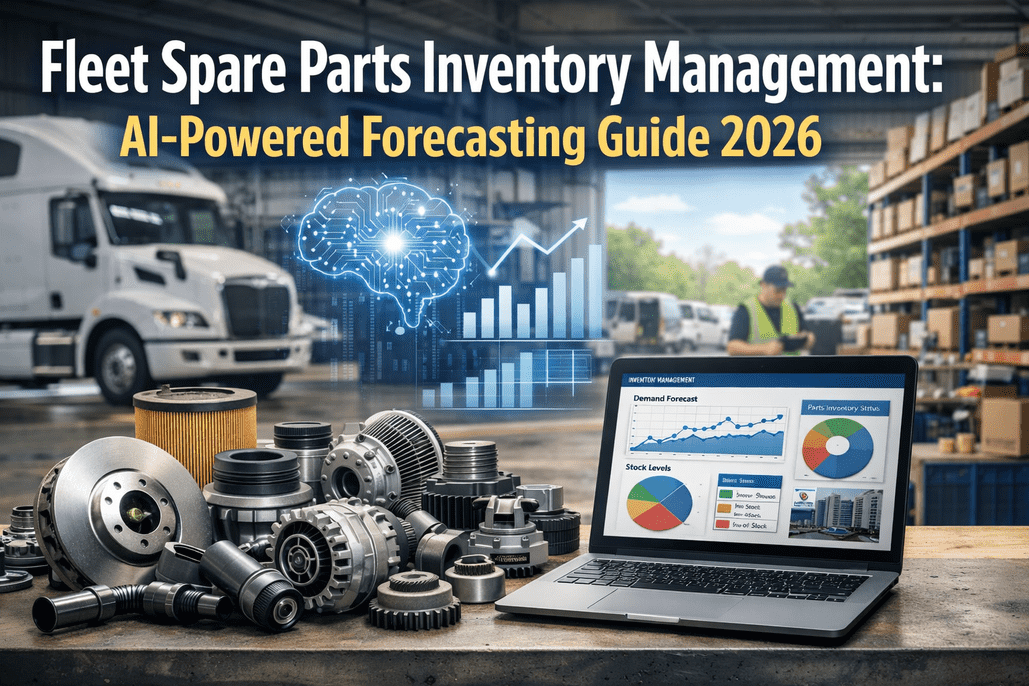
Missing parts cause 37% of unplanned truck downtime—costing fleets $760 per hour in lost productivity while vehicles sit waiting for components. Traditional inventory management can't keep pace with today's complex supply chains, but AI-powered forecasting is changing everything. Fleets implementing smart parts management systems are reducing stockouts by up to 65%, cutting inventory costs by 25-30%, and achieving 98% parts availability. Here's your complete guide to transforming spare parts from a cost center into a competitive advantage. Start optimizing your parts inventory with FleetRabbit.
The Hidden Cost of Poor Parts Management
Parts inventory problems extend far beyond the price tag on a missing component. When a critical part isn't available, the ripple effects cascade through your entire operation—creating costs that often go untracked but significantly impact your bottom line.
Extended Downtime
Trucks sit idle waiting for backordered parts. Average repair time has increased to 4.3 days—31% longer than 2022—with 60% of extended downtimes involving backordered sensors or emission components.
$760/hour lost productivityEmergency Purchases
Rush orders and expedited shipping inflate costs by 30-40%. Emergency air freight can cost 10x standard shipping while still adding days of delay to critical repairs.
30-40% cost premiumExcess Inventory
Fear of stockouts leads to overstocking. MRO inventories are often substantially higher than necessary due to high safety stock targets and inaccurate forecasts.
15-25% capital tied upObsolete Parts
Stocked parts become obsolete as fleet ages change. Dead stock ties up warehouse space and capital that could be used for high-demand components.
8-12% inventory wasteLabor Inefficiency
Technicians wait for parts instead of turning wrenches. Mechanics and planners spend hours tracking orders and searching for alternatives.
20% wrench time lostCustomer Impact
Delayed repairs mean missed deliveries. Each parts-related delay damages customer relationships and can trigger SLA penalties.
22% customer loss riskTraditional vs. AI-Powered Inventory Management
Traditional parts management relies on static reorder points, historical averages, and manual tracking—approaches that worked when supply chains were predictable. Today's reality demands smarter solutions.
How AI-Powered Parts Forecasting Works
AI inventory systems analyze multiple data streams simultaneously—historical usage, predictive maintenance alerts, seasonal patterns, and supplier performance—to forecast exactly what parts you'll need and when.
Data Collection
System gathers historical usage, maintenance records, telematics data, supplier lead times, and seasonal patterns from multiple sources.
Pattern Analysis
Machine learning algorithms identify correlations between vehicle usage, component wear, and parts consumption that humans can't detect.
Demand Prediction
AI forecasts future parts needs based on scheduled maintenance, predicted failures, fleet utilization trends, and external factors.
Optimization
System calculates optimal stock levels and reorder points for each SKU, balancing service levels against carrying costs.
Auto-Replenishment
Automated purchase orders trigger when stock hits dynamic thresholds, ensuring parts arrive before they're needed.
Key Data Integrations
ABC-XYZ Analysis: Prioritizing Your Inventory
Not all parts deserve equal attention. ABC-XYZ analysis combines usage value with demand predictability to focus resources where they matter most—improving planner productivity by 27% according to Deloitte.
ABC: Value Classification
XYZ: Demand Predictability
Recommended Strategies by Category
Critical Truck Parts to Stock
Focus inventory investment on parts that cause the most downtime when unavailable. These high-impact components should be prioritized in your stocking strategy.
Inventory Management Software Features
Modern parts inventory software goes far beyond simple stock tracking. Look for these essential features when evaluating solutions.
Real-Time Tracking
Know exactly what's in stock, where it's located (down to aisle/bin), and what's on order at any moment.
Barcode/RFID Scanning
Eliminate manual data entry errors. Scan parts in and out for 99%+ inventory accuracy.
Auto-Reorder Alerts
Get notified before stockouts happen. System triggers alerts at customizable thresholds.
Demand Forecasting
AI predicts future needs based on maintenance schedules, usage patterns, and seasonal trends.
Work Order Integration
Parts automatically link to repair orders, ensuring accurate job costing and inventory deduction.
Vendor Management
Track supplier performance, compare pricing, and manage purchase orders in one system.
Multi-Location Support
Manage inventory across warehouses, shops, and truck stock with centralized visibility.
Warranty Tracking
Flag warranty-covered parts automatically. Never miss a claim opportunity again.
Reporting & Analytics
Track turnover rates, carrying costs, stockout frequency, and vendor performance with dashboards.
Supplier Relationship Strategies
Your suppliers are partners in preventing stockouts. Strategic vendor management can cut lead time variability by 35% and dramatically improve parts availability.
Qualify at least two geographically diversified suppliers for high-risk items. Dual sourcing insulates against disruptions and improves leverage.
35% less lead time variabilityProvide suppliers with 12-month rolling forecasts updated weekly, not quarterly. They gain visibility; you gain earlier warning of capacity constraints.
86% fewer emergency air-freightsRank suppliers on on-time-in-full (OTIF), responsiveness, quality, and digital integration. Publish scorecards on a live portal for transparency.
17-point OTIF improvementFor C-class items with stable demand, let suppliers own and replenish stock. VMI reduces your carrying costs and administrative burden.
23% less inventory heldImplementation Roadmap
Transform your parts inventory management in three phases over 6-9 months. Start with foundational improvements, then add sophistication as processes mature.
- Audit current inventory and identify dead stock
- Implement CMMS with parts tracking
- Set up barcode scanning system
- Establish bin locations and organization
- Configure basic reorder points
- Perform ABC-XYZ analysis
- Integrate with telematics/predictive maintenance
- Implement dynamic safety stock calculations
- Establish vendor scorecards and SLAs
- Automate purchase order generation
- Deploy AI-powered demand forecasting
- Implement predictive parts ordering
- Optimize multi-location inventory
- Establish continuous improvement KPIs
- Explore VMI for appropriate categories
Key Performance Indicators
Track these metrics monthly to measure inventory health and drive continuous improvement.
Inventory Turnover
Cost of Parts Used ÷ Average Inventory Value
Target: 4-6x annually
Stockout Rate
Items Not Available ÷ Items Requested × 100
Target: Under 2%
Fill Rate
Orders Filled Complete ÷ Total Orders × 100
Target: 95%+
Days of Inventory
Average Inventory ÷ Daily Usage
Target: 30-45 days
Dead Stock %
Unused 12+ Months ÷ Total SKUs × 100
Target: Under 5%
Supplier OTIF
On-Time In-Full ÷ Total Orders × 100
Target: 95%+
Case Study: 75-Truck Fleet Transformation
Regional Distribution Fleet
Frequently Asked Questions
Most fleets should target 30-45 days of inventory for routine parts, with higher levels for critical components with long lead times. The optimal level depends on your suppliers' reliability, lead times, and tolerance for stockouts. ABC-XYZ analysis helps determine appropriate levels for each SKU.
World-class fleets achieve under 2% stockout rates. The industry average is around 5-8%. Companies tolerating rates above 5% leave 10-15% of potential revenue on the table annually through extended downtime and emergency purchases.
It depends on the component and your risk tolerance. For critical safety systems (brakes, steering), OEM parts often provide better warranty coverage and reliability. For commodity items (filters, belts), quality aftermarket parts can reduce costs 20-40% without sacrificing performance.
Predictive maintenance transforms parts planning from reactive to proactive. When AI predicts a component will fail in 30 days, you can order the replacement part to arrive just before it's needed—reducing both stockouts and excess inventory. Fleets using integrated predictive systems report 42% fewer reactive purchases.
Most fleets see 15-30% reduction in inventory carrying costs, 50-90% fewer stockouts, and significant labor savings from automation. Typical payback period is 4-8 months. In 2024, Baxter Planning customers collectively saved over $600 million in inventory costs.
Conduct quarterly reviews to identify slow-moving and dead stock. Options include: returning to suppliers (check policies), selling to aftermarket dealers, using as trade-ins, or donating for tax benefits. Prevent future obsolescence by aligning inventory with current fleet composition and using AI forecasting.
Key Takeaways
Ready to Optimize Your Parts Inventory?
FleetRabbit connects parts management to maintenance scheduling, work orders, and predictive alerts—ensuring the right part is always ready when you need it.