Manual preventive maintenance scheduling is costing fleets thousands in missed services, unnecessary repairs, and unexpected breakdowns. While spreadsheets and calendar-based reminders worked for smaller operations, modern fleets generate too much data and face too much complexity for human schedulers to optimize effectively. Automated preventive maintenance systems now analyze real-time vehicle data, predict optimal service timing, and generate work orders without human intervention—reducing breakdowns by 70% and maintenance costs by 35% for fleets that implement them properly.
The 2026 maintenance landscape has fundamentally shifted from reactive fixes and rigid schedules to intelligent, data-driven automation. AI-powered maintenance platforms process thousands of data points per vehicle annually, filtering noise from actionable insights and triggering precise interventions at the optimal moment. Fleets using comprehensive automation achieve 300-500% ROI within 18 months while eliminating the administrative burden that consumes maintenance managers' time. This guide explores how automation is revolutionizing preventive maintenance and the specific strategies that deliver measurable results. Start automating your PM program in under 15 minutes, or schedule a personalized automation demo.
2026 Maintenance Automation Reality Check
Efficiency Truth: A typical fleet vehicle generates 8,000+ fault codes annually, making manual monitoring impossible. Automated systems reduce this noise to 5-10 actionable issues per vehicle per year. Companies using automated scheduling report 25% lower maintenance costs, 30% less downtime, and 70% improved visibility into vehicle health. The difference isn't working harder—it's letting intelligent systems handle complexity while humans focus on decisions that matter.
Quick Automation Readiness Assessment
Before transforming your maintenance operations, assess your current automation level in 2 minutes. Understanding your starting point determines which improvements will deliver the fastest ROI. (Try our automation readiness assessment tool free)
5-Minute Automation Readiness Check:
- □ Are your PM schedules triggered automatically by mileage, hours, or sensor data?
- □ Do work orders generate automatically when inspections fail or faults trigger?
- □ Does your system integrate telematics data for real-time vehicle health monitoring?
- □ Can technicians receive and close jobs via mobile without paper documentation?
- □ Do you have automated parts reordering based on usage patterns and forecasts?
If you answered "no" to any item, you're leaving significant efficiency and cost savings on the table. Modern automation addresses each of these gaps. (Book a free 30-minute automation consultation)
Preventive maintenance automation isn't about replacing human judgment—it's about eliminating manual data entry, ensuring nothing falls through cracks, and enabling faster, more informed decisions. The most successful implementations automate routine tasks while empowering maintenance teams with better information. (Explore maintenance automation with FleetRabbit)
The Real Numbers: Automated vs. Manual PM Programs
Annual Performance: Automated vs. Traditional Maintenance
| Performance Metric | Automated Systems | Manual/Spreadsheet | Improvement | Key Driver |
|---|---|---|---|---|
| Maintenance Costs | 25-35% lower | Baseline | -30% | Optimized timing |
| Vehicle Downtime | 30-45% reduction | Baseline | -38% | Predictive alerts |
| Breakdown Frequency | 70% fewer | Baseline | -70% | Proactive intervention |
| Administrative Time | 65% reduction | Hours weekly | -65% | Auto work orders |
| Missed PM Services | Near zero | 15-25% | -95% | Automated triggers |
| Parts Availability | 98%+ when needed | 75-85% | +15% | Demand forecasting |
The Evolution of Preventive Maintenance
Understanding where maintenance has been helps clarify why automation represents such a significant leap forward. Each evolution addressed limitations of the previous approach while creating new opportunities for improvement.
From Reactive to Predictive: The Maintenance Journey
Maintenance Approach Evolution:
- Reactive Maintenance (Break-Fix): Run equipment until failure, then repair. Highest cost, maximum downtime, unpredictable budgets, constant crisis management
- Calendar-Based PM: Service at fixed time intervals regardless of actual condition. Better than reactive but leads to over-maintenance and still misses condition-based failures
- Mileage/Hours-Based PM: Service at predetermined usage thresholds. Improved accuracy but doesn't account for operating conditions or actual component wear
- Condition-Based Maintenance: Service based on actual component condition using inspections and sensor data. More efficient but requires manual monitoring
- Automated Preventive Maintenance: Systems automatically trigger services based on multiple data inputs—mileage, time, sensor readings, and usage patterns
- Predictive Maintenance with AI: Machine learning analyzes patterns to predict failures weeks in advance, automatically scheduling intervention at optimal timing
Modern automation combines the best elements of condition-based and predictive approaches while eliminating manual monitoring requirements. The result is maintenance that happens at exactly the right time—not too early (wasting money) and not too late (causing failures). Move beyond calendar-based maintenance.
Core Automation Capabilities
Effective preventive maintenance automation encompasses multiple interconnected systems that work together to eliminate manual processes while improving outcomes. Understanding each capability helps identify where your operation can benefit most.
Automated PM Scheduling
Intelligent Schedule Automation Features:
- Multi-Trigger Scheduling: Set PM intervals by mileage, engine hours, calendar days, or any combination—system triggers service when first threshold is reached
- Real-Time Odometer Integration: Telematics feeds live mileage data, eliminating manual entry and ensuring accurate trigger timing
- Dynamic Interval Adjustment: AI adjusts service intervals based on actual operating conditions, vehicle age, and historical performance data
- Service Program Templates: Create standardized PM programs for vehicle types with automatic application to new assets
- Compliance Integration: Automatically schedule DOT inspections, emissions tests, and regulatory requirements with deadline tracking
- Workload Balancing: Spread scheduled maintenance across time periods to prevent shop overload and maintain consistent vehicle availability
Automate Your PM Scheduling Today
Never miss another service interval. Intelligent automation ensures every vehicle gets the right maintenance at exactly the right time.
Automated Work Order Generation
Manual work order creation consumes hours weekly and introduces delays between issue identification and repair initiation. Automated systems generate work orders instantly based on configurable triggers, ensuring immediate action on every maintenance need.
Work Order Automation Workflow:
- Inspection-Triggered Orders: When a driver reports a failed inspection item, system automatically creates work order with defect details and photos
- Fault Code Integration: Diagnostic trouble codes (DTCs) from telematics trigger prioritized work orders based on severity and historical patterns
- PM Due Conversion: Upcoming PM services automatically convert to work orders at configurable lead times
- Technician Assignment: System routes work orders to available technicians based on skills, location, and current workload
- Parts Attachment: Work orders automatically include required parts lists based on service type and vehicle configuration
- Status Automation: Vehicle status updates automatically when work orders are created and closed
Real-World Automation Example
Automated Workflow in Action
Here's how automated work order management works:
- A truck fails pre-trip inspection due to low tire pressure
- System auto-generates work order and flags it as high priority
- Closest available technician receives mobile notification and accepts job
- After repair, tech logs completed task and system updates asset record
- Vehicle is cleared for dispatch—no paper shuffling or manual follow-ups needed
This entire process happens in minutes rather than hours, with complete documentation automatically captured. (See automated workflows in action)
Telematics-Powered Automation
The integration of telematics data transforms preventive maintenance from schedule-based to condition-based. Real-time sensor data provides continuous visibility into vehicle health, enabling automated systems to respond to actual conditions rather than assumptions.
Critical Telematics Data Points
Vehicle Health Monitoring Parameters
| Data Category | Monitored Parameters | Automation Triggers | Maintenance Impact |
|---|---|---|---|
| Engine Performance | Temperature, oil pressure, RPM patterns | Threshold alerts, trend analysis | Prevent overheating, lubrication failures |
| Fuel System | Consumption rates, efficiency trends | Abnormal consumption alerts | Detect injector issues, filter needs |
| Electrical System | Battery voltage, alternator output | Voltage drop detection | Prevent no-start situations |
| Brake System | Air pressure, application frequency | Pressure anomalies, wear patterns | Schedule brake service proactively |
| Tire Condition | Pressure, temperature, tread wear | Pressure loss, heat buildup | Prevent blowouts, optimize rotation |
| Transmission | Fluid temperature, shift patterns | Temperature spikes, hard shifts | Service before failure |
Fault Code Intelligence
Transforming 8,000 Codes into 10 Actions:
- Volume Challenge: A typical fleet vehicle generates 8,000+ engine codes annually—impossible for humans to monitor effectively
- AI Filtering: Machine learning identifies patterns that truly indicate failures versus normal operational variations
- Prioritization Logic: Systems rank fault codes by severity, combining multiple indicators to distinguish urgent from routine issues
- Contextual Analysis: AI considers operating conditions when evaluating codes—a voltage drop during cranking is normal; continuous low voltage indicates alternator failure
- Actionable Reduction: Automated filtering reduces 8,000 codes to 5-10 actionable issues per vehicle annually
- Automatic Routing: Critical codes trigger immediate work orders while minor issues are bundled into scheduled PM services
Predictive Maintenance Integration
Predictive maintenance represents the cutting edge of automation—using AI to forecast failures before they occur and automatically scheduling intervention at the optimal time. This capability transforms maintenance from a cost center into a competitive advantage.
How Predictive AI Works
AI-Powered Failure Prediction:
- Historical Pattern Analysis: AI examines millions of data points across fleet history to identify failure precursors
- Real-Time Monitoring: Continuous sensor data streams feed prediction models, updating failure probability in real-time
- Multi-Variable Correlation: Systems analyze combinations of factors—temperature plus vibration plus age—that predict failures
- Confidence Scoring: Predictions include confidence levels, helping prioritize which alerts require immediate action
- Lead Time Optimization: AI predicts failures 3-6 weeks in advance, providing ample time for scheduled repair
- Continuous Learning: Models improve over time as they process more fleet-specific data and outcomes
PM Bundling: Maximizing Shop Visits
Intelligent Service Bundling:
- Opportunity Identification: When vehicle enters shop for scheduled PM, AI identifies other repairs approaching due
- Cost-Benefit Analysis: System calculates whether bundling saves money versus separate visits based on labor and downtime costs
- Parts Coordination: Bundled repairs trigger automatic parts ordering to ensure availability during service
- Downtime Optimization: Completing multiple services in one visit reduces total out-of-service time
- Shop Efficiency: Technicians work more efficiently with comprehensive work orders versus multiple small jobs
Fleets implementing predictive maintenance with PM bundling cut unplanned downtime by 10-40% depending on operation type.
Predict Failures Before They Happen
AI-powered predictive maintenance identifies issues weeks in advance, automatically scheduling repairs before breakdowns disrupt your operation.
Automated Parts and Inventory Management
Parts availability directly impacts maintenance speed and vehicle uptime. Automated inventory management ensures critical components are always available while preventing costly overstocking that ties up capital.
Intelligent Inventory Automation
Data-Driven Parts Management:
- Demand Forecasting: AI analyzes PM schedules, failure patterns, and seasonal trends to predict parts needs
- Automatic Reordering: System triggers purchase orders when inventory reaches configurable minimum levels
- ABC Classification: Parts categorized by criticality and usage frequency for differentiated stocking strategies
- Just-In-Time Delivery: Routine parts ordered for delivery aligned with scheduled PM services
- Emergency Stock: Critical failure-prone components maintained at higher levels for unexpected needs
- Vendor Integration: Automated ordering with preferred suppliers for optimal pricing and lead times
Work Order Parts Integration
Closing the Parts-Labor Loop
- Automatic Association: Work orders include required parts lists based on service type and vehicle configuration
- Availability Checking: System verifies parts in stock before scheduling service, preventing delays
- Usage Tracking: Parts consumed automatically deducted from inventory when work orders close
- Cost Allocation: Parts costs automatically assigned to vehicles and departments for accurate TCO tracking
- Warranty Flagging: System identifies parts still under warranty before approving replacement purchases
Mobile and Field Automation
Effective maintenance automation extends beyond the office to technicians in the field and drivers performing inspections. Mobile capabilities eliminate paper processes while ensuring real-time data capture and communication.
Technician Mobile Capabilities
Field Operations Automation:
- Work Order Reception: Technicians receive assignments via mobile app with complete vehicle history and repair details
- Digital Inspections: Customizable inspection forms with photo documentation and signature capture
- Time Tracking: Automatic labor time capture from work order acceptance to completion
- Parts Logging: Scan or select parts used with automatic inventory deduction
- Status Updates: Real-time progress visibility for managers without interrupting technicians
- Offline Capability: Full functionality without connectivity, syncing when connection restored
Driver Inspection Automation
Digital DVIR Workflows:
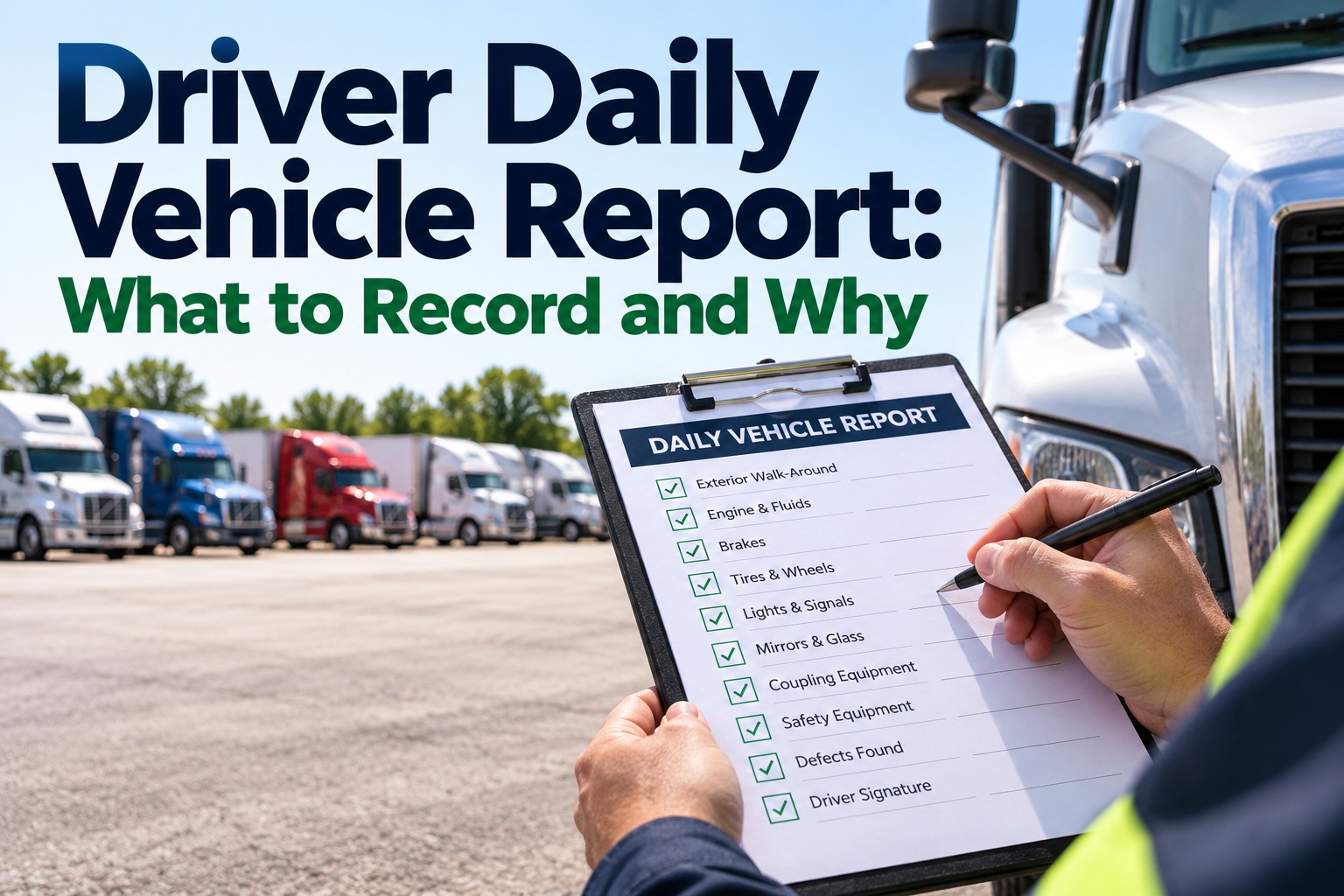
- Guided Inspections: Step-by-step checklists ensure complete pre-trip and post-trip documentation
- Photo Requirements: Configurable photo capture for defects, damage, and compliance documentation
- Instant Defect Reporting: Failed items immediately trigger work orders without separate communication
- Electronic Signatures: Driver certification captured digitally for compliance records
- Compliance Tracking: Automated tracking ensures no inspections are missed across the fleet
- Time Savings: Digital inspections reduce completion time by up to 70% versus paper processes
Compliance Automation
Regulatory compliance requires meticulous documentation and timely completions. Automated systems ensure nothing falls through cracks while eliminating manual compliance tracking burden.
Automated Compliance Management
| Compliance Area | Manual Challenge | Automated Solution | Risk Reduction |
|---|---|---|---|
| DOT Inspections | Tracking annual dates per vehicle | Auto-scheduling with reminders | Zero missed inspections |
| Emissions Testing | State-specific requirements | Jurisdiction-aware scheduling | No failed registrations |
| CDL Medical Cards | Driver expiration tracking | Automated alerts and blocks | No expired drivers |
| DVIR Records | Paper filing and retrieval | Digital storage with instant access | Audit-ready always |
| Maintenance Records | Manual documentation | Auto-generated service history | Complete audit trails |
| Recall Management | Tracking affected vehicles | VIN-based recall matching | No missed safety recalls |
Implementation Best Practices
Successful automation implementation requires thoughtful planning and phased execution. Rushing deployment or skipping foundational steps creates problems that undermine ROI and user adoption.
12-Week Implementation Roadmap
Phased Automation Deployment:
- Weeks 1-2: Foundation — Data cleanup, vehicle inventory verification, service history import, user setup
- Weeks 3-4: Core Scheduling — PM program configuration, service templates, trigger rules, reminder setup
- Weeks 5-6: Telematics Integration — Connect data feeds, configure fault code rules, test automated triggers
- Weeks 7-8: Work Order Automation — Workflow configuration, technician training, mobile app deployment
- Weeks 9-10: Parts Integration — Inventory setup, reorder rules, vendor connections, warranty tracking
- Weeks 11-12: Optimization — Review initial results, adjust thresholds, expand automation rules, train advanced features
Critical Success Factors
Avoid Common Implementation Pitfalls
- Data Quality First: Automation amplifies data problems—clean asset records and service history before launch
- Start Simple: Begin with basic PM scheduling before adding predictive features; build confidence incrementally
- User Training: Technology is only effective if people use it correctly; invest in comprehensive training
- Integration Testing: Verify telematics connections and data flows before relying on automated triggers
- Change Management: Address resistance by demonstrating benefits and involving users in configuration decisions
- Realistic Expectations: Full ROI takes 6-12 months; early wins build momentum for broader adoption
Transform Your Maintenance Operations
Join fleets achieving 300-500% ROI with intelligent maintenance automation. Reduce costs, eliminate breakdowns, and free your team for strategic work.
Measuring Automation ROI
Quantifying automation benefits requires tracking the right metrics before and after implementation. Clear measurement enables continuous optimization and justifies expanded investment.
Key Performance Indicators
Essential Automation Metrics:
- Maintenance Cost per Mile: Total maintenance spend divided by miles driven—target 25-35% reduction
- Vehicle Availability: Percentage of fleet available for dispatch—target 96-98% uptime
- Unplanned Downtime: Hours lost to unexpected repairs—target 40-70% reduction
- PM Compliance Rate: Percentage of scheduled services completed on time—target 98%+
- Work Order Cycle Time: Time from issue identification to repair completion—target 50% reduction
- Administrative Hours: Time spent on manual scheduling and data entry—target 65% reduction
- Parts Availability Rate: Percentage of needed parts in stock when required—target 98%+
ROI Calculation Framework
Typical Automation ROI Components
| Savings Category | Small Fleet (25 vehicles) | Medium Fleet (100 vehicles) | Large Fleet (500 vehicles) |
|---|---|---|---|
| Reduced Breakdowns | $15,000-25,000/year | $60,000-100,000/year | $300,000-500,000/year |
| Lower Maintenance Costs | $10,000-20,000/year | $40,000-80,000/year | $200,000-400,000/year |
| Administrative Savings | $5,000-10,000/year | $20,000-40,000/year | $100,000-200,000/year |
| Parts Optimization | $3,000-8,000/year | $12,000-32,000/year | $60,000-160,000/year |
| Total Annual Savings | $33,000-63,000 | $132,000-252,000 | $660,000-1,260,000 |
| Typical Payback Period | 4-8 months | 3-6 months | 2-4 months |
The Future of Maintenance Automation
Maintenance automation continues to advance rapidly, with emerging capabilities that will further transform fleet operations in the coming years.
Emerging Automation Capabilities
What's Next in PM Automation:
- Autonomous Scheduling: Self-diagnosing vehicles that schedule maintenance, order parts, and coordinate service appointments without human intervention
- LLM-Powered Guidance: Large language models synthesizing work order history, troubleshooting data, and fleet trends to provide step-by-step repair recommendations
- Expanded Sensor Coverage: Trailers, tires, reefers, and specialized equipment gaining IoT sensors for comprehensive predictive maintenance
- Digital Twin Technology: Complete virtual replicas of vehicles enabling simulation and prediction with unprecedented accuracy
- Cross-Fleet Learning: AI models trained on industry-wide data identifying failure patterns before they occur in your specific fleet
- Automated Parts Ordering: AI predicting and ordering parts automatically based on predicted failures and scheduled services
Frequently Asked Questions
Q: How long does it take to see ROI from maintenance automation?
Most fleets break even within 6-12 months, with leading implementations achieving payback in 3-6 months. ROI compounds over time as the system learns your fleet's patterns and optimization improves. Initial savings come from reduced administrative time and missed-service prevention, while larger savings from predictive maintenance and parts optimization develop as the system accumulates data.
Q: Can automation work without telematics integration?
Yes, automated PM scheduling delivers significant value with manual mileage entry or fuel card integration. However, telematics integration unlocks the full potential—real-time odometer data, fault code monitoring, and condition-based triggers. Fleets often start with basic automation and add telematics integration as they see value, progressively enhancing capabilities.
Q: How does automated scheduling handle vehicles with different maintenance requirements?
Modern systems support multiple PM programs—different schedules for vehicle types, makes, models, and operating conditions. Templates can be configured for each category and automatically applied to new vehicles based on classification. Custom intervals account for factors like vocational use, climate conditions, and manufacturer recommendations.
Q: What happens when the system triggers too many or too few alerts?
Threshold tuning is a normal part of implementation. Most systems provide dashboards showing alert frequency and outcomes, enabling administrators to adjust sensitivity. AI-powered systems learn over time which alerts result in actual repairs versus false positives, automatically improving filtering accuracy. Start conservative and refine based on actual results.
Q: Does automation replace the need for skilled maintenance managers?
No—automation handles routine scheduling, data entry, and monitoring while freeing managers for higher-value work: strategic decisions, vendor relationships, team development, and continuous improvement. The best implementations elevate maintenance managers from data processors to strategic leaders. Automation amplifies human capability rather than replacing it.
Q: How do we ensure technicians adopt mobile tools?
Success requires involving technicians in selection and configuration, providing thorough training, and demonstrating how digital tools make their jobs easier—not harder. Start with willing early adopters, gather feedback, and expand gradually. Emphasize benefits like reduced paperwork, better job information, and easier parts access. Address resistance by showing how the system helps rather than monitors them.
Conclusion: The Competitive Imperative
Preventive maintenance automation has moved from competitive advantage to operational necessity. Fleets still relying on spreadsheets, calendar reminders, and manual work orders face mounting disadvantages: higher costs, more breakdowns, slower response times, and administrative overhead that prevents strategic focus. The technology is proven, the ROI is documented, and implementation pathways are well-established.
The question isn't whether to automate—it's how quickly you can implement and how comprehensively you can deploy. Start with core PM scheduling automation to eliminate missed services. Add telematics integration for real-time condition monitoring. Implement work order automation to accelerate repairs. Layer predictive capabilities as your data matures. Each step delivers measurable value while building toward a fully optimized maintenance operation.
The fleets that thrive in the coming years will be those that transform maintenance from a cost center into a competitive advantage—through automation that prevents problems, optimizes timing, and frees human talent for work that truly requires human judgment. The technology exists today. The implementation path is clear. The only variable is your decision to start. Begin your automation journey now.
Ready to Automate Your Maintenance?
Join thousands of fleets achieving breakthrough efficiency with intelligent PM automation. Start seeing results in weeks, not months.