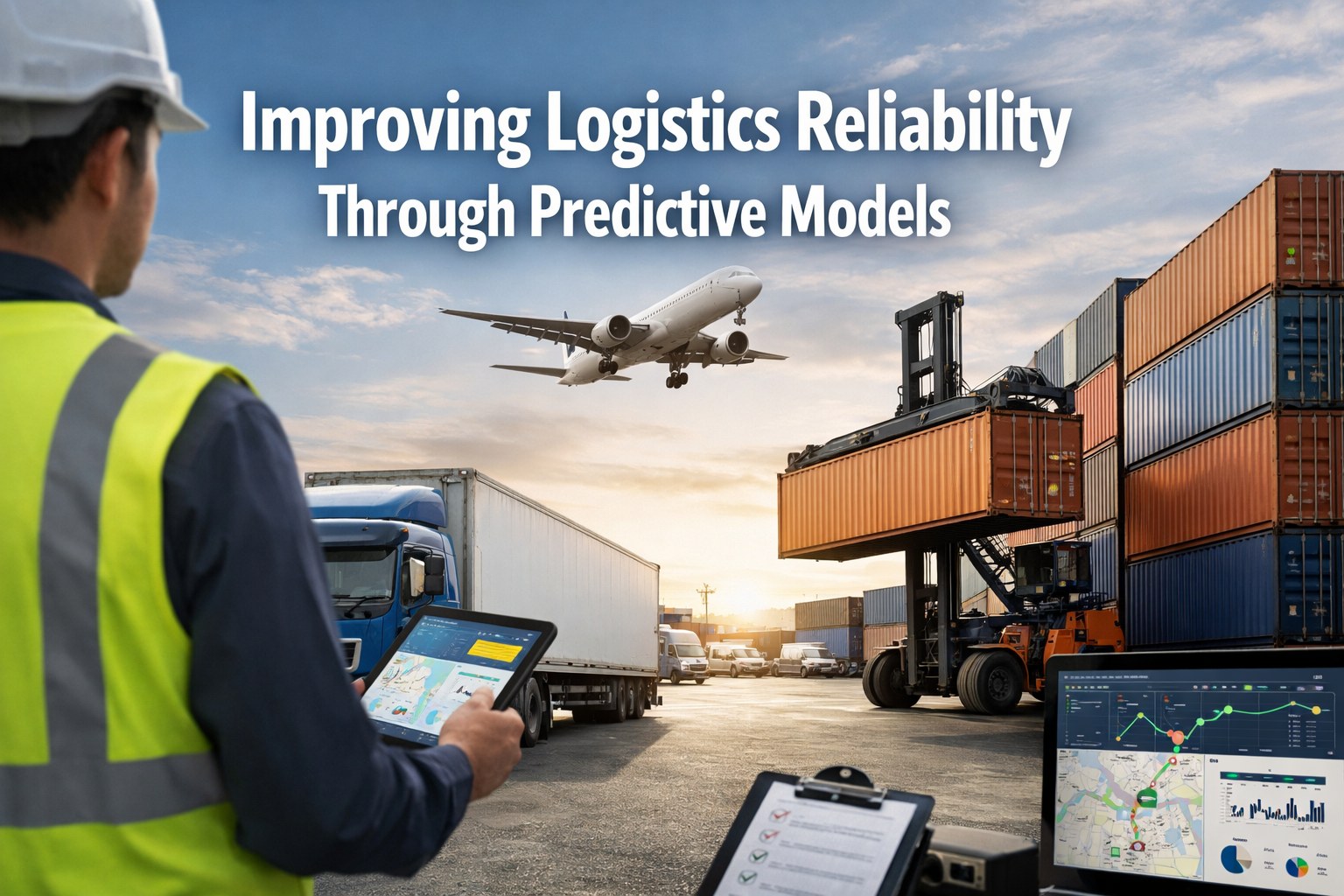
Logistics reliability isn't about hoping deliveries arrive on timeit's about knowing they will because predictive models have already anticipated every variable that could cause delays. While 75% of companies still react to disruptions after they occur, the top-performing 25% use AI-driven predictive analytics to identify problems weeks in advance, reduce delivery uncertainty by 40%, and transform their supply chains from reactive cost centers into proactive strategic assets. The difference between reliable and unreliable logistics isn't better trucks or more driversit's systematic implementation of predictive intelligence that turns uncertainty into predictability.
The 2025 logistics landscape demands unprecedented reliability as customer expectations accelerate and supply chain volatility becomes the new normal. Organizations employing AI-driven predictive solutions report a 15% reduction in logistics costs, a 35% decrease in inventory levels, and a 65% improvement in service quality according to McKinsey research. This comprehensive guide reveals exactly how predictive models improve logistics reliability across ETA accuracy, demand forecasting, route optimization, and disruption prevention—turning data into dependable deliveries. Start building your predictive logistics system in under 15 minutes, or schedule a personalized reliability strategy demo.
2025 Logistics Reliability Reality Check
Competitive Truth: A 2025 Deloitte report found that AI-driven logistics firms outperform traditional peers by 25% in overall operational agility. Supply chain disruptions lasting longer than a month occur every 3.7 years on average and can cost businesses up to 45% of a year's profit over a decade. Predictive analytics isn't optional—it's the difference between surviving disruptions and being destroyed by them.
Quick Predictive Logistics Assessment
Before implementing predictive models, assess your current logistics reliability in 2 minutes. Understanding your baseline determines your path to data-driven operations. (Try our predictive readiness assessment tool free)
5-Minute Predictive Readiness Check:
- Do you have real-time visibility into shipment locations and status?
- Can you predict delivery times with less than 10% deviation?
- Do you receive advance warning of potential supply chain disruptions?
- Are your demand forecasts accurate within 15% of actual orders?
- Can you dynamically adjust routes based on real-time conditions?
If you answered "no" to any item, you're leaving reliability—and profit—on the table. (Book a free 30-minute predictive analytics consultation)
The Real Numbers: Predictive vs. Reactive Logistics Operations
Annual Performance: AI-Driven vs. Traditional Logistics
| Performance Metric | Predictive Analytics | Traditional Methods | Difference | Business Impact |
|---|---|---|---|---|
| ETA Accuracy | 90-96% | 55-70% | +35-40% | Customer trust and retention |
| Demand Forecast Error | 10-15% | 25-40% | -60% | Inventory optimization |
| Disruption Response Time | Hours | Days | -90% | Business continuity |
| Route Optimization Savings | 15-30% | Baseline | +15-30% | Fuel and labor costs |
| Fleet Downtime | 15-40 hrs/year | 120-200 hrs/year | -75% | Asset utilization |
| Inventory Carrying Costs | Reduced 35% | Baseline | -35% | Working capital |
Understanding Predictive Models in Logistics
Predictive analytics in logistics uses artificial intelligence and machine learning to forecast future events based on historical data, real-time inputs, and pattern recognition. Unlike traditional methods that react to problems after they occur, predictive models anticipate challenges before they impact operations—transforming logistics from reactive firefighting to proactive optimization.
Core Predictive Model Components:
- Machine Learning Algorithms: Neural networks, random forests, and gradient boosting analyze patterns in historical data to generate forecasts
- Real-Time Data Integration: GPS tracking, IoT sensors, traffic feeds, and weather data provide continuous input for dynamic predictions
- Pattern Recognition: AI identifies correlations humans might miss—connecting weather patterns to delivery delays or traffic trends to ETA accuracy
- Continuous Learning: Models improve with each prediction, learning from outcomes to refine future forecasts
- Prescriptive Analytics: Beyond predicting what will happen, advanced models recommend optimal actions to take
- Scenario Simulation: "What-if" modeling evaluates multiple outcomes and identifies risks before they occur
The global predictive analytics market reached $18.89 billion in 2024 and is expected to grow at a 28.3% compound annual growth rate through 2030. This explosive growth reflects one reality: predictive intelligence delivers measurable returns that justify investment. Start your predictive analytics implementation in under 10 minutes.
Transform Uncertainty Into Predictability
Our intelligent predictive platform analyzes millions of data points to forecast delays, optimize routes, and ensure reliable deliveries—before problems occur.
ETA Accuracy: The Foundation of Logistics Reliability
Estimated Time of Arrival accuracy directly impacts customer satisfaction, warehouse planning, and operational efficiency. Traditional carrier ETAs rely on static schedules and historical averages, achieving only 55-70% accuracy. AI-powered ETA prediction analyzes real-time variables to achieve 90-96% accuracy—transforming unreliable estimates into dependable commitments.
How AI Improves ETA Predictions
Modern ETA prediction systems process hundreds of data parameters simultaneously, creating dynamic forecasts that adjust in real-time as conditions change. These systems don't just calculate distance divided by speed—they model the complex interactions between traffic, weather, driver behavior, and operational constraints. Access our ETA prediction engine in under 10 minutes.
AI ETA Prediction Data Inputs:
- Real-Time Traffic Data: Live congestion levels, accidents, road closures, and construction zones
- Historical Performance: Past delivery times for similar routes, times, and conditions
- Weather Conditions: Current and forecasted weather impacts on travel speed and safety
- Driver Patterns: Individual driver performance, break schedules, and driving style variations
- Vehicle Telematics: Speed, fuel levels, engine status, and maintenance condition
- Delivery Constraints: Time windows, loading/unloading durations, and customer availability
- Seasonal Patterns: Holiday impacts, seasonal demand variations, and event-driven traffic
- Port and Facility Congestion: Real-time dock availability and processing delays
ETA Prediction Accuracy by Method
ETA Calculation Method Comparison
| Prediction Method | Accuracy Rate | Update Frequency | Best Use Case | Key Limitation |
|---|---|---|---|---|
| Static Carrier Schedule | 55-65% | Daily/Weekly | Long-term planning | Ignores real-time conditions |
| Historical Averages | 65-75% | Per shipment | Route benchmarking | Can't adapt to changes |
| GPS-Based Tracking | 75-85% | Real-time | In-transit visibility | Reactive, not predictive |
| AI/ML Dynamic Prediction | 90-96% | Continuous | All logistics operations | Requires quality data |
| Segment-Based AI | 94-97% | Continuous | Complex multi-stop routes | Higher computational cost |
The Cost of Inaccurate ETAs
- Warehouse Disruption: Staff scheduled for arrivals that don't happen, or unprepared for early arrivals
- Trucking Rescheduling: Last-minute changes with limited driver availability and premium costs
- Inventory Buffers: Safety stock increases to offset uncertainty, tying up working capital
- Customer Service Failures: Missed delivery commitments eroding trust and brand reputation
- Detention and Demurrage: Inaccurate container ETAs costing $150-500+ per day in port fees
AI-powered ETA predictions reduce detention and demurrage costs by up to 70% through accurate arrival forecasting. (Get ETA optimization consultation)
Demand Forecasting: Predicting What Customers Need
Accurate demand forecasting is the foundation of logistics efficiency—it drives inventory levels, transportation planning, warehouse staffing, and procurement decisions. AI-driven demand forecasting reduces forecast error by 10-20% compared to traditional methods, enabling organizations to reduce inventory by 35% while improving service levels.
AI Demand Forecasting Capabilities
Machine learning models analyze vast datasets that traditional statistical methods cannot process, including unstructured data like social media sentiment, news events, and weather patterns. This comprehensive analysis produces forecasts that adapt to market dynamics in real-time rather than relying solely on historical patterns. Access demand forecasting tools in under 12 minutes.
AI Demand Forecasting Data Sources:
- Historical Sales Data: Transaction records, seasonal patterns, and promotional response history
- Market Signals: Economic indicators, competitor pricing, and industry trends
- External Factors: Weather forecasts, holiday calendars, and local events
- Social Sentiment: Social media trends, review patterns, and consumer behavior signals
- Supply Chain Data: Supplier lead times, inventory positions, and production capacity
- Real-Time Sales: Point-of-sale data, e-commerce activity, and order pipeline
- Promotional Calendar: Planned marketing campaigns, price changes, and product launches
Forecasting Accuracy Impact on Operations
Demand Forecast Accuracy Business Impact
| Forecast Error Range | Inventory Impact | Service Level | Logistics Cost Impact | Typical Method |
|---|---|---|---|---|
| 40%+ error | Chronic stockouts/overstock | 75-85% | +25-40% excess costs | Manual/gut-feel |
| 25-40% error | Frequent imbalances | 85-90% | +15-25% excess costs | Simple averages |
| 15-25% error | Occasional mismatches | 90-95% | +5-15% excess costs | Statistical models |
| 10-15% error | Optimized inventory | 95-98% | Baseline costs | AI/ML forecasting |
| Under 10% error | Just-in-time capability | 98%+ | -10-20% cost reduction | Advanced AI + real-time |
Gartner predicts that 70% of large organizations will adopt AI-based supply chain forecasting to predict future demand by 2030. Companies implementing AI-based predictive models achieve up to 10-15% reduction in operational costs and measurable revenue growth through improved inventory availability and reduced waste.
Forecast Demand With Confidence
Our AI-powered demand forecasting reduces forecast error by up to 50%, optimizing inventory levels and ensuring products are available when customers need them.
Route Optimization: Dynamic Intelligence for Every Mile
AI route optimization transforms static route planning into dynamic, real-time decision-making that adapts to changing conditions. Unlike traditional methods that calculate routes once and hope for the best, AI systems continuously process live data to ensure every vehicle takes the optimal path at every moment.
How AI Route Optimization Works
Machine learning algorithms analyze millions of route possibilities in seconds, evaluating traffic patterns, weather conditions, delivery windows, vehicle capacities, and road restrictions simultaneously. The system doesn't just find the shortest path—it finds the most efficient path considering all operational constraints and objectives. Start AI route optimization in under 10 minutes.
AI Route Optimization Capabilities:
- Real-Time Traffic Integration: Live congestion data automatically triggers route recalculation when conditions change
- Multi-Constraint Optimization: Balances delivery windows, driver hours, vehicle capacity, and customer preferences simultaneously
- Predictive Rerouting: Anticipates traffic patterns and weather impacts to proactively avoid delays
- Dynamic Dispatching: Assigns new orders to optimal vehicles based on current location and capacity
- Historical Learning: Models improve with each delivery, learning which routes perform best under specific conditions
- Fuel Optimization: Considers fuel consumption, elevation changes, and vehicle efficiency in route selection
Route Optimization ROI Examples
- UPS ORION System: Saved $320 million annually, reduced fuel consumption by 10 million gallons, with 35,000+ drivers using the system
- Amazon Logistics: AI-powered same-day delivery routing processes massive data volumes to determine fastest paths avoiding traffic
- Domino's Pizza: AI platform predicts order volume and plans delivery routes, achieving brand recognition for fast, hot pizza delivery
- Industry Average: 15-30% reduction in fuel costs, 20-40% improvement in on-time delivery, 25% increase in deliveries per driver
Every percentage point improvement in route efficiency translates directly to bottom-line savings. (Calculate your route optimization potential)
Predictive Maintenance: Preventing Breakdowns Before They Happen
Predictive maintenance uses AI to monitor equipment health and predict failures before they cause breakdowns. Research shows predictive maintenance reduces fleet downtime by 50%, lowers maintenance costs by 40%, and decreases equipment failure rates by 60%. For logistics operations where vehicle availability directly impacts reliability, predictive maintenance is transformational.
How Predictive Maintenance Works
IoT sensors continuously monitor vehicle components—engine temperature, vibration patterns, brake performance, battery condition, and tire pressure. Machine learning algorithms analyze this data stream to detect anomalies and predict component failures weeks before they occur. Implement predictive maintenance in under 15 minutes.
Predictive Maintenance Monitoring Points:
- Engine Systems: Temperature, oil condition, coolant levels, and performance parameters
- Drivetrain Components: Transmission behavior, differential wear, and driveline vibration
- Brake Systems: Pad wear, fluid levels, and air system pressure patterns
- Electrical Systems: Battery health, alternator output, and charging patterns
- Tires and Wheels: Pressure monitoring, tread depth estimation, and alignment indicators
- Exhaust and Emissions: System performance indicating engine health and compliance
Predictive vs. Preventive vs. Reactive Maintenance
Maintenance Strategy Comparison
| Maintenance Approach | Cost per Mile | Annual Downtime | Vehicle Availability | Breakdown Reduction |
|---|---|---|---|---|
| Reactive (Fix When Broken) | $0.18-0.25 | 120-200 hours | 85-90% | Baseline |
| Preventive (Scheduled) | $0.14-0.18 | 60-100 hours | 92-95% | -60% |
| Predictive (Condition-Based) | $0.10-0.14 | 15-40 hours | 98-99% | -90% |
Equipment monitored through IoT-enabled predictive systems lasts 15-25% longer when problems are identified and addressed early. Companies implementing comprehensive predictive maintenance solutions see 20-40% reductions in unplanned downtime, with 2-4 weeks warning of potential issues allowing maintenance to be scheduled during planned downtime.
Disruption Prediction: Seeing Problems Before They Impact Operations
Supply chain disruptions are inevitable—but their impact doesn't have to be catastrophic. AI-powered disruption prediction analyzes global data sources to identify risks weeks or months in advance, enabling proactive response rather than reactive scrambling. Machine learning has reduced disruption reaction times by 20-30% and improved delivery reliability by 10-20%.
AI Disruption Detection Capabilities
Advanced predictive systems continuously monitor hundreds of risk factors across supplier networks, transportation routes, and external environments. When early warning signals appear, AI alerts supply chain teams and recommends mitigation strategies before disruptions cascade through operations. Access disruption prediction tools in under 10 minutes.
Disruption Prediction Data Sources:
- Supplier Health Monitoring: Financial indicators, compliance records, and operational performance patterns
- Geopolitical Intelligence: Trade policy changes, regional conflicts, and regulatory developments
- Weather and Climate: Storm tracking, seasonal patterns, and climate-related risk assessment
- Transportation Network Status: Port congestion, carrier capacity, and infrastructure conditions
- Market Signals: Commodity prices, demand shifts, and competitive intelligence
- News and Social Media: Event detection, sentiment analysis, and emerging risk identification
Disruption Prediction Success Stories
- IBM Watson Supply Chain: Reduced client disruption response times from days to hours, with Lenovo achieving 90% faster disruption mitigation
- Blue Yonder AI: Processes 25 billion AI predictions daily, automatically detecting issues and recommending solutions
- Google DeepMind WeatherNext: Predicts hundreds of weather outcomes 8x faster with 1-hour resolution for supply chain weather planning
- Stanley 1913: Used Kinaxis AI to detect disruptions in real-time across procurement, production, and fulfillment
Companies that lack analytics and decision protocols struggle to convert predictive information into action. (Build your disruption response capability)
Stay Ahead of Disruptions
Our AI monitors global risk factors 24/7, alerting you to potential disruptions weeks before they impact operations and recommending proactive mitigation strategies.
Implementation Framework: Building Predictive Logistics Capability
Implementing predictive analytics requires a systematic approach that balances quick wins with long-term capability building. Organizations that succeed follow a phased implementation that demonstrates value early while building toward comprehensive predictive intelligence.
6-Step Predictive Analytics Implementation
Phase 1: Foundation (Months 1-2)
- Data Assessment: Inventory existing data sources and identify gaps in collection
- Quality Baseline: Evaluate data accuracy, completeness, and accessibility
- Use Case Prioritization: Identify highest-value predictive applications for your operations
- Technology Evaluation: Assess platform options based on integration requirements and scalability
Phase 2: Pilot Implementation (Months 3-4)
- Single Use Case Focus: Start with one high-impact application (typically ETA prediction or route optimization)
- Limited Scope: Test with subset of routes, vehicles, or customers to validate approach
- Success Metrics: Establish clear KPIs and measurement methodology
- Change Management: Train pilot users and gather feedback for refinement
Phase 3: Expansion (Months 5-8)
- Scale Pilot Success: Expand validated use cases across full operations
- Add Use Cases: Implement additional predictive applications based on pilot learnings
- Integration: Connect predictive systems with existing TMS, WMS, and ERP platforms
- Automation: Move from insight delivery to automated action triggers
Phase 4: Optimization (Months 9-12)
- Model Refinement: Tune algorithms based on performance data and feedback
- Process Integration: Embed predictive insights into standard operating procedures
- Continuous Learning: Establish feedback loops for ongoing model improvement
- Advanced Analytics: Implement prescriptive recommendations and scenario modeling
Implementation Investment by Fleet Size
Predictive Analytics Implementation Costs
| Fleet Size | Recommended Approach | Monthly Investment | Expected ROI Timeline | Key Capabilities |
|---|---|---|---|---|
| 10-25 vehicles | Basic predictive platform | $500-1,500 | 6-9 months | ETA, basic routing |
| 26-75 vehicles | Integrated analytics suite | $1,500-4,000 | 4-6 months | Full routing, maintenance |
| 76-200 vehicles | Enterprise platform | $4,000-10,000 | 3-5 months | All capabilities, API access |
| 200+ vehicles | Custom enterprise solution | $10,000+ | 3-4 months | Full suite, custom models |
Common Implementation Challenges and Solutions
Understanding common obstacles helps organizations prepare for success and avoid costly mistakes during predictive analytics implementation. Most challenges are organizational and cultural rather than technical.
Top Implementation Challenges:
- Data Quality Issues: Inconsistent, outdated, or incomplete data compromises prediction accuracy—invest in data cleansing before model training
- Integration Complexity: Legacy systems may lack APIs for real-time data exchange—prioritize platforms with pre-built connectors
- Change Resistance: Teams accustomed to manual processes may resist AI recommendations—demonstrate value through pilot successes
- Skill Gaps: Organizations often lack data science expertise—choose solutions with managed services or intuitive interfaces
- Unrealistic Expectations: AI needs time to learn patterns—set appropriate timelines for model optimization
- Process Disconnects: Predictive insights without action protocols deliver no value—define response procedures before implementation
Organizations that address these challenges proactively achieve implementation success 3x more frequently. (Get implementation guidance consultation)
Measuring Predictive Analytics Success
Data-driven logistics management requires tracking key performance indicators that demonstrate predictive program effectiveness and identify improvement opportunities. Establish baseline measurements before implementation to quantify gains accurately.
Essential Predictive Analytics KPIs:
- ETA Accuracy Rate: Percentage of deliveries arriving within predicted time window (target: 90%+)
- Forecast Accuracy: Mean Absolute Percentage Error (MAPE) of demand predictions (target: under 15%)
- On-Time Delivery Rate: Percentage of shipments meeting customer commitment (target: 95%+)
- Route Efficiency: Actual vs. planned miles/time ratio (target: under 105%)
- Unplanned Downtime: Hours of unexpected vehicle unavailability (target: -50% from baseline)
- Disruption Response Time: Time from alert to mitigation action (target: under 4 hours)
- Cost per Delivery: Total logistics cost divided by deliveries completed (target: -15% from baseline)
- Customer Satisfaction: Delivery experience ratings and complaint rates (target: +20% improvement)
The Future of Predictive Logistics
Predictive analytics in logistics continues to evolve rapidly, with emerging technologies promising even greater reliability improvements. Organizations that establish predictive foundations today position themselves to capitalize on these advances.
Emerging Predictive Technologies:
- Digital Twins: Virtual replicas of entire supply chains enabling real-time disruption simulation and response testing
- Autonomous Logistics: AI-powered drones, self-driving trucks, and robotic ports operating on predictive intelligence
- Blockchain Integration: Transparent supplier contracts and product authenticity verification enhancing prediction data quality
- Federated Learning: Collaborative AI model development across companies without sharing sensitive data
- Generative AI: Natural language interfaces for predictive insights and automated scenario planning
- Edge Computing: Real-time predictions processed locally on vehicles and equipment for instant response
Conclusion: Building Reliable Logistics Through Prediction
Logistics reliability isn't achieved through hope, heroic efforts, or adding more resources to react faster. It's built systematically through predictive models that anticipate problems before they occur, optimize operations in real-time, and transform uncertainty into confident execution.
The difference between reliable and unreliable logistics operations isn't better equipment or more experienced staff—it's the systematic application of predictive intelligence that turns data into dependable deliveries. Organizations that master predictive analytics achieve 90%+ ETA accuracy, 35% inventory reductions, 50% less downtime, and the operational agility to thrive in volatile markets.
The technology is proven, the ROI is documented, and the implementation path is clear. The only question is whether you'll build predictive capability before your competitors do—or spend the next decade reacting to problems they saw coming. Start building predictive logistics reliability in under 15 minutes, or schedule a personalized predictive strategy consultation.
Transform Your Logistics Reliability Today
Join thousands of operators who achieve 90%+ on-time delivery with FleetRabbit's predictive analytics platform. Real intelligence, real reliability, real results.
Frequently Asked Questions About Predictive Logistics
Q: How accurate are AI-powered ETA predictions compared to traditional methods?
AI-powered ETA predictions achieve 90-96% accuracy compared to 55-70% for traditional carrier schedules and historical averages. The improvement comes from analyzing real-time data including live traffic, weather conditions, driver patterns, and historical performance. Companies like Shippeo commit to 90% accuracy for road delay predictions up to 12 hours before delivery, while container tracking platforms achieve 96% accuracy compared to 55% for carrier-provided ETAs. This 40+ percentage point improvement translates directly to better warehouse planning, reduced detention costs, and improved customer satisfaction.
Q: What data do we need to implement predictive analytics effectively?
Effective predictive analytics requires three categories of data: historical operations data (past deliveries, routes, performance metrics), real-time operational data (GPS tracking, vehicle telematics, order status), and external data (traffic feeds, weather, market signals). Start with whatever historical data you have—even 6-12 months of delivery records provides a foundation. The quality and completeness of data directly impacts prediction accuracy, so establish data cleansing processes early. Many organizations begin with available data and systematically improve collection over time as predictive capabilities mature.
Q: How long does it take to see ROI from predictive analytics implementation?
Most organizations see measurable ROI within 3-6 months of implementation, with full value realization at 12-18 months. Quick wins typically come from route optimization (15-30% fuel savings visible immediately) and ETA accuracy improvements (reduced customer complaints within weeks). Predictive maintenance shows ROI as prevented breakdowns accumulate over months. Demand forecasting benefits compound over time as inventory levels optimize. The key is starting with high-impact use cases that demonstrate value quickly while building toward comprehensive predictive capability.
Q: Can small and medium fleets benefit from predictive analytics, or is it only for large enterprises?
Predictive analytics delivers value for fleets of all sizes, with cloud-based platforms making sophisticated capabilities accessible at reasonable cost. A 15-vehicle fleet can implement basic predictive routing and ETA for $500-1,500 monthly and see 15-20% efficiency gains. The key is selecting solutions scaled to your operations—small fleets don't need enterprise platforms, and modern SaaS tools provide appropriate functionality without massive investment. The "30% rule" suggests starting with AI-assisted optimization for 30% of operations to test performance before full scaling.
Q: How do predictive models handle unexpected events they haven't seen before?
Modern AI models handle novel situations through several mechanisms. First, they identify patterns in underlying variables (traffic density, weather severity, time patterns) rather than memorizing specific events. Second, real-time data integration allows models to detect anomalies and adjust predictions even for unprecedented situations. Third, ensemble approaches combine multiple model types to improve robustness. Fourth, human oversight remains important—predictive systems recommend actions, but operators can override when judgment suggests different responses. Models also improve continuously, learning from each new event to handle similar situations better in the future.
Q: What's the difference between predictive and prescriptive analytics in logistics?
Predictive analytics forecasts what will happen—a shipment will arrive late, demand will spike, or a vehicle component will fail. Prescriptive analytics goes further by recommending what to do about it—reroute through an alternate path, pre-position inventory, or schedule maintenance now. The most effective logistics platforms combine both: predicting disruptions and automatically recommending or implementing optimal responses. As organizations mature in analytics capability, they typically progress from descriptive (what happened) to predictive (what will happen) to prescriptive (what to do about it) to autonomous (systems take action automatically).